



4-Hydroxybenzophenone

Based on 1 Customer Validation
4‑Hydroxybenzophenone (4HBP) is a major metabolite of Benzophenone (HY-Y0546) and is orally active. 4-Hydroxybenzophenone triggers endoplasmic reticulum stress and activates the PERK-eIF2α-ATF4-CHOP and IRE1α-XBP1s pathways, and inhibits IκB translation. 4-Hydroxybenzophenone induces endoplasmic reticulum stress, unfolded protein response activation, protein homeostasis imbalance, protein aggregation, oxidative stress, ROS accumulation, mitochondrial membrane potential decrease, ATP depletion, and cytotoxicity. 4-Hydroxybenzophenone induces neural stem cell apoptosis (apoptosis) and affects neuronal differentiation. 4-Hydroxybenzophenone promotes malignant proliferation of hepatocellular carcinoma cells and xenograft tumor growth in nude mice. 4-Hydroxybenzophenone can be used in research related to neurodevelopmental toxicity and hepatocellular carcinoma.
For research use only. We do not sell to patients.
- Purity : 99.95%
- CAS No.: 1137-42-4
- Formula: C13H10O2
- Molecular Weight:198.22
-
Storage:
RT, stored under nitrogen.
In solvent -80°C, 1 year , -20°C, 6 months


To place orders, for customer services and technical support, please contact: MedChemExpress USA
Tel: 609-228-6898 E-mail: [email protected] [email protected]


-
 Biological Activity
-
Chemical Information
-
Solvent & Solubility
- Protocols
- Purity & Documentation
- References
-
 Help & FAQs


-
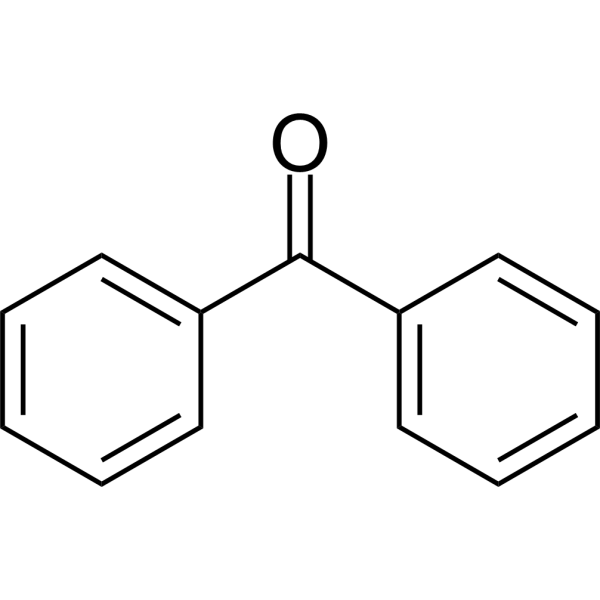
HY-Y0546
BenzophenonePhotosensitizer -

HY-W019643
Glycopyrronium impurity 3Drug Impurity -

HY-W098021
2,2-Dimethoxy-2-phenylacetophenoneFree Radical Photoinitiator -

HY-W086630
CamphorquinonePhotoinitiator -

HY-Y0546R
Benzophenone (Standard)Photosensitizer -

HY-118571
Benzoin methyl etherPhotoinitiator -
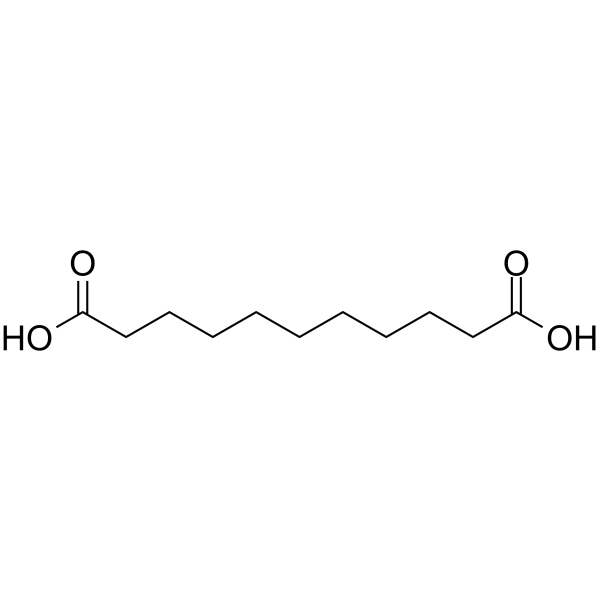
HY-W014125
Undecanedioic acidEndogenous Metabolite -
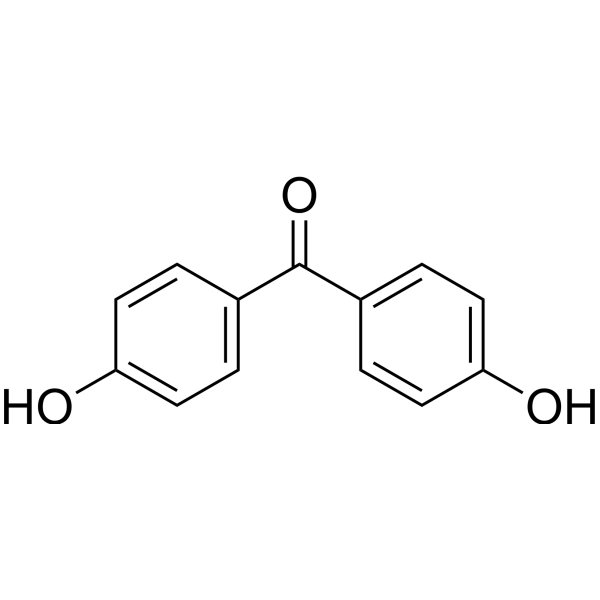
HY-W014226
4,4'-DihydroxybenzophenoneUltraviolet Absorber -
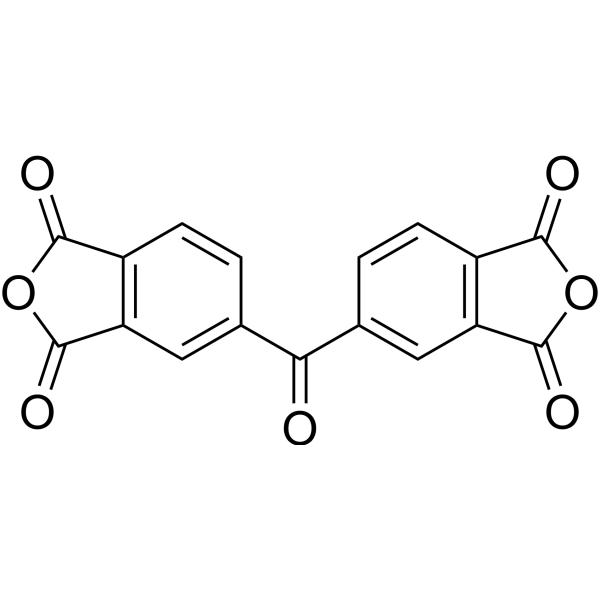
HY-W009169
Benzophenonetetracarboxylic dianhydridePrecursor -

HY-116654
2-Methyl-4'-(methylthio)-2-morpholinopropiophenoneDrug Derivative -
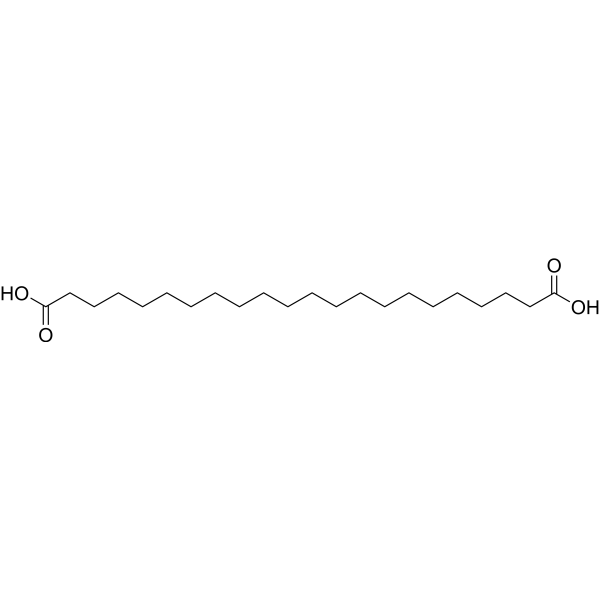
HY-W034918
Docosanedioic acidADC Linker -

HY-W014125R
Undecanedioic acid (Standard)Analytical Standard


Biological Activity
Description
IC50 & Target
[1]|
NF-κB |
IL-6 |
IL-1β |
TNF-α |
eIF2-α |
Cellular Effect
|
Cell Line

|
Type | Value | Description | References |
|---|---|---|---|---|
| HepG2 | IC50 |
41.3 μM
|
Decrease in mitochondrial membrane potential in human HepG2 hepatocellular carcinoma cells measured by m-MPI dye after 1 hr treatment in a 1,536-well plate format.
Decrease in mitochondrial membrane potential in human HepG2 hepatocellular carcinoma cells measured by m-MPI dye after 1 hr treatment in a 1,536-well plate format.
|
25302578 |
In Vitro
4-Hydroxybenzophenone (4HBP) (5 nM; 48 h) increases cell viability in HepG2 hepatocellular carcinoma cells, but not in normal LO2 hepatocytes[2].
4-Hydroxybenzophenone (5 nM; 1-2 weeks) promotes colony formation in HepG2 hepatocellular carcinoma cells but not in normal LO2 hepatocytes[2].
4-Hydroxybenzophenone (5 nM; beyond 30 passages) accelerates the proliferative capacity of HepG2 hepatocellular carcinoma cells but does not affect normal LO2 hepatocytes; at P30, it upregulates BIP and selectively activates the IRE1α-XBP1s signaling axis in HepG2 cells, induces XBP1s nuclear translocation, and increases protein aggregation[2].
4-Hydroxybenzophenone exposure (5 nM; more than 30 passages) induces PERK reporter oligomerization and aggregate formation in HepG2 cells at P30[2].
The 4-Hydroxybenzophenone-induced increase in cell viability, enhanced proliferation, and elevated colony formation ability in HepG2 cells are reversed by XBP1 knockdown or inhibition of the IRE1α-XBP1s pathway with MKC8866 (HY-104040)[2].
4-Hydroxybenzophenone (4OH-BP) exhibits strong binding affinity with ESR1 and ESR2 in molecular docking simulations[3].
4-Hydroxybenzophenone (1-1000 nM; 7 days) inhibits the proliferation of primary mouse hippocampal NSCs in vitro and reduces the viability of primary mouse hippocampal NSCs in vitro[4].
4-Hydroxybenzophenone (1 μM; 7 days) treatment significantly upregulates the expression of Cxcl1 and other genes in primary mouse NSCs, with Cxcl1 being the most significantly upregulated gene[4].
4-Hydroxybenzophenone induces ATF4-dependent p65 transcriptional regulation; ATF4 or CHOP knockdown rescues 4-Hydroxybenzophenone-triggered hippocampal neural stem cell apoptosis; it eliminates nuclear p65 aggregation and reverses apoptosis[1].
MedChemExpress (MCE) has not independently confirmed the accuracy of these methods. They are for reference only.
-
Cell Line:Primary hippocampal neural stem cells (NSCs)
-
Concentration:1 μM
-
Incubation Time:7 days
-
Result:Dose-dependently inhibited viability of primary NSCs.
Neither the parental BP nor BP-3 caused significant toxicity at the same concentration.
-
Cell Line:Hippocampal neural stem cells (NSCs)
-
Concentration:0, 0.01, 0.1, 1 μM
-
Incubation Time:7 days
-
Result:Phosphorylated and total level of p65 robustly increased.
Reduction in IκBα level.
Elevated level of p65 mRNA.
-
Cell Line:Hippocampal neural stem cells (NSCs)
-
Concentration:1 μM
-
Incubation Time:7 days
-
Result:ATF4 knockdown almost completely eliminated nuclear p65 in the 4HBP-treated NSCs.
Increased proliferation and decreased apoptosis, as reflected by Ki67 and cleaved-caspase 3 staining.
-
Cell Line:HepG2 and LO2
-
Concentration:5 nM
-
Incubation Time:48 h
-
Result:Increased cell viability significantly in HepG2 cells at passage 10 and passage 30.
Failed to induce significant alterations in cell viability in normal LO2 cells.
-
Cell Line:HepG2
-
Concentration:10 μM
-
Incubation Time:48 h
-
Result:Almost completely inhibited the 4-Hydroxybenzophenone-induced increase in cell viability.
Showed a more significant decrease in viability compared with the control group.
-
Cell Line:Primary mouse neural stem cells (NSCs)
-
Concentration:1 μM
-
Incubation Time:7 days
-
Result:Identified top upregulated genes induced by 4HBP exposure, with chemokine Cxcl1 ranked first.
Confirmed that expression of Cxcl1, Adm2, Cntnap3, P2rx3, and Atp2a3 were generally increased.\nConfirmed elevated mRNA expression of Cxcl1 upon 4HBP exposure.
-
Cell Line:Primary mouse neural stem cells (NSCs)
-
Concentration:1 μM
-
Incubation Time:7 days
-
Result:Showed significantly stronger signal of Cxcl1 staining in Nestin-labeled NSCs treated with 4HBP compared to untreated cells.
Resulted in marked reduction of Cxcl1 staining with siRNA-mediated transient knockdown of Cxcl1.\nShowed significantly less Ki67+ cells and more cleaved-caspase 3+ cells in 4HBP-treated group.
Cxcl1 knockdown strongly reversed the number of Ki67+ and cleaved-caspase 3+ cells.
-
Cell Line:Primary mouse neural stem cells (NSCs)
-
Concentration:1 μM
-
Incubation Time:7 days
-
Result:Cxcl1 knockdown rescued the decline in cell viability caused by 4HBP treatment.
In Vivo
MedChemExpress (MCE) has not independently confirmed the accuracy of these methods. They are for reference only.
-
Animal Model:C57BL/6 mice (pregnant dams and their offspring; male 25-30 g, female 20-25 g)[1]
-
Dosage:0.1, 1 mg/kg/day
-
Administration:p.o.; throughout the entire 21-day pregnancy
-
Result:Reduced offspring swimming time in target quadrant and platform-crossing numbers in the 1 mg/kg/day 4HBP group, decreased spontaneous exploration, and increased dark-cage residence time and entry frequency.
Decreased hippocampal volume at P1 with persistent morphological changes at P56, lowered Ki67+/Nestin+ NSC count and raised TUNEL signals at 1 mg/kg/day.
Altered GFAP and Tuj1 expression, reduced NeuN+ cell number, and elevated cleaved-caspase 3 and Bax levels in offspring hippocampus.
Increased PERK pathway component expression at P1 with sustained mild activation at P56, upregulated TNFα, IL-1β and IL-6, elevated total and phosphorylated p65 and reduced IκBα in hippocampal tissues.
-
Animal Model:C57BL/6 mice (pregnant dams and their offspring; male 25-30 g, female 20-25 g)[1]
-
Dosage:1 mg/kg/day (4HBP)
50 mg/kg/day (GSK2606414) -
Administration:p.o.; throughout the entire 21-day pregnancy
-
Result:Altered no behavioral performance in the Morris water maze after single GSK2606414 treatment, and fully rescued 4HBP-induced cognitive deficits to the control level; consistent rescued cognitive phenotypes were validated in the T-maze test.
Promoted proliferation and alleviated apoptosis of hippocampal NSCs in P1 and P56 offspring co-treated with 4HBP and GSK2606414.
Attenuated 4HBP-triggered PERK-eIF2α pathway activation, nuclear p65 accumulation, NF-κB signaling activation and inflammatory cytokine overexpression in offspring hippocampal tissues.
-
Animal Model:BALB/c nude mice (female, 4.5-5.5 weeks old, HepG2 cell-derived xenograft model (6.5 × 10⁸ cells suspended in a mixture of 1 mL sterile PBS and Matrigel at a 2:1 ratio))[2]
-
Dosage:5 nM
-
Administration:subcutaneous injection; 0, 3, 6, 9, 12 days
-
Result:Displayed significantly larger tumor volumes and higher tumor weights than paired vehicle control tumors at 22 days post-injection.
- Cell differentiation
- Liver Cancer Modeling
- Directly Induced Neuron Culture
- PC12 NGF-Induced Neuronal Differentiation Culture
- iPSC/hPSC-Derived Neuron Differentiation Culture
- Detection of Apoptosis
- TUNEL staining for apoptotic DNA fragmentation
- Cell Cytotoxicity Assay
- SH-SY5Y Neuronal Differentiation Culture
- Fluorescent plasma-membrane potential dye assay
- Mitochondrial membrane-potential and mitochondrial mass staining
- Apoptosis Solutions
- Mitochondrial membrane-potential fluorescent assay
- Mammalian live/dead viability and cytotoxicity staining
- Annexin V plus membrane-impermeant dye apoptosis staining
- ROS/oxidative-stress fluorescent staining
- hPSC directed neural induction/NPC culture
- Patient-Derived Orthotopic Xenograft (PDOX)
- PC12 NGF-induced neuronal-like differentiation
- Cell Viability Determination by MTT Colorimetric Assay
- Human pluripotent stem cell neural induction and neuron differentiation
- SH-SY5Y neuronal-like differentiation
- Patient-Derived Xenograft (PDX)
- Splenic/Portal-Vein Liver Metastasis Xenograft
- Subcutaneous Cell-Line-Derived Xenograft
- Orthotopic Cell-Line Xenograft
- Intraperitoneal/Peritoneal Dissemination Xenograft


Chemical Information
-
CAS No. 1137-42-4
-
Appearance Solid
-
Molecular Weight 198.22
-
Formula C13H10O2
-
Color White to off-white
-
SMILES
O=C(C1=CC=C(O)C=C1)C2=CC=CC=C2
-
Synonyms
4HBP
-
Shipping
Room temperature in continental US; may vary elsewhere.
-
Storage
RT, stored under nitrogen
In solvent -80°C 1 year -20°C 6 months


Solvent & Solubility
In Vitro:
DMSO : 100 mg/mL (504.49 mM; Need ultrasonic; Hygroscopic DMSO has a significant impact on the solubility of product, please use newly opened DMSO)
Please refer to the solubility information to select the appropriate solvent. Once prepared, please aliquot and store the solution to prevent product inactivation from repeated freeze-thaw cycles.
Storage method and period of stock solution: -80°C, 1 year; -20°C, 6 months. When stored at -80°C, please use it within 1 year. When stored at -20°C, please use it within 6 months.
Concentration (start) × Volume (start) = Concentration (final) × Volume (final)
In Vivo:
Select the appropriate dissolution method based on your experimental animal and administration route.
- For the following dissolution methods, please ensure to first prepare a clear stock solution using an In Vitro approach and then sequentially add co-solvents:
- To ensure reliable experimental results, the clarified stock solution can be appropriately stored based on storage conditions. As for the working solution for In Vivo experiments, it is recommended to prepare freshly and use it on the same day.
- The percentages shown for the solvents indicate their volumetric ratio in the final prepared solution. If precipitation or phase separation occurs during preparation, heat and/or sonication can be used to aid dissolution.
Add each solvent one by one: 10% DMSO 40% PEG300 5% Tween-80 45% Saline
Solubility: ≥ 5 mg/mL (25.22 mM); Clear solution
This protocol yields a clear solution of ≥ 5 mg/mL (saturation unknown).
Taking 1 mL working solution as an example, add 100 μL DMSO stock solution (50.0 mg/mL) to 400 μL PEG300, and mix evenly; then add 50 μL Tween-80 and mix evenly; then add 450 μL Saline to adjust the volume to 1 mL.
Preparation of Saline: Dissolve 0.9 g sodium chloride in ddH₂O and dilute to 100 mL to obtain a clear Saline solution.
Add each solvent one by one: 10% DMSO 90% (20% SBE-β-CD in Saline)
Solubility: ≥ 5 mg/mL (25.22 mM); Clear solution
This protocol yields a clear solution of ≥ 5 mg/mL (saturation unknown).
Taking 1 mL working solution as an example, add 100 μL DMSO stock solution (50.0 mg/mL) to 900 μL 20% SBE-β-CD in Saline, and mix evenly.
Preparation of 20% SBE-β-CD in Saline (4°C, storage for one week): 2 g SBE-β-CD powder is dissolved in 10 mL Saline, completely dissolve until clear.
In Vivo Dissolution Calculator
Please enter the basic information of animal experiments:
-
-
-
-
Recommended: Prepare an additional quantity of animals to account for potential losses during experiments.
Please enter your animal formula composition:
-
%DMSO +
Recommended: Keep the proportion of DMSO in working solution below 2% if your animal is weak.
-
%+
-
+%Tween-80 + +
-
%Saline +
The co-solvents required include: DMSO, . All of co-solvents are available by MedChemExpress (MCE). , Tween 80. All of co-solvents are available by MedChemExpress (MCE).
Working solution concentration: 0.22 mg/mL
Method for preparing stock solution: mg drug dissolved in μL DMSO. Stock solution concentration: mg/mL.
1. Take μL DMSO stock solution;
2. Add μL .
μL , mix evenly;
3. Then add μL Tween 80, mix evenly;
4. Then add μL
Please ensure that the stock solution in the first step is dissolved to a clear state, and add co-solvents in sequence. You can use ultrasonic heating (ultrasonic cleaner, recommended frequency 20-40 kHz), vortexing, etc. to assist dissolution.


Purity & Documentation
-
Data Sheet (299 KB)
-
SDS (418 KB)
- English - EN (418 KB)
- Français - FR (418 KB)
- Deutsch - DE (418 KB)
- Norwegian - NO (418 KB)
- Español - ES (418 KB)
- Swedish - SV (418 KB)
- Italian - IT (418 KB)
- Korean - KR (418 KB)
- Portuguese - PT (418 KB)
-
Handling Instructions (2659 KB)
References


Complete Stock Solution Preparation Table
Please refer to the solubility information to select the appropriate solvent. Once prepared, please aliquot and store the solution to prevent product inactivation from repeated freeze-thaw cycles.
Storage method and period of stock solution: -80°C, 1 year; -20°C, 6 months. When stored at -80°C, please use it within 1 year. When stored at -20°C, please use it within 6 months.
| Optional Solvent | Concentration Solvent Mass | 1 mg | 5 mg | 10 mg | 25 mg |
|---|---|---|---|---|---|
| DMSO | 1 mM | 5.0449 mL | 25.2245 mL | 50.4490 mL | 126.1225 mL |
| 5 mM | 1.0090 mL | 5.0449 mL | 10.0898 mL | 25.2245 mL | |
| 10 mM | 0.5045 mL | 2.5224 mL | 5.0449 mL | 12.6122 mL | |
| 15 mM | 0.3363 mL | 1.6816 mL | 3.3633 mL | 8.4082 mL | |
| 20 mM | 0.2522 mL | 1.2612 mL | 2.5224 mL | 6.3061 mL | |
| 25 mM | 0.2018 mL | 1.0090 mL | 2.0180 mL | 5.0449 mL | |
| 30 mM | 0.1682 mL | 0.8408 mL | 1.6816 mL | 4.2041 mL | |
| 40 mM | 0.1261 mL | 0.6306 mL | 1.2612 mL | 3.1531 mL | |
| 50 mM | 0.1009 mL | 0.5045 mL | 1.0090 mL | 2.5224 mL | |
| 60 mM | 0.0841 mL | 0.4204 mL | 0.8408 mL | 2.1020 mL | |
| 80 mM | 0.0631 mL | 0.3153 mL | 0.6306 mL | 1.5765 mL | |
| 100 mM | 0.0504 mL | 0.2522 mL | 0.5045 mL | 1.2612 mL |


4-Hydroxybenzophenone Related Classifications
HY-W014937 Related Classifications
 Powered by Bioz
Keywords
- 4-Hydroxybenzophenone
- 1137-42-4
- 4HBP
- Drug Metabolite
- PERK
- Eukaryotic Initiation Factor (eIF)
- NF-κB
- TNF Receptor
- Interleukin Related
- Reactive Oxygen Species (ROS)
- Apoptosis
- CHOP
- hepatocellular carcinoma cells
- ESR1
- unfolded protein response
- hippocampal neural stem cells
- XBP1s
- Cxcl1
- IRE1α
- endoplasmic reticulum stress
- Inhibitor
- inhibitor
- inhibit