



DAPK1
DAPK1 is a Ca2+/calmodulin-regulated serine/threonine kinase that integrates apoptosis and autophagy signaling during cellular stress[1]. Mechanistically, DAPK1 phosphorylates Beclin 1 at Thr119, disrupts Beclin 1-Bcl-2/Bcl-xL binding, and promotes autophagy-linked cell-death regulation[2]. In disease models, cerebral ischemia recruits DAPK1 into the NMDA receptor NR2B complex, where DAPK1 signaling mediates brain damage in stroke[3]. DAPK1 also activates a p19^ARF^/p53 apoptotic checkpoint that suppresses oncogenic transformation, supporting its tumor-suppressive function in defined cancer contexts[4]. Compared with related isoforms, DAPK1 belongs to a five-member DAPK family but is distinguished by multidomain architecture and broad roles in apoptosis, autophagy, neurodegeneration, and cancer biology[1][5]. For experimental applications, structure-based studies identified small-molecule DAPK inhibitors, supporting kinase-inhibition strategies for probing DAPK1-dependent pathways[6].
References:
- [1]. Singh P, et al. Death Associated Protein Kinase 1 (DAPK1): A Regulator of Apoptosis and Autophagy. Front Mol Neurosci. 2016 Jun 23;9:46. [Content Brief]
- [2]. Zalckvar E, et al. DAP-kinase-mediated phosphorylation on the BH3 domain of beclin 1 promotes dissociation of beclin 1 from Bcl-XL and induction of autophagy. EMBO Rep. 2009 Mar;10(3):285-92. [Content Brief]
- [3]. Tu W, et al. DAPK1 interaction with NMDA receptor NR2B subunits mediates brain damage in stroke. Cell. 2010 Jan 22;140(2):222-34. [Content Brief]
- [4]. Raveh T, et al. DAP kinase activates a p19ARF/p53-mediated apoptotic checkpoint to suppress oncogenic transformation. Nat Cell Biol. 2001 Jan;3(1):1-7. [Content Brief]
- [5]. Farag AK, et al. Death-associated protein kinase (DAPK) family modulators: Current and future therapeutic outcomes. Med Res Rev. 2019 Jan;39(1):349-385. [Content Brief]
- [6]. Okamoto M, et al. Identification of death-associated protein kinases inhibitors using structure-based virtual screening. J Med Chem. 2009 Nov 26;52(22):7323-7. [Content Brief]
-
DAPK1 Related Products (7)
Related Products (7)

-
Quinocetone
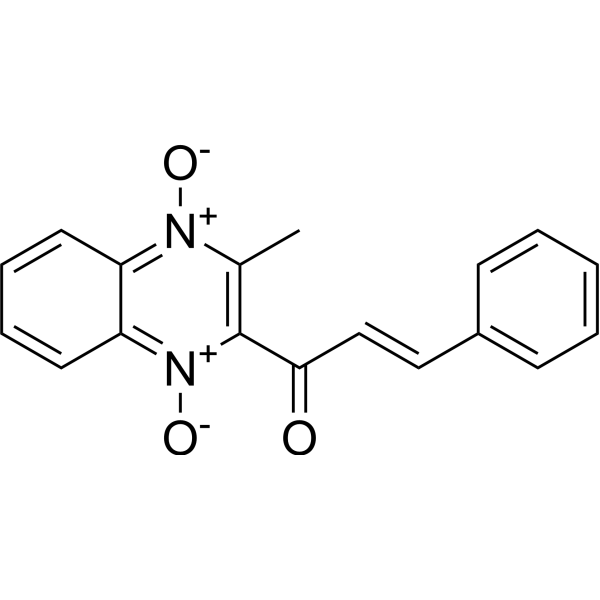 0 ImagesQuinocetone is an orally active animal feed additive used to increase the meat production of livestock and poultry. Quinocetone exhibits antibacterial activity against a variety of pathogenic microorganisms. Quinocetone exhibits tissue-specific (liver, lymphocyte) toxicity. Quinocetone induces autophagy in cells through the ATF6/DAPK1 pathway. Quinocetone activates the NF-κB and iNOS pathways, leading to cell apoptosis, hepatocyte vacuolar degeneration and fibrosis. Quinocetone can inhibit Nrf2/HO-1 and induce the generation of reactive oxygen species (ROS), leading to oxidative stress and DNA damage.
-
PROTAC DAPK1 Degrader-1
 0 ImagesCat. No.: HY-179055CAS No.: 3063030-38-3PROTAC DAPK1 Degrader-1 is a death-associated protein kinase 1 (DAPK1) degrader with a DC50 of 119.6 nM. PROTAC DAPK1 Degrader-1 significantly increases MDM2 protein levels and inhibits neuronal apoptosis in ceramide-induced cells. PROTAC DAPK1 Degrader-1 can be used to study neurological disorders such as cerebral ischemia and traumatic brain injury.
-
DAPK-IN-1
 0 ImagesCat. No.: HY-125404CAS No.: 313971-05-0DAPK-IN-1 is a DAPK1 and DAPK3 inhibitor. DAPK-IN-1 is applicable to research related to cerebral infarction, myocardial infarction and renal failure.
-
UNC9750
 0 ImagesCat. No.: HY-175477CAS No.: 2967648-29-7UNC9750 is an inositol phosphate multikinase (IPMK) inhibitor with IC50 values of 31.6 and 374 nM for IPMK and IP6K2, respectively.. UNC9750 inhibits cellular accumulation of InsP5, the direct product of IPMK kinase activity, while having no effect on either InsP6 or InsP7 levels. UNC9750 has ≥ 75% inhibition of four kinases (DAPK1, DYRK1B, PDGFR, and KDR). UNC9750 can be used for the study of glioblastoma.
-
DAPK1-binding peptide
 0 ImagesCat. No.: HY-P12376CAS No.: 1432595-61-3DAPK1-binding peptide is a peptide derived from GluN2B that selectively recognizes the activated, dephosphorylated DAPK1 kinase. DAPK1-binding peptide can serve as the binder moiety of PVtCD-cTP-AlkF-2 (HY-188196).
-
DRAK1/2-IN-2
 0 ImagesCat. No.: HY-178967DRAK1/2-IN-2 (Compound Y17) is a DRAK1/2 inhibitor with IC50 values for DRAK2 and DRAK1 of 353.2 nM and 507.4 nM respectively. DRAK1/2-IN-2 can enhance mitochondrial membrane potential and glucose-stimulated insulin secretion (GSIS). DRAK1/2-IN-2 resists lipotoxicity-induced cell apoptosis. DRAK1/2-IN-2 significantly inhibits the secretion of pro-inflammatory cytokine IL-1β, thereby exerting an anti-inflammatory effect. DRAK1/2-IN-2 can significantly lower the blood glucose levels of mice. DRAK1/2-IN-2 can be used in diabetes research.
-
PVtCD-cTP-AlkF-2
 0 ImagesCat. No.: HY-188196PVtCD-cTP-AlkF-2 is a ROS-responsive DAPK1 BmTAC activator with blood-brain barrier permeability. PVtCD-cTP-AlkF-2 is equipped with a VHL E3 ubiquitin ligase ligand modified with a ROS-responsive phenylboronic acid caging group, and undergoes uncaging activation only in a high-ROS microenvironment. PVtCD-cTP-AlkF-2 can selectively recognize and degrade dephosphorylated activated DAPK1. PVtCD-cTP-AlkF-2 exerts its activator function through caveolae-mediated transcytosis. PVtCD-cTP-AlkF-2 reduces APP and Tau phosphorylation, decreases Aβ oligomer deposition, and improves cognitive function in aged APP/PS1 mice. PVtCD-cTP-AlkF-2 can be used for research on Alzheimer's disease.



