



Brilliant green
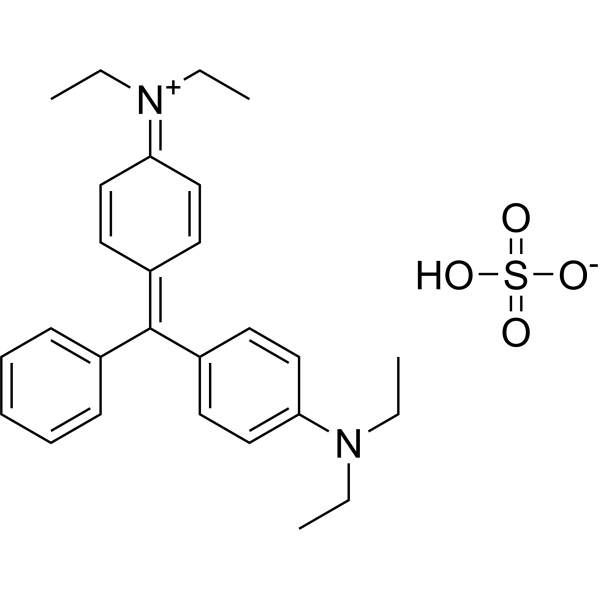
Brilliant green is a diaminotriphenylmethane compound and cationic dye that serves as a biological stain. Brilliant green exhibits strong antibacterial activity, with significant inhibitory effects on Gram-positive bacteria. The detection wavelength of Brilliant green is λmax = 625 nm.
For research use only. We do not sell to patients.
- CAS No.: 633-03-4
- Formula: C27H34N2O4S
- Molecular Weight:482.63
-
Storage:
Please store the product under the recommended conditions in the Certificate of Analysis.

To place orders, for customer services and technical support, please contact: MedChemExpress USA
Tel: 609-228-6898 E-mail: [email protected] [email protected]


-
 Biological Activity
-
Chemical Information
- Protocols
- Purity & Documentation
- References
-
 Help & FAQs


-
HY-D0213
Sudan Black BFat-soluble Diazo Dye -
HY-N1442
Acid orange 7Azo Dye -
HY-B0324A
Crystal VioletFluorochrome -
HY-D0236
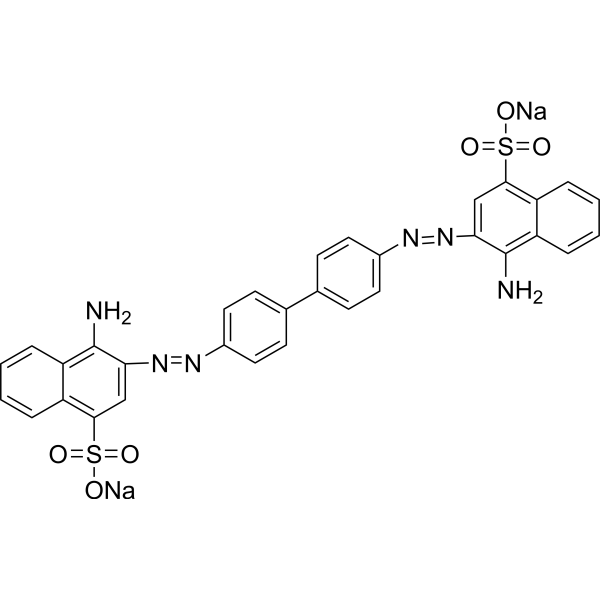
Congo RedAzo Dye -
HY-D0914
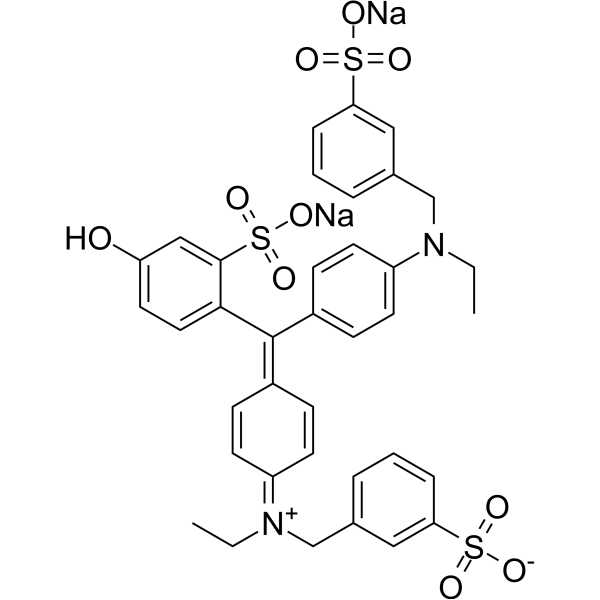
Fast Green FCFSea Green Triarylmethane Food Dye -
HY-D0932
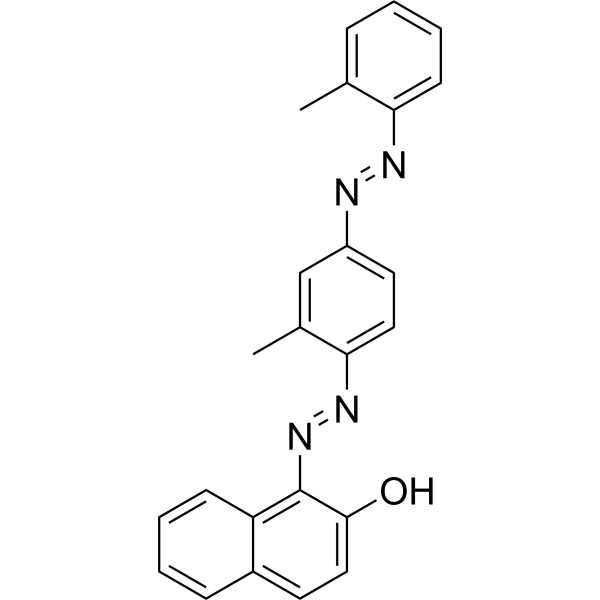
Sudan IVDisazo Dye -

HY-N1442R
Acid orange 7 (Standard)Azo Dye -

HY-DY2001
Crystal Violet (solution)Fluorochrome -
HY-W040226
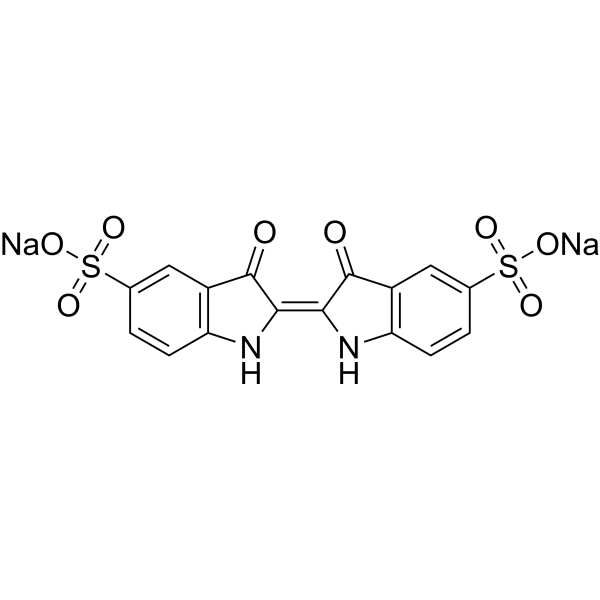
Indigo carmine -

HY-D0932R
Sudan IV (Standard)Standard of Sudan IV -
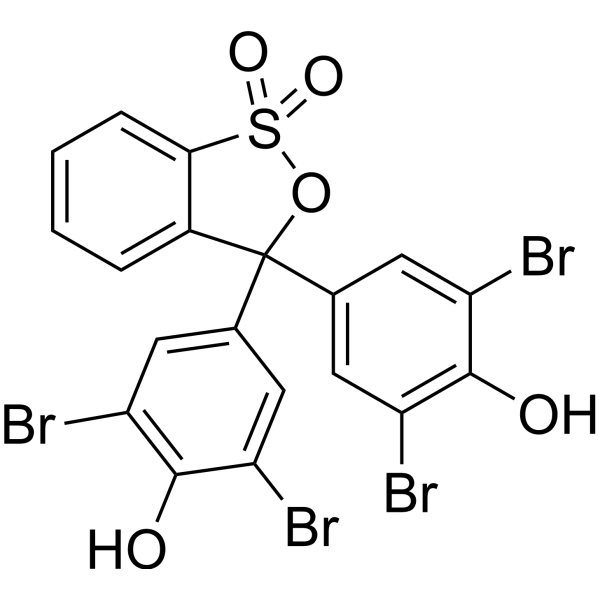
HY-B1571
Bromophenol bluepH Indicator -
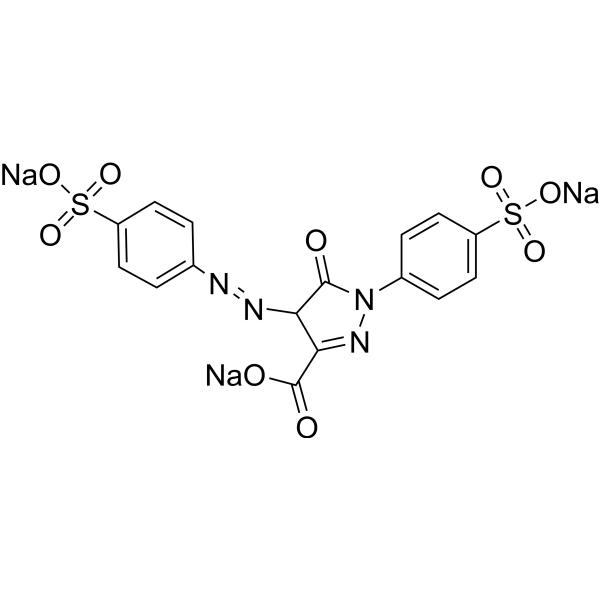
HY-D0257
TartrazineAzo Dye


Biological Activity
Description
In Vitro
1. Stock Solution Preparation
1.1 Solvent: Water or 60% ethanol. Aqueous solutions are unstable and require fresh preparation.
1.2 Concentration recommendation: It is generally recommended to prepare a high-concentration stock solution of 1-10 mM.
2. Working Solution Preparation
2.1 Diluent: Double-distilled water.
2.2 Working concentrations: 1% (based on 60% ethanol), 0.5% ethanol solution, 1:2000 (aqueous solution), 1:1000 (aqueous solution).
2.3 Notes: Adjust the working solution concentration as needed; prepare fresh before use.
3. Staining Procedures
3.1 Sample type description
3.1.1 Bacterial samples: Suitable for Gram-positive bacteria, with weak efficacy against *Escherichia coli* and Mycobacterium tuberculosis.
3.1.2 Skin/mucosa: 1% ethanol solution is used for skin disinfection; 0.5% solution is used for mucosa.
3.1.3 Adsorption experiment samples: Add 25 mg of PANI/Ag nanocomposite to 20 mL of BG solution (initial concentration 40-61.2 mg/L), shake at 30 °C and 120 rpm, and reach adsorption equilibrium within 120 min.
3.2 Incubation conditions
3.2.1 Antibacterial experiment: Apply to skin, mucosa or wounds at room temperature or body temperature; use warm aqueous solution for wet compresses.
3.2.2 Adsorption experiment: Shake at 30 °C and 120 rpm in the dark, with a contact time of 120 min.
3.3 Washing steps
3.3.1 Skin staining can be removed by vigorous wiping with alcohol or hydrogen peroxide.
4. Control Setup
4.2 Adsorption experiment controls: Comparison of adsorption efficiency under conditions of different initial concentrations (40-61.2 mg/L), different nanocomposite dosages (0.01-0.03 g), different temperatures (25-40 °C) and different pH values (2-12).
5. Detection and Analysis
5.1 Instrument type: Spectrophotometer.
5.2 Excitation/emission wavelength: 625 nm (detection wavelength).
5.3 Result analysis
5.3.1 Absorbance change: The absorbance at 625 nm decreases with the extension of adsorption time; the removal rate reaches 89.8% at an initial concentration of 40 mg/L and 75% at 61.2 mg/L; approximately 90% is removed within 120 min.
5.3.2 Antibacterial activity: The minimum inhibitory dilution against streptococci and pneumococci is 1:200,000, with weak efficacy against *Escherichia coli* and Mycobacterium tuberculosis.
5.3.3 Color change: Green dye. Adsorption is the lowest at pH 2; the removal rate increases from 61% to 85% at pH 4-12, reaching the maximum at pH 12; the pKa values are 4.93 and 2.26.
MedChemExpress (MCE) has not independently confirmed the accuracy of these methods. They are for reference only.


Chemical Information
-
CAS No. 633-03-4
-
Molecular Weight 482.63
-
Formula C27H34N2O4S
-
SMILES
CC/[N+](CC)=C1C=C/C(C=C/1)=C(C2=CC=C(N(CC)CC)C=C2)/C3=CC=CC=C3.O=S(O)([O-])=O
-
Shipping
Room temperature in continental US; may vary elsewhere.
-
Storage
Please store the product under the recommended conditions in the Certificate of Analysis.


Purity & Documentation
References

Calculators
Concentration (start) × Volume (start) = Concentration (final) × Volume (final)


Brilliant green Related Classifications
HY-D0008 Related Classifications
 Powered by Bioz