



Carbamyl-PAF

Based on 1 Customer Validation
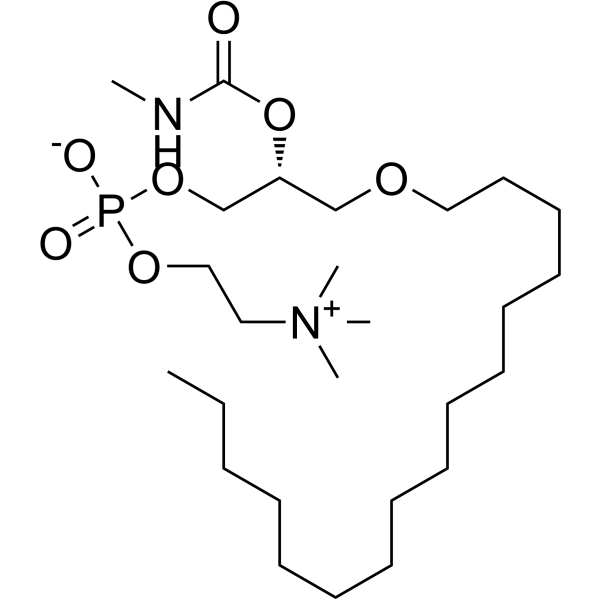
Carbamyl-PAF (C-PAF) is a metabolically stable platelet-activating factor analog and PAF receptor agonist that activates G protein-coupled PAF receptors, triggering calcium mobilization, NF-κB activation, and downstream signaling, thereby inducing neutrophil recruitment, inflammatory responses, and ROS generation. Carbamyl-PAF is used in research on obesity, pulmonary inflammation, Zellweger syndrome, and non-melanoma skin cancer.
For research use only. We do not sell to patients.
- Purity : 99.6%
- CAS No.: 91575-58-5
- Formula: C26H55N2O7P
- Molecular Weight:538.70
-
Storage:
Solution, -20°C, 2 years

To place orders, for customer services and technical support, please contact: MedChemExpress USA
Tel: 609-228-6898 E-mail: [email protected] [email protected]


-
 Biological Activity
-
Chemical Information
- Protocols
- Purity & Documentation
- References
-
 Help & FAQs


-
HY-128694
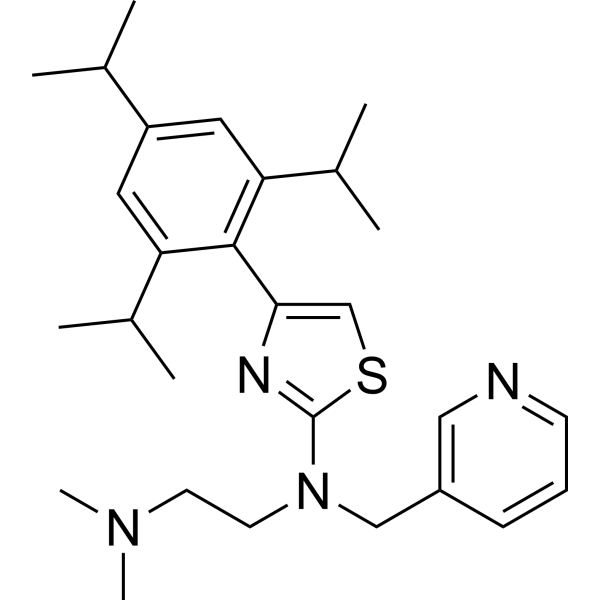
ForopafantPAF Receptor Antagonist -

HY-137798
Chromozym PLLiposome -
HY-130345
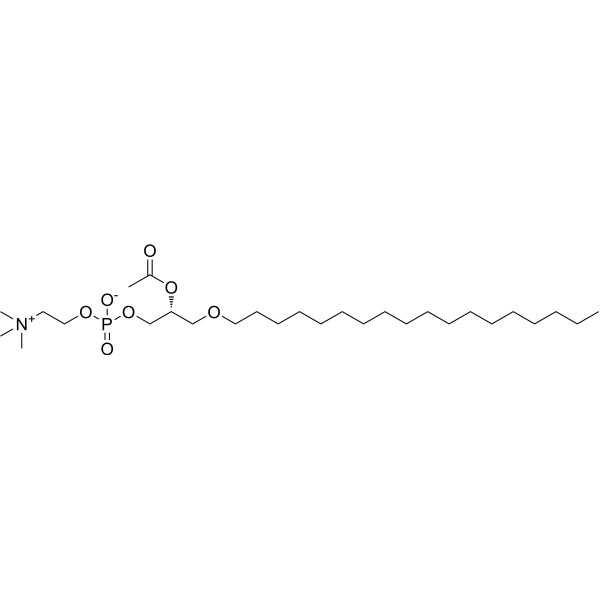
PAF (C18)Platelet Activating Factor -
HY-12357
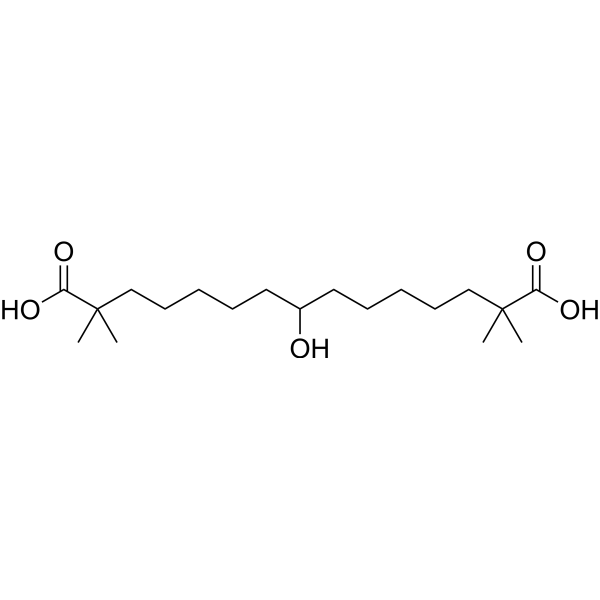
Bempedoic acidACL Inhibitor/AMPK Activator -
HY-A0183
PhosphatidylserineAnti-Inflammatory/Immunosuppressive Signal -
HY-108634
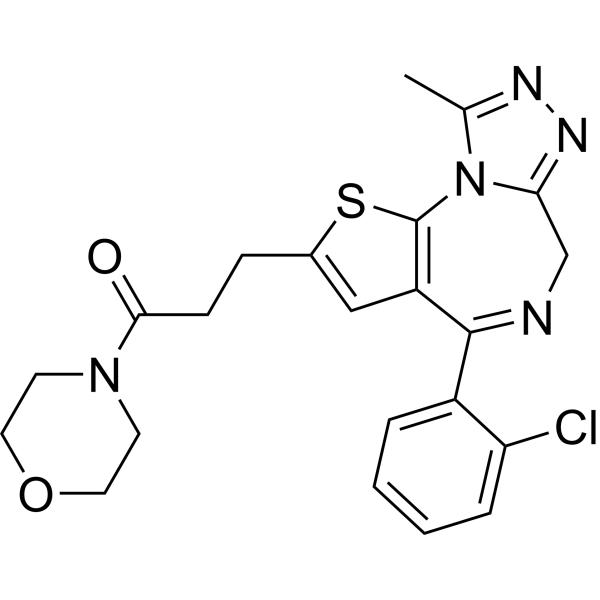
ApafantPAF Receptor Antagonist -
HY-109897
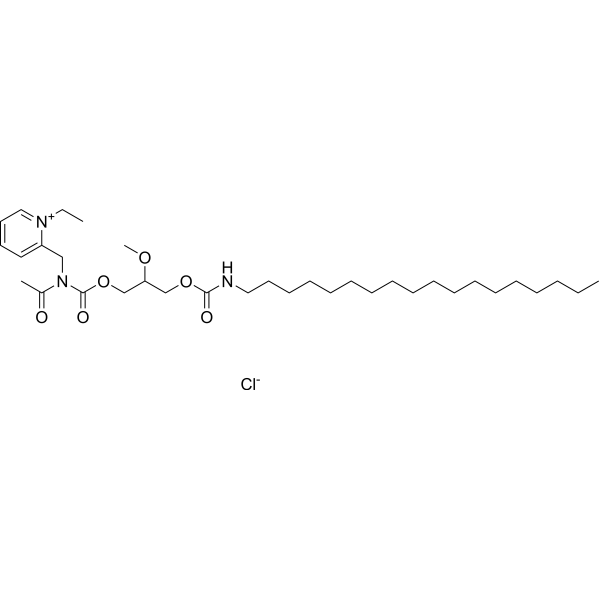
CV-6209PAF Antagonist -
HY-116084S
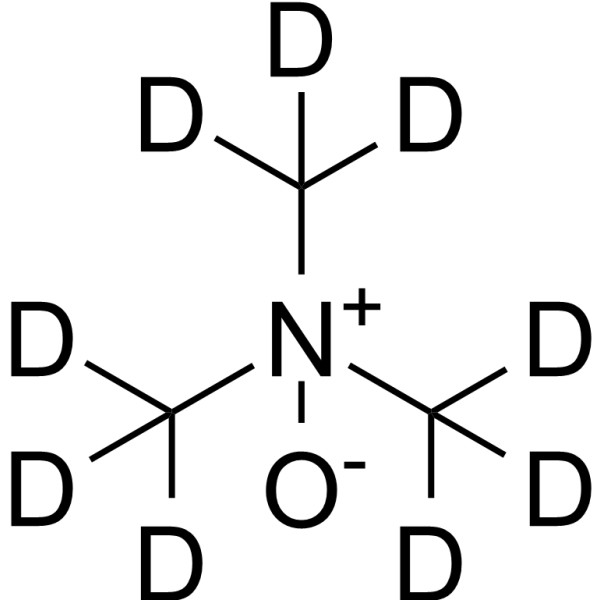
Trimethylamine N-oxide-d9Stable Isotope -

HY-W040255
1-Palmitoyl-2-glutaryl-sn-glycero-3-phosphocholineOxidized Phospholipid -
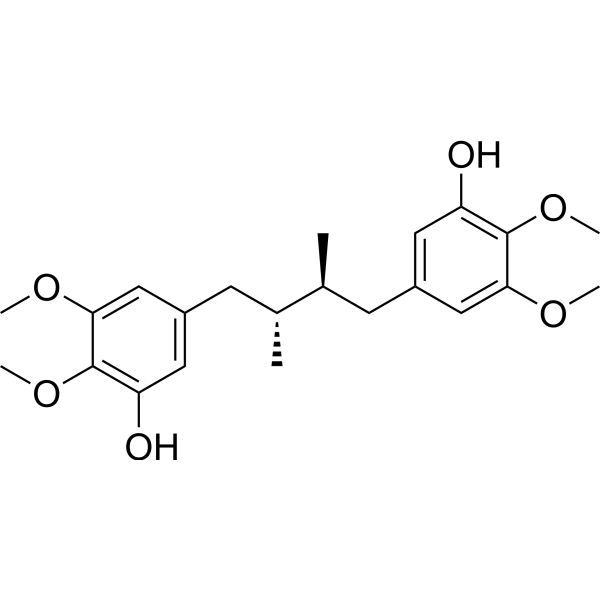
HY-N7343
PregomisinNatural Compound -

HY-148971A
PtdIns-(345)-P3 (12-dipalmitoyl) sodiumPIP3 Analog -
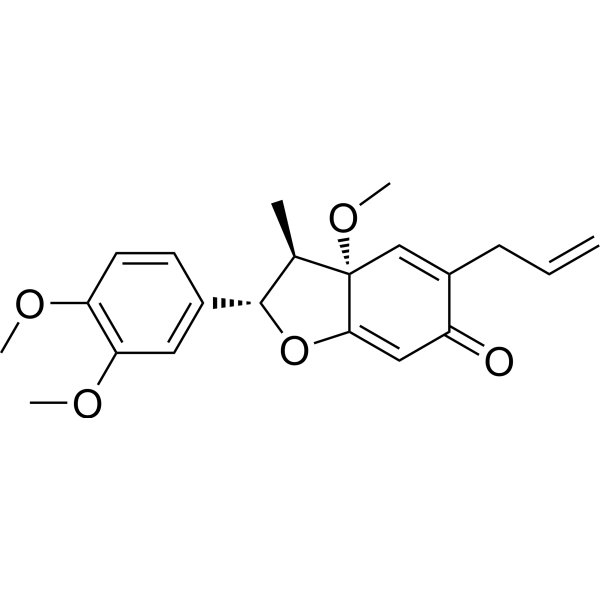
HY-N10663
KadsurenonePlatelet-activating Factor Antagonist


Biological Activity
Description
In Vitro
Carbamyl-PAF (100 nM; 1-3 h) increases PAR2 mRNA expression in RAW 264.7 mouse macrophages[3].
Carbamyl-PAF (100 nM; 7 days) decreases neurosphere formation and promotes a differentiated epithelial phenotype in PE-derived neurospheres from adult BALB/cJ mouse ciliary epithelium, while inhibiting the expression of retinal progenitor and pluripotency markers[5].
Carbamyl-PAF (100 nM; 3 days) inhibits the proliferation of cultured normal human epidermal keratinocytes[6].
Carbamyl-PAF (100 nM; 7 days) alone does not affect cornified envelope formation, but reverses Apafant (WEB 2086) (HY-108634)-induced stimulation of cornified envelope formation in cultured normal human epidermal keratinocytes[6].
Carbamyl-PAF (0.5 mM; 80 seconds) pretreatment restores NMDA (HY-17551) (50 μM)-induced cytosolic calcium responses to wild-type levels in Pxr1-/- mouse embryonic neuronal cultures[8].
MedChemExpress (MCE) has not independently confirmed the accuracy of these methods. They are for reference only.
-
Cell Line:3T3-L1 adipocytes
-
Concentration:10 nM
-
Incubation Time:3 h
-
Result:Induced the expression of Ucp1 mRNA.
These effects were absent in WEB2086-treated cells.
-
Cell Line:RAW 264.7 murine macrophages
-
Concentration:100 nM
-
Incubation Time:20 min
-
Result:Confirmed the presence of PAR2 in the PAFR immunoprecipitates.
Showed increased signal after co-stimulation of PAFR and PAR2 with their respective agonists compared to activation with C-PAF alone.
-
Cell Line:RAW 264.7 murine macrophages
-
Concentration:100 nM
-
Incubation Time:4 h
-
Result:Showed constitutive PAR2 expression in RAW 264.7 murine macrophages.
Impaired PAR2 expression in C-PAF-stimulated cells compared to non-stimulated cells.
Increased NF-κB (p65) transcription factor nuclear fluorescence compared to control cells.
PAR2 blockade with ENMD1068 reduced NF-κB (p65) nuclear fluorescence.
-
Cell Line:RAW 264.7 murine macrophages
-
Concentration:100 nM
-
Incubation Time:1, 2, 3 h
-
Result:Increased PAR2 mRNA at all analyzed time points (1, 2, and 3 h) compared to non-stimulated cells.
-
Cell Line:RAW 264.7 murine macrophages
-
Concentration:100 nM
-
Incubation Time:4 h
-
Result:Decreased PAR2 protein expression at 4 h.
Increased NF-κB p65 nuclear translocation.
-
Cell Line:RAW 264.7 murine macrophages
-
Concentration:100 nM
-
Incubation Time:1, 2, 3 h
-
Result:Increased PAR2 mRNA expression at 1, 2, and 3 h compared to non-stimulated cells.
-
Cell Line:Cultured human normal epidermal keratinocytes
-
Concentration:100 nM
-
Incubation Time:3 days
-
Result:Inhibited keratinocyte proliferation at 100 nM, an effect blocked by WEB 2086 (100 nM).
-
Cell Line:Cultured human normal epidermal keratinocytes
-
Concentration:100 nM
-
Incubation Time:7 days
-
Result:Had no effect on cornified envelope formation alone but reversed the WEB 2086 (100 nM)-induced stimulation of cornified envelope formation.
In Vivo
Carbamyl-PAF (100 nM; i.n.; 20 µL) induces the production of neutrophil chemoattractants CXCL1 and CXCL2 in the lungs of BALB/c mice, whereas blocking PAR2 with ENMD1068 reduces this production[4].
Carbamyl-PAF (100 nM; i.n.) promotes leukocyte rolling and adhesion in the mesenteric microcirculation of BALB/c mice, a process that is inhibited by the PAR2 antagonist ENMD1068[4].
MedChemExpress (MCE) has not independently confirmed the accuracy of these methods. They are for reference only.
-
Animal Model:BALB/c (male, 8-10 weeks old, 25-30 g)[3]
-
Dosage:10-8, 10-7, 10-6 M/20 µL
-
Administration:i.n.; single dose
-
Result:Increased the number of neutrophils in BALF at all doses utilized (10-8-10-6 M) compared to PBS-instilled mice, peaking 24 h after 10-7 M instillation.
-
Animal Model:BALB/c (male, 8-10 weeks old, 25-30 g)[3]
-
Dosage:10-7 M/20 µL
-
Administration:i.n.; single dose
-
Result:Lungs displayed perivascular and peribronchiolar inflammation with leukocyte infiltration after 24 h.
-
Animal Model:BALB/c (male, 8-10 weeks old, 25-30 g)[3]
-
Dosage:10-7 M
-
Administration:i.n.; single dose
-
Result:Increased the number of leukocytes surrounding the vessels in the mesentery microcirculation compared to PBS-injected mice.
-
Animal Model:BALB/c (male, 25-30 g, 8-10 weeks old)[4]
-
Dosage:10-8, 10-7, 10-6 M
-
Administration:i.n.; single dose
-
Result:Increased the number of neutrophils in BALF at all doses utilized (10-8-10-6 M) compared to PBS-instilled mice.
Peaked 24 h after 10-7 M instillation.
-
Animal Model:BALB/c (male, 25-30 g, 8-10 weeks old)[4]
-
Dosage:10-7 M
-
Administration:i.n.; single dose
-
Result:Induced perivascular and peribronchiolar inflammation with leukocyte infiltration after 24 h, with a histopathology score of approximately 7.
Increased MPO and NAG levels in lung tissue.
Reduced cellular infiltration in the perivascular region, impaired lung inflammation as assessed by the histopathology score, and reduced levels of both MPO and NAG when pretreated with ENMD1068 compared to C-PAF-instilled mice.\nIncreased the levels of neutrophil chemokines CXCL1 and CXCL2 in BALF compared to control mice (CXCL1: approximately 390 pg/mL at 1 h, 480 pg/mL at 4 h; CXCL2: approximately 280 pg/mL at 1 h, 300 pg/mL at 4 h).
Decreased the levels of CXCL1 and CXCL2 measured in BALF at 1 h and 4 h after instillation when treated with ENMD1068 compared to C-PAF-treated mice.
Low levels of CXCL1 persisted in ENMD1068-treated mice 12 h after instillation, whereas CXCL2 returned to basal levels 12 h after instillation.
-
Animal Model:BALB/c (male, 25-30 g, 8-10 weeks old)[4]
-
Dosage:10-7 M
-
Administration:i.n.; single dose
-
Result:Increased the number of leukocytes surrounding the vessels compared to PBS-injected mice.
Reduced the number of adherent, rolling, and velocity of leukocytes in the mesentery microcirculation following PAR2 antagonist ENMD1068 treatment in C-PAF-treated mice.
-
Animal Model:Pxr1 heterozygous mice (pregnant females mated with Pxr1 heterozygous males)[8]
-
Dosage:0.25, 2.5 mg/kg
-
Administration:i.p.; twice daily; E8 to E18
-
Result:All pregnant dams administered 0.25 mg/kg (n = 3) or 2.5 mg/kg (n = 3) died of shock within the first 48 hours after initiation of administration (E8).
-
Animal Model:C57BL/6 mice[9]
-
Dosage:500 pM
-
Administration:i.p.; single dose
-
Result:Increased 8-oxo-dG formation in the skin with statistically significant induction compared to normal skin.
Induced a high number of TUNEL-positive apoptotic cells in the skin.
-
Animal Model:C57BL/6 mice[9]
-
Dosage:500 pM
-
Administration:i.p.; single dose
-
Result:Induced immune suppression as measured by suppression of the delayed-type hypersensitivity response to Candida albicans.


Chemical Information
-
CAS No. 91575-58-5
-
Appearance Liquid
-
Molecular Weight 538.70
-
Formula C26H55N2O7P
-
Color Colorless to light yellow
-
SMILES
CNC(O[C@H](COCCCCCCCCCCCCCCCC)COP(OCC[N+](C)(C)C)([O-])=O)=O
-
Synonyms
C-PAF
-
Shipping
Room temperature in continental US; may vary elsewhere.
-
Storage
Solution, -20°C, 2 years


Purity & Documentation
-
Data Sheet (306 KB)
-
SDS (393 KB)
- English - EN (393 KB)
- Français - FR (393 KB)
- Deutsch - DE (393 KB)
- Norwegian - NO (393 KB)
- Español - ES (393 KB)
- Swedish - SV (393 KB)
- Italian - IT (393 KB)
- Korean - KR (393 KB)
- Portuguese - PT (393 KB)
-
Handling Instructions (2659 KB)
References

Calculators
Concentration (start) × Volume (start) = Concentration (final) × Volume (final)


Carbamyl-PAF Related Classifications
HY-137257 Related Classifications
 Powered by Bioz
Keywords