



Cetrorelix diacetate
Based on 2 publication(s) in Google Scholar
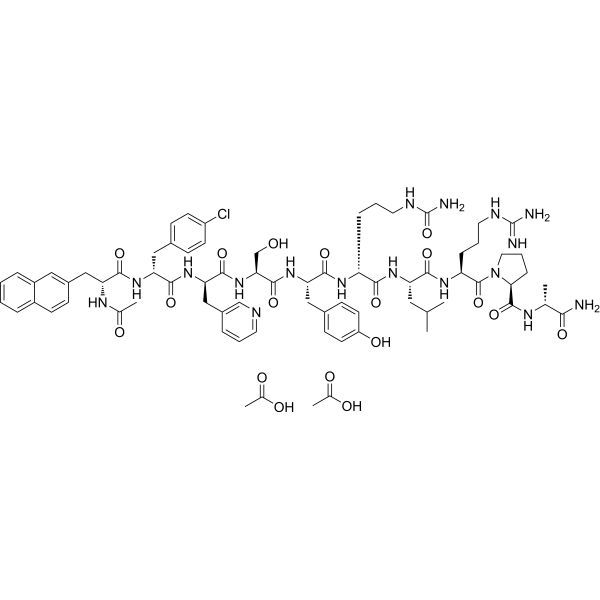
Cetrorelix (SB-75) diacetate is a competitive gonadotropin-releasing hormone receptor (GnRHR) antagonist with a Kd of 0.19 nM. Cetrorelix diacetate inhibits the secretion of luteinizing hormone (LH) and follicle-stimulating hormone (FSH), thereby suppressing the secretion of downstream sex steroids. Cetrorelix diacetate prevents ovulation, induces reversible reproductive shutdown and azoospermia, reduces ovarian fibrosis, improves superovulation outcomes, and inhibits chemotherapy-induced mitochondria-dependent apoptosis. Cetrorelix diacetate is applicable for fertility assistance research.
For research use only. We do not sell to patients.
- CAS No.: 130143-01-0
- Formula: C74H100ClN17O18
- Molecular Weight:1551.14
-
Storage:
Please store the product under the recommended conditions in the Certificate of Analysis.

To place orders, for customer services and technical support, please contact: MedChemExpress USA
Tel: 609-228-6898 E-mail: [email protected] [email protected]


-
 Biological Activity
-
Chemical Information
- Protocols
- Purity & Documentation
- References
-
 Help & FAQs


-
HY-P0009A
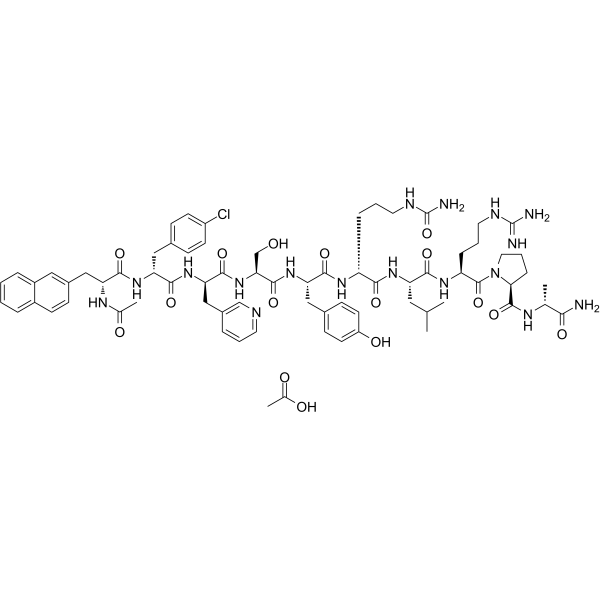
Cetrorelix acetateGnRH Receptor Antagonist -
HY-13673A
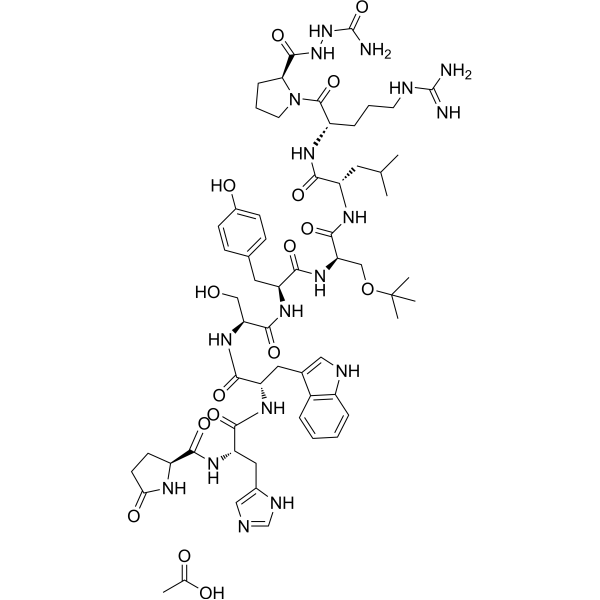
Goserelin acetateGnRH Agonist -
HY-17405
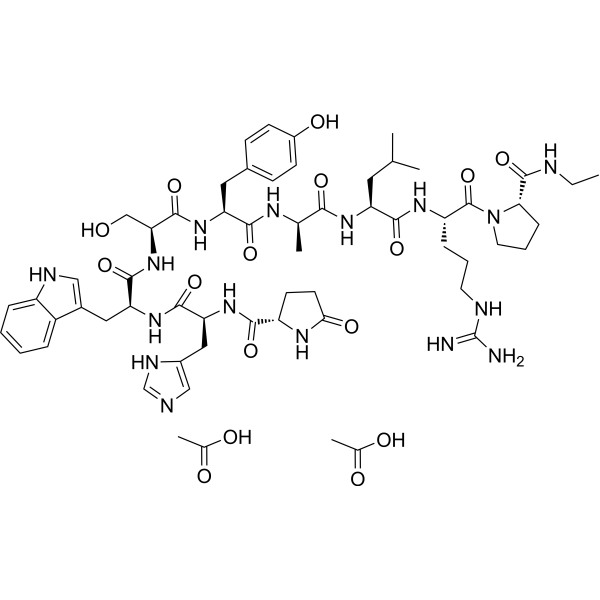
Alarelin AcetateGnRH Receptor Agonist -
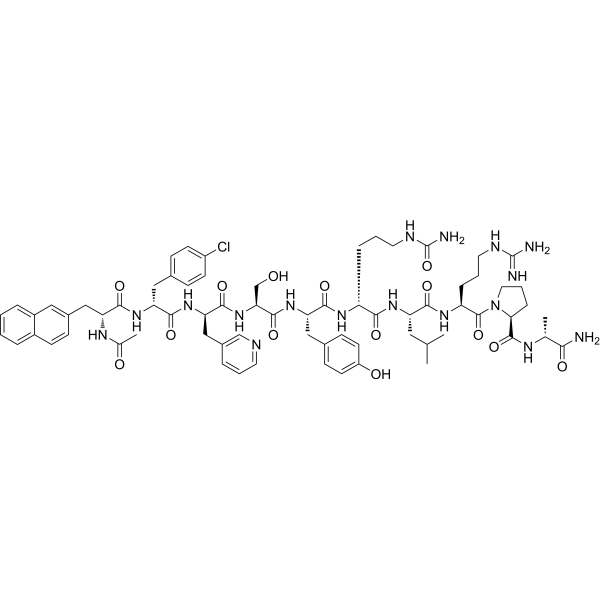
HY-P0009
CetrorelixGnRH Receptor Antagonist -
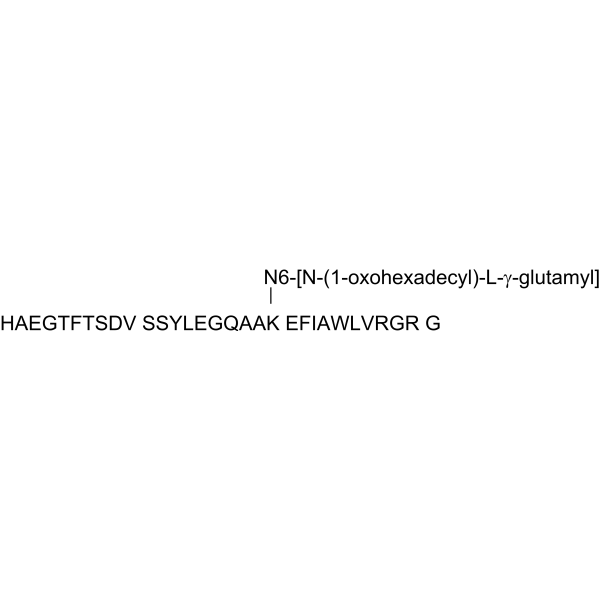
HY-P0014
LiraglutideGLP-1R Agonist -
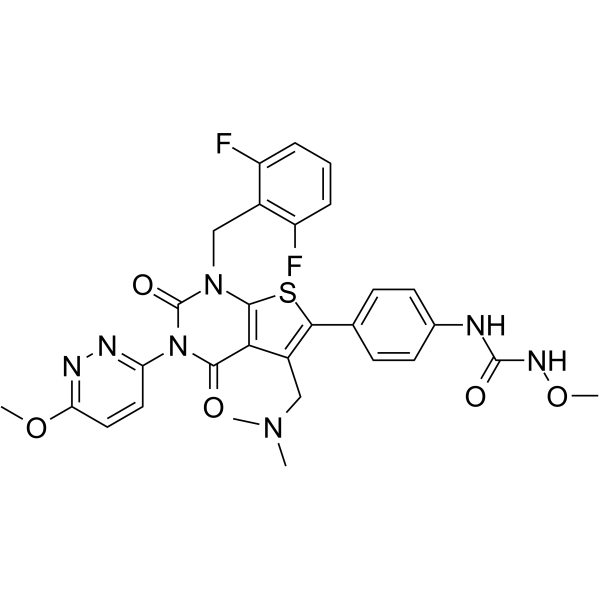
HY-16474
RelugolixGnRH Antagonist -
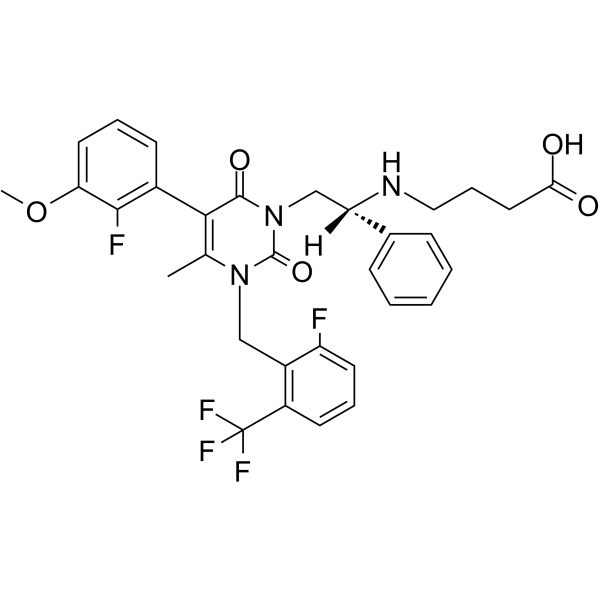
HY-14789
(R)-ElagolixGnRH Receptor Antagonist -
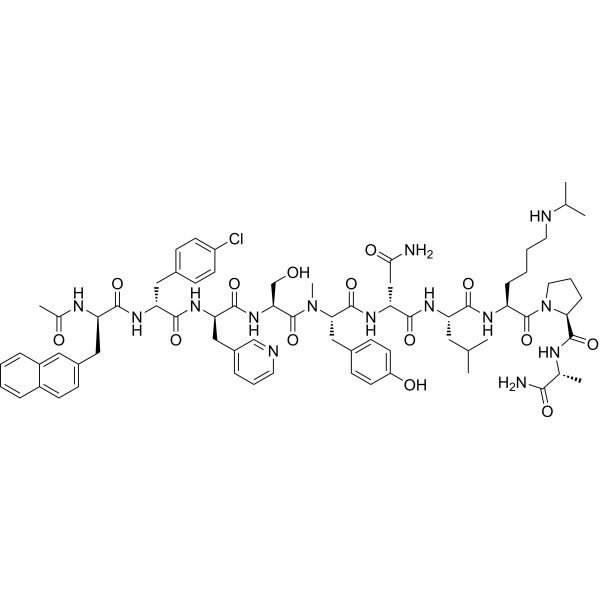
HY-13534
AbarelixGnRH Antagonist -

HY-16168
Degarelix acetateGnRH Anagonist -
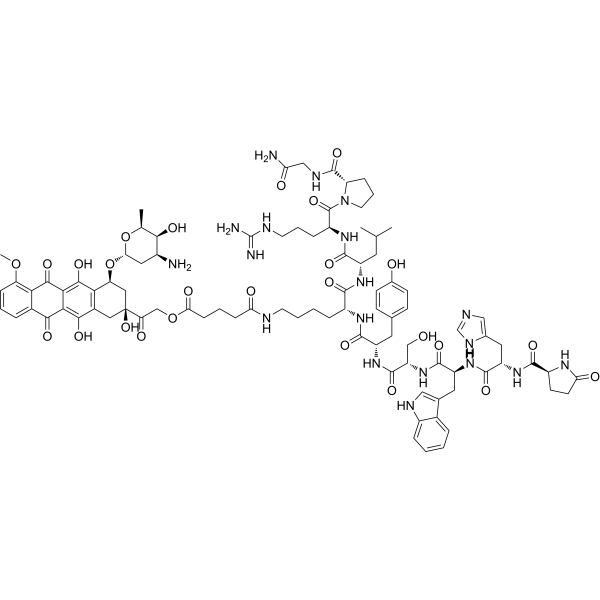
HY-16532
Zoptarelin doxorubicinHybrid Anticancer Agent -
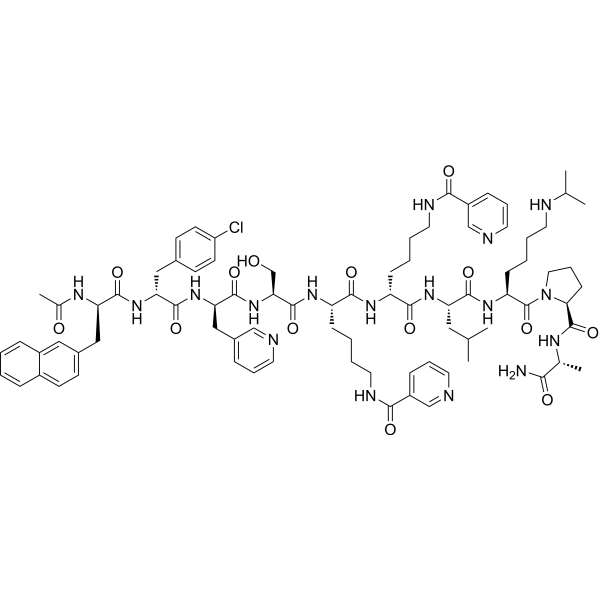
HY-P0013
AntideLHRH Antagonist -
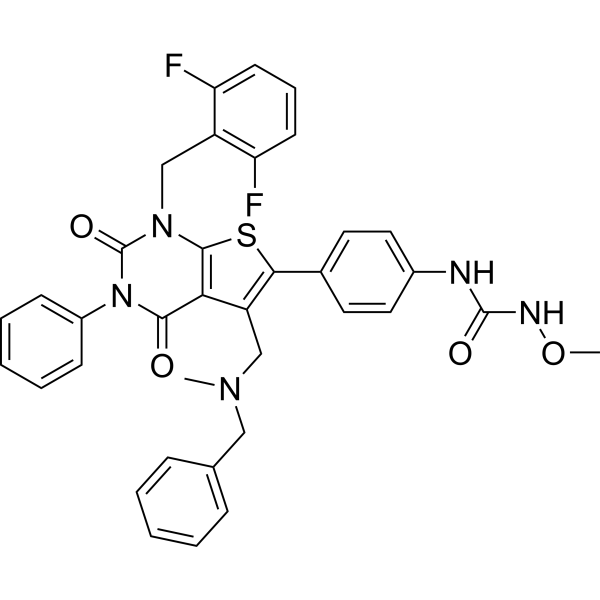
HY-100209
SufugolixLHRH Antagonist
Publications Citing Use of MedChemExpress (MCE) Cetrorelix diacetate
More

Biological Activity
Description
In Vitro
Cetrorelix does not inhibit EGF-stimulated proliferation of human granulosa cells at pharmacologically relevant concentrations, with inhibitory effects only seen at ~100-fold higher concentrations[3].
MedChemExpress (MCE) has not independently confirmed the accuracy of these methods. They are for reference only.
In Vivo
Cetrorelix (5 μg/day; i.p.; daily; 20 days) alone has no detectable effect on ovarian granulosa cell apoptosis, hormone levels, or mitochondrial function in healthy female Sprague-Dawley rats[1].
Cetrorelix (~10 μg/kg; s.c.; single dose) immediately suppresses plasma LH by >80% in male castrated rats, with full recovery within 24 hours[3].
Cetrorelix (250-1250 μg/kg; s.c.; single dose) immediately suppresses LH in male castrated cynomolgus monkeys, with suppression lasting for at least 96 hours[3].
MedChemExpress (MCE) has not independently confirmed the accuracy of these methods. They are for reference only.
-
Animal Model:Sprague-Dawley (female, 250 g)[1]
-
Dosage:5 μg/day (pretreatment); 5 μg/day + 20 mg/kg/day (combined with alkylating antineoplastic agent)
-
Administration:i.p.; daily; 10 days (pretreatment); i.p.; daily; 10 days (combined)
-
Result:Reduced granulosa cell apoptotic index from 13.6% to 3.1%.
Restored serum estradiol levels from ~80 pg/mL to ~160 pg/mL.
Preserved normal granulosa cell ultrastructure including intact mitochondria.
Reversed alkylating antineoplastic agent-induced mitochondrial depolarization, resulting in a green fluorescence intensity of 15.36, red fluorescence intensity of 23.16, and a red/green ratio of 1.51.
Inhibited alkylating antineoplastic agent-induced cytochrome c release from mitochondria to cytoplasm.
Suppressed alkylating antineoplastic agent-induced increases in Bax-positive cells from 90% to 25%, caspase-3-positive cells from 85% to 30%, and cytochrome c-positive cells from 80% to 30%.
Restored alkylating antineoplastic agent-reduced Bcl-2-positive cells from 40% to 70%.
-
Animal Model:Sprague-Dawley (female, 250 g)[1]
-
Dosage:5 μg/day
-
Administration:i.p.; daily; 20 days
-
Result:Did not alter granulosa cell apoptotic index (2.8%, similar to control's 2.5%).
Did not change serum estradiol or progesterone levels.
Did not affect granulosa cell ultrastructure, mitochondrial membrane potential, cytochrome c distribution between mitochondria and cytoplasm, or expression levels of Bax, Bcl-2, caspase-3, or cytochrome c.
-
Animal Model:C57BL/6J (female, 52 weeks old, aged)[2]
-
Dosage:5 µg/kg (3 doses over 1 week); 5 µg/kg (7 doses over 1 week)
-
Administration:i.p.; once every 3 days (3 doses over 1 week); daily (7 doses over 1 week)
-
Result:Increased mean total oocyte count to 13.2 (3-dose group) and 11.4 (7-dose group), with normal oocyte counts increased to 9.8 (74.2% normal rate) and 8.7 (76.3% normal rate), respectively, compared to controls (P<0.05).
Achieved fertilization rates of 96.9% (3-dose group) and 88.5% (7-dose group), with birth rates of 58.3% and 51.8%, respectively, comparable to control values.
Reduced ovarian fibrosis, with phalloidin-positive area percentage decreased compared to untreated aged controls (P<0.05).
Showed no significant difference in ovary weight compared to control aged mice.
-
Animal Model:Male castrated rats[3]
-
Dosage:2.5 μg/rat (~10 μg/kg)
-
Administration:s.c.; single dose
-
Result:Suppressed plasma LH concentrations immediately, reaching a nadir at 4 hours with an >80% fall in LH concentrations.
Returned serum LH to normal levels within 24 hours.
-
Animal Model:Male castrated cynomolgus monkeys (*Macaca fascicularis*)[3]
-
Dosage:250 μg/kg; 625 μg/kg; 1250 μg/kg
-
Administration:s.c.; single dose
-
Result:Suppressed LH concentrations immediately across all doses, reaching a nadir at ~12 hours post-injection.
Maintained LH concentrations suppressed for at least 96 hours.
Showed no LH rebound within the 96-hour interval at any dose.
- Fibrosis/Collagen Morphometry
- Reproductive and Developmental Toxicity Study
- Collagen: Sirius Red Staining
- Detection of Apoptosis
- TUNEL staining for apoptotic DNA fragmentation
- Annexin V plus membrane-impermeant dye apoptosis staining
- Research Protocol for Endocrine Diseases
- Connective Tissue: Masson's Trichrome/Collagen Trichrome Staining
- Apoptosis Solutions


Chemical Information
-
CAS No. 130143-01-0
-
Molecular Weight 1551.14
-
Formula C74H100ClN17O18
-
Synonyms
SB-75 diacetate
-
Sequence Shortening
Ac-{2-Naph-Ala}-{Cl-Phe}-{3Py-Ala}-SY-{Cit}-LRPA-NH2
-
Shipping
Room temperature in continental US; may vary elsewhere.
-
Storage
Please store the product under the recommended conditions in the Certificate of Analysis.


Publications (2)
-
Journal Impact Factor
-
Most Recent
-
Commun Biol
Diurnal testosterone oscillations gate drug delivery via phase separation of ZO-1 at the blood-testis barrier in mice. [Abstract]2026 Jun 1. PMID: 42219451 -
Gen Comp Endocrinol
Neuromodulatory effects of GnRH on the caudal neurosecretory Dahlgren cells in female olive flounder. [Abstract]2021 Jun 1:307:113754. PMID: 33711313


Purity & Documentation
References
[1]. Zhao XJ, et al. GnRH antagonist cetrorelix inhibits mitochondria-dependent apoptosis triggered by chemotherapy in granulosa cells of rats. Gynecologic oncology. 2010 Jul;118(1):69-75. [Content Brief]
[2]. Kanda A, et al. Effect of Cetrorelix administration on ovarian stimulation in aged mice. Experimental animals. 2021 Feb 06;70(1):31-36. [Content Brief]
[3]. Reissmann T, et al. The LHRH antagonist cetrorelix: a review. Human reproduction update. 2000;6(4):322-31. [Content Brief]

Calculators
Concentration (start) × Volume (start) = Concentration (final) × Volume (final)


Cetrorelix diacetate Related Classifications
HY-P0009B Related Classifications
 Powered by Bioz
Keywords
- Cetrorelix diacetate
- 130143-01-0
- SB-75 diacetate
- GnRH Receptor
- Apoptosis
- cynomolgus monkeys
- pituitary cells
- gonadotropin-releasing hormone receptor
- Sprague-Dawley rats
- human granulosa cells
- luteinizing hormone
- rat mast cells
- epidermal growth factor
- follicle-stimulating hormone
- C57BL/6J mice
- Inhibitor
- inhibitor
- inhibit