



Coenzyme Q2

Based on 1 Customer Validation
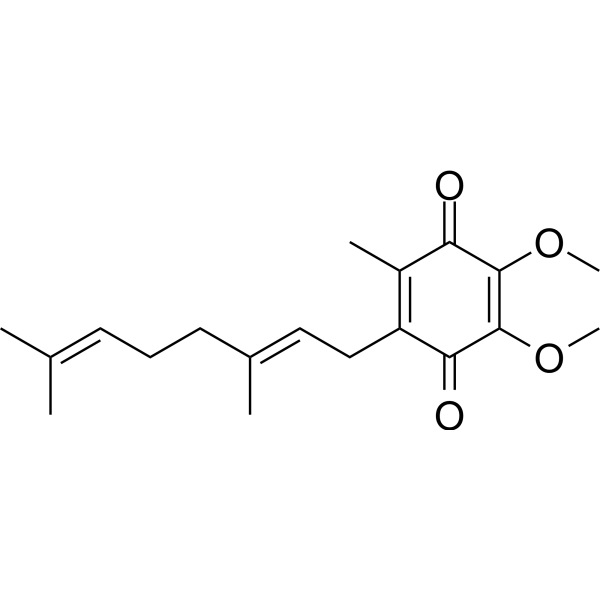
Coenzyme Q2 is a benzoquinone electron carrier in the mitochondrial electron transport chain and a p53-dependent apoptosis inducer. Coenzyme Q2 induces p53 phosphorylation at Ser15, promoting p53 accumulation and functional activation. Coenzyme Q2 induces ROS generation, caspase-3 activation, DNA fragmentation, phosphatidylserine externalization, mitochondrial permeability transition pore opening, and oxidative phosphorylation uncoupling. Coenzyme Q2 inhibits Complex I, Complex III, and Complex IV activities, disrupting electron transport and membrane potential generation. Coenzyme Q2 induces excessive mitochondrial proton leak in forebrain mitochondria. Coenzyme Q2 causes loss of righting reflex in mice, accompanied by slow-wave delta EEG activity and reversible loss of wakefulness. Coenzyme Q2 inhibits lipid peroxidation and scavenges superoxide radicals. Coenzyme Q2 is used in research on leukemia, myocardial ischemia-reperfusion injury, and mitochondrial encephalomyopathy.
For research use only. We do not sell to patients.
- CAS No.: 606-06-4
- Formula: C19H26O4
- Molecular Weight:318.41
-
Storage:
Please store the product under the recommended conditions in the Certificate of Analysis.

To place orders, for customer services and technical support, please contact: MedChemExpress USA
Tel: 609-228-6898 E-mail: [email protected] [email protected]


-
 Biological Activity
-
Chemical Information
- Protocols
- Purity & Documentation
- References
-
 Help & FAQs


-
HY-18085A
Quercetin hydrateFlavonoid Antioxidant -
HY-N0703
SchaftosideFlavonoid -
HY-14655
SulfasalazineAnti-rheumatic Agent -
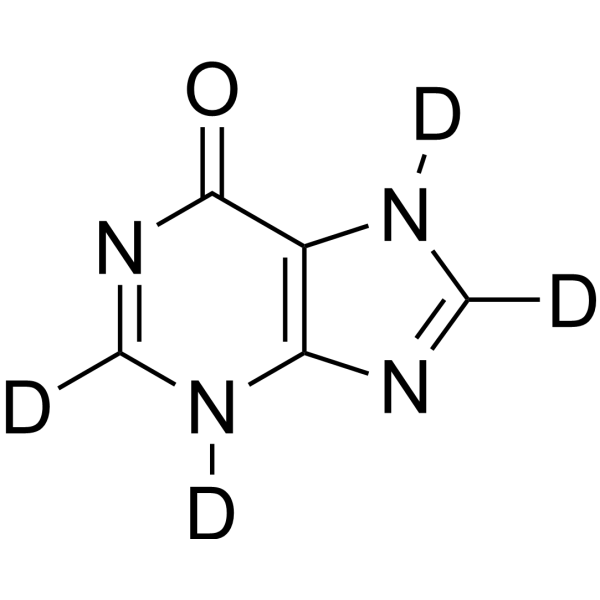
HY-N0091S5
Hypoxanthine-d4Stable Isotope -

HY-14655R
Sulfasalazine (Standard)Anti-rheumatic Agent -

HY-W165608
5-(3'-Hydroxyphenyl)-γ-valerolactoneMetabolitec -

HY-135115
Oleuropein AglyconeSecoiridoid -

HY-N0703R
Schaftoside (Standard)Flavonoid -
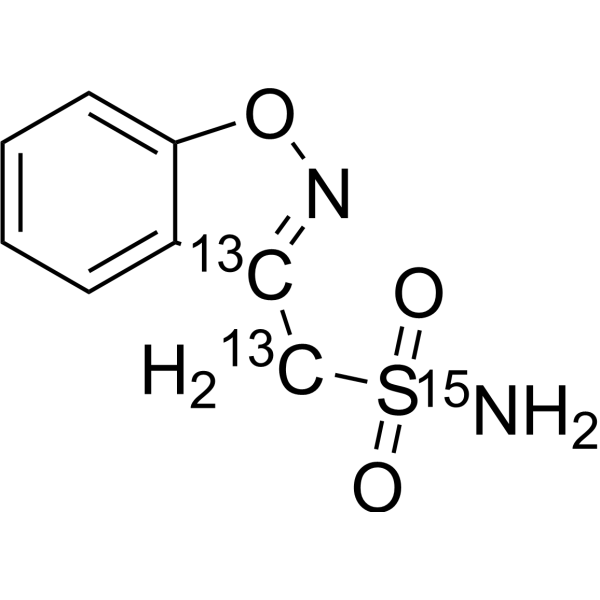
HY-B0124S1
Zonisamide-13C2,15NStable Isotope -
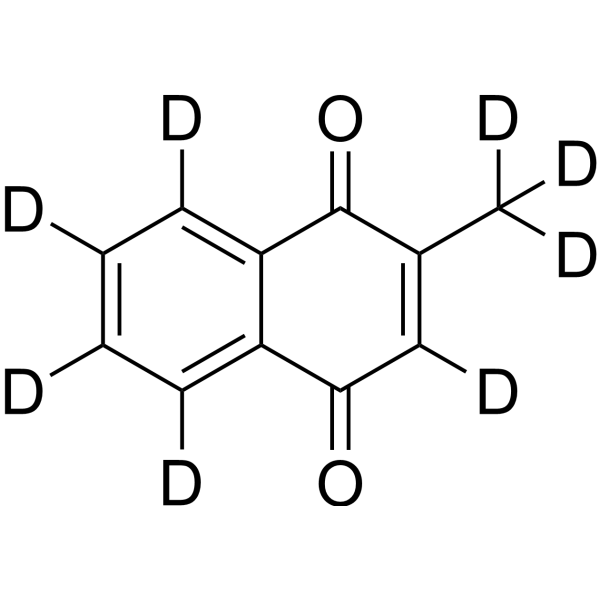
HY-132389S
Vitamin K3-d8Stable Isotope -
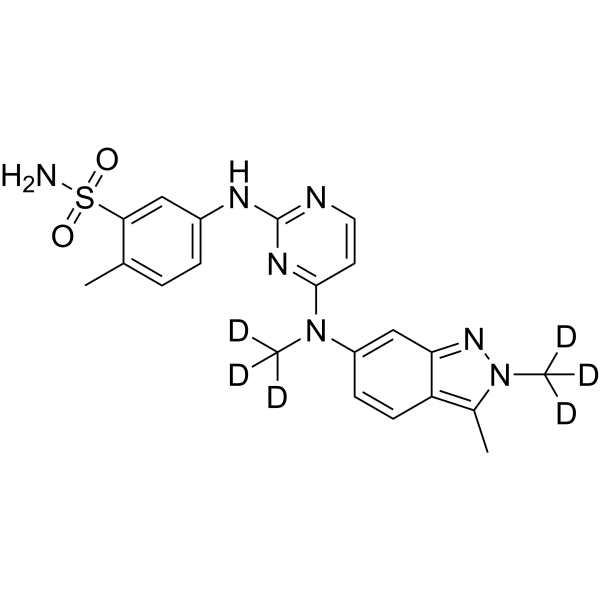
HY-10208S
Pazopanib-d6Stable Isotope -

HY-169225
PDIC-NNSTING Activator
All Caspase Isoforms
More

Biological Activity
Description
IC50 & Target
[1]|
Caspase-3 |
Cellular Effect
|
Cell Line

|
Type | Value | Description | References |
|---|---|---|---|---|
| BALL-1 | IC50 |
20 μM
|
Inhibition of human leukemia BALL-1 cell growth assessed as reduction in cell viability incubated for 24 hrs by MTT assay.
Inhibition of human leukemia BALL-1 cell growth assessed as reduction in cell viability incubated for 24 hrs by MTT assay.
|
15905035 |
In Vitro
Coenzyme Q2 (23 μM) uncouples oxidative phosphorylation in isolated rabbit heart and rat liver mitochondria by increasing state 4 respiration and decreasing the respiratory control index[3].
Coenzyme Q2 (23 μM) increases calcium retention capacity in isolated rat liver mitochondria, thereby inhibiting mPTP opening[3].
Coenzyme Q2 (23 μM) significantly decreases NADH DUb-reductase activity in isolated rabbit heart and rat liver mitochondria[3].
Coenzyme Q2 (23 μM) increases H2O2 production in isolated rabbit heart mitochondria, but does not significantly alter H2O2 production in isolated rat liver mitochondria under basal conditions[3].
MedChemExpress (MCE) has not independently confirmed the accuracy of these methods. They are for reference only.
-
Cell Line:BALL-1, MOLT-4F, HL-60
-
Concentration:60 μM
-
Incubation Time:24 h
-
Result:Killed BALL-1 cells at a high rate (approximately 92% cell death), but barely killed MOLT-4F (approximately 13% cell death) or HL-60 (approximately 10% cell death) cells.
Increased caspase-3 activity approximately 30-fold in BALL-1 cells, while MOLT-4F and HL-60 cells showed little caspase-3 activation.
-
Cell Line:HepG2, HuH-7, Hep3B
-
Concentration:100 μM
-
Incubation Time:24 h
-
Result:Induced cell death strongly in HuH-7 cells (approximately 40% cell death) and induced a lower level of cell death in HepG2 cells (approximately 28% cell death).
Hep3B cells were not affected by CoQ2 (approximately 0% cell death).
Increased caspase-3 activity approximately 2-fold in HuH-7 cells and approximately 1-fold in HepG2 cells, while Hep3B showed no increase.
-
Cell Line:BALL-1
-
Concentration:0, 20, 40, 60, 80, 100 μM
-
Incubation Time:24 h
-
Result:Decreased cell viability dose-dependently with an IC50 of 20 μM.
-
Cell Line:BALL-1
-
Concentration:20 μM
-
Incubation Time:6 h
-
Result:Induced the externalization of phosphatidylserine in a time-dependent manner.\nCaspase-3 activation in BALL-1 cells was observed.
A caspase-3 specific inhibitor, Ac-DEVD-CHO, dramatically blocked CoQ2-induced cell death.
Caspase-8 and -9 were little activated by CoQ2.
-
Cell Line:BALL-1
-
Concentration:60 μM
-
Incubation Time:2, 4, or 6 h
-
Result:Phosphorylated the Ser15 site of p53, but not the Ser9, Ser20, Ser46, or Ser392 site.
-
Cell Line:BALL-1
-
Concentration:60 μM
-
Incubation Time:4 h
-
Result:Induced cell death (approximately 67% viability), caspase-3 activation (approximately 22-fold increase), and p53 Ser15 phosphorylation, which were suppressed by treatment with L-ascorbic acid (approximately 98% viability, approximately 1-fold caspase-3 activity).
In Vivo
MedChemExpress (MCE) has not independently confirmed the accuracy of these methods. They are for reference only.
-
Animal Model:C57Bl/6 N (male, 6-8 weeks old, 20-25 grams)[2]
-
Dosage:20 mg/mL (various doses); 200 mg/kg (EEG assessment)
-
Administration:i.v.; single injection
-
Result:Induced short-lived loss of righting reflex (LORR) across a range of doses.
Mice regained righting reflex within approximately 8 minutes.
Latency to return of righting reflex (RORR) showed a significant positive correlation with dose.
Mean latency to LORR was 95.0 s (95% CI: 23.3-166.7).
ED50 was approximately 100 mg/kg.
- Kinase activity and phosphorylation assays
- Western Blot
- Detection of Apoptosis
- TUNEL staining for apoptotic DNA fragmentation
- Annexin V plus membrane-impermeant dye apoptosis staining
- ROS/oxidative-stress fluorescent staining
- Fluorescent plasma-membrane potential dye assay
- Apoptosis Solutions
- Transepithelial/transendothelial electrical resistance assay
- Protocol for Kinase activity and phosphorylation assays
- Ferroptosis Solutions


Chemical Information
-
CAS No. 606-06-4
-
Appearance Liquid
-
Molecular Weight 318.41
-
Formula C19H26O4
-
Color Light yellow to yellow
-
SMILES
O=C(C(C)=C(C1=O)C/C=C(C)/CC/C=C(C)\C)C(OC)=C1OC
-
Shipping
Room temperature in continental US; may vary elsewhere.
-
Storage
Please store the product under the recommended conditions in the Certificate of Analysis.


Purity & Documentation
-
Data Sheet (284 KB)
-
SDS (393 KB)
- English - EN (393 KB)
- Français - FR (393 KB)
- Deutsch - DE (393 KB)
- Norwegian - NO (393 KB)
- Español - ES (393 KB)
- Swedish - SV (393 KB)
- Italian - IT (393 KB)
- Korean - KR (393 KB)
- Portuguese - PT (393 KB)
-
Handling Instructions (2659 KB)
References

Calculators
Concentration (start) × Volume (start) = Concentration (final) × Volume (final)


Coenzyme Q2 Related Classifications
HY-118075 Related Classifications
 Powered by Bioz
Keywords
- Coenzyme Q2
- 606-06-4
- Coenzyme Q 2
- Coenzyme Q-2
- MDM-2/p53
- Apoptosis
- Reactive Oxygen Species (ROS)
- Caspase
- Oxidative Phosphorylation
- p53-dependent apoptosis
- caspase-3 activation
- ROS generation
- mitochondrial permeability transition pore opening
- BALL-1 cells
- p53 phosphorylation at Ser15
- HuH-7 cells
- HL-60 cells
- human hepatoma cell lines
- MOLT-4F
- Inhibitor
- inhibitor
- inhibit