



Mosliciguat
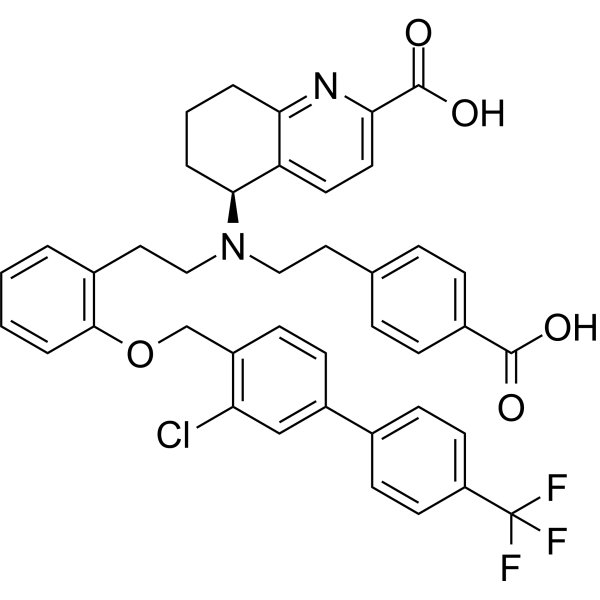
Mosliciguat (BAY 1237592) is an apo-soluble guanylate cyclase activator. Mosliciguat improves cardiopulmonary circulation, reduces pulmonary arterial pressure in animal models, and its efficacy is enhanced under oxidative stress conditions. Mosliciguat exerts a bronchodilatory effect in a rat model of acetylcholine-induced bronchoconstriction. Mosliciguat can be used for research on pulmonary arterial hypertension.
For research use only. We do not sell to patients.
- CAS No.: 2231749-54-3
- Formula: C41H36ClF3N2O5
- Molecular Weight:729.18
-
Storage:
Please store the product under the recommended conditions in the Certificate of Analysis.

To place orders, for customer services and technical support, please contact: MedChemExpress USA
Tel: 609-228-6898 E-mail: [email protected] [email protected]


-
 Biological Activity
-
Chemical Information
- Protocols
- Purity & Documentation
- References
-
 Help & FAQs


-
HY-16774
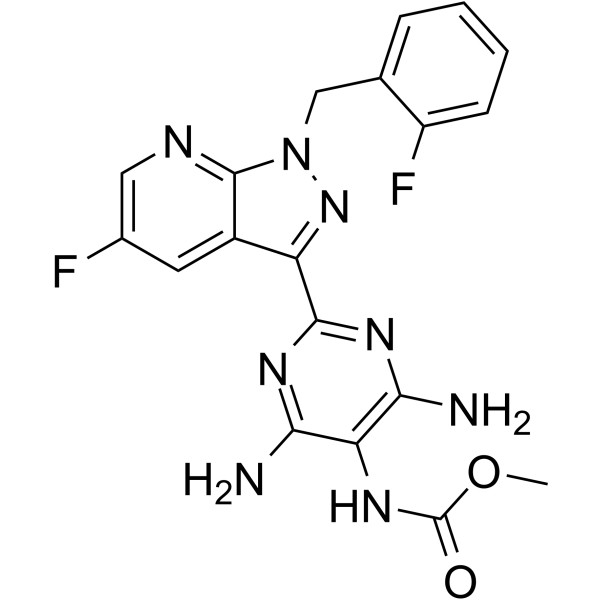
VericiguatsCG Stimulator -
HY-17584
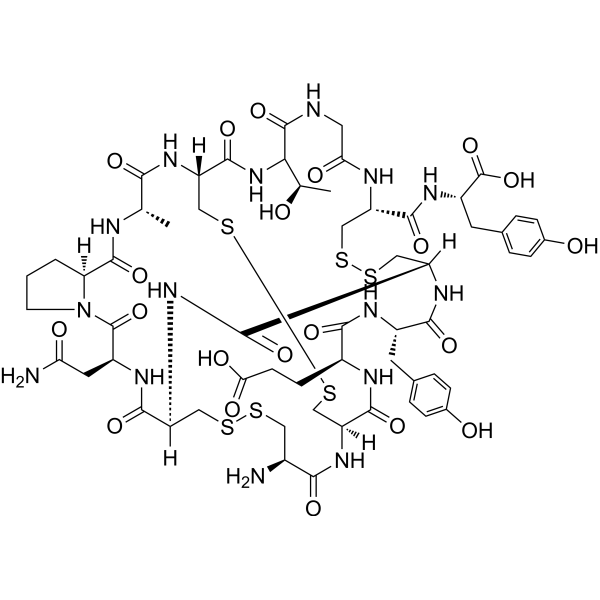
LinaclotideGuanylate Cyclase Agonist -
HY-14779
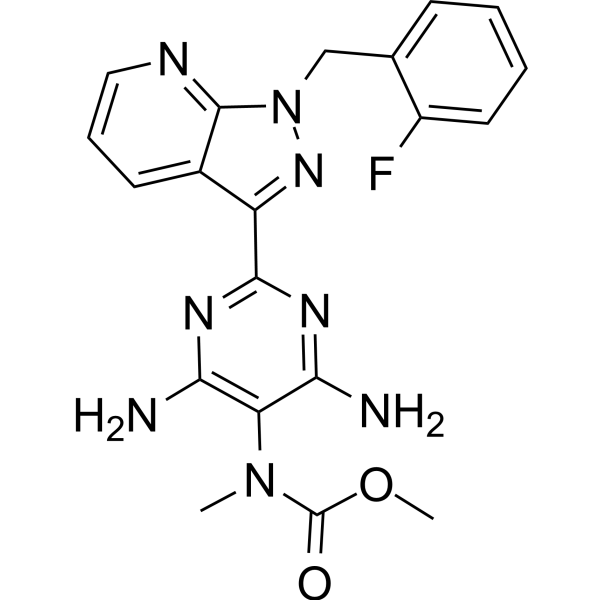
Riociguat -
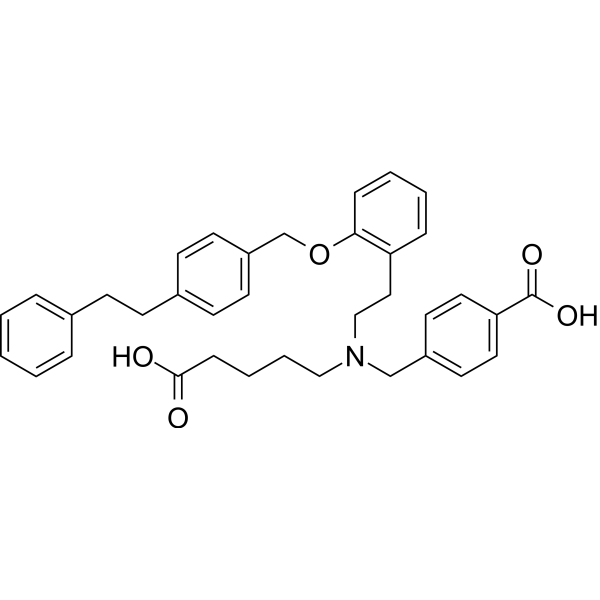
HY-14181
CinaciguatGuanylate Cyclase Activator -
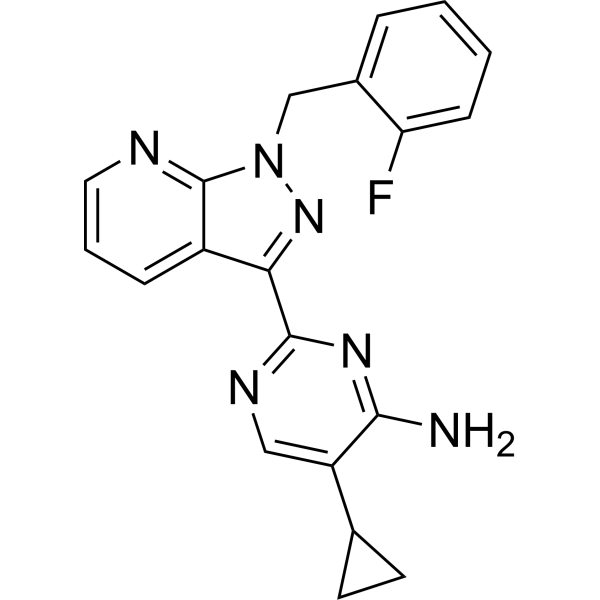
HY-12376
BAY 41-2272Guanylate Cyclase Activator -
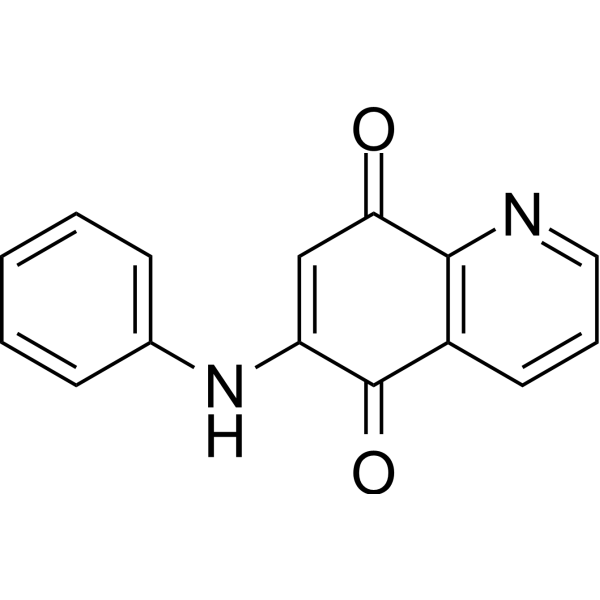
HY-W013386
LY83583sGC Inhibitor -
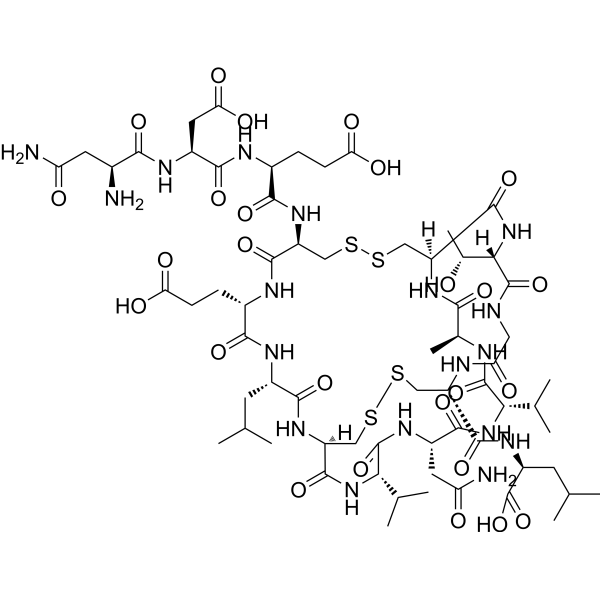
HY-108741
PlecanatideGuanylate Cyclase-C Agonist -
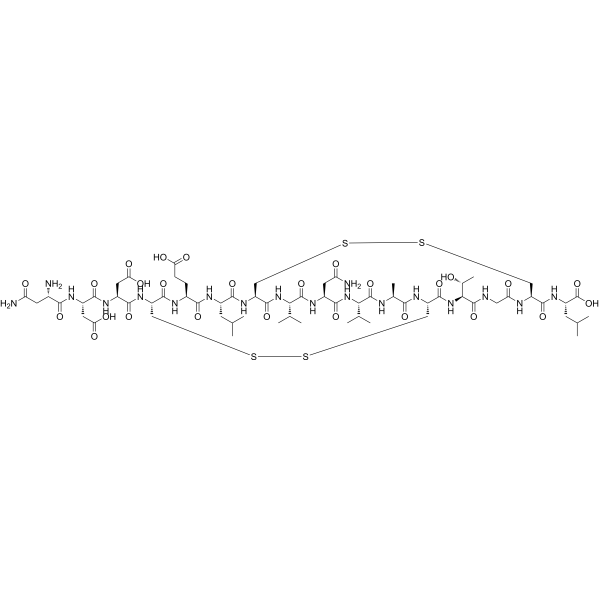
HY-P3099
Uroguanylin (human)Endogenous Peptide Hormone -
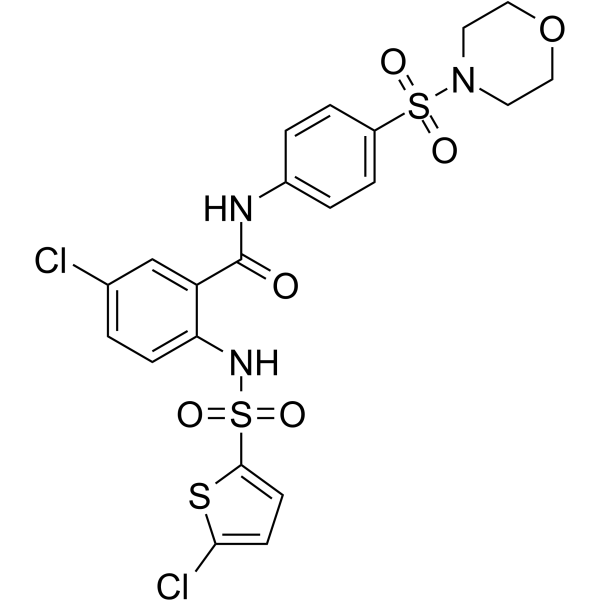
HY-17500
AtaciguatsGC Activator -
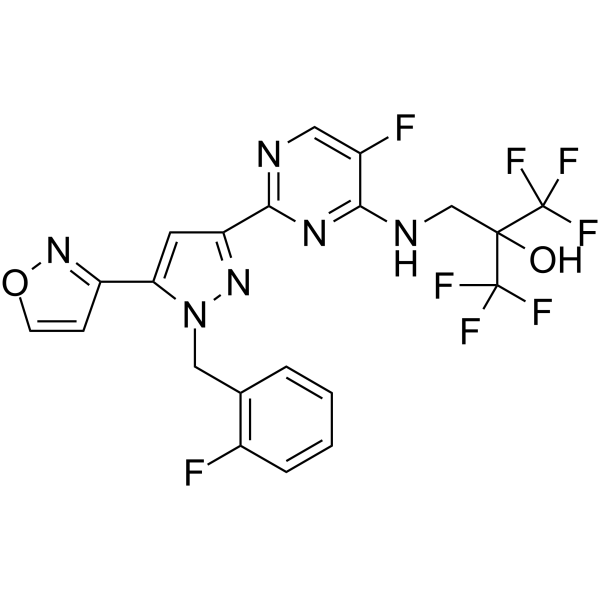
HY-109039
PraliciguatSoluble Guanylate Cyclase Stimulator -
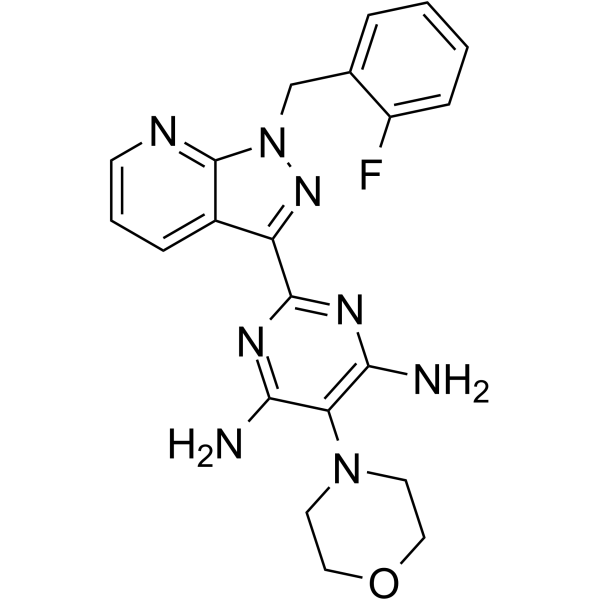
HY-W062836
BAY 41-8543sGC Stimulator -
HY-145607
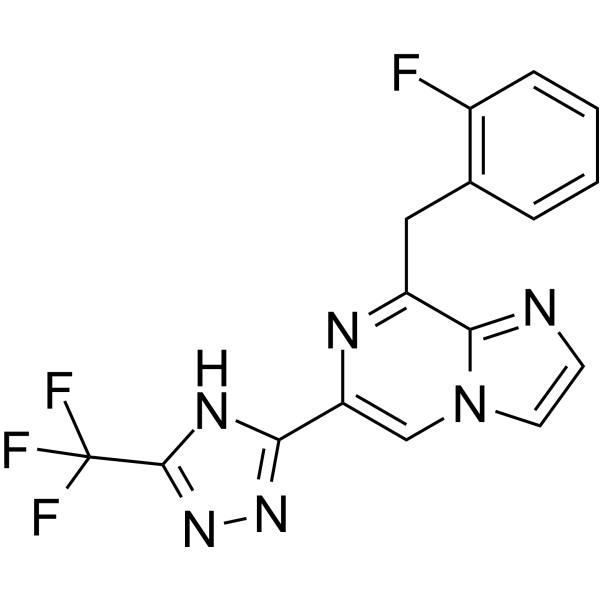
ZagociguatSoluble Guanylate Cyclase Stimulator


Biological Activity
Description
In Vitro
MedChemExpress (MCE) has not independently confirmed the accuracy of these methods. They are for reference only.
In Vivo
Inhalation administration of Mosliciguat (100 µg/kg via nebulizer) produces a long-lasting (up to 17 hours) inhibitory effect on hypoxia-induced pulmonary hypertension in conscious dogs without affecting heart rate[1].
Mosliciguat (100 µg/kg; administered via inhalation; nebulized, 7 min per dose; 30-100 µg/kg; administered intravenously; cumulative bolus injection) effectively reduces pulmonary arterial pressure in a porcine model of unilateral bronchial obstruction without exacerbating ventilation-perfusion mismatch. In contrast, intravenous administration alone exacerbates desaturation and reduces systemic blood pressure[1].
MedChemExpress (MCE) has not independently confirmed the accuracy of these methods. They are for reference only.
-
Animal Model:Ellegaard Göttinger (female, 4-5 kg body weight, pulmonary hypertension induced by thromboxane A2 analog [U-46619] infusion)[1]
-
Dosage:3 µg/kg, 10 µg/kg, 30 µg/kg, 100 µg/kg, 300 µg/kg (inhaled); 1 µg/kg, 3 µg/kg, 10 µg/kg, 30 µg/kg, 100 µg/kg (intravenous)
-
Administration:inhaled; via nebulizer, 7 min/dose, cumulative doses; intravenous; cumulative infusions
-
Result:Induced a dose-dependent decrease in mean pulmonary arterial pressure (PAP) starting at 10 µg/kg, with no relevant effects on systemic mean blood pressure (BP).
Caused a >5% reduction in PAP versus vehicle at 3 µg/kg.
Achieved maximal PAP reduction 90-120 min after inhalation, maintained for 4 hours.
Did not reduce BP at inhaled 300 µg/kg, while intravenous 30 µg/kg reduced both BP and PAP.
Caused similar or greater PAP reduction than systemic endothelin receptor antagonist or phosphodiesterase type 5 inhibitor at inhaled 30 µg/kg and 100 µg/kg, without reducing BP.
Maintained PAP-lowering efficacy without additional BP effects when combined with endothelin receptor antagonist or phosphodiesterase type 5 inhibitor at inhaled 30 µg/kg.
Showed enhanced PAP reduction without BP effects under oxidative stress (ODQ or L-NAME pretreatment) at inhaled 30 µg/kg.
-
Animal Model:Beagle (male, 8-15 kg body weight, pulmonary hypertension induced by hypoxia exposure)[1]
-
Dosage:100 µg/kg
-
Administration:inhaled; via nebulizer
-
Result:Attenuated hypoxia-induced systolic pulmonary arterial pressure (sPAP) increases for 1-17 hours after administration; the effect dissipated by 24 hours.
Caused no effects on heart rate.
-
Animal Model:Ellegaard Göttinger (female, 4-5 kg body weight, ventilation/perfusion mismatch induced by unilateral broncho-occlusion)[1]
-
Dosage:100 µg/kg (inhaled); 30 µg/kg, 100 µg/kg (intravenous)
-
Administration:inhaled; via nebulizer, 7 min/dose; intravenous; cumulative bolus
-
Result:Decreased mean pulmonary arterial pressure (PAP) during unilateral ventilation cycles at inhaled 100 µg/kg, with a trend toward reduced desaturation area (no ventilation/perfusion mismatch deterioration) and no effects on systemic BP.
Decreased PAP but increased desaturation area and reduced systemic BP at intravenous 30 µg/kg and 100 µg/kg.
-
Animal Model:Brown Norway (male, 10-12 weeks old, bronchoconstriction induced by acetylcholine aerosol provocation)[1]
-
Dosage:1 µg/kg, 10 µg/kg, 100 µg/kg
-
Administration:inhaled; via aerosolized micro feeding system
-
Result:Induced a dose-dependent bronchodilatory effect, inhibiting acetylcholine-induced bronchoconstriction.
Achieved 68% inhibition of lung resistance increase and 37% improvement in dynamic compliance at 100 µg/kg, affecting both large and small airways.
Clinical Trial
| NCT Number | Sponsor | Condition | Start Date |
Phase

|
|---|---|---|---|---|
| NCT01329991 | Plexxikon| | 2011-05 | PHASE1 |


Chemical Information
-
CAS No. 2231749-54-3
-
Molecular Weight 729.18
-
Formula C41H36ClF3N2O5
-
SMILES
OC(C1=CC=C(C2=N1)[C@H](CCC2)N(CCC(C=C3)=CC=C3C(O)=O)CCC(C=CC=C4)=C4OCC(C=CC(C(C=C5)=CC=C5C(F)(F)F)=C6)=C6Cl)=O
-
Synonyms
BAY 1237592
-
Shipping
Room temperature in continental US; may vary elsewhere.
-
Storage
Please store the product under the recommended conditions in the Certificate of Analysis.


Purity & Documentation
References

Calculators
Concentration (start) × Volume (start) = Concentration (final) × Volume (final)


Mosliciguat Related Classifications
HY-137446 Related Classifications
 Powered by Bioz
Keywords
- Mosliciguat
- 2231749-54-3
- BAY 1237592
- BAY1237592
- BAY-1237592
- Guanylate Cyclase
- conscious dogs
- nitric oxide
- pulmonary hypertension
- recombinant sGC
- pulmonary vasodilator
- acetylcholine-induced bronchoconstriction rat model
- lung resistance
- ODQ
- apo-soluble guanylate cyclase
- unilateral broncho-occlusion model
- Inhibitor
- inhibitor
- inhibit