11 Results for "

786-O

" in MedChemExpress (MCE) Product Catalog:
Products (11)

11 Results for "786-O" in MCE Product Catalog:

10
10 Cited Publications
Cat. No.: HY-112055
CAS No.: 151358-47-3
Purity:  99.05%
Research Areas:  

Cancer

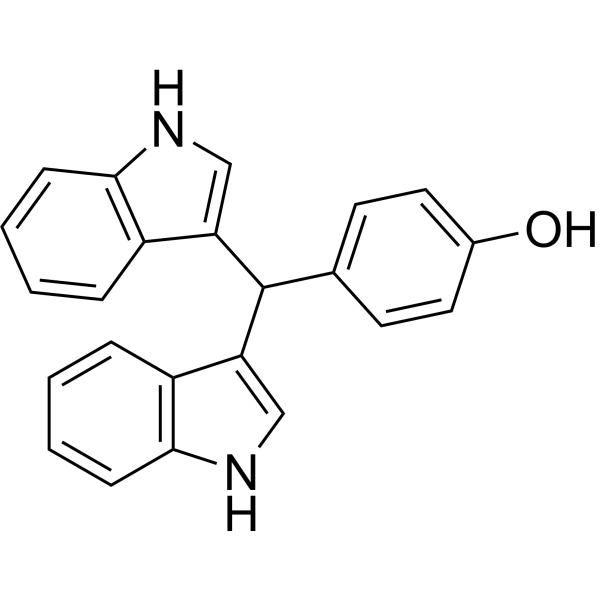
DIM-C-pPhOH is a nuclear receptor 4A1 (NR4A1) antagonist. DIM-C-pPhOH inhibits cancer cell growth and mTOR signaling, induce apoptosis and cellular stress. DIM-C-pPhOH reduces cell proliferation with IC50 values of 13.6 μM and 13.0 μM for ACHN cells and 786-O cells, respectively .
loading...
    loading...
1
1 Cited Publications
Cat. No.: HY-153016
CAS No.: 2750141-15-0
Purity:  99.59%
Research Areas:  

Inflammation/Immunology

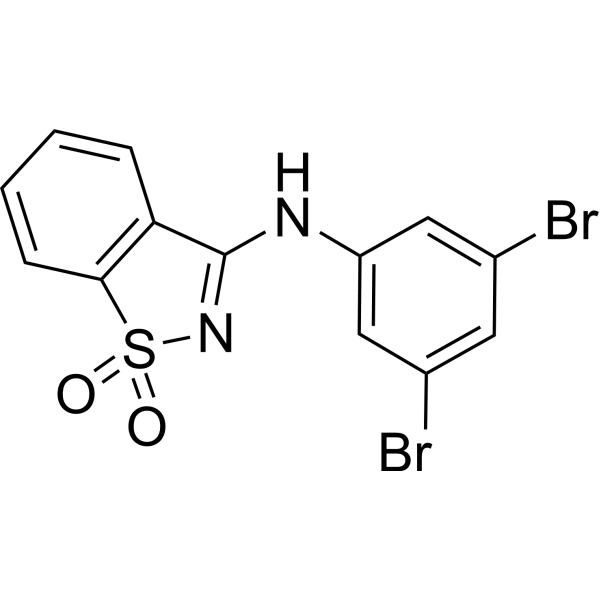
HIF-2α agonist 2 (compound 10) is a HIF-2α agonist with an EC50 value of 1.68 μM at the dose of 20 μM. HIF-2α agonist 2 is non-cytotoxic against 786-O-HRE-Luc cells. HIF-2α agonist 2 can be used for oxygen metabolism research .
loading...
    loading...
Cat. No.: HY-145835
CAS No.: 2616821-91-9
Purity:  99.40%
Target:  

PERK

Research Areas:  

Cancer

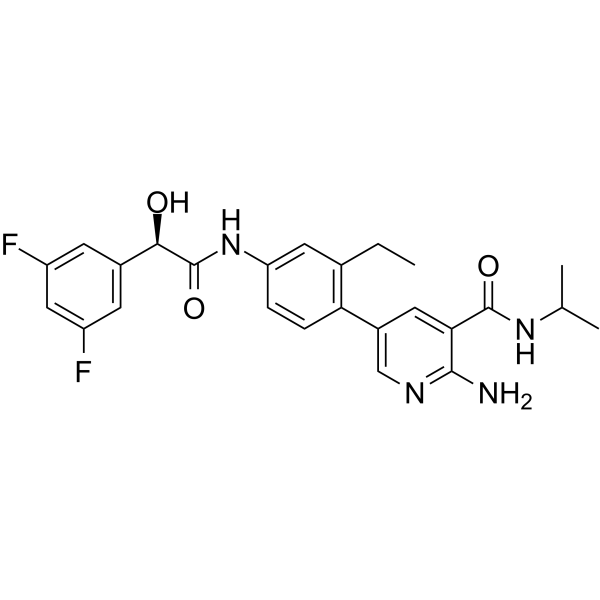
PERK-IN-5 is a highly potent, selectively and orally bioavailable PERK inhibitor (IC50s of 2 and 9 nM for PERK and p-eIF2α, respectively). PERK-IN-5 can significantly inhibit tumor growth in the 786-O renal cell carcinoma xenograft tumor model .
loading...
    loading...
Cat. No.: HY-176508
CAS No.: 2757728-47-3
Target:  

Casein Kinase

Research Areas:  

Cancer

KDX1381 is a bivalent CK2α inhibitor (IC50: 17 nM, KD: 54 nM). KDX1381 has antitumor activity in mouse 786-O and A375 tumor xenograft models. KDX1381 combined with VEGFR inhibitors or DNA damaging agents enhances antitumor efficacy in mouse hepatocellular carcinoma and glioma models .
loading...
    loading...
Cat. No.: HY-161096
CAS No.: 3034861-58-7
Target:  

ROR

Research Areas:  

Cancer

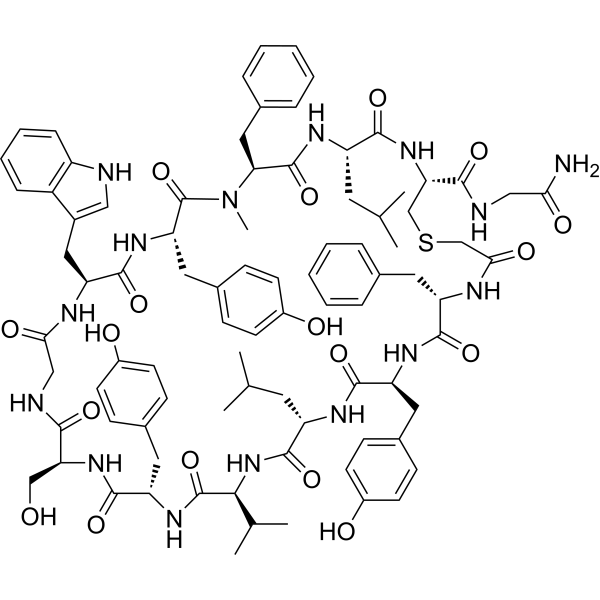
Antitumor agent-127 (compound 1) is a parent macrocyclic peptide. Antitumor agent-127 displays nanomolar cell-based binding to ROR1 and relatively good internalization in 786-O and MDA-MB-231 tumor cell lines .
loading...
    loading...
Cat. No.: HY-170675
Target:  

Ferroptosis

Research Areas:  

Cancer

Ferroptosis-IN-13 (compound NY-26) is a ferroptosis inhibitor. Ferroptosis-IN-13 inhibits RSL3(HY-100218A)-induced ferroptosis in 786-O cells with an EC50 value of 62 nM .
loading...
    loading...
Cat. No.: HY-169298
CAS No.: 1260669-24-6
Target:  

Ferroptosis

Research Areas:  

Cancer

Ferroptosis-IN-15 (compound 12) is a potent inhibitor of ferroptosis, with the EC50s of 0.76 and 0.67 μM in A375 cells and 786-O cells, respectively.Ferroptosis-IN-15 is a potential iron chelator and radical trapping antioxidant .
loading...
    loading...
Cat. No.: HY-168707
Target:  

Casein Kinase

Research Areas:  

Cancer

CK2-IN-14 (Compound 10b) is an inhibitor for cyclin kinase 2α with an IC50 of 36.7 nM. CK2-IN-14 inhibits the growth of cancer cell 786-O and U937 with GI50 of 7.3 μM and 7.5 μM .
loading...
    loading...
Cat. No.: HY-170959
Target:  

Ferroptosis

NYY-6a is a Ferroptosis inhibitor. NYY-6a shows significant inhibitory activity against RSL3-induced ferroptosis across 786-O and HT-1080 cells with EC50s of 52 and 50 nM, respectively. NYY-6a functions as a radical trapping antioxidant (RTA) with efficacy of diminishing lipid peroxidation comparable to ferrostatin-1 and liproxtatin-1. NYY-6a is potential for ferroptosis related pathologies reasearch .
loading...
    loading...
Cat. No.: HY-149388
CAS No.: 2954795-29-8
Target:  

Microtubule/Tubulin

Research Areas:  

Cancer

Anticancer agent 139 (Compound 6h) has potent anticancer activity. Anticancer agent 139 displayed a π–cationic interaction with the residue Lys352 of Tublin. Anticancer agent 139 has good anticancer activity against SNB-19, OVCAR-8, and NCI-H40 with PGIs of 86.61, 85.26, and 75.99, respectively. Anticancer agent 139 also has moderate anticancer activity against HOP-62, SNB-75, ACHN, NCI/ADR-RES, 786-O, A549/ATCC, HCT-116, and MDA-MB-231 with PGIs of 67.55, 65.46, 59.09, 59.02, 57.88, 56.88, 56.53, 56.4, and 51.88 respectively .
loading...
    loading...
Cat. No.: HY-P11929
TCL6148 is a ferroptosis inducer targeting GOT1, with a KD of 25.84 μM for GOT1. TCL6148 inhibits the viability of renal cell carcinoma 786-O and A498 cells, with IC50 values of 7.896 μM and 7.468 μM, respectively. TCL6148 induces ferroptosis by increasing Fe 2+, ROS and lipid peroxidation, reducing GSH and inhibiting the GOT1/GPX4 pathway; it also inhibits proliferation and migration of RCC cells, enhances cellular sensitivity to Sunitinib (HY-10255A) and suppresses the growth of RCC xenograft tumors . TCL6148 can be used in research on renal cell carcinoma and ferroptosis .
loading...
    loading...
  • 1

