15 Results for "

Antianginal effects

" in MedChemExpress (MCE) Product Catalog:
Products (15)

15 Results for "Antianginal effects" in MCE Product Catalog:

9
9 Publications Verification
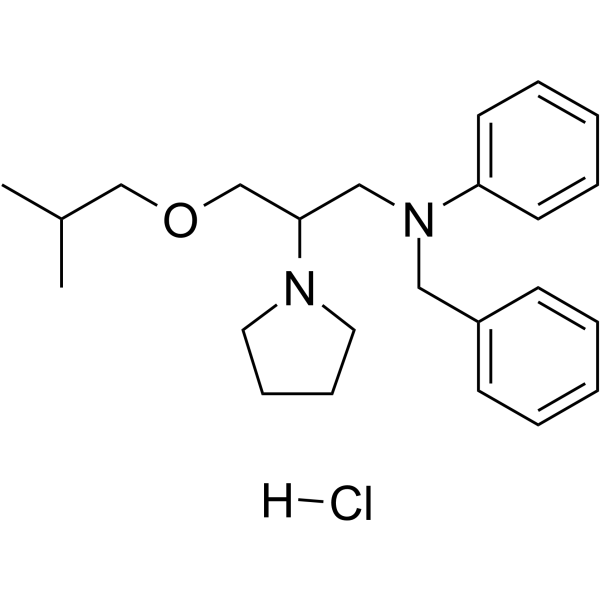
Cat. No.: HY-103315
CAS No.: 68099-86-5
Purity:  99.98%
Synonyms: CERM 1978; Org 5730 hydrochloride
Bepridil hydrochloride (CERM 1978; Org 5730 hydrochloride) is an orally active non-selective calcium channel antagonist with multi-ion channel blocking activity. Bepridil hydrochloride modulates Calmodulin, the 20S proteasome, T-type/L-type calcium channels, cardiac sodium channels, multiple potassium channels, γ-secretase, β-secretase, and mitoKATP/sarcKATP channels. Bepridil hydrochloride acts as a hydroxyl radical scavenger, regulates mitochondrial and intracellular calcium handling, and exerts antiarrhythmic, antianginal, and cardioprotective effects. Bepridil hydrochloride alters amyloid precursor protein processing, reduces β-amyloid and thalamic calcium levels, restores seladin-1/DHCR24 expression, and improves sensorimotor recovery after cerebral ischemia. Bepridil hydrochloride also exhibits potent inhibitory effects on SARS-CoV-2 replication. Bepridil hydrochloride is used in studies related to stable angina, arrhythmias, cerebral ischemia, Alzheimer's disease, and SARS-CoV-2 infection .
loading...
    loading...
9
9 Publications Verification
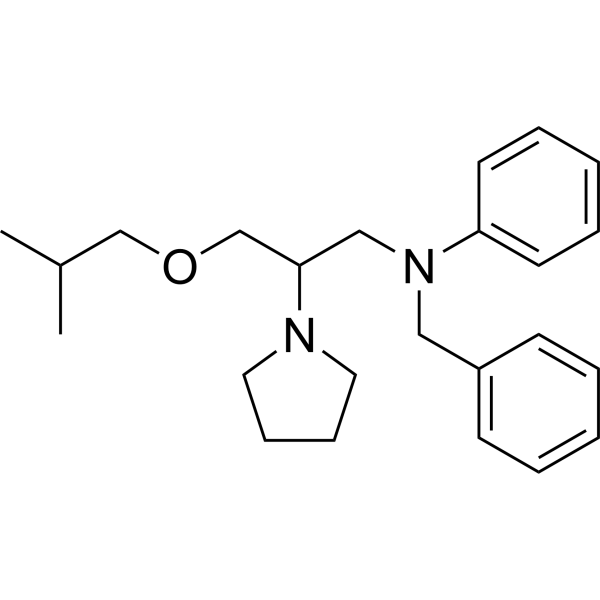
Cat. No.: HY-16952
CAS No.: 64706-54-3
Synonyms: CERM 1978 free base; Org 5730
Bepridil (CERM 1978 (free base); Org 5730) is an orally active non-selective calcium channel antagonist with multi-ion channel blocking activity. Bepridil modulates Calmodulin, the 20S proteasome, T-type/L-type calcium channels, cardiac sodium channels, multiple potassium channels, γ-secretase, β-secretase, and mitoKATP/sarcKATP channels. Bepridil acts as a hydroxyl radical scavenger, regulates mitochondrial and intracellular calcium handling, and exerts antiarrhythmic, antianginal, and cardioprotective effects. Bepridil alters amyloid precursor protein processing, reduces β-amyloid and thalamic calcium levels, restores seladin-1/DHCR24 expression, and improves sensorimotor recovery after cerebral ischemia. Bepridil also exhibits potent inhibitory effects on SARS-CoV-2 replication. Bepridil is used in studies related to stable angina, arrhythmias, cerebral ischemia, Alzheimer's disease, and SARS-CoV-2 infection .
loading...
    loading...
9
9 Publications Verification
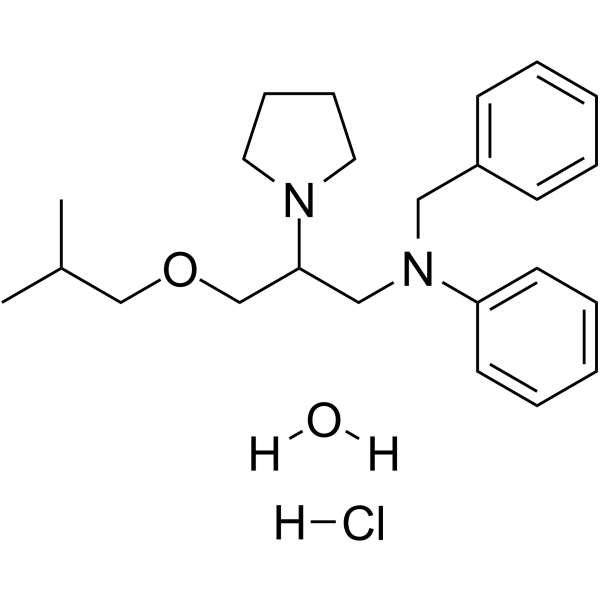
Cat. No.: HY-16952A
CAS No.: 74764-40-2
Synonyms: CERM 1978 hydrate; Org 5730 hydrochloride hydrate
Bepridil hydrochloride hydrate (CERM 1978 hydrate; Org 5730 hydrochloride hydrate) is an orally active non-selective calcium channel antagonist with multi-ion channel blocking activity. Bepridil hydrochloride hydrate modulates Calmodulin, the 20S proteasome, T-type/L-type calcium channels, cardiac sodium channels, multiple potassium channels, γ-secretase, β-secretase, and mitoKATP/sarcKATP channels. Bepridil hydrochloride hydrate acts as a hydroxyl radical scavenger, regulates mitochondrial and intracellular calcium handling, and exerts antiarrhythmic, antianginal, and cardioprotective effects. Bepridil hydrochloride hydrate alters amyloid precursor protein processing, reduces β-amyloid and thalamic calcium levels, restores seladin-1/DHCR24 expression, and improves sensorimotor recovery after cerebral ischemia. Bepridil hydrochloride hydrate also exhibits potent inhibitory effects on SARS-CoV-2 replication. Bepridil hydrochloride hydrate is used in studies related to stable angina, arrhythmias, cerebral ischemia, Alzheimer's disease, and SARS-CoV-2 infection .
loading...
    loading...
6
6 Cited Publications
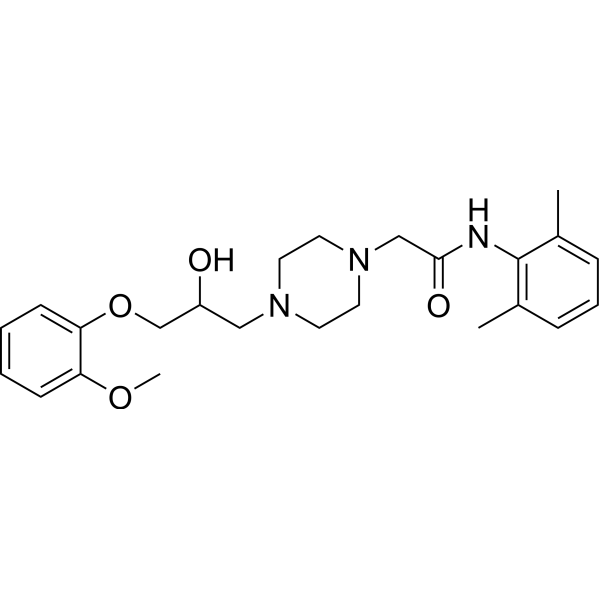
Cat. No.: HY-B0280
CAS No.: 95635-55-5
Synonyms: CVT 303; RS 43285-003
Ranolazine (CVT 303) is an anti-angina drug that achieves its effects by inhibiting the late phase of inward sodium current (INa and IKr with IC50 values of 6 μM and 12 μM, respectively) without affecting heart rate or blood pressure (BP) . Ranolazine is also a partial fatty acid oxidation (FAO) inhibitor . Antianginal agent.
loading...
    loading...
1
1 Cited Publications
Cat. No.: HY-B0683
CAS No.: 74397-12-9
Synonyms: 17α,20-dimethyl-δ2-PGE1; ONO1206; OP1206
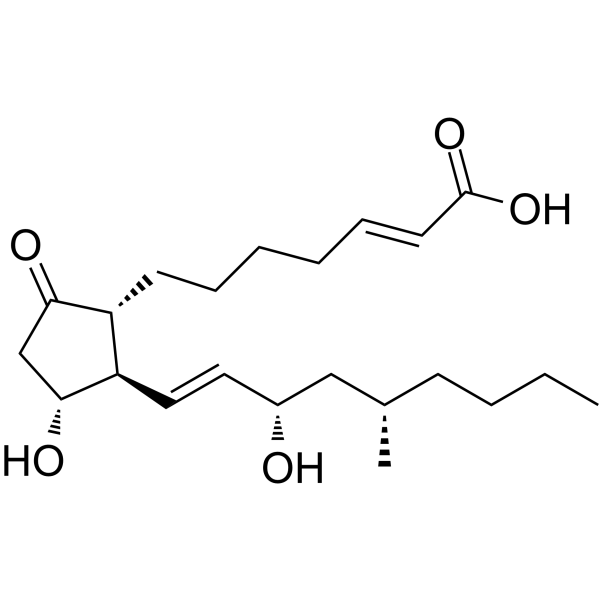
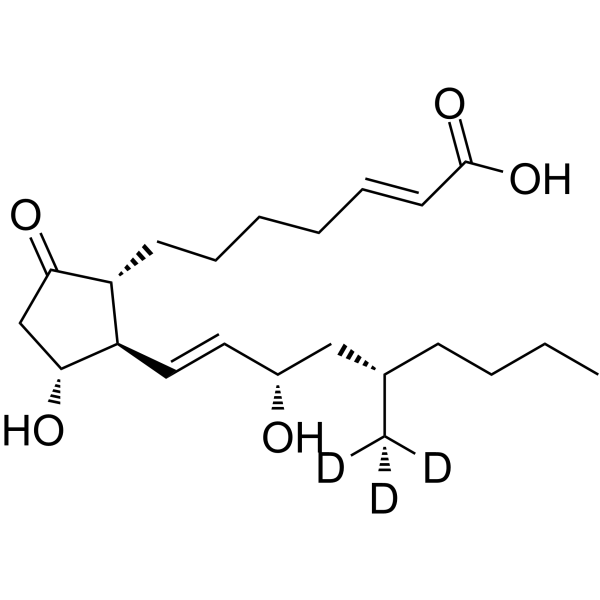
Limaprost (OP1206) is a PGE1 analogue and a potent and orally active vasodilator. Limaprost increases blood flow and inhibits platelet aggregation. Limaprost pain relief, has antianginal effects, and can be used for ischaemic symptoms research .
loading...
    loading...
Cat. No.: HY-B0280S1
CAS No.: 1092804-88-0
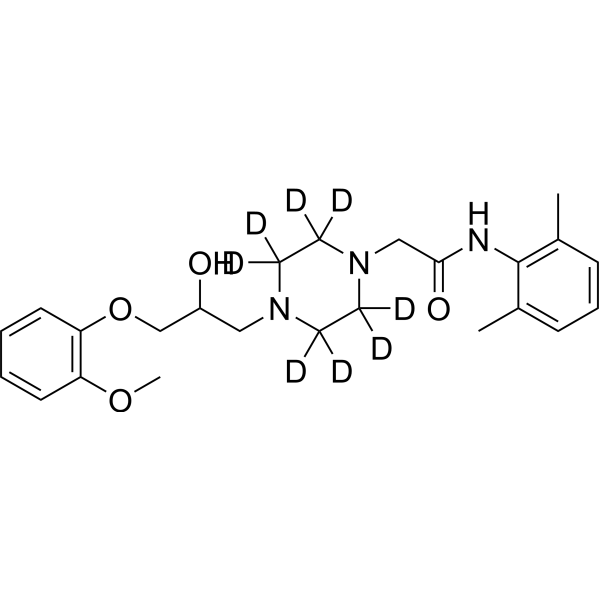
Ranolazine-d8 is the deuterium labeled Ranolazine. Ranolazine (CVT 303) is an anti-angina agent that achieves its effects by inhibiting the late phase of inward sodium current (INa and IKr with IC50 values of 6 μM and 12 μM, respectively) without affecting heart rate or blood pressure (BP) . Ranolazine is also a partial fatty acid oxidation (FAO) inhibitor . Antianginal agent.
loading...
    loading...
Cat. No.: HY-B0280S2
CAS No.: 1054624-77-9
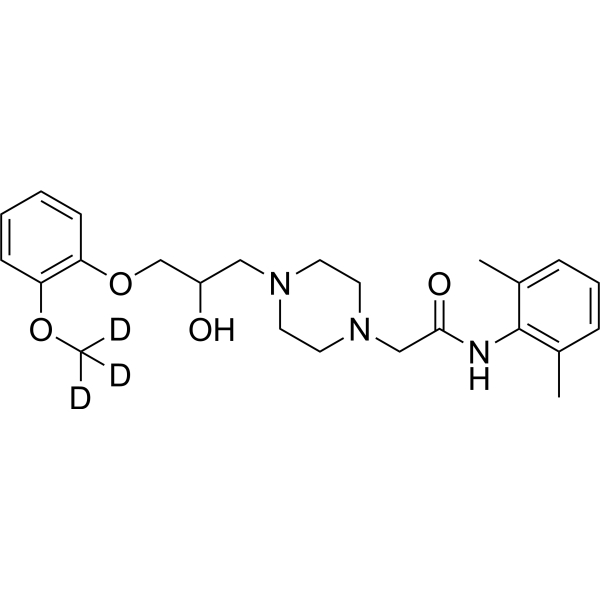
Ranolazine-d3 is the deuterium labeled Ranolazine. Ranolazine (CVT 303) is an anti-angina agent that achieves its effects by inhibiting the late phase of inward sodium current (INa and IKr with IC50 values of 6 μM and 12 μM, respectively) without affecting heart rate or blood pressure (BP) . Ranolazine is also a partial fatty acid oxidation (FAO) inhibitor . Antianginal agent.
loading...
    loading...
Cat. No.: HY-B0280S
CAS No.: 1092804-87-9
Synonyms: CVT 303-d5; RS 43285-003-d5
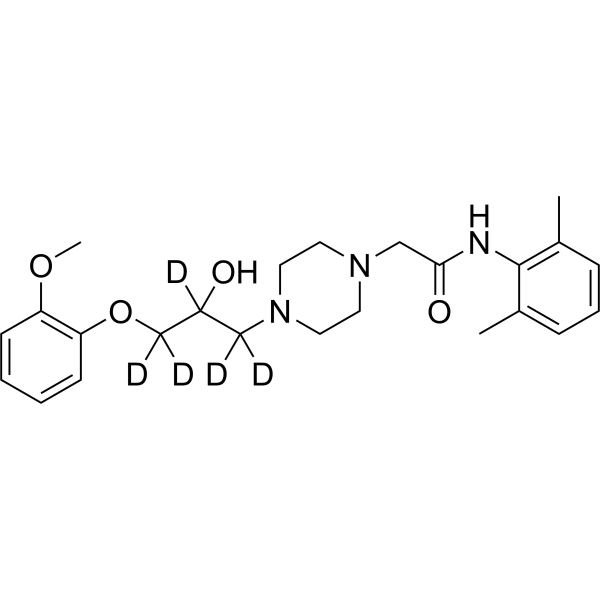
Ranolazine-d5 is the deuterium labeled Ranolazine. Ranolazine (CVT 303) is an anti-angina drug that achieves its effects by inhibiting the late phase of inward sodium current (INa and IKr with IC50 values of 6 μM and 12 μM, respectively) without affecting heart rate or blood pressure (BP) . Ranolazine is also a partial fatty acid oxidation (FAO) inhibitor . Antianginal agent.
loading...
    loading...
Cat. No.: HY-U00151
CAS No.: 79700-61-1
Target:  

Calcium Channel

Research Areas:  

Cardiovascular Disease

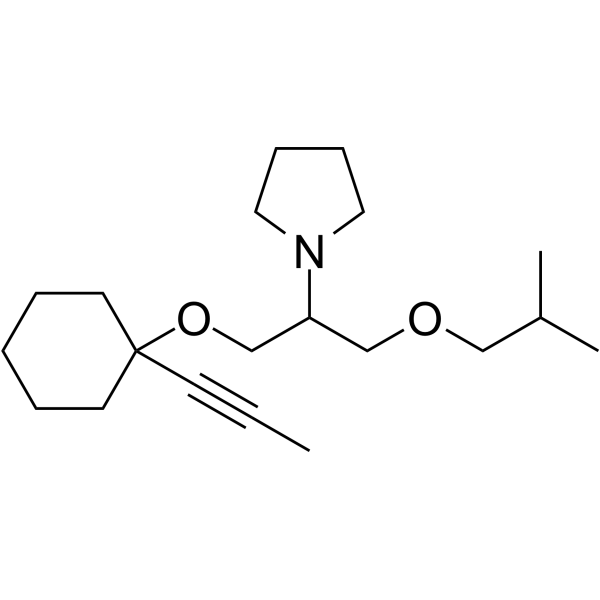
Dopropidil is a novel anti-anginal calcium ion modulating agent, possessing intracellular calcium antagonist activity and anti-ischemic effects in several predictive animal models.
loading...
    loading...
Cat. No.: HY-U00151A
CAS No.: 117241-47-1
Target:  

Calcium Channel

Research Areas:  

Cardiovascular Disease

Dopropidil hydrochloride is a novel anti-anginal calcium ion modulating agent, possessing intracellular calcium antagonist activity and anti-ischemic effects in several predictive animal models.
loading...
    loading...
Cat. No.: HY-B0280R
CAS No.: 95635-55-5
Synonyms: CVT 303 (Standard); RS 43285-003 (Standard)
Ranolazine (Standard) is the analytical standard of Ranolazine. This product is intended for research and analytical applications. Ranolazine (CVT 303) is an anti-angina drug that achieves its effects by inhibiting the late phase of inward sodium current (INa and IKr with IC50 values of 6 μM and 12 μM, respectively) without affecting heart rate or blood pressure (BP) . Ranolazine is also a partial fatty acid oxidation (FAO) inhibitor . Antianginal agent.
loading...
    loading...
Cat. No.: HY-B0683S
CAS No.: 1263190-37-9
Limaprost-d3 (17α,20-dimethyl-δ2-PGE1-d3) is the deuterium labeled Limaprost. Limaprost (OP1206) is a PGE1 analogue and a potent and orally active vasodilator. Limaprost increases blood flow and inhibits platelet aggregation. Limaprost pain relief, has antianginal effects, and can be used for ischaemic symptoms research .
loading...
    loading...
Cat. No.: HY-103315R
CAS No.: 68099-86-5
Synonyms: CERM 1978 (Standard); Org 5730 hydrochloride (Standard)
Bepridil hydrochloride (Standard) (CERM 1978 (Standard);Org 5730 hydrochloride (Standard)) is the analytical standard of Bepridil hydrochloride (HY-103315). This product is intended for research and analytical applications. Bepridil hydrochloride is an orally active non-selective calcium channel antagonist with multi-ion channel blocking activity. Bepridil hydrochloride modulates Calmodulin, the 20S proteasome, T-type/L-type calcium channels, cardiac sodium channels, multiple potassium channels, γ-secretase, β-secretase, and mitoKATP/sarcKATP channels. Bepridil hydrochloride acts as a hydroxyl radical scavenger, regulates mitochondrial and intracellular calcium handling, and exerts antiarrhythmic, antianginal, and cardioprotective effects. Bepridil hydrochloride alters amyloid precursor protein processing, reduces β-amyloid and thalamic calcium levels, restores seladin-1/DHCR24 expression, and improves sensorimotor recovery after cerebral ischemia. Bepridil hydrochloride also exhibits potent inhibitory effects on SARS-CoV-2 replication. Bepridil hydrochloride is used in studies related to stable angina, arrhythmias, cerebral ischemia, Alzheimer's disease, and SARS-CoV-2 infection .
loading...
    loading...
Cat. No.: HY-103315S
Synonyms: CERM 1978-d5; Org 5730-d5 hydrochloride
Bepridil-d5 hydrochloride (CERM 1978-d5; Org 5730-d5 hydrochloride) is the deuterated-labeled Bepridil hydrochloride (HY-103315). Bepridil hydrochloride (CERM 1978; Org 5730 hydrochloride) is an orally active non-selective calcium channel antagonist with multi-ion channel blocking activity. Bepridil hydrochloride modulates Calmodulin, the 20S proteasome, T-type/L-type calcium channels, cardiac sodium channels, multiple potassium channels, γ-secretase, β-secretase, and mitoKATP/sarcKATP channels. Bepridil hydrochloride acts as a hydroxyl radical scavenger, regulates mitochondrial and intracellular calcium handling, and exerts antiarrhythmic, antianginal, and cardioprotective effects. Bepridil hydrochloride alters amyloid precursor protein processing, reduces β-amyloid and thalamic calcium levels, restores seladin-1/DHCR24 expression, and improves sensorimotor recovery after cerebral ischemia. Bepridil hydrochloride also exhibits potent inhibitory effects on SARS-CoV-2 replication. Bepridil hydrochloride is used in studies related to stable angina, arrhythmias, cerebral ischemia, Alzheimer's disease, and SARS-CoV-2 infection .
loading...
    loading...
Cat. No.: HY-186062
CAS No.: 2234283-04-4
HCN-IN-1 is a TLR4 inhibitor and HCN channel modulator with activity against HCN2 and HCN4.HCN-IN-1 inhibits TLR4-mediated alkaline phosphatase (SEAP) signal activity.HCN-IN-1 reduces HCN2 current across tested voltages, shifts voltage-dependent activation to more hyperpolarized potentials, slows activation kinetics, and does not affect deactivation process.HCN-IN-1 blocks HCN4 current.HCN-IN-1 exhibits analgesic, anti-inflammatory, and anti-anginal effects.HCN-IN-1 can be used for the research of inflammatory pain, neuropathic pain, heart failure, inflammation .
loading...
    loading...
  • 1

