22 Results for "

Bifidobacterium

" in MedChemExpress (MCE) Product Catalog:
Products (22)

22 Results for "Bifidobacterium" in MCE Product Catalog:

2
2 Cited Publications
Cat. No.: HY-41324
CAS No.: 911-40-0
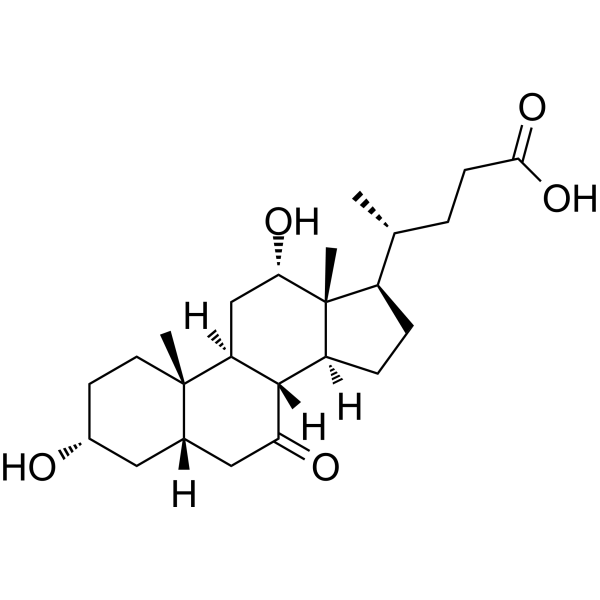
7-keto-Deoxycholic acid is a metabolite of bile acids in Clostridium absonum. 7-keto-Deoxycholic acid is also converted from Lactobacillus and Bifidobacterium with specific condition .
loading...
    loading...
1
1 Cited Publications
Cat. No.: HY-137335
CAS No.: 157574-76-0
Purity:  ≥98.0%
Target:  

Bacterial VEGFR Akt ERK

Research Areas:  

Infection Inflammation/Immunology

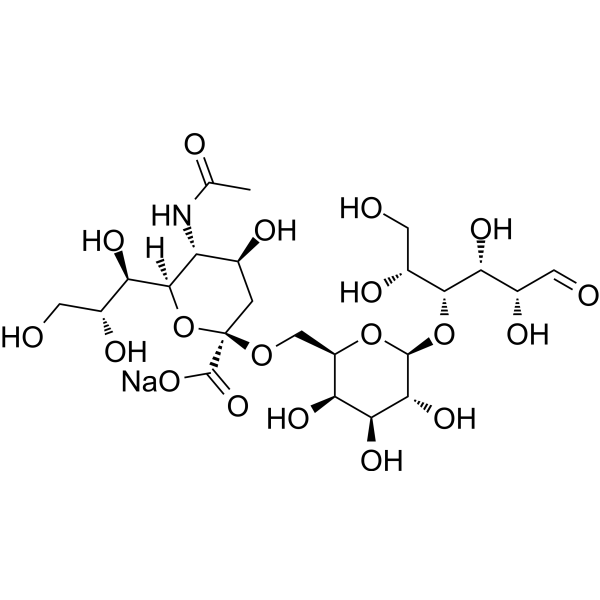
6'-Sialyllactose sodium promotes the growth of beneficial bacteria (such as Bifidobacterium and lactobacillus) and inhibits the proliferation of harmful bacteria. 6'-Sialyllactose sodium exhibits anti-inflammatory and anti-angiogenic activities. 6'-Sialyllactose sodium promotes the muscle health .
loading...
    loading...
1
1 Cited Publications
Cat. No.: HY-N10521
CAS No.: 35890-39-2
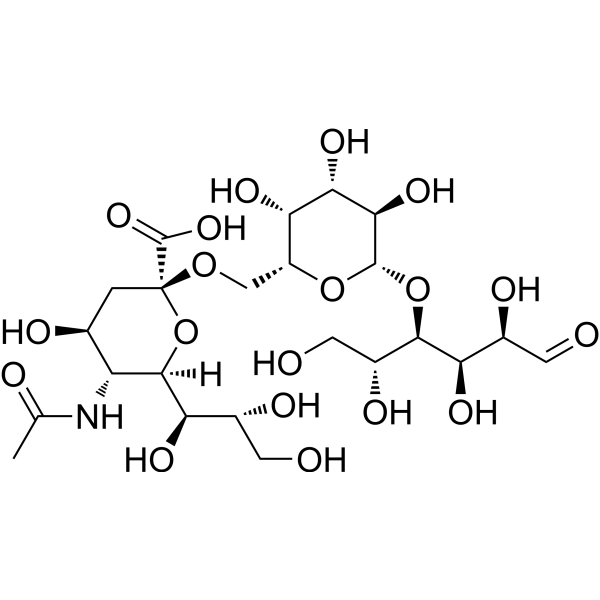
6'-Sialyllactose promotes the growth of beneficial bacteria (such as Bifidobacterium and lactobacillus) and inhibits the proliferation of harmful bacteria. 6'-Sialyllactose exhibits anti-inflammatory and anti-angiogenic activities. 6'-Sialyllactose promotes the muscle health .
loading...
    loading...
1
1 Cited Publications
Cat. No.: HY-113133
CAS No.: 2140-29-6
Purity:  99.76%
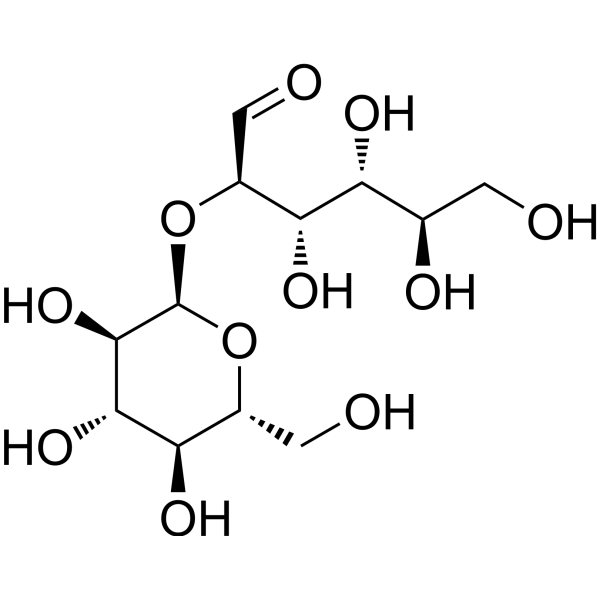
Kojibiose, an orally active prebiotic disaccharide, can specifically inhibit the activity of α-glucosidase I. kojibiose is a proliferation factor for Bifidobacterium, lactic acid bacteria, and eubacteria. kojibiose is a low-calorie sweetener capable of increasing the absorption of iron. Kojibiose exhibits antitoxic activity. Kojibiose reduces hepatic expression of inflammatory markers in vivo .
loading...
    loading...
1
1 Cited Publications
Cat. No.: HY-120536
CAS No.: 13080-21-2
Purity:  ≥98.0%
Target:  

Bacterial

Research Areas:  

Infection

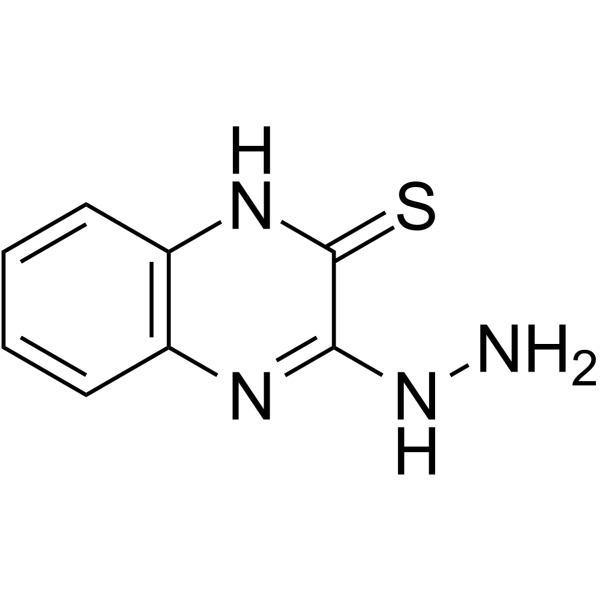
HPi1 is a potent, selective and orally active antimicrobial against Helicobacter pylori with an IC50 of 0.24 μM and an MIC of 0.08-0.16 μg/mL. HPi1 is inactive against other bacteria, including the gut commensals Lactobacillus casei, Lactobacillus reuteri, and Bifidobacterium longum .
loading...
    loading...
Cat. No.: HY-P3752
CAS No.: 92327-84-9
Synonyms: H-Gly-Ala-Tyr-OH
Research Areas:  

Others

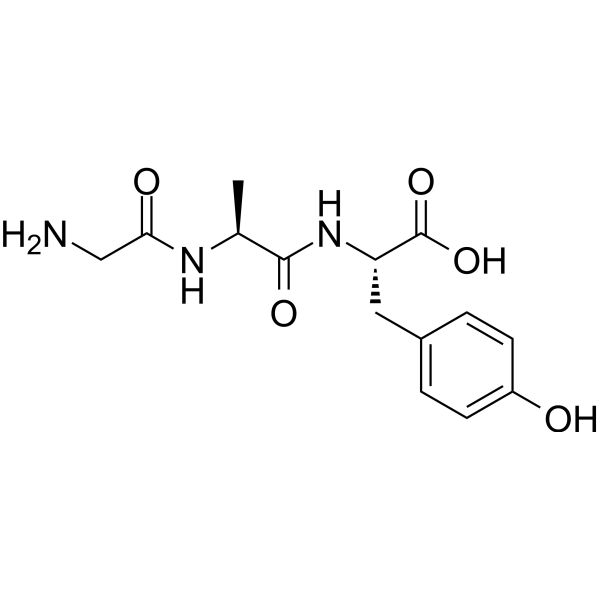
Gly-Ala-Tyr (H-Gly-Ala-Tyr-OH) is a tripeptide substrate composed of L-glycine, alanine, and L-tyrosine joined in sequence by peptide linkages. Gly-Ala-Tyr can be hydrolyzed at both extracellular and intracellular levels by Streptococcus thermophilus, Lactobacillus delbrueckii ssp. bulgaricus, Lactobacillus acidophilus, and Bifidobacterium spp. Ala-Gly-Tyr is functionally related to L-alanine, glycine and L-tyrosine. .
loading...
    loading...
Cat. No.: HY-132177C
CAS No.: 9037-65-4
Target:  

Glycosidase

Research Areas:  

Metabolic Disease

α1-3,4 Fucosidase, Bifidobacterium bifidum is a broad specificity exoglycosidase that catalyzes the hydrolysis of terminal, non-reducing α1-3 and α1-4 linked fucose residues from oligosaccharides and glycoproteins .
loading...
    loading...
Cat. No.: HY-132177A
CAS No.: 9037-65-4
Target:  

Glycosidase

Research Areas:  

Metabolic Disease

α1-2 Fucosidase (EC 3.2.1.51) is a highly specific exoglycosidase that catalyzes the hydrolysis of linear α1-2 linked fucose residues from oligosaccharides .
loading...
    loading...
Cat. No.: HY-P2988A
CAS No.: 9001-67-6
Target:  

Glycosidase

Research Areas:  

Metabolic Disease

α2-3,6 Neuraminidase, Bifidobacterium infantis is a highly specific exoglycosidase that catalyzes the hydrolysis of non-reducing terminal α2-3 and α2-6 unbranched sialic acid residues from complex carbohydrates and glycoproteins. α2-3,6 Neuraminidase does not exhibit activity on α2-8 or branched sialic acids .
loading...
    loading...
Cat. No.: HY-W007708
CAS No.: 4412-91-3
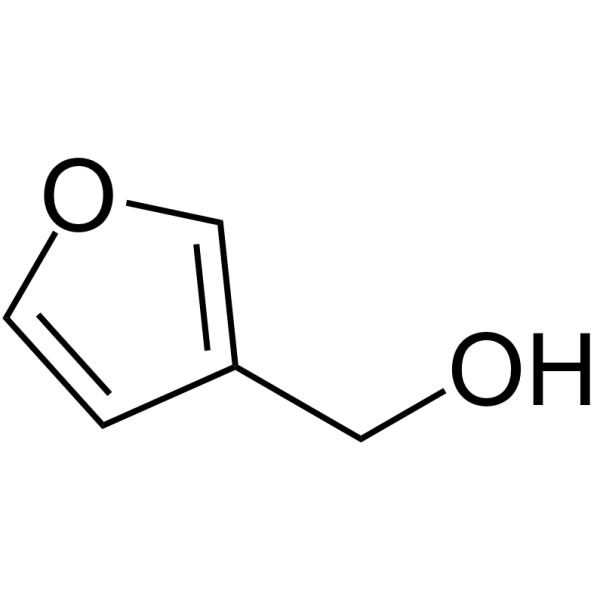
3-Furanmethanol, a volatile furan compound, can be detected in malt beverages fermented with Bifidobacterium breve. 3-Furanmethanol exhibits roasty, popcorn-like flavors .
loading...
    loading...
Cat. No.: HY-W008030
CAS No.: 2243-47-2
Target:  

Bacterial

Research Areas:  

Infection

3-Aminobiphenyl is a chemical isomer of 4-ABP. 3-Aminobiphenyl can inhibit the growth of human intestinal bacteria Bifidobacterium infantis ATCC 15697, B. bifidium ATCC 11863, Clostridium perfringens ATCC 13124, Escherichia coli ATCC 25922, E. coli ATCC 35218, Enterobacter cloacae ATCC 13047 and Salmonella typhimurium TA98, TA100, YG1041. 3-Aminobiphenyl can be used as a biomarker of exposure to aromatic amines from cigarette smoke .
loading...
    loading...
Cat. No.: HY-113254
CAS No.: 363-23-5
Purity:  96.7%
Research Areas:  

Endocrinology

13,14-Dihydro-15-keto-PGE2 participates in Bifidobacterium animalis F1-7 to alleviate opioid-induced constipation by 5-HT pathway .
loading...
    loading...
Cat. No.: HY-41324R
CAS No.: 911-40-0
7-keto-Deoxycholic acid (Standard) is the analytical standard of 7-keto-Deoxycholic acid. This product is intended for research and analytical applications. 7-keto-Deoxycholic acid is a metabolite of bile acids in Clostridium absonum. 7-keto-Deoxycholic acid is also converted from Lactobacillus and Bifidobacterium with specific condition[1][2].
loading...
    loading...
Cat. No.: HY-105762
CAS No.: 314-35-2
Synonyms: Etamiphylline
Target:  

Others

Research Areas:  

Inflammation/Immunology

Etamiphyllin (Etamiphylline) is a respiratory and cardiac stimulant. Etamiphyllin camsylate relaxes bronchial and bronchiolar smooth muscle to open airways, and increases cardiac output without elevating heart rate. The level of Etamiphyllin camsylate decreases in mice with ulcerative colitis, and it is positively correlated with *Bifidobacterium* and *Faecalibacterium*. Etamiphyllin camsylate can be applied to research related to chronic obstructive pulmonary disease, respiratory failure and ulcerative colitis .
loading...
    loading...
Cat. No.: HY-132177I
CAS No.: 9037-65-4
Research Areas:  

Others

exo-α-1,2-Fucosidase,Bifidobacterium bifidum is a glycoside hydrolase that would release free fucose .
loading...
    loading...
Cat. No.: HY-105762A
CAS No.: 19326-29-5
Synonyms: Etamiphylline camsylate
Target:  

Others

Research Areas:  

Inflammation/Immunology

Etamiphyllin (Etamiphylline) camsylate is a respiratory and cardiac stimulant. Etamiphyllin camsylate relaxes bronchial and bronchiolar smooth muscle to open airways, and increases cardiac output without elevating heart rate. The level of Etamiphyllin camsylate decreases in mice with ulcerative colitis, and it is positively correlated with *Bifidobacterium* and *Faecalibacterium*. Etamiphyllin camsylate can be applied to research related to chronic obstructive pulmonary disease, respiratory failure and ulcerative colitis .
loading...
    loading...
Cat. No.: HY-N13267
CAS No.: 51152-12-6
(-)-cis-Myrtanol is a terpenoid compound derived from Artemisia dracunculus that exhibits effective antibacterial activity against harmful gut bacteria such as Bifidobacterium bifidum .
loading...
    loading...
Cat. No.: HY-113133R
CAS No.: 2140-29-6
Kojibiose (Standard) is the analytical standard of Kojibiose. This product is intended for research and analytical applications. Kojibiose, an orally active prebiotic disaccharide, can specifically inhibit the activity of α-glucosidase I. kojibiose is a proliferation factor for Bifidobacterium, lactic acid bacteria, and eubacteria. kojibiose is a low-calorie sweetener capable of increasing the absorption of iron. Kojibiose exhibits antitoxic activity. Kojibiose reduces hepatic expression of inflammatory markers in vivo[1][2].
loading...
    loading...
Cat. No.: HY-W014701R
CAS No.: 31519-22-9
1,4-Dihydroxy-2-naphthoic acid (Standard) is the analytical standard for 1,4-Dihydroxy-2-naphthoic acid (HY-W014701). 1,4-Dihydroxy-2-naphthoic acid is an orally active aryl hydrocarbon receptor (AhR) agonist and a bifidogenic growth stimulator. 1,4-Dihydroxy-2-naphthoic acid can improve the motor dysfunction in parkinson's disease (PD) model through AhR-dependent and -independent pathways. 1,4-Dihydroxy-2-naphthoic acid exerts anti-inflammatory effects by regulating the gut microbiota (such as promoting the proliferation of Bifidobacterium) and directly regulating the host immune system. 1,4-Dihydroxy-2-naphthoic acid induces apoptosis through G0/G1 cell cycle arrest in human keratinocyte to inhibit psoriasis .
loading...
    loading...
Cat. No.: HY-E71299
Target:  

Glycosidase

Research Areas:  

Others

β-Galactosidase 42A, Bifidobacterium longum (EC 3.2.1.23) is a hydrolase enzyme that catalyzes the hydrolysis of β-galactosides into monosaccharides. Substrates of different β-galactosidases include ganglioside GM1, lactosylceramides, lactose, and various glycoproteins.
loading...
    loading...

