6 Results for "

Brassicaceae

" in MedChemExpress (MCE) Product Catalog:
Products (6)

6 Results for "Brassicaceae" in MCE Product Catalog:

Cat. No.: HY-N2388
CAS No.: 495-02-3
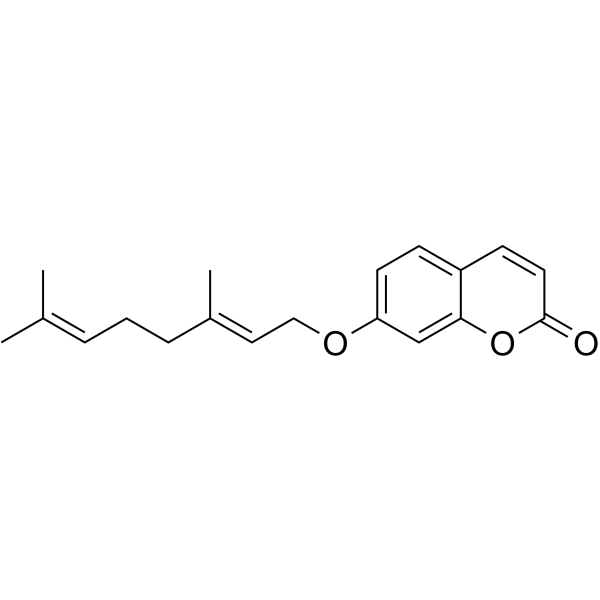
Auraptene is an orally active geranyloxycoumarin that can be isolated from plants in the Brassicaceae family, antibacterial, anti-pathogen, antioxidant, anti-tumor, and neuroprotective effects. Auraptene plays an important role in the treatment of various chronic diseases such as hypertension and cystic fibrosis .
loading...
    loading...
Cat. No.: HY-W265314
CAS No.: 4837-74-5
Arvelexin is a biologically active compound. Arvelexin can be found in Brassica rapa L. (Brassicaceae). Arvelexin inhibits NF-κB activation and the expressions of IL-8. Arvelexin inhibits colonic inflammation .
loading...
    loading...
Cat. No.: HY-129584
CAS No.: 596093-97-9
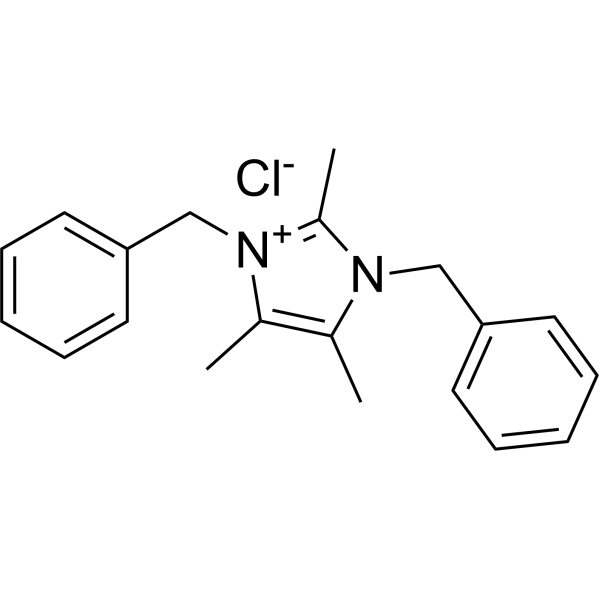
Lepidiline B is a flavonolignan isolated from the roots of Brassicaceae Lepidium meyenii. Lepidiline B exhibits anti-inflammation activities in human cancer cell lines .
loading...
    loading...
Cat. No.: HY-N2388R
CAS No.: 495-02-3
Auraptene (Standard) is the analytical standard of Auraptene. This product is intended for research and analytical applications. Auraptene is an orally active geranyloxycoumarin that can be isolated from plants in the Brassicaceae family, antibacterial, anti-pathogen, antioxidant, anti-tumor, and neuroprotective effects. Auraptene plays an important role in the treatment of various chronic diseases such as hypertension and cystic fibrosis .
loading...
    loading...
Cat. No.: HY-N21949A
CAS No.: 15592-33-3
Synonyms: Methyl glucosinolate potassium
Glucocapparin (Methyl glucosinolate) potassium is a glucosinolate compound. Glucocapparin potassium can be isolated from plants of the Brassicaceae and Capparaceae families. Glucocapparin potassium possesses phytochemical defense (insect-repellent and antibacterial), hypoglycemic and antioxidant activities, and the isothiocyanate substances produced by its hydrolysis exhibit certain anticancer effects. Glucocapparin potassium can be used in studies related to cancer, inflammation and hyperglycemia .
loading...
    loading...
Cat. No.: HY-N2423B
CAS No.: 534-69-0
Synonyms: (E/Z)-Allyl-glucosinolate free base; (E/Z)-2-Propenyl-glucosinolate free base
(E/Z)-Sinigrin ((E/Z)-Allyl-glucosinolate; (E/Z)-2-Propenyl-glucosinolate) free base is an orally active aliphatic thioglucoside anti-leukemia compound. Allyl isothiocyanate, produced by the hydrolysis of (E/Z)-sinigrin free base by myrosinase, has an IC50 of 2.71 μM against HL60 leukemia cells. The hydrolysis products of (E/Z)-sinigrin free base can further activate apoptosis pathways, inhibit NF-κB and MAPK signaling pathways, and induce phase II metabolic enzyme activity, thus exhibiting anti-cancer, anti-inflammatory, antibacterial, antioxidant, and wound healing activities. (E/Z)-Sinigrin free base can be used in research on cancer, inflammation-related diseases (such as atherosclerosis), and infectious diseases. (E/Z)-Sinigrin free base can be naturally extracted from the seeds of Brassica nigra, Brassica juncea, and other Brassicaceae plants such as broccoli and Brussels sprouts. Methyl pechueloate is a guaiane-type sesquiterpene ester compound and a potential precursor of xerantholide. It is useful in the structural elucidation and biosynthetic pathway studies of sesquiterpenoids. Methyl pechueloate can be naturally extracted from the aerial parts of Pechuel-Loeschea leibnitziae (Kuntze) O. Hoffm .
loading...
    loading...

