54 Results for "

CNS disorders

" in MedChemExpress (MCE) Product Catalog:
Products (54)

54 Results for "CNS disorders" in MCE Product Catalog:

18
18 Publications Verification
Cat. No.: HY-B0193A
CAS No.: 19237-84-4
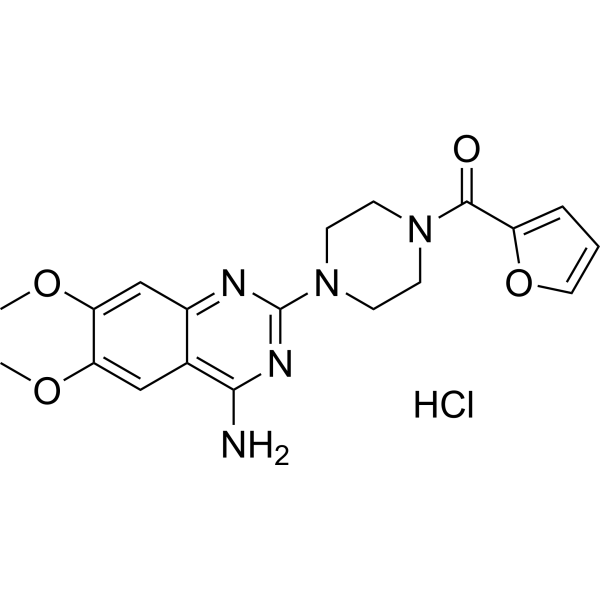
Prazosin hydrochloride is a well-tolerated, CNS-active α1-adrenergic receptor antagonist for the research of high blood pressure and alcohol use disorders . Prazosin hydrochloride potently inhibits Norepinephrine (NE)-stimulated 45Ca efflux with an IC50 of 0.15 nM .Prazosin hydrochloride inhibits organic cation transporters OCT-1 and OCT-3 with IC50s of 1.8, and 13 μM, respectively .
loading...
    loading...
6
6 Cited Publications
Cat. No.: HY-15722
CAS No.: 174635-69-9
Purity:  99.85%
Target:  

Neurokinin Receptor

Research Areas:  

Neurological Disease Endocrinology

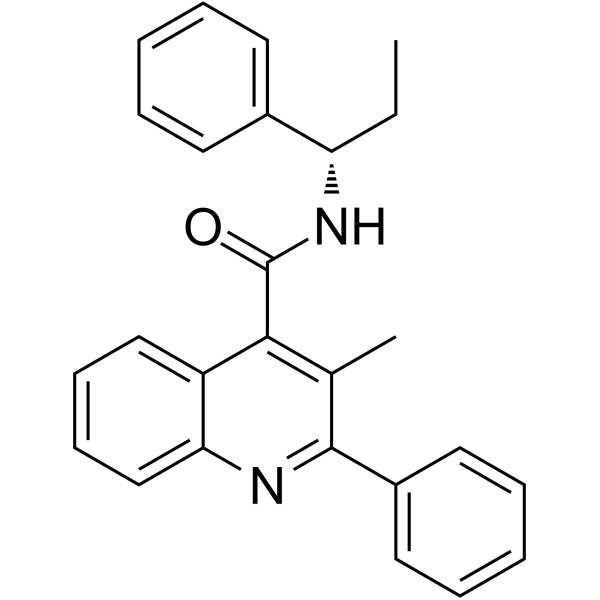
SB-222200 is a potent, selective, orally active and blood-brain barrier (BBB) penetrant NK-3 receptor antagonist. SB-222200 is developed for central nervous system (CNS) disorders .
loading...
    loading...
1
1 Cited Publications
Cat. No.: HY-122697
CAS No.: 1928763-08-9
Purity:  99.78%
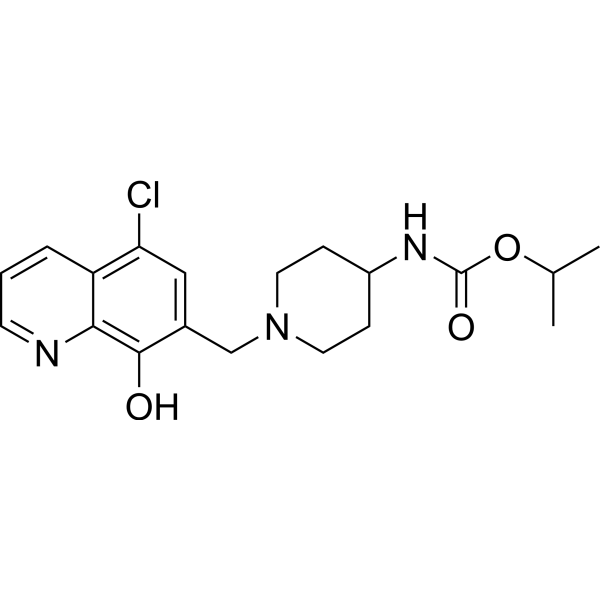
ML418 is a potent, selective and CNS penetrating Kir7.1 potassium channel blocker. ML418 inhibits Kir7.1 with an IC50 value of 0.31 μM. ML418 can be used for the research of neurological, cardiovascular, endocrine and muscle disorders.
loading...
    loading...
1
1 Cited Publications
Cat. No.: HY-112831
CAS No.: 1189767-28-9
Purity:  99.88%
Synonyms: BI-409306
Research Areas:  

Neurological Disease

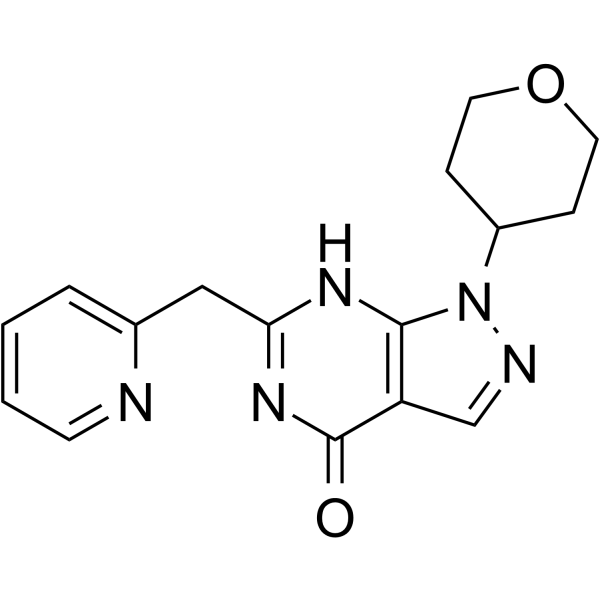
Osoresnontrine (BI-409306) is a potent and selective PDE9A inhibitor, with an IC50 of 52 nM, and shows weak activity against other PDEs, such as PDE1A (IC50, 1.4 µM), PDE1C (IC50, 1.0 µM), PDE2A, PDE3A, PDE4B, PDE5A, PDE6AB, PDE7A, and PDE10A (IC50 all > 10 μM); Osoresnontrine can be used in the research of memory enhancement in CNS disorders.
loading...
    loading...
1
1 Cited Publications
Cat. No.: HY-145086
CAS No.: 1185189-97-2
Purity:  99.90%
Research Areas:  

Metabolic Disease

R-PSOP is highly potent and selective nonpeptidic NMUR2 antagonist. R-PSOP binds to NMUR2 with the Kis of 52 and 32 nM for the human and rat NMUR2, respectively. R-PSOP shows moderate CNS penetration. R-PSOP can be used for the research of the eating disorders, obesity, pain, and stress-related disorders .
loading...
    loading...
1
1 Cited Publications
Cat. No.: HY-W186242
CAS No.: 223500-15-0
PDE4-IN-16 (compound 27) is a PDE4 inhibitor with an IC50 value of 3.61 μM. PDE4-IN-16 can be used for the research of inflammatory diseases and central nervous system (CNS) disorders involving elevated levels of cytokines .
loading...
    loading...
Cat. No.: HY-156438
CAS No.: 2272917-13-0
Purity:  99.65%
Synonyms: NT-0796
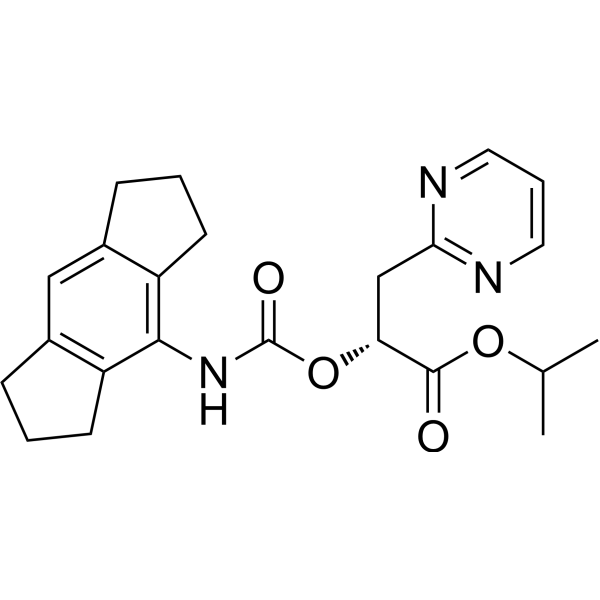
Ruvonoflast (NT-0796) is an orally active, selective and CNS-penetrant NLRP3 inflammasome inhibitor. Ruvonoflast inhibits IL-1β release in human PBMC cells with an IC50 value of 0.32 nM. Ruvonoflast is an isopropyl ester that undergoes intracellular conversion to Ruvonoflast, the carboxylic acid active species. Ruvonoflast reverses high fat diet-induced obesity, systemic inflammation and astrogliosis in the diet-induced obesity mouse model. Ruvonoflast is promising for research of neurodegenerative disorders, including Alzheimer’s disease, Parkinson’s disease, multiple sclerosis, and amyotrophic lateral sclerosis .
loading...
    loading...
Cat. No.: HY-W019815
CAS No.: 759-73-9
Synonyms: ENU; N-Nitroso-N-ethylurea
Target:  

DNA/RNA Synthesis

Research Areas:  

Neurological Disease Cancer

N-Ethyl-N-nitrosourea (ENU) is a DNA alkylating agent. N-Ethyl-N-nitrosourea induces leukemia by alkylating nucleobases, disrupting DNA, and resulting in bone marrow suppression and the formation of leukemic cells. N-Ethyl-N-nitrosourea is teratogenic in vivo, inducing tumor formation and paw malformations in pregnant rats. N-Ethyl-N-nitrosourea cause central nervous system (CNS) tumors and genetic disorders .
loading...
    loading...
Cat. No.: HY-132806
CAS No.: 2230009-48-8
Purity:  99.93%
Synonyms: RG-7816; RO-7017773
Target:  

GABA Receptor

Research Areas:  

Neurological Disease

Alogabat is a positive allosteric modulator (PAM) and agonist (Ki <100 nM) of the GABAA α5 receptor, targeting the α5β3γ2 subunit with a Ki of 8.7 nM. Alogabat increases the expression level of α5β3γ2 in oocytes (1.97-fold). GABAA has been implicated in cognitive impairment associated with central nervous system (CNS) disorders, brain cancer (including brain tumors such as medulloblastoma), and can be used in the study of mild cognitive impairment (MCI), amnestic MCI (aMCI), age-associated memory impairment (AAMI), age-related cognitive decline (ARCD), dementia, Alzheimer's disease (AD), prodromal AD, post-traumatic stress disorder (PTSD), schizophrenia, bipolar disorder, amyotrophic lateral sclerosis (ALS), cognitive impairment associated with cancer treatment, mental retardation, Parkinson's disease (PD), autism spectrum disorder, fragile X, Rett syndrome, obsessive-compulsive behavior, and substance addiction .
loading...
    loading...
Cat. No.: HY-W105505
CAS No.: 101020-79-5
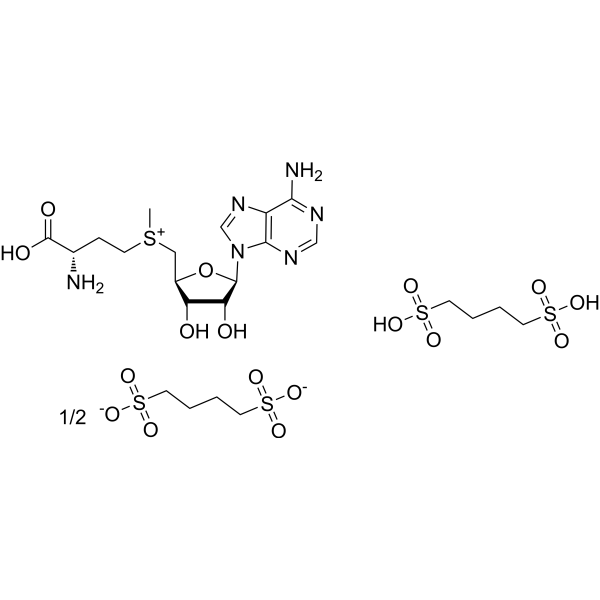
SAMe-1,4-Butanedisulfonate, a natural compound, is a methyl donor in the central nervous system. SAMe-1,4-Butanedisulfonate has antidepressant activity. SAMe-1,4-Butanedisulfonate can be used for research of CNS disorders .
loading...
    loading...
Cat. No.: HY-N2428
CAS No.: 847361-96-0
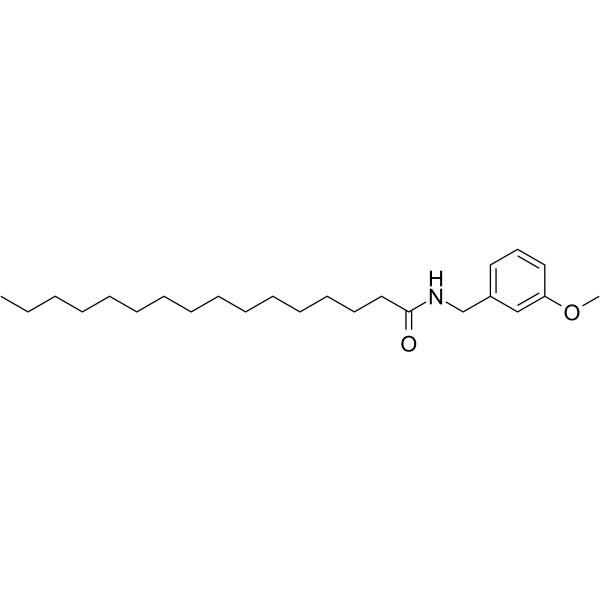
N-(3-Methoxybenzyl)Palmitamide is a promising inhibitor of FAAH for the treatment of pain, inflammation and CNS degenerative disorders .
loading...
    loading...
Cat. No.: HY-14550A
CAS No.: 898562-99-7
Purity:  97.31%
Research Areas:  

Others

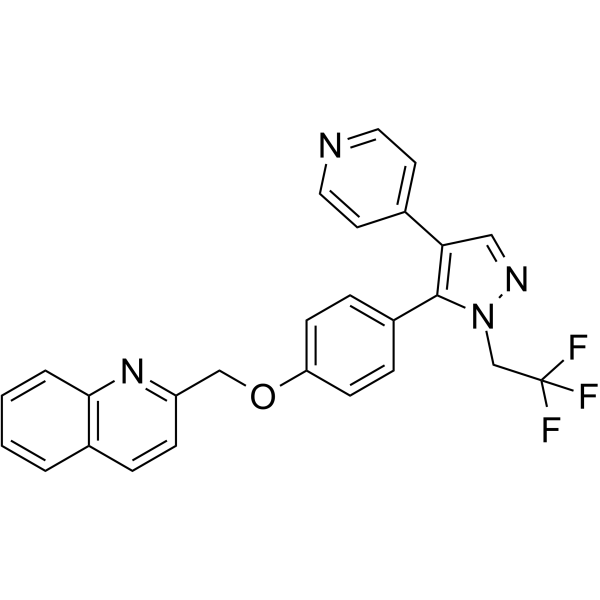
PDE10-IN-5 is a phosphodiesterase 10 (PDE 10) inhibitor, can be used for researching certain central nervous system (CNS) disorders .
loading...
    loading...
Cat. No.: HY-118158
CAS No.: 256383-45-6
Purity:  99.83%
Target:  

FAAH

Research Areas:  

Neurological Disease

FAAH/MAGL-IN-4 (Compound 13) is a potent fatty acid amide hydrolase (FAAH) and monoglyceride lipase (MGL) inhibitor with IC50s of 9.1 nM and 7.9 μM, respectively. FAAH/MAGL-IN-4 can be used for the research of pain and CNS disorders .
loading...
    loading...
Cat. No.: HY-172182
CAS No.: 2230296-66-7
Synonyms: VU6011887
Target:  

Potassium Channel

Research Areas:  

Neurological Disease

ONO-2920632 is an orally active and central nervous system (CNS)-penetrant TREK activator, with EC50 values of 0.3 µM and 2.8 μM for TREK-1 and TREK-2, respectively. ONO-2920632 exhibits selectivity for other K2P channels (>91-fold selective versus TASK1, TASK2, TASK3, TRAAK, and TWIK2; 31-fold selective versus TRESK). ONO-2920632 possesses analgesic effects and can be used in research on pain, migraine, and neurological disorders.
loading...
    loading...
Cat. No.: HY-W001601
CAS No.: 57982-78-2
Target:  

iGluR

Research Areas:  

Neurological Disease

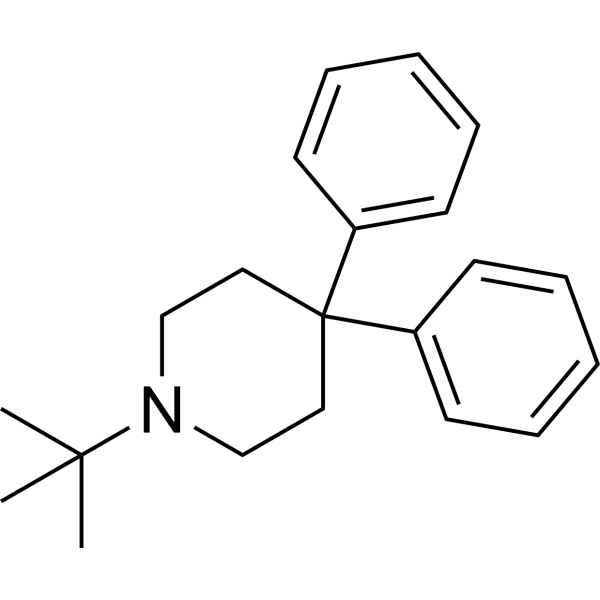
Budipine is an anti-parkinson agent. Budipine also is a substrate of P-glycoprotein (P-gp), is mediated the uptake into the brain by P-gp. Budipine also is N-methyl-d-aspartate (NMDA) antagonist, and has indirect dopaminergic effects through an improved dopamine release, the inhibition of monoamine oxidase type B (MAO-B). Budipine can be used for the research of CNS disorders include Parkinson disease .
loading...
    loading...
Cat. No.: HY-W739056
SAMe-1,4-Butanedisulfonate-d3 is the deuterium labeled SAMe-1,4-Butanedisulfonate (HY-W105505). SAMe-1,4-Butanedisulfonate, a natural compound, is a methyl donor in the central nervous system. SAMe-1,4-Butanedisulfonate has antidepressant activity. SAMe-1,4-Butanedisulfonate can be used for research of CNS disorders
loading...
    loading...
Cat. No.: HY-179004
CAS No.: 2640753-22-4
Synonyms: VU6022856
Target:  

Potassium Channel

Research Areas:  

Neurological Disease

ONO-9517601 is a potent, orally active, selective and CNS penetrant dual TREK-1/TREK-2 inhibitor (TREK-1 IC50= 0.067 μM, TREK-2 IC50= 0.23 μM). ONO-9517601 displays robust efficacy in an MK-801 (HY-15084B) challenge rat novel object recognition (NOR) paradigm. ONO-9517601 can be used for research on neurological and cognitive disorders .
loading...
    loading...
Cat. No.: HY-B0193AS
CAS No.: 1189508-34-6
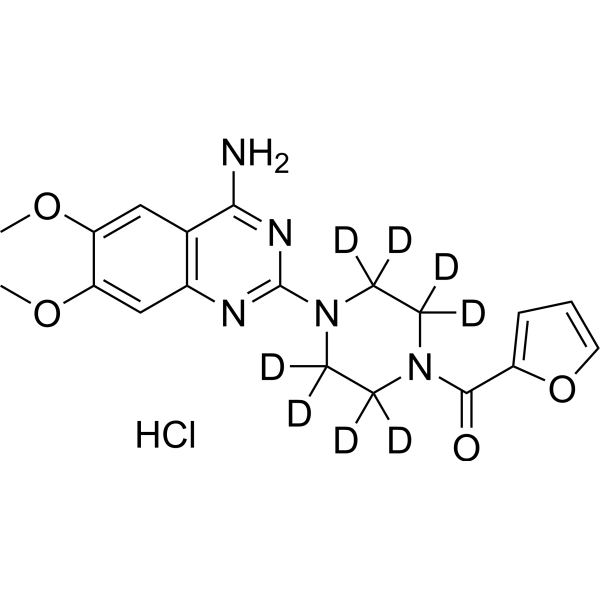
Prazosin-d8 hydrochloride is the deuterated-labeled Prazosin hydrochloride (HY-B0193A). Prazosin hydrochloride is a well-tolerated, CNS-active α1-adrenergic receptor antagonist for the research of high blood pressure and alcohol use disorders . Prazosin hydrochloride potently inhibits Norepinephrine (NE)-stimulated 45Ca efflux with an IC50 of 0.15 nM .Prazosin hydrochloride inhibits organic cation transporters OCT-1 and OCT-3 with IC50s of 1.8, and 13 μM, respectively .
loading...
    loading...
Cat. No.: HY-170973
Target:  

Opioid Receptor

KOR agonist 4 (compound 39) is an agonist of Kappa Opioid Receptor. KOR agonist 4 is an activator of G-protein signaling. KOR agonist 4 binds with GTPγS with an EC50 of 14 nM and with an Emax of 83 %. KOR agonist 4 demonstrates moderate to high intrinsic clearance in human hepatocytes. KOR agonist 4 exhibits 60- and 810-fold selectivities versus the related mu (MOR) and delta (DOR) opioid receptors. KOR agonist 4 is potential for central nervous system (CNS) disorders research .
loading...
    loading...
Cat. No.: HY-109527
CAS No.: 334974-31-1
Target:  

5-HT Receptor

Research Areas:  

Neurological Disease

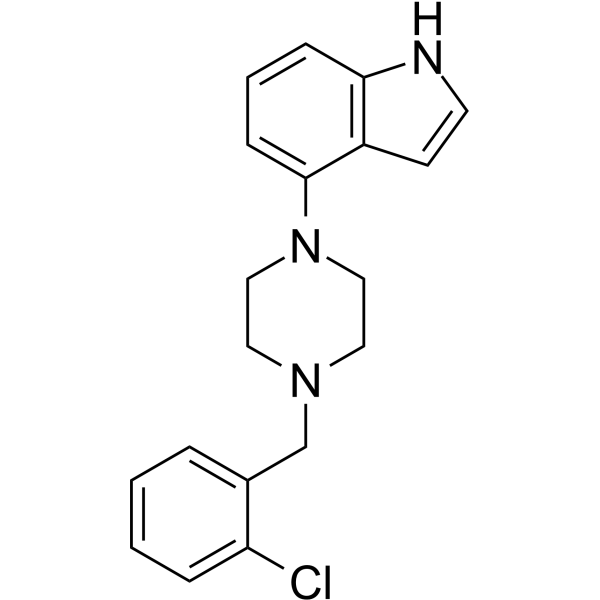
5-HT7 agonist 1 is a selective 5-HT7 receptor agonist, with an IC50 of 222.93 nM, can be used for the 5-HT7 receptor related disease, such as CNS disorders.
loading...
    loading...

