

80 Results for "

CTLs

" in MedChemExpress (MCE) Product Catalog:
Products (80)

80 Results for "CTLs" in MCE Product Catalog:

19
19 Publications Verification
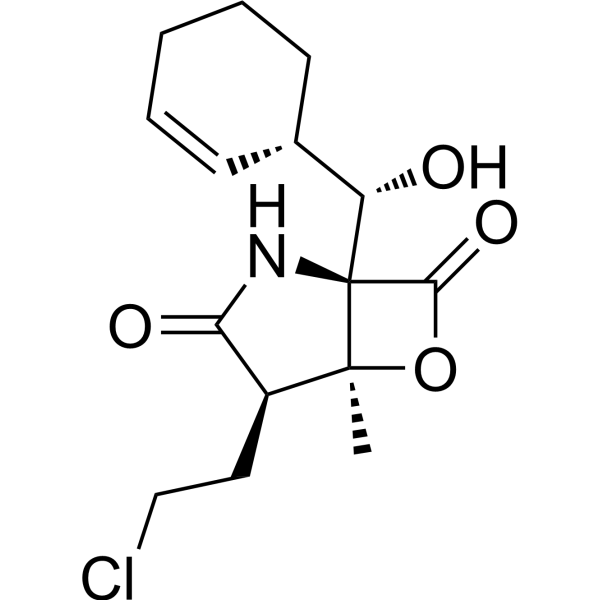
Cat. No.: HY-10985
CAS No.: 437742-34-2
Purity:  99.13%
Synonyms: Salinosporamide A; NPI-0052
Marizomib (Salinosporamide A) is a second-generation, irreversible, brain-penetrant, pan-proteasome inhibitor. Marizomib inhibits the CT-L (β5), CT-T-laspase-like (C-L, β1) and trypsin-like (T-L, β2) activities of the 20S proteasome (IC50=3.5, 28, and 430 nM, respectively) .
loading...
    loading...
2
2 Cited Publications
Cat. No.: HY-P99100
CAS No.: 2556646-63-8
Synonyms: CTL-002

Research Areas:  

Cancer

Visugromab (CTL-002) is a GDF-15 neutralizing IgG4 mAb. Visugromab has synergistic anticancer activity with the anti-PD1 antibody Nivolumab (HY-P9903) and can effectively act on PD-1/PD-L1 relapsed/refractory metastatic solid tumors. Recommend Isotype Controls: Human IgG4 (S228P) kappa, Isotype Control (HY-P99003) .
loading...
    loading...
2
2 Cited Publications
Cat. No.: HY-P99762
CAS No.: 2069959-72-2
Synonyms: MGD009

Target:  

CD3

Research Areas:  

Cancer

Obrindatamab is a humanized anti-B7-H3/CD3 bispecific antibody. Obrindatamab binds to B7-H3 and CD3, thereby mediating redirected cytotoxic T-lymphocyte (CTL) activity against B7-H3-expressing cancer cells. Obrindatamab can be used in research of cancer .
loading...
    loading...
1
1 Cited Publications
Cat. No.: HY-P990255

Target:  

CXCR

Research Areas:  

Inflammation/Immunology Cancer

Anti-Mouse CXCL9/MIG Antibody (MIG-2F5.5) is an anti-mouse CXCL9/MIG IgG monoclonal antibody. Anti-Mouse CXCL9/MIG Antibody (MIG-2F5.5) can reduce tumor infiltration of CD8 + cytotoxic T cells (CTLs). Anti-Mouse CXCL9/MIG Antibody (MIG-2F5.5) can prolong the survival of transplanted hearts. Anti-Mouse CXCL9/MIG Antibody (MIG-2F5.5) can be used for researches on immunology and cancer such as prostate cancer .
loading...
    loading...
1
1 Cited Publications
Cat. No.: HY-160768
Target:  

Deubiquitinase

Research Areas:  

Inflammation/Immunology Cancer

OTUB2-IN-1, a specific inhibitor of OTUB2 (KD: ~12 μM), reduces PD-L1 protein expression in tumor cells and inhibits tumor growth by promoting robust intra-tumor infiltration of cytotoxic T lymphocytes (CTL) .
loading...
    loading...
1
1 Cited Publications
Cat. No.: HY-P10869
dCNP binds to NPR-B/C receptor, activates cGMP signaling pathway, and regulates vascular function. dCNP exhibits anti-hypoxia property through downregulation of hypoxia-related genes expressions like HIF1α and HIF2α. dCNP inhibits the induction of tumor stroma and exhibits anti-fibrosis activity. dCNP upregulates CTLs, NK cells, and conventional type 1 dendritic cells in tumors, and activates immune responses .
loading...
    loading...
Cat. No.: HY-163028
CAS No.: 459789-75-4
Target:  

Tim3

Research Areas:  

Cancer

ML-T7 is a potent Tim-3 inhibitor. ML-T7 blocks Tim-3 interactions with PtdSer and CEACAM1. ML-T7 not only enhances the antitumor activity of adoptive transfer therapy with cytotoxic T lymphocytes (CTLs) and CAR T cells but also increases the effector function of T cell. ML-T7 promotes NK cells’ killing activity against tumor cells and DC antigen-presenting capacity. ML-T7 directly exerts antitumor efficacy in preclinical tumor models either alone or in combination with Nivolumab (HY-P9903A). ML-T7 can be used for tumor immunotherapy research .
loading...
    loading...
Cat. No.: HY-126666
CAS No.: 1204819-92-0
Purity:  92.02%
Target:  

ADC Payloads

Research Areas:  

Inflammation/Immunology Cancer

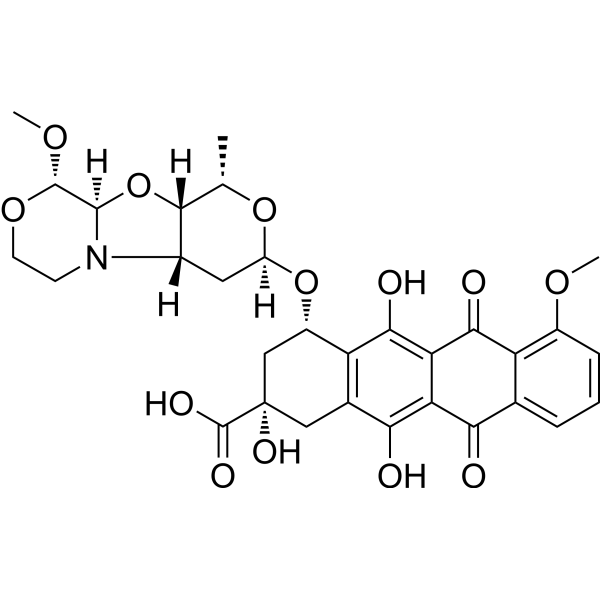
PNU-159682 carboxylic acid (Compound 53) is a potent ADCs cytotoxin and encodes a member of the C-type lectin/C-type lectin-like domain (CTL/CTLD) superfamily. PNU-159682 carboxylic acid has protein fold and diverse functions, such as cell adhesion, cell-cell signalling, glycoprotein turnover, and roles in inflammation and immune response .
loading...
    loading...
Cat. No.: HY-172240
CAS No.: 1418305-55-1
Synonyms: TU2218 free base
Tosposertib (TU2218 free base) is an ALK5/VEGFR2 dual inhibitor (IC50 = 1.2 nM/4.9 nM). Tosposertib directly restores the activity of damaged cytotoxic T lymphocytes (CTLs) and natural killer cells inhibited by TGFβ and suppresses the activity and viability of regulatory T cells. Tosposertib can be used for the study of melanoma and colon cancer .
loading...
    loading...
Cat. No.: HY-P1907
CAS No.: 151812-18-9
Target:  

HPV

Research Areas:  

Cancer

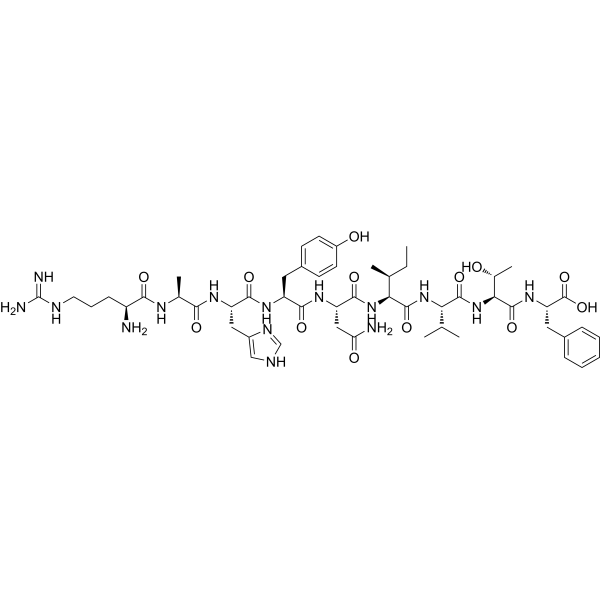
Human Papillomavirus (HPV) E7 protein (49-57) is a cytotoxic T lymphocyte (CTL) epitope peptide derived from HPV16 E7 protein (sequence: RAHYNIVTF). Human Papillomavirus (HPV) E7 protein (49-57) induces E749-57-specific CTL responses. Human Papillomavirus (HPV) E7 protein (49-57) can be used for the research of cervical cancer .
loading...
    loading...
Cat. No.: HY-P990795

Target:  

Osteopontin

Research Areas:  

Inflammation/Immunology Cancer

Anti-Mouse osteopontin/SPP1 Antibody (100D3) is an anti-mouse osteopontin/SPP1 IgG2c monoclonal antibody. Anti-Mouse osteopontin/SPP1 Antibody (100D3) can reverse the inhibition of osteopontin (OPN) on T cells and enhance cytotoxic T lymphocyte (CTL) killing ability. Anti-Mouse osteopontin/SPP1 Antibody (100D3) can improve dentin density. Anti-Mouse osteopontin/SPP1 Antibody (100D3) can be used for researches on cancer and dental related conditions such as colon cancer. The recommend isotype control of Anti-Mouse osteopontin/SPP1 Antibody (100D3): Mouse IgG2c kappa, Isotype Control (HY-P99981) .
loading...
    loading...
Cat. No.: HY-P0277
CAS No.: 168635-85-6
Synonyms: CEA peptide
Carcinoembryonic antigen peptide 1 (CEA peptide) is a 9-amino acid HLA-A0201-binding cytotoxic T lymphocyte (CTL) epitope peptide derived from carcinoembryonic antigen (CEA). The IC50 of Carcinoembryonic antigen peptide 1 binding to HLA-A0201 is 2 μM. Carcinoembryonic antigen peptide 1 binds to HLA-A0201 to form a peptide-MHC I complex, which is recognized by the T cell receptor (TCR) of CAP1-specific CD8 + CTLs, thereby inducing antigen-specific T cell activation, IFN-γ production, and CTL-mediated lysis of target cells. Carcinoembryonic antigen peptide 1 is used in research on CEA-specific CTL responses and colorectal cancer .
loading...
    loading...
Cat. No.: HY-12286
CAS No.: 1401223-22-0
Purity:  98.78%
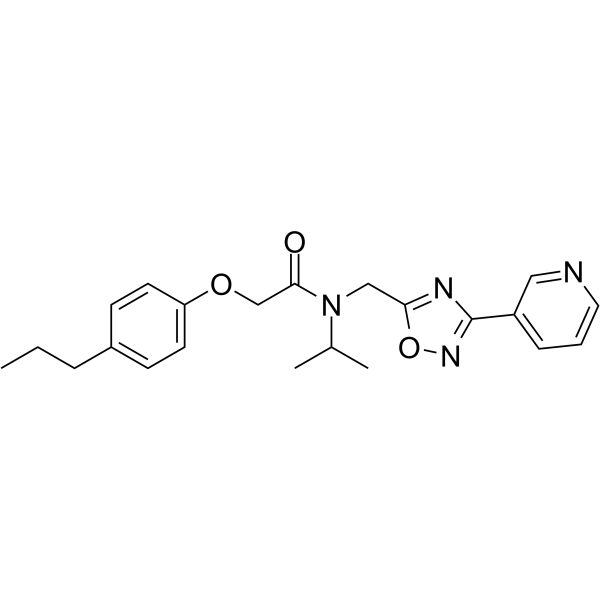
PI-1840 is a potent and selective chymotrypsin-like (CT-L) inhibitor for with an IC50 value of 27 nM. PI-1840 inhibits cell proliferation and arrest cell cycle at G2/M phase. PI-1840 induces apoptosis and induces autophagy. PI-1840 induces the accumulation of proteasome substrates p27, Bax, and IκB-α .
loading...
    loading...
Cat. No.: HY-P2527
CAS No.: 187671-49-4
Target:  

Tyrosinase

Research Areas:  

Cancer

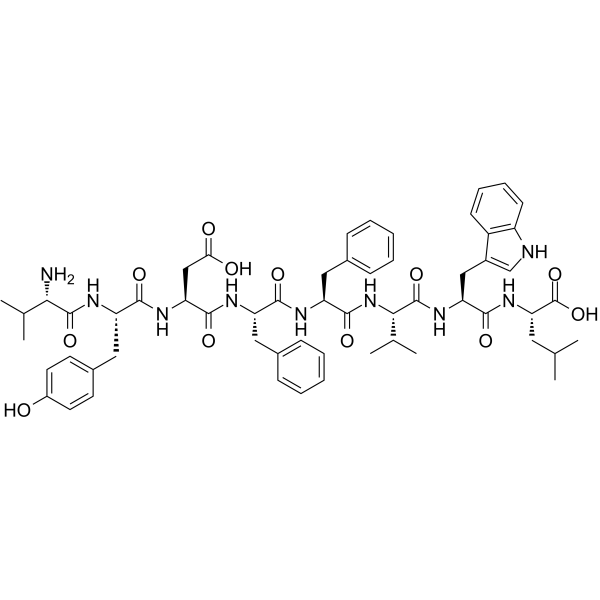
Tyrosinase-related Protein 2 (TRP-2) (181-188) is a peptide epitope of the TRP-2 protein that conforms to the MHC class I H2-Kb binding motif. It is the major reactive epitope within TRP-2 recognized by anti-B16 CTLs, induces TRP-2-specific CTL and CD8 + T cell responses, and mediates antibody-dependent antitumor effects against lung metastasis. Tyrosinase-related Protein 2 (TRP-2) (181-188) is used in melanoma research .
loading...
    loading...
Cat. No.: HY-P5470
CAS No.: 152274-91-4
Target:  

EBV IFNAR

Research Areas:  

Inflammation/Immunology

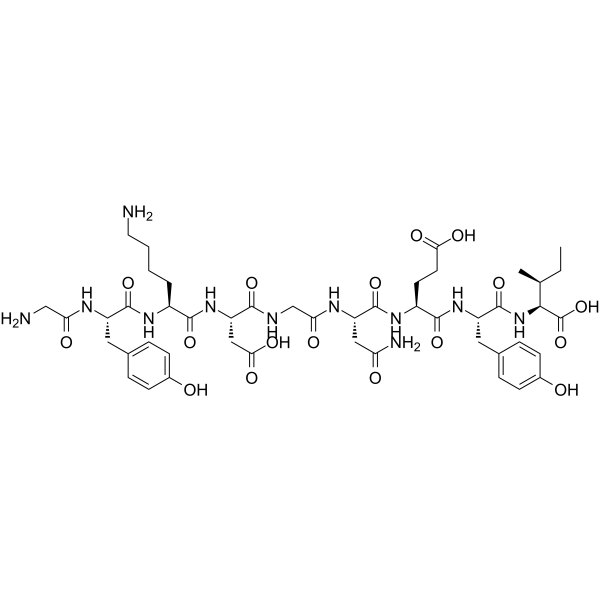
LMP2A (426-434) is a HLA-A2-restricted cytotoxic T lymphocyte (CTL) epitope of Epstein-Barr virus (EBV) latent membrane protein 2A (LMP2A). LMP2A (426-434) can trigger an immune response in individuals expressing different HLA-A*02 subtypes (A*02:01, A*02:03, A*02:06 and A*02:07). LMP2A (426-434) can induce a strong IFN-γ secretion response, stimulating the production of a high proportion of CD8 + IFN-γ + T cells. LMP2A (426-434) induces specific CTLs to effectively kill target cells expressing LMP2A. LMP2A (426-434) can be used to study EBV-related malignant tumors (such as Hodgkin's disease and nasopharyngeal carcinoma) .
loading...
    loading...
Cat. No.: HY-P2455
CAS No.: 137856-41-8
Synonyms: Listeriolysin O (91-99)
Target:  

Bacterial

Research Areas:  

Infection Inflammation/Immunology

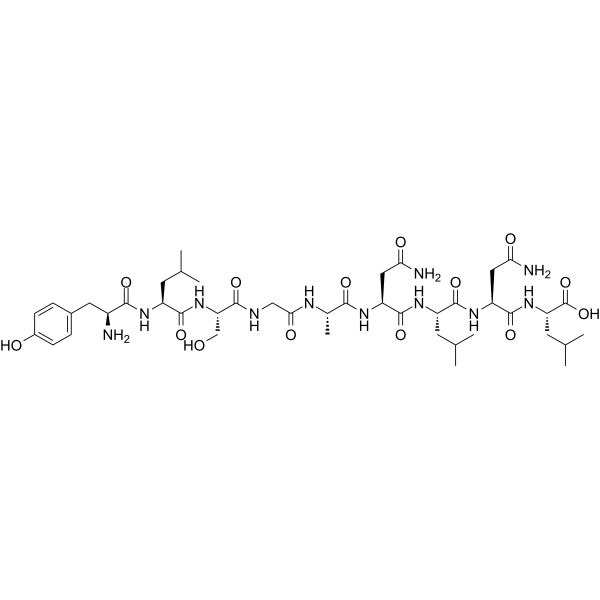
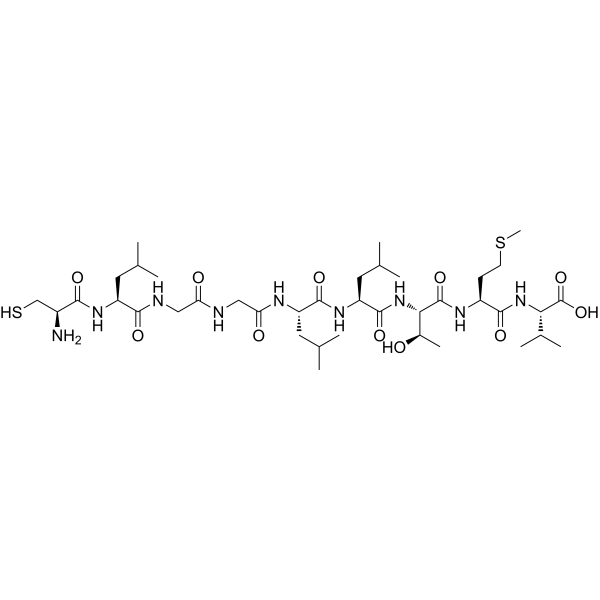
LLO (91-99) (Listeriolysin O (91-99)) is an exotoxin and class I MHC-restricted T-cell epitope of listeriolysin (LLO). LLO (91-99) is processed by antigen-presenting cells, binds to MHC class I molecules and is presented to the cell surface. LLO (91-99) induces CTL responses and effectively eliminates Listeria from infected cells. LLO (91-99) can be used in the research of Listeria infections (e.g., listeriosis) .
loading...
    loading...
Cat. No.: HY-156871
CAS No.: 404828-08-6
Purity:  99.06%
Target:  

CaMK

Research Areas:  

Cancer

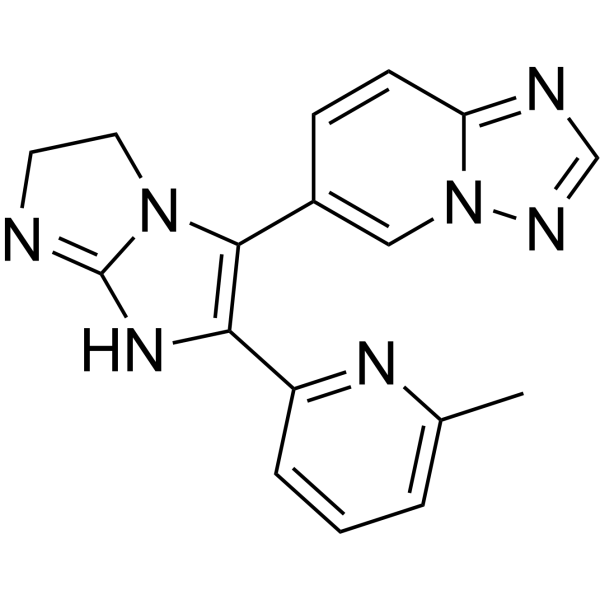
CAMK1D-IN-1 (compound I) is an inhibitor of CAMK1D, targeting cytotoxic T lymphocyte (CTL)-resistant tumor cells. CAMK1D impairs CTL-induced death receptor signaling and apoptosis by inhibiting caspases, making it a key and effective target for PD-L1-refractory tumors .
loading...
    loading...
Cat. No.: HY-161982
CAS No.: 3079468-41-7
Target:  

TNF Receptor

Research Areas:  

Cancer

JNU-0921 is a potent and orally active CD137 agonist. JNU-0921 increases the mRNA expression of IFN-γ and GZMB. JNU-0921 induces luciferase activity with an EC50 value of 64.07 nM.JNU-0921 enhances effector and memory function of cytotoxic CD8 + T cells (CTLs) and alleviates their exhaustion. JNU-0921 also skews polarization of helper T cells toward T helper 1 type and enhances their activity to boost CTL function. JNU-0921 shows anticancer activity .
loading...
    loading...
Cat. No.: HY-158412
CAS No.: 38485-94-8
Purity:  99.81%
Target:  

Proteasome Apoptosis

Research Areas:  

Cancer

BT317 is a blood-brain transmissible mitochondrial Lon peptidase I (LonP1) and CT-L proteasome inhibitor. BT317 can increase the production of reactive oxygen species (ROS) and induce apoptosis in astrocytoma cells. BT317 has antitumor activity .
loading...
    loading...
Cat. No.: HY-150226
CAS No.: 868540-02-7
Purity:  95.19%
Target:  

Proteasome

Research Areas:  

Inflammation/Immunology

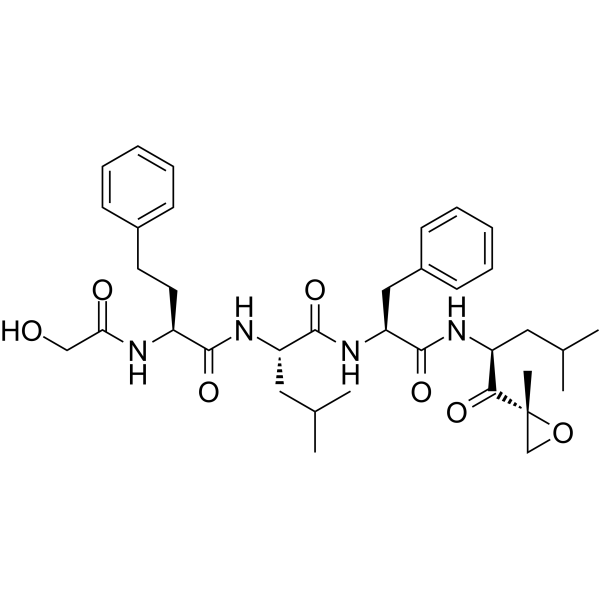
Enzyme-IN-1 (compound 1) is a peptide-based inhibitor of N-terminal nucleophile (Ntn) hydrolases. Specifically, Enzyme-IN-1 inhibits the chymotrypsin-like activity (CT-L) of the 20S proteasome. Enzyme-IN-1 may has potential antiinflammatory properties .
loading...
    loading...

