219 Results for "
Colony formation
" in MedChemExpress (MCE) Product Catalog:
Products (219)
219 Results for "Colony formation" in MCE Product Catalog:
10
10 Publications Verification
Target:
Research Areas:
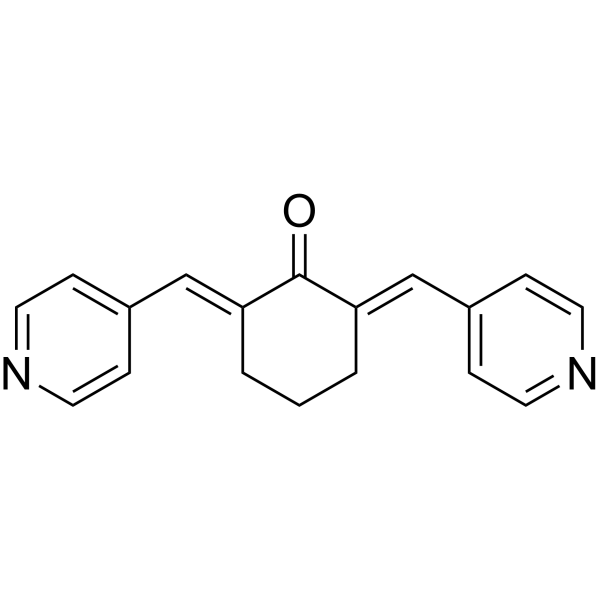
LDC1267 is a AXL/TAM/FLT3 inhibitor with IC50 values of 42 nM, 130 nM, and 63 nM against AXL, MERTK, and TYRO3, respectively. LDC1267 blocks GAS6-induced AXL phosphorylation and the downstream AKT/ERK1/2 signaling pathway. LDC1267 inhibits cancer cell proliferation, colony formation, and glioblastoma cell invasion, without causing obvious impairment of cytotoxic autophagic flux. LDC1267 exerts a synergistic effect when used in combination with Imatinib (HY-15463) in chronic myeloid leukemia models. LDC1267 can be widely applied in studies related to glioblastoma and chronic myeloid leukemia .
5
5
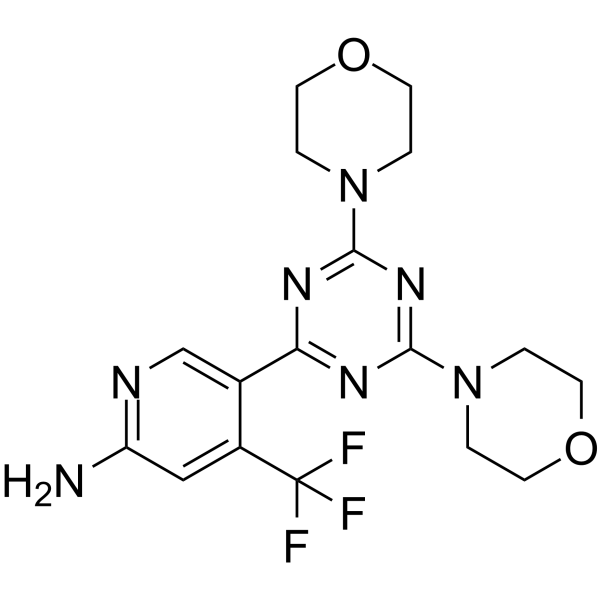
Bimiralisib (PQR309) is an orally active, blood-brain barrier-penetrant PI3K/mTOR inhibitor with in vitro antiproliferative activity and in vivo antitumor activity. Bimiralisib induces G1 cell cycle arrest, apoptosis and cell death in cancer cells, while inhibiting cancer cell proliferation, migration, invasion, colony formation and spheroid generation. Bimiralisib upregulates the expression of E2F4. The combination of Bimiralisib with venetoclax enhances therapeutic efficacy in acute myeloid leukemia models. Bimiralisib can be used in cancer-related research .
3
3 Cited Publications
3
3 Cited Publications
3
3 Cited Publications
Cat. No.: HY-163410
CAS No.: 3084244-26-5
Target:
Research Areas:
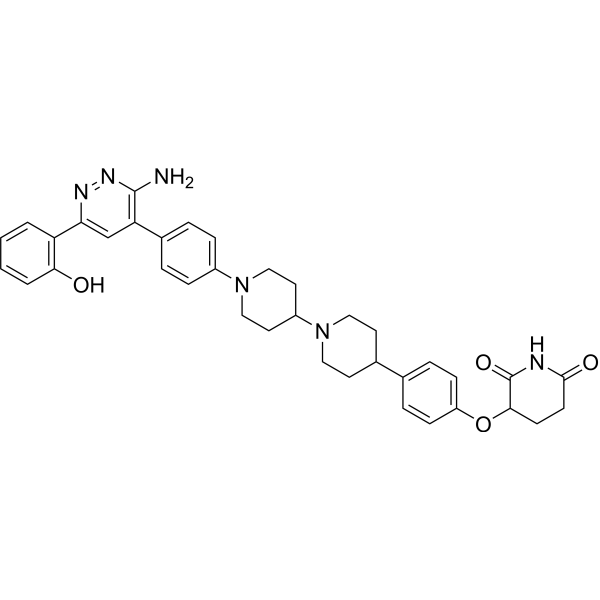
AU-24118 is an orally active PROTAC degrader that recruits cereblon to target the degradation of SMARCA2, SMARCA4 and PBRM1. AU-24118 impairs the chromatin accessibility of oncogenic transcription factors, inhibits colony formation, dislodges chromatin-bound transcription factors, attenuates downstream signal transduction, induces apoptosis, and exerts antiproliferative and cytotoxic effects. AU-24118 can be used in research related to castration-resistant prostate cancer, colorectal cancer, small cell lung cancer and multiple myeloma (including the t (4;14) subtype) .
3
3 Cited Publications
Cat. No.: HY-N0597
CAS No.: 32791-84-7