11 Results for "

DEET

" in MedChemExpress (MCE) Product Catalog:
Products (11)

11 Results for "DEET" in MCE Product Catalog:

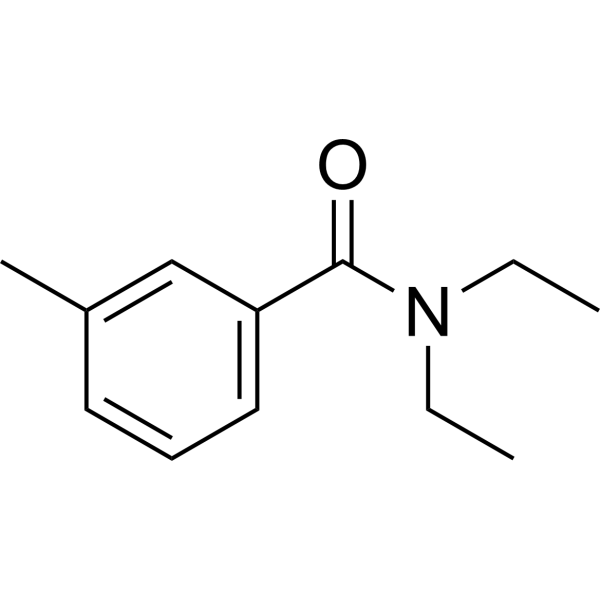
Cat. No.: HY-B0978
CAS No.: 134-62-3
Synonyms: DEET; N,N-Diethyl-m-toluamide
Diethyltoluamide (DEET) is the most common active ingredient in insect repellents. It is intended to provide protection against mosquitoes, ticks, fleas, chiggers, leeches, and many other biting insects. Diethyltoluamide is toxic to hepatocytes and can lead to many physiological, pharmacological, and behavioral abnormalities, particularly motor deficits and learning and memory dysfunction .
loading...
    loading...
Cat. No.: HY-B0978R
CAS No.: 134-62-3
Synonyms: DEET (Standard); N,N-Diethyl-m-toluamide (Standard)
Diethyltoluamide (Standard) is the analytical standard of Diethyltoluamide. This product is intended for research and analytical applications. Diethyltoluamide (DEET) is the most common active ingredient in insect repellents. It is intended to provide protection against mosquitoes, ticks, fleas, chiggers, leeches, and many other biting insects. Diethyltoluamide is toxic to hepatocytes and can lead to many physiological, pharmacological, and behavioral abnormal ities, particularly motor deficits and learning and memory dysfunction .
loading...
    loading...
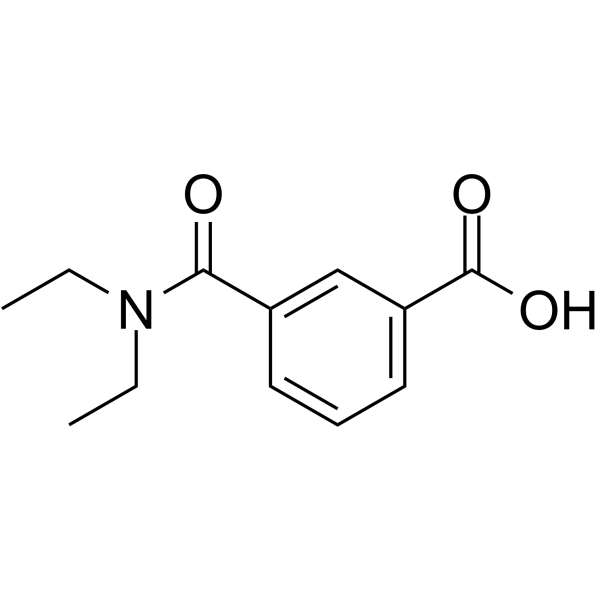
Cat. No.: HY-136612
CAS No.: 72236-23-8
Purity:  99.65%
Target:  

Drug Metabolite EGFR

Research Areas:  

Metabolic Disease

DCBA is the major urinary oxidative metabolite of the insect repellent DEET (HY-B0978). DCBA targets EGFR. DCBA exposure is significantly positively correlated with the risk of liver fibrosis. DCBA can be used in liver fibrosis research .
loading...
    loading...
Cat. No.: HY-78571
CAS No.: 99-04-7
3-Methylbenzoic acid is a weakly acidic compound and an important intermediate for the synthesis of various chemicals, drugs and agrochemicals, including the insect repellent DEET .
loading...
    loading...
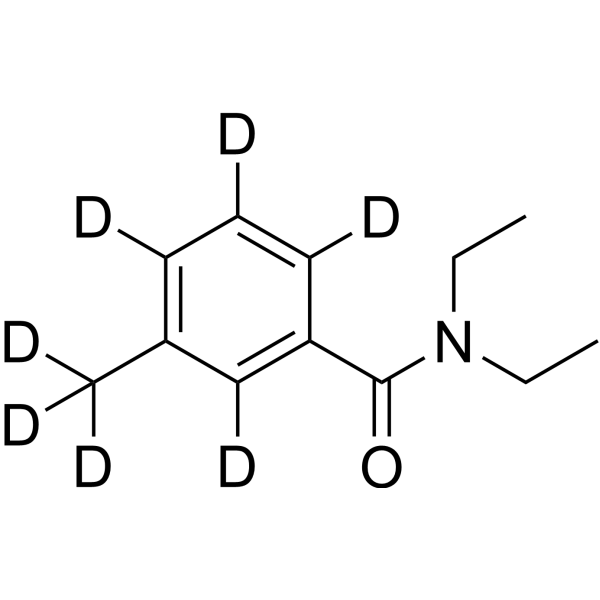
Cat. No.: HY-B0978S1
CAS No.: 1219799-37-7
Synonyms: DEET-d7; N,N-Diethyl-m-toluamide-d7
Diethyltoluamide-d7 is the deuterium labeled Diethyltoluamide . Diethyltoluamide is the most common active ingredient in insect repellents. It is intended to provide protection against mosquitoes, ticks, fleas, chiggers, leeches, and many other biting insects .
loading...
    loading...
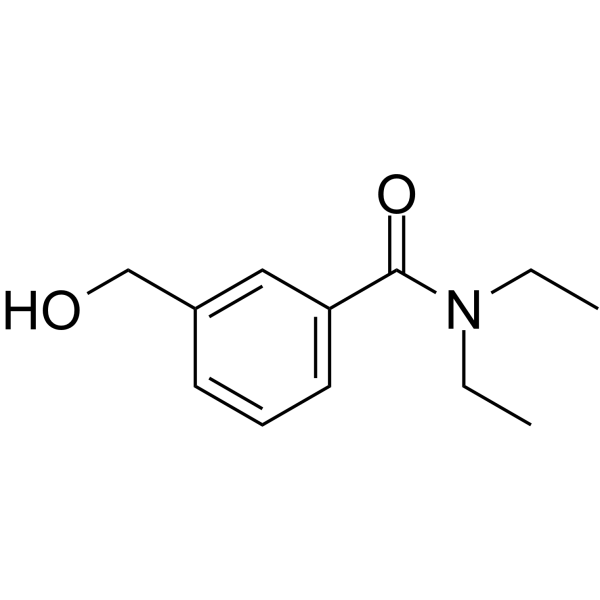
Cat. No.: HY-136611
CAS No.: 72236-22-7
Purity:  ≥96.0%
Target:  

Drug Metabolite

Research Areas:  

Infection

ω-Hydroxy-DEET is a major metabolite of insect repellent N-N-diethyl-meta-toluamide (DEET). ω-Hydroxy-DEET has anti-proliferative effects. DEET is a spatial repellent and an irritant that commonly used to prevent contact with mosquitoes .
loading...
    loading...
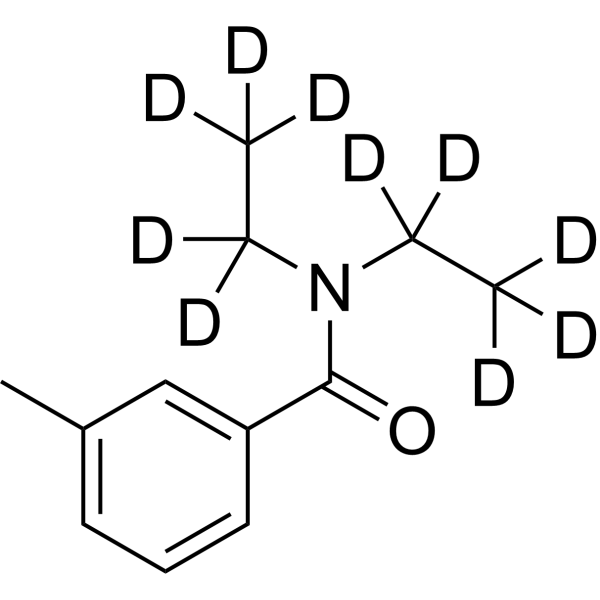
Cat. No.: HY-B0978S
CAS No.: 1215576-01-4
Synonyms: DEET-d10; N,N-Diethyl-m-toluamide-d10
Diethyltoluamide-d10 is the deuterium labeled Diethyltoluamide . Diethyltoluamide is the most common active ingredient in insect repellents. It is intended to provide protection against mosquitoes, ticks, fleas, chiggers, leeches, and many other biting insects .
loading...
    loading...
Cat. No.: HY-136611S
ω-Hydroxy-DEET-d10 is the deuterium labeled ω-Hydroxy-DEET (HY-136611). ω-Hydroxy-DEET is a major metabolite of insect repellent N-N-diethyl-meta-toluamide (DEET). ω-Hydroxy-DEET has anti-proliferative effects. DEET is a spatial repellent and an irritant that commonly used to prevent contact with mosquitoes .
loading...
    loading...
Cat. No.: HY-136611R
CAS No.: 72236-22-7
Research Areas:  

Infection

Carbasalate calcium (Standard) is the analytical standard of Carbasalate calcium. This product is intended for research and analytical applications. Carbasalate calcium is an anti-inflammatory, antipyretic, and analgesic agent.
loading...
    loading...
Cat. No.: HY-136612R
CAS No.: 72236-23-8
Research Areas:  

Metabolic Disease

DCBA (Standard) is the analytical standard of DCBA (HY-136612). This product is intended for research and analytical applications. DCBA is the major urinary oxidative metabolite of the insect repellent DEET (HY-B0978). DCBA targets EGFR. DCBA exposure is significantly positively correlated with the risk of liver fibrosis. DCBA can be used in liver fibrosis research .
loading...
    loading...
Cat. No.: HY-W706930
DCBA-d10 is the d10-labeled DCBA (HY-136612). DCBA is the major urinary oxidative metabolite of the insect repellent DEET (HY-B0978). DCBA targets EGFR. DCBA exposure is significantly positively correlated with the risk of liver fibrosis. DCBA can be used in liver fibrosis research .
loading...
    loading...
  • 1

