51 Results for "

E3 enzyme

" in MedChemExpress (MCE) Product Catalog:
Products (51)

51 Results for "E3 enzyme" in MCE Product Catalog:

27
27 Publications Verification
Cat. No.: HY-13296
CAS No.: 418805-02-4
Purity:  ≥98.0%
Research Areas:  

Cancer

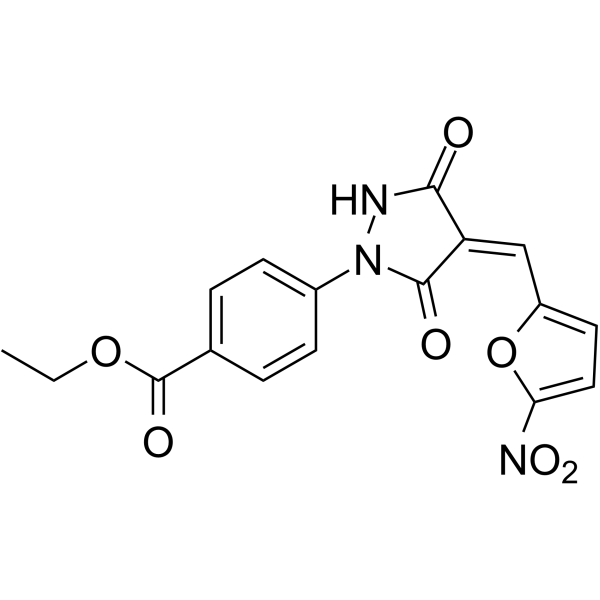
PYR-41 is a selective and cell permeable inhibitor of ubiquitin-activating enzyme E1 with an IC50 of < 10 μM, with little activity at E2 and E3.
loading...
    loading...
5
5 Cited Publications
Cat. No.: HY-101519
CAS No.: 2093388-62-4
Purity:  99.59%
Synonyms: ZBC 260
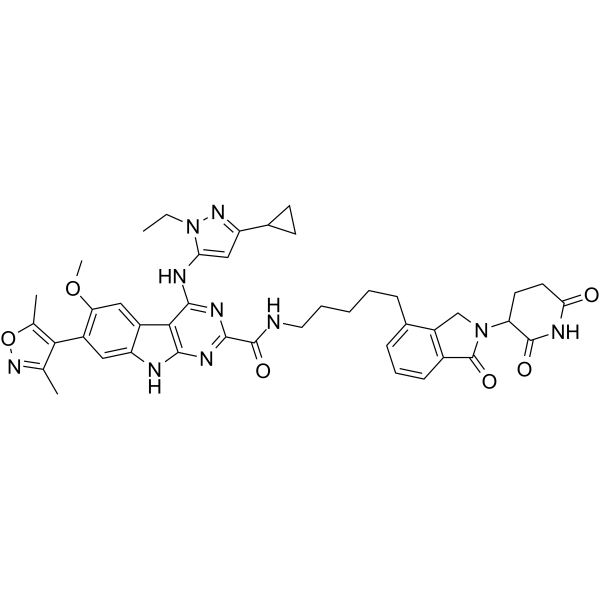
BETd-260 (ZBC 260) is a BET PROTAC degrader. BETd-260 recruits BRD2, BRD3, and BRD4 to the CUL4-RBX1-DDB1-CRBN E3 ubiquitin ligase complex, driving cereblon-, proteasome-, and NEDD8-activating enzyme-dependent ubiquitination and degradation, with a DC50 of approximately 30-100 pM in RS4;11 cells. BETd-260 induces cancer cell apoptosis via endogenous signaling pathways, regulates the expression of the Bcl-2 family, inhibits the oncogene c-Myc, and reduces cell viability. BETd-260 suppresses tumor growth in mouse xenograft models with good biosafety. BETd-260 can be used in research related to acute leukemia, hepatocellular carcinoma, osteosarcoma, and triple-negative breast cancer .
loading...
    loading...
4
4 Cited Publications
Cat. No.: HY-P79449
Purity:  ≥ 95%, as determined by reducing SDS-PAGE.
Synonyms: UBE2D2; Ubiquitin Conjugating enzyme E2 D2; UBC4; UbcH5B; Ubiquitin-Conjugating enzyme E2D 2 (Homologous To Yeast UBC4/5); (E3-Independent) E2 Ubiquitin-Conjugating enzyme D2; P53-Regulated Ubiquitin-Conjugating enzyme 1; Ubiquitin-Conjugating enzyme E2-1
Species:  
Human
Source:  
E. coli
loading...
    loading...
3
3 Cited Publications
Cat. No.: HY-P70998
Purity:  ≥ 95%, as determined by reducing SDS-PAGE.
Synonyms: UBE2D3; Ubiquitin Conjugating enzyme E2 D3; UbcH5C; Ubiquitin-Conjugating enzyme E2D 3 (Homologous To Yeast UBC4/5); Ubiquitin-Conjugating enzyme E2D 3 (UBC4/5 Homolog,Yeast); (E3-Independent) E2 Ubiquitin-Conjugating enzyme D3; Ubiquitin-Conjugating Enzy
Species:  
Human
Source:  
E. coli
loading...
    loading...
Cat. No.: HY-141432
CAS No.: 2573775-59-2
Purity:  99.87%
Synonyms: Cbl-b-IN-3
Target:  

E1/E2/E3 Enzyme

Research Areas:  

Cancer

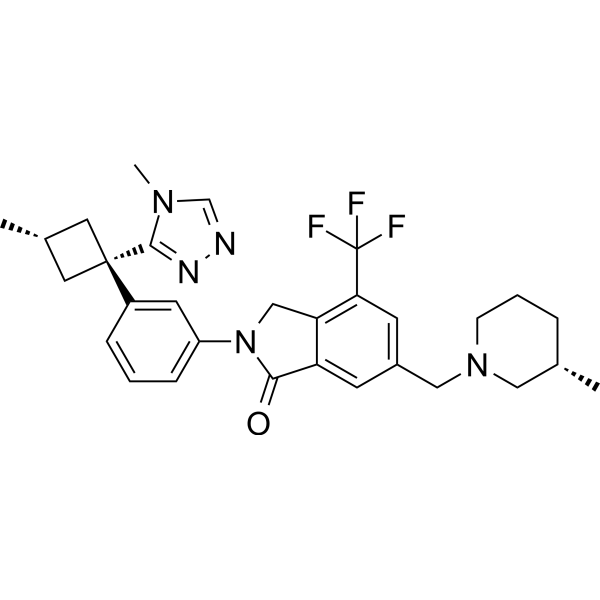
NX-1607 (Compound 23) is an inhibitor of Cbl-b, an E3 enzyme in the ubiquitin-proteasome pathway, with an IC50 value of less than 1 nM. NX-1607 can be used in cancer research .
loading...
    loading...
Cat. No.: HY-141431
CAS No.: 2503325-21-9
Target:  

E1/E2/E3 Enzyme

Research Areas:  

Inflammation/Immunology Cancer

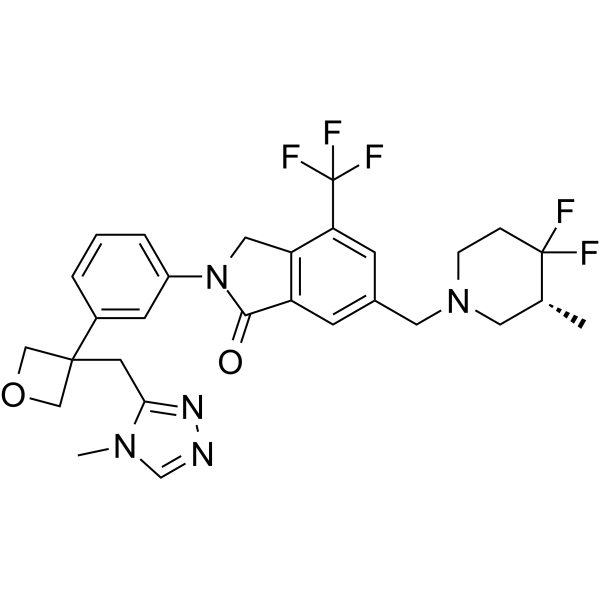
Cbl-b-IN-2 (Example 8) is an orally bioavailable compound, can inhibit the E3 enzyme Casitas B-lineage lymphoma proto-oncogene-b (Cbl-b) in the ubiquitin proteasome pathway. Cbl-b-IN-2 can be used to modulate the immune system and diseases amenable to immune system modulation. Cbl-b-IN-2 (Example 8) also may be administered to an individual with cancer, either alone or as part of a combination, with one or more of an immune checkpoint inhibitor, an anti-neoplastic agent, and radiation agent .
loading...
    loading...
Cat. No.: HY-141432G
CAS No.: 2573775-59-2
Synonyms: Cbl-b-IN-3 (GMP)
NX-1607 (Cbl-b-IN-3) (GMP) is a GMP-grade NX-1607 (HY-141432). GMP-grade small molecules can be used as adjuvant agents in cell therapy. NX-1607 (GMP) enhances antigen recall, reduces T cell exhaustion and increases cytokine production. NX-1607 is an inhibitor of Cbl-b (an E3 enzyme) .
loading...
    loading...
Cat. No.: HY-E71082
Research Areas:  

Others

(E3-independent) E2 ubiquitin-conjugating enzyme (EC 2.3.2.24) transfers a single ubiquitin directly from an ubiquitinated E1 ubiquitin-activating enzyme to itself, and on to a lysine residue of the acceptor protein without involvement of E3 ubiquitin transferases.
loading...
    loading...
Cat. No.: HY-161960
EP300/CBP ligand 2 (compound S19) is a ligand targeting the bromodomain of CREB binding protein (CBP) and E1A-associated protein (EP300). EP300/CBP ligand 2 can be used as a target protein ligand in the PROTAC structure, and can be coupled to the E3 ubiquitin ligase ligand through the PTOTAC Linker to synthesize PROTAC molecules with degradation effects. For example, EP300/CBP ligand 2 can be coupled with the conjugate (E3 ubiquitin enzyme ligand + Linker) Thalidomide-NH-C10-Boc (HY-161961) to produce the PROTAC molecule dCE-2 (HY-161958) .
loading...
    loading...
Cat. No.: HY-P88402
Synonyms: UBCE4; UBCH9; UBE2E3; Ubiquitin-conjugating enzyme E2 E3; E2 ubiquitin-conjugating enzyme E3; UbcH9; Ubiquitin carrier protein E3; Ubiquitin-conjugating enzyme E2-23 kDa; Ubiquitin-protein ligase E3

Host:  

Mouse

Application:  

IHC-P, ICC/IF, FC

Reactivity:  

Human, Mouse, Rat

loading...
    loading...
Cat. No.: HY-P88402A
Synonyms: UBCE4; UBCH9; UBE2E3; Ubiquitin-conjugating enzyme E2 E3; E2 ubiquitin-conjugating enzyme E3; UbcH9; Ubiquitin carrier protein E3; Ubiquitin-conjugating enzyme E2-23 kDa; Ubiquitin-protein ligase E3

Host:  

Mouse

Application:  

IHC-P, ICC/IF, FC

Reactivity:  

Human, Mouse, Rat

loading...
    loading...
Cat. No.: HY-L050
507 compounds

Protein ubiquitination is an enzymatic post-translational modification in which an ubiquitin protein is attached to a substrate protein. Ubiquitination involves three main steps: activation, conjugation, and ligation, performed by ubiquitin-activating enzymes (E1s), ubiquitin-conjugating enzymes (E2s), and ubiquitin ligases (E3s), respectively. Ubiquitination affects cellular processes such as apoptosis, cell cycle, DNA damage repair, and membrane transportation, etc. by regulating the degradation of proteins (via the proteasome and lysosome), altering the cellular localization of proteins, affecting proteins activity, and promoting or preventing protein-protein interactions. Deregulation of ubiquitin pathway leads to many diseases such as neurodegeneration, cancer, infection and immunity, etc.

MCE offers a unique collection of 507 small molecule modulators with biological activity used for ubiquitination research. Compounds in this library target the key enzymes in ubiquitin pathway. MCE Ubiquitination Compound Library is a useful tool for the research of ubiquitination regulation and the corresponding diseases.

Cat. No.: HY-P701487
Purity:  ≥ 90%, as determined by reducing SDS-PAGE.
Synonyms: UBE2E3; Ubiquitin Conjugating enzyme E2 E3; UbcH9; Ubiquitin-Conjugating enzyme E2E 3 (Homologous To Yeast UBC4/5); Ubiquitin-Conjugating enzyme E2E 3 (UBC4/5 Homolog,Yeast); Ubiquitin-Conjugating enzyme E2-23 KDa; Ubiquitin-Conjugating enzyme E2 E3; E2 U
Species:  
Human
Source:  
Sf9 insect cells
loading...
    loading...
Cat. No.: HY-P701490
Purity:  ≥ 90%, as determined by reducing SDS-PAGE.
Synonyms: UBE2E3; Ubiquitin Conjugating enzyme E2 E3; UbcH9; Ubiquitin-Conjugating enzyme E2E 3 (Homologous To Yeast UBC4/5); Ubiquitin-Conjugating enzyme E2E 3 (UBC4/5 Homolog,Yeast); Ubiquitin-Conjugating enzyme E2-23 KDa; Ubiquitin-Conjugating enzyme E2 E3; E2 U
Species:  
Human
Source:  
Sf9 insect cells
loading...
    loading...
Cat. No.: HY-P82533
Synonyms: EFP; RNF147; ZNF147; TRIM25; E3 ubiquitin/ISG15 ligase TRIM25; Estrogen-responsive finger protein; RING finger protein 147; RING-type E3 ubiquitin transferase; RING-type E3 ubiquitin transferase TRIM25; Tripartite motif-containing protein 25; Ubiquitin/ISG15-conjugating enzyme TRIM25; Zinc finger protein 147

Host:  

Rabbit

Application:  

WB, ICC/IF, IP

Reactivity:  

Human, Rat

loading...
    loading...
Cat. No.: HY-P84567
Synonyms: EFP; RNF147; ZNF147; TRIM25; E3 ubiquitin/ISG15 ligase TRIM25; Estrogen-responsive finger protein; RING finger protein 147; RING-type E3 ubiquitin transferase; RING-type E3 ubiquitin transferase TRIM25; Tripartite motif-containing protein 25; Ubiquitin/ISG15-conjugating enzyme TRIM25; Zinc finger protein 147

Host:  

Mouse

Application:  

WB, IHC-P, ICC/IF, FC, ELISA

Reactivity:  

Human

loading...
    loading...
Cat. No.: HY-P82533A
Synonyms: EFP; RNF147; ZNF147; TRIM25; E3 ubiquitin/ISG15 ligase TRIM25; Estrogen-responsive finger protein; RING finger protein 147; RING-type E3 ubiquitin transferase; RING-type E3 ubiquitin transferase TRIM25; Tripartite motif-containing protein 25; Ubiquitin/ISG15-conjugating enzyme TRIM25; Zinc finger protein 147

Host:  

Rabbit

Application:  

WB, ICC/IF, IP

Reactivity:  

Human, Rat

loading...
    loading...
Cat. No.: HY-P84567A
Synonyms: EFP; RNF147; ZNF147; TRIM25; E3 ubiquitin/ISG15 ligase TRIM25; Estrogen-responsive finger protein; RING finger protein 147; RING-type E3 ubiquitin transferase; RING-type E3 ubiquitin transferase TRIM25; Tripartite motif-containing protein 25; Ubiquitin/ISG15-conjugating enzyme TRIM25; Zinc finger protein 147

Host:  

Mouse

Application:  

WB, IHC-P, ICC/IF, FC, ELISA

Reactivity:  

Human

loading...
    loading...
Cat. No.: HY-P811950
Synonyms: TRIAD3; UBCE7IP1; ZIN; RNF216; E3 ubiquitin-protein ligase RNF216; RING finger protein 216; RING-type E3 ubiquitin transferase RNF216; Triad domain-containing protein 3; Ubiquitin-conjugating enzyme 7-interacting protein 1; Zinc finger protein inhibiting NF-kappa-B

Host:  

Mouse

Application:  

WB, FC

Reactivity:  

Human, Mouse, Rat

loading...
    loading...
Cat. No.: HY-L045
4,368 compounds

Oxygen homeostasis regulation is the most fundamental cellular process for adjusting physiological oxygen variations, and its irregularity leads to various human diseases, including cancer. Hypoxia is closely associated with cancer development, and hypoxia/oxygen-sensing signaling plays critical roles in the modulation of cancer progression.

Hypoxia-inducible factor 1 (HIF-1) is a transcription factor that functions as a master regulator of oxygen homeostasis. A variety of HF-1 target genes have been identified thus far which encode proteins that play key roles in critical developmental and physiological processes including angiogenesis/vascular remodeling, erythropoiesis, glucose transport, glycolysis, iron transport, and cell proliferation/survival.

HIF-1 is a heterodimeric transcription factor consisting of a constitutively expressed β-subunit and an oxygen-regulated α-subunit. The unique feature of HIF-1 is the regulation of HIF-1α expression and activity based upon the cellular O2 concentration. Under normoxic conditions, hydroxylation of HIF-1α on these different proline residues is essential for HIF proteolytic degradation by promoting interaction with the von Hippel-Lindau tumor-suppressor protein (pVHL) through hydrogen bonding to the hydroxyproline-binding pocket in the pVHL β-domain. As oxygen levels decrease, hydroxylation of HIF decreases; HIF-1α then no longer binds pVHL, and becomes stabilized, allowing more of the protein to translocate to the cell’s nucleus, where it acts as a transcription factor, upregulating (often within minutes) the production of proteins that stimulate blood perfusion in tissues and thus tissue oxygenation.

MCE offers a unique collection of 4,368 oxygen sensing related compounds targeting HIF/HIF Prolyl-Hydroxylase, MAPK/ERK, PI3K/AKT signaling pathways, etc. MCE Oxygen Sensing Compound Library is a useful tool to study hypoxia, oxidative stress and discover new anti-cancer drugs.

