18 Results for "

European Mistletoe

" in MedChemExpress (MCE) Product Catalog:
Products (18)

18 Results for "European Mistletoe" in MCE Product Catalog:

1
1 Cited Publications
Cat. No.: HY-114899
CAS No.: 35575-96-3
Purity:  96.46%
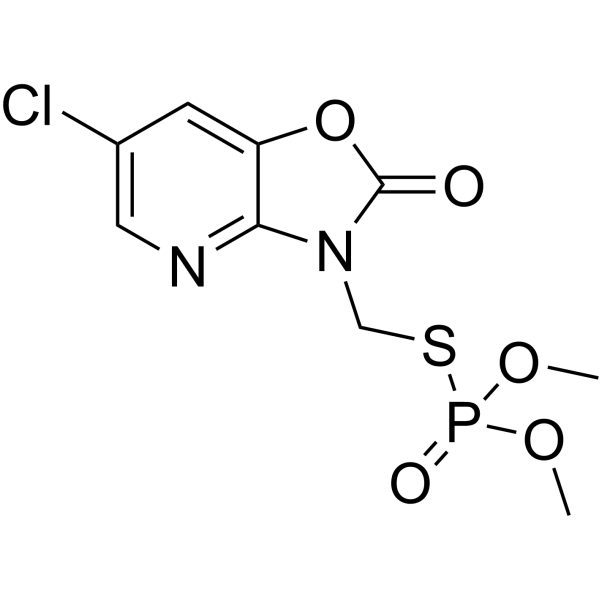
Azamethiphos is an acetylcholinesterase inhibitor and insecticide. Azamethiphos covalently binds to acetylcholinesterase via phosphorylation, inhibits its activity, causes acetylcholine to accumulate in cholinergic synapses, triggers uncontrolled excitation of cholinergic sites, induces paralysis and leads to death. Azamethiphos can be used as a bath insecticide in salmonid aquaculture to control sea lice infestations, and it exerts acute toxicity to European lobster larvae, including mortality and movement disorders .
loading...
    loading...
Cat. No.: HY-16565
CAS No.: 32981-86-5
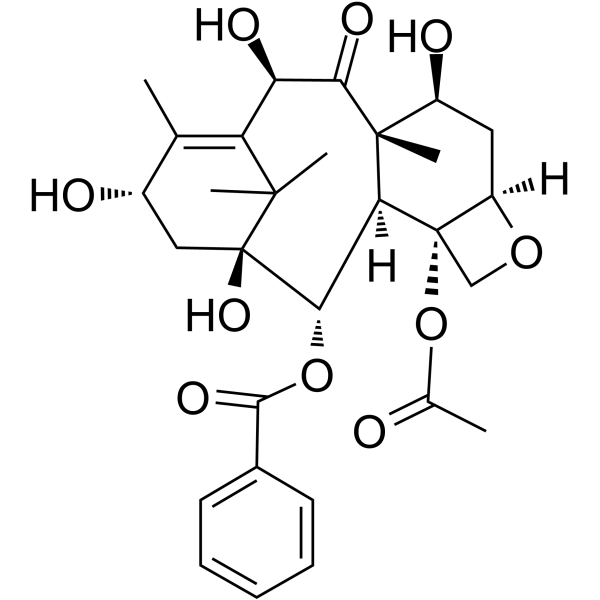
10-Deacetylbaccatin-III is an intermediate in the preparation process of paclitaxel. 10-Deacetylbaccatin III can be isolated from the dried needles and small branches of the European yew tree (Taxus baccata). 10-Deacetylbaccatin III exhibits antileishmanial activity .
loading...
    loading...
Cat. No.: HY-B1419
CAS No.: 90-01-7
Synonyms: 2-Hydroxybenzyl alcohol; Saligenin
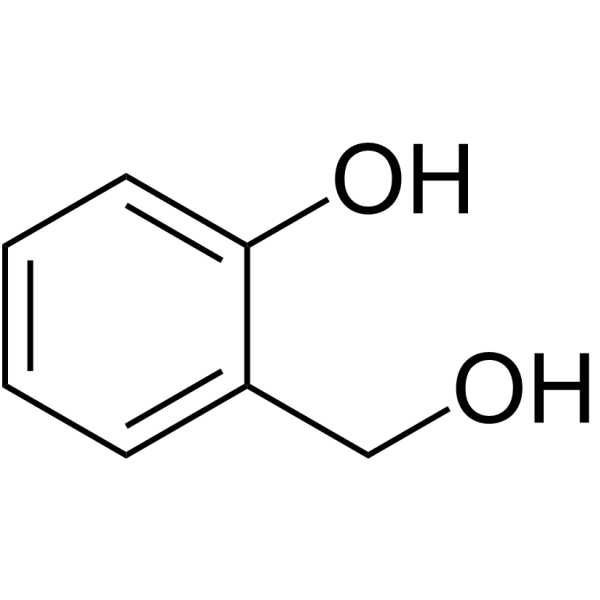
Salicyl alcohol (2-Hydroxybenzyl alcohol; Saligenin) is a phenolic alcohol-type topical anesthetic and strong sensitizer with antiseptic, antibacterial and antipyretic activities. Salicyl alcohol serves as a precursor for salicin synthesis. Salicyl alcohol induces contact dermatitis and eczematous skin reactions, and is a well-known allergen identified in phenolic resins. Salicyl alcohol is isolated from the barks of European aspen (Populus tremula), rowan (Sorbus aucuparia) and willow (Salix spp.). Salicyl alcohol is used in studies related to allergic contact dermatitis .
loading...
    loading...
Cat. No.: HY-N1098
CAS No.: 25739-41-7
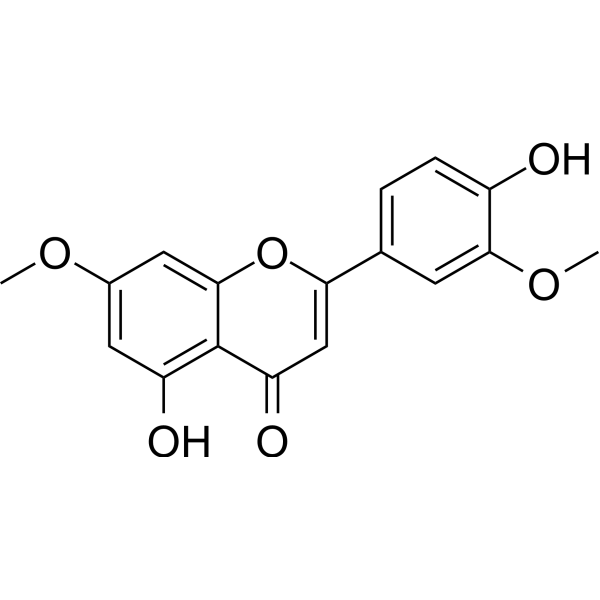
Velutin is a flavonoid. Velutin can be extracted from mistletoe. Velutin inhibits mushroom Tyrosinase activity with an IC50 of 910.1 μM. Velutin inhibits p38 phosphorylation, the NF-κB pathway and the MAPK pathway. Velutin prevents articular cartilage degeneration and subchondral bone loss. Velutin slows down the progression of intervertebral disc degeneration. Velutin exhibits inhibitory effects on melanogenesis, skin whitening, anti-inflammatory, anti-allergic, anti-oxidant and antibacterial activities. Velutin can be used in studies related to pigmented diseases, osteoarthritis and intervertebral disc degeneration .
loading...
    loading...
Cat. No.: HY-133985
CAS No.: 63623-49-4
Target:  

Sex Pheromone

7(Z)-Pentacosene is an aggregation pheromone of the European earwig (Forficula auricularia). 7(Z)-Pentacosene can be used in the study of insect behavior and neurobiology .
loading...
    loading...
Cat. No.: HY-P10681
CAS No.: 93207-22-8
Target:  

Bacterial

Research Areas:  

Infection

Crabrolin is a tridecapeptide that can be extracted from the venom of the European hornet (Vespa crabro). Crabrolin shows MIC/MBC of 2/2, 16/64, 4/8 μM, for S. aureus (NCTC 10788), MRSA (NCTC 12493) and E. faecium (NTCC 12697), respectively .
loading...
    loading...
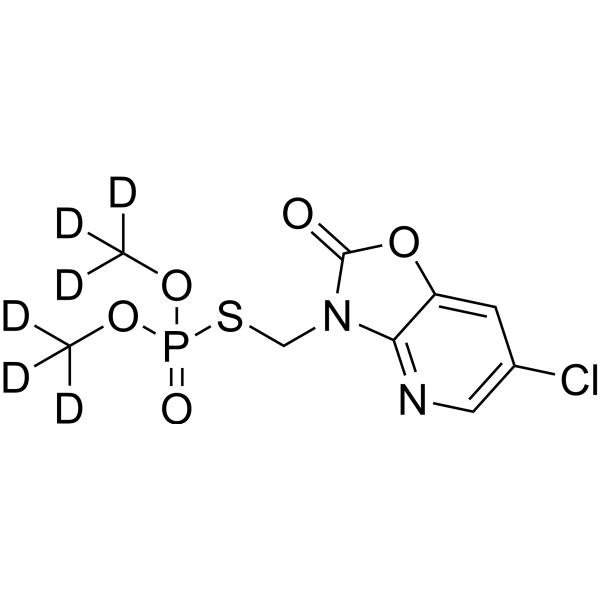
Cat. No.: HY-114899S
CAS No.: 1189894-02-7
Azamethiphos-d6 is deuterated labeled Azamethiphos (HY-114899). Azamethiphos is an acetylcholinesterase inhibitor and insecticide. Azamethiphos covalently binds to acetylcholinesterase via phosphorylation, inhibits its activity, causes acetylcholine to accumulate in cholinergic synapses, triggers uncontrolled excitation of cholinergic sites, induces paralysis and leads to death. Azamethiphos can be used as a bath insecticide in salmonid aquaculture to control sea lice infestations, and it exerts acute toxicity to European lobster larvae, including mortality and movement disorders .
loading...
    loading...
Cat. No.: HY-114899R
CAS No.: 35575-96-3
Azamethiphos (Standard) is the analytical standard of Azamethiphos (HY-114899). This product is intended for research and analytical applications. Azamethiphos is an acetylcholinesterase inhibitor and insecticide. Azamethiphos covalently binds to acetylcholinesterase via phosphorylation, inhibits its activity, causes acetylcholine to accumulate in cholinergic synapses, triggers uncontrolled excitation of cholinergic sites, induces paralysis and leads to death. Azamethiphos can be used as a bath insecticide in salmonid aquaculture to control sea lice infestations, and it exerts acute toxicity to European lobster larvae, including mortality and movement disorders .
loading...
    loading...
Cat. No.: HY-N1098R
CAS No.: 25739-41-7
Velutin (Standard) is the analytical standard of Velutin (HY-N1098). This product is intended for research and analytical applications. Velutin is a flavonoid. Velutin can be extracted from mistletoe. Velutin inhibits mushroom Tyrosinase activity with an IC50 of 910.1 μM. Velutin inhibits p38 phosphorylation, the NF-κB pathway and the MAPK pathway. Velutin prevents articular cartilage degeneration and subchondral bone loss. Velutin slows down the progression of intervertebral disc degeneration. Velutin exhibits inhibitory effects on melanogenesis, skin whitening, anti-inflammatory, anti-allergic, anti-oxidant and antibacterial activities. Velutin can be used in studies related to pigmented diseases, osteoarthritis and intervertebral disc degeneration .
loading...
    loading...
Cat. No.: HY-B1419R
CAS No.: 90-01-7
Synonyms: 2-Hydroxybenzyl alcohol (Standard); Saligenin (Standard)
Salicyl alcohol (Standard) (2-Hydroxybenzyl alcohol (Standard)) is the analytical standard of Salicyl alcohol (HY-B1419). This product is intended for research and analytical applications. Salicyl alcohol (2-Hydroxybenzyl alcohol; Saligenin) is a phenolic alcohol-type topical anesthetic and strong sensitizer with antiseptic, antibacterial and antipyretic activities. Salicyl alcohol serves as a precursor for salicin synthesis. Salicyl alcohol induces contact dermatitis and eczematous skin reactions, and is a well-known allergen identified in phenolic resins. Salicyl alcohol is isolated from the barks of European aspen (Populus tremula), rowan (Sorbus aucuparia) and willow (Salix spp.). Salicyl alcohol is used in studies related to allergic contact dermatitis .
loading...
    loading...
loading...
    loading...
Cat. No.: HY-W142293
CAS No.: 763-32-6
Synonyms: Methallylcarbinol
Target:  

Drug Derivative

3-Methyl-3-buten-1-ol (Methallylcarbinol), a semiterpenoid alcohol, is an aggregation pheromone that can be found in the venom glands of the European hornet (Vespa crabro) and our-eyed spruce bark beetle .
loading...
    loading...
Cat. No.: HY-W778558
CAS No.: 171926-87-7
Target:  

Drug Derivative

Research Areas:  

Others

2-Debenzoyl-2-tigloyl 10-Deacetyl Baccatin III is a Baccatin III (HY-N6985) derivative lacking a benzoyl residue. 2-Debenzoyl-2-tigloyl 10-Deacetyl Baccatin III can be isolated from the needles of the European yew (T. barcata L.) .
loading...
    loading...
Cat. No.: HY-W1121912
CAS No.: 2142-94-1
Nerylformate is a terpenoid derivative secreted by American house dust mites (Dermatophagoides farinae) and European house dust mites (Dermatophagoides pteronyssinus). Nerylformate has a significant attraction effect on both male and female individuals of the two species of house dust mites. Nerylformate guides the mites to gather together to reduce dehydration and enhance defense. Nerylformate can be used for the research of immunology and inflammation, such as allergic rhinitis .
loading...
    loading...
Cat. No.: HY-W720758
CAS No.: 6750-34-1
3,7,11-Trimethyl-1-dodecanol is an alcohol volatile organic compound present in Spirulina platensis, with a faint odor. 3,7,11-Trimethyl-1-dodecanol inhibits the oviposition behavior of female Ostrinia nubilalis (European corn borer). 3,7,11-Trimethyl-1-dodecanol can be used in studies related to behavioral regulation of agricultural pests .
loading...
    loading...
Cat. No.: HY-178898
CAS No.: 13072-74-7
7-Oxogedunin (Compound 7DG; Compound 16) is a small molecule that protects macrophages from cell pyroptosis induced by anthrax lethal toxin (LT). Its target is protein kinase R (PKR). 7-Oxogedunin can widely inhibit the assembly of various inflammasomes (NLRP1 and NLRP3) and the activation of caspase-1 by inhibiting the kinase-independent function of PKR. 7-Oxogedunin has growth inhibitory activity on European corn borer larvae. 7-Oxogedunin can be used for LT toxicity inhibition and pest control research .
loading...
    loading...
Cat. No.: HY-L115
3,362 compounds

Natural products are characterized by enormous scaffold diversity and structural complexity, because of which, natural products do show a wide range of biological activities. Medicinal plants have been the major source of medicines over many centuries. About a quarter of all Food and Drug Administration (FDA) and/or the European Medical Agency (EMA) approved drugs are plant based, with well-known drugs such as Paclitaxel and Aspirin having been isolated from plants.

MCE provides a unique collection of 3,362 plant-sourced natural products. MCE Plant-Sourced Natural Product Library is a useful tool for drug discovery that can be used for high throughput screening (HTS) and high content screening (HCS).

Cat. No.: HY-L143
61 compounds

Oceans cover more than 70% of the Earth’s surface and host a huge species diversity. Marine organisms are considered the most recent source of bioactive natural products after terrestrial plants and nonmarine microorganisms. Marine biological sources are taxonomically diverse and include sponges, tunicates, corals, mollusks, fungi, and sediment-derived bacteria.

Marine organisms can produce a plethora of small molecules with novel chemical structures and potent biological properties, being a rich source for the discovery of pharmacologically active compounds, already with several marine-derived agents approved as drugs. Ziconotide, a peptide originally discovered in a tropical cone snail, was the first marine-derived compound to be approved in the United States in December 2004 for the treatment of pain. Then, in October 2007, Trabectedin became the first marine anticancer drug to be approved in the European Union.

MCE offers a unique collection of 61 marine-sourced natural products which can be used for drug discovery for high throughput screening (HTS) and high content screening (HCS). MCE marine-sourced natural product library is an important source for drug discovery and development.

  • 1

