17 Results for "

FPR1 antagonist

" in MedChemExpress (MCE) Product Catalog:
Products (17)

17 Results for "FPR1 antagonist" in MCE Product Catalog:

6
6 Publications Verification
Cat. No.: HY-101283
CAS No.: 1435265-06-7
Purity:  99.16%
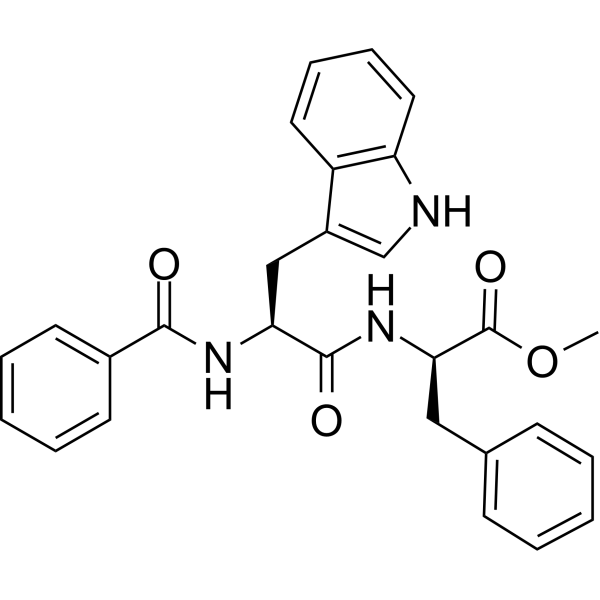
HCH6-1 is a potent and competitive dipeptide antagonist of Formyl peptide receptor 1 (FPR1). HCH6-1 inhibits chemotaxis, superoxide anion generation, and elastase release in human neutrophils specifically activated by fMLF (an FPR1 agonist). HCH6-1 has protective effects against acute lung injury (ALI) in vivo and can be used for the research of FPR1-involved inflammatory lung diseases .
loading...
    loading...
4
4 Cited Publications
Cat. No.: HY-103473
CAS No.: 67247-12-5
Purity:  99.93%
Synonyms: Boc-Met-Leu-Phe-OH
Research Areas:  

Inflammation/Immunology

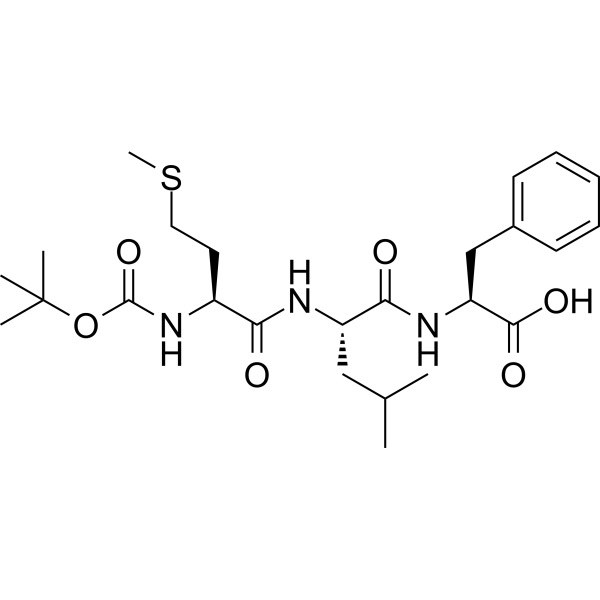
Boc-MLF (Boc-Met-Leu-Phe-OH) is a competitive FPR1 antagonist. Boc-MLF inhibits fMLF-induced neutrophil activation through FPR. Boc-MLF inhibits receptor-induced inflammation and cell migration. Boc-MLF inhibits amniotic epithelial-mesenchymal transition. Boc-MLF reduces pro-inflammatory cytokine levels. Boc-MLF increases collagen expression in fetal membranes. Boc-MLF reverses fetal membrane epithelial cell collapse, increases villi, and reduces mucus attachment. Boc-MLF can be used in research on premature rupture of fetal membranes .
loading...
    loading...
4
4 Cited Publications
Cat. No.: HY-103473A
Purity:  99.48%
Synonyms: Boc-Met-Leu-Phe-OH TFA
Research Areas:  

Inflammation/Immunology

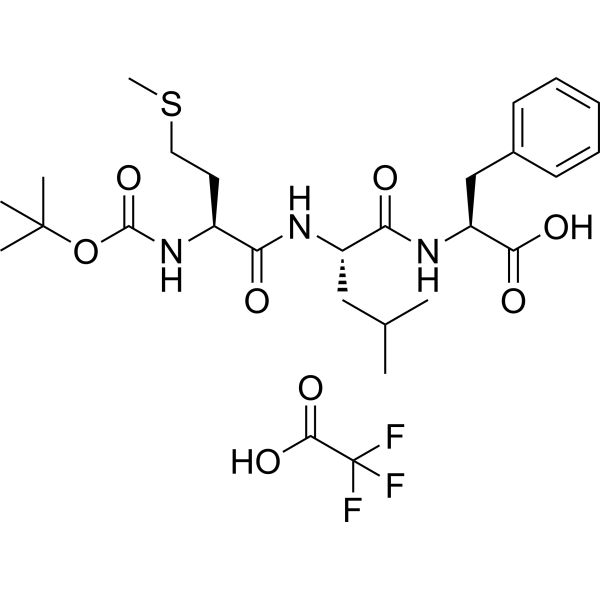
Boc-MLF TFA (Boc-Met-Leu-Phe-OH TFA) is a competitive FPR1 antagonist. Boc-MLF TFA inhibits fMLF-induced neutrophil activation through FPR. Boc-MLF TFA inhibits receptor-induced inflammation and cell migration. Boc-MLF TFA inhibits amniotic epithelial-mesenchymal transition. Boc-MLF TFA reduces pro-inflammatory cytokine levels. Boc-MLF TFA increases collagen expression in fetal membranes. Boc-MLF TFA reverses fetal membrane epithelial cell collapse, increases villi, and reduces mucus attachment. Boc-MLF TFA can be used in research on premature rupture of fetal membranes .
loading...
    loading...
2
2 Cited Publications
Cat. No.: HY-103286
CAS No.: 204067-01-6
Purity:  99.38%
Target:  

Bombesin Receptor

Research Areas:  

Cancer

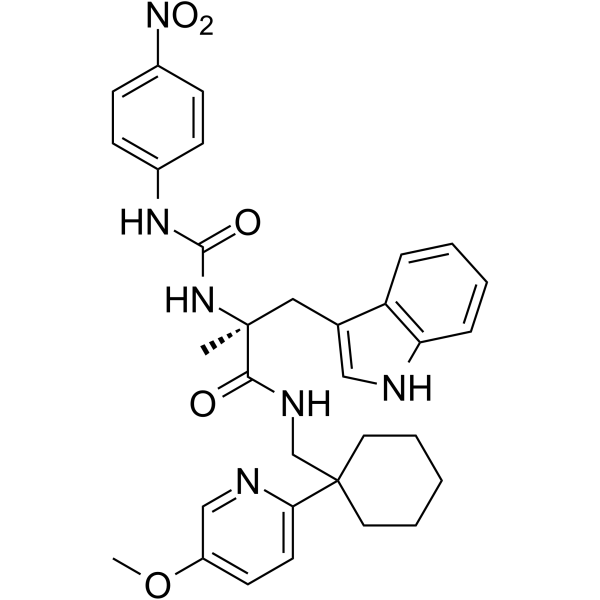
PD176252 is a potent antagonist of neuromedin-B preferring (BB1) and gastrin-releasing peptide-preferring (BB2) receptor with Kis of 0.17 nM and 1 nM for human BB1 and BB2 receptors, and 0.66 nM, 16 nM for Rat BB1 and BB2 receptors, respectively; PD176252 is also an agonist of N-Formyl peptide receptor1/2 (FPR1/FPR2), with EC50s of 0.31 and 0.66 μM in HL-60 cells.
loading...
    loading...
2
2 Cited Publications
Cat. No.: HY-P1795
CAS No.: 148182-34-7
Research Areas:  

Inflammation/Immunology

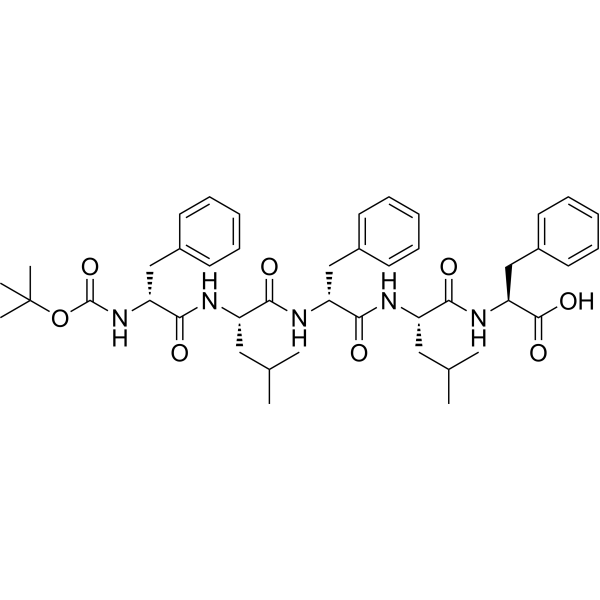
Boc-dPhe-Leu-dPhe-Leu-Phe (Boc-fLfLF) is a selective N-formyl peptide receptor1 (FPR1) antagonist. Boc-dPhe-Leu-dPhe-Leu-Phe inhibits fMIFL(HY-P0224)-induced NADPH oxidase activity. Boc-dPhe-Leu-dPhe-Leu-Phe can be used for the study of inflammation .
loading...
    loading...
1
1 Cited Publications
Cat. No.: HY-P2355
CAS No.: 66556-73-8
Synonyms: BOC2; Boc-Phe-dLeu-Phe-dLeu-Phe
Research Areas:  

Inflammation/Immunology

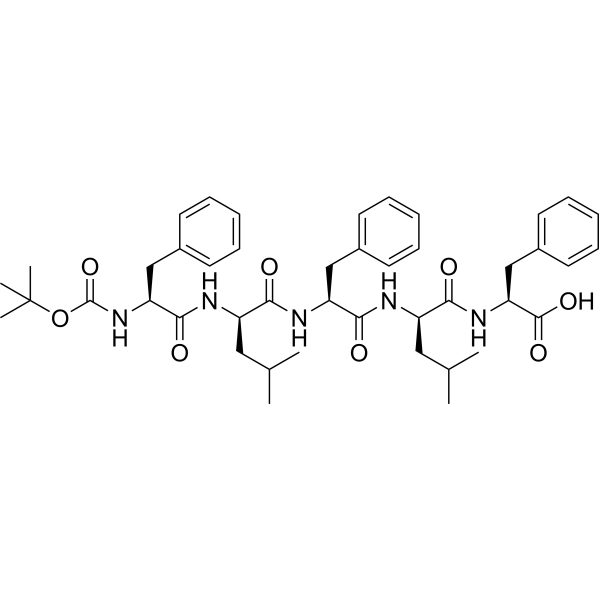
BOC-FlFlF (Boc-Phe-dLeu-Phe-dLeu-Phe) is a selective FPR1 antagonist. Boc-FlFlF has an apparent dissociation constant (KD) of 230 nM as determined by the intracellular calcium mobilization assay. Boc-FlFlF can be used for the study of inflammation .
loading...
    loading...
Cat. No.: HY-156293
CAS No.: 3053980-28-9
Purity:  ≥95.0%
Research Areas:  

Cancer

FPR1 antagonist 1 (compound 24a) is a formyl peptide receptor 1 (FPR1) antagonist with an IC50 of 25 nM. FPR1 antagonist 1 inhibits cell growth through a combined effect on cell proliferation and apoptosis and reduces cell migration, while inducing an increase in angiogenesis .
loading...
    loading...
Cat. No.: HY-116216
CAS No.: 204066-82-0
Purity:  98.78%
Target:  

Bombesin Receptor

Research Areas:  

Cancer

PD 168368 is a potent, competitive, and selective neuromedin B receptor (NMB-R) antagonist with the Ki of 15–45 nM . PD 168368 is neuromedin B receptor (NMBR; IC50=96 nM) / gastrin-releasing peptide receptor (GRPR IC50=3500 nM) antagonist . PD 168368 also is a mixed FPR1/FPR2/FPR3 agonist with EC50s of 0.57, 0.24, and 2.7 nM, respectively .
loading...
    loading...
Cat. No.: HY-117971
CAS No.: 1374984-75-4
Purity:  99.97%
Research Areas:  

Others

BVT173187 is a selective inhibitor of the neutrophil formyl peptide receptor FPR1, with activity that inhibits FPR1 activation. BVT173187 inhibits FPR1 agonist-induced activation in neutrophils, reduces adhesion molecule mobilization and superoxide anion production, and has inhibitory activity on FPR1 similar to that of earlier described peptide antagonists, but also has effects on C5aR and CXCR signaling.
loading...
    loading...
Cat. No.: HY-156294
Research Areas:  

Cancer

FPR1 antagonist 2 (compound 25b) is a formyl peptide receptor 1 (FPR1) antagonist with an IC50 of 70 nM. FPR1 antagonist 2 inhibits cell growth through a combined effect on cell proliferation and apoptosis and reduces cell migration, while inducing an increase in angiogenesis .
loading...
    loading...
Cat. No.: HY-176403
CAS No.: 3058943-53-3
Research Areas:  

Inflammation/Immunology

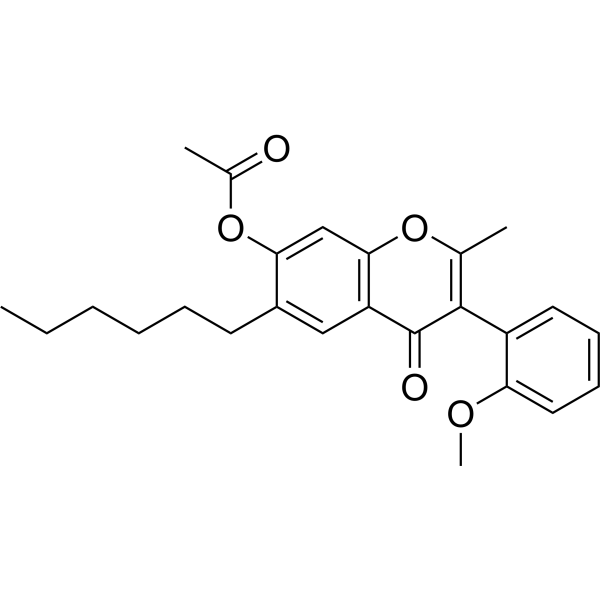
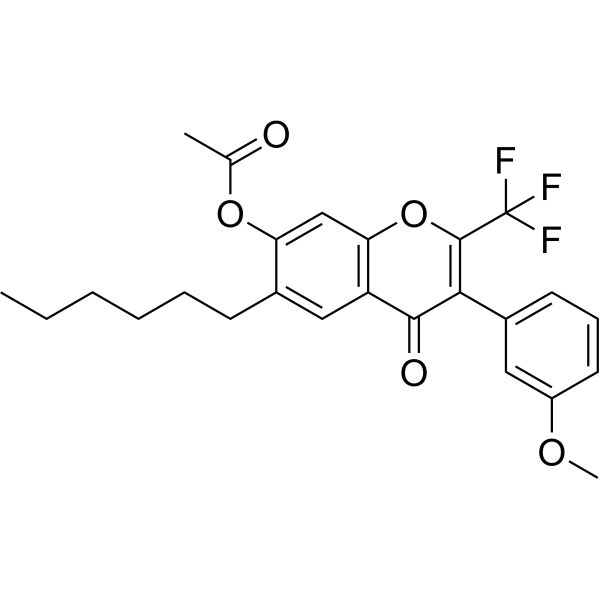
FPR1 antagonist 3 (compound 10) is a potent and selective FPR1 antagonist. FPR1 antagonist 3 inhibits superoxide anion generation and elastase release with IC50s of 0.33 and 0.84 μM, respectively .
loading...
    loading...
Cat. No.: HY-N8152
CAS No.: 14021-14-8
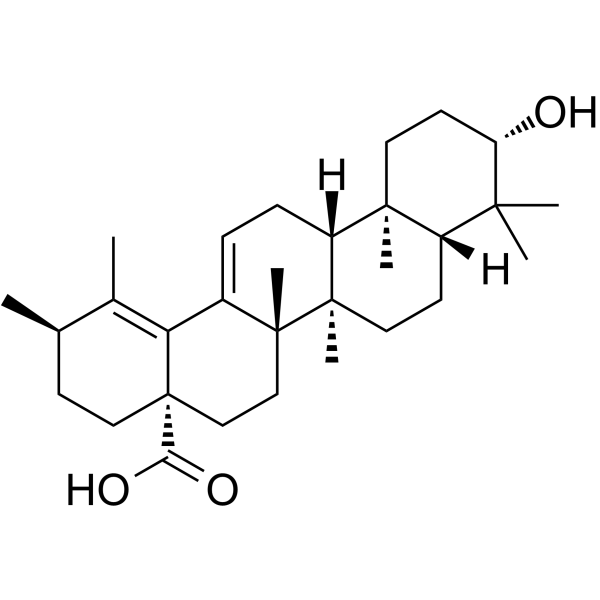
Randialic acid B, a triterpenoid compound, is a formyl peptide receptor 1 (FPR1) antagonist. Randialic acid B blocks FPR1 in human neutrophils and attenuates psoriasis-like inflammation in vivo .
loading...
    loading...
Cat. No.: HY-178919
CAS No.: 2996841-28-0
N-19004 is a FPR1 antagonist. N-19004 shows broad-spectrum antibacterial effects against a variety of pathogens. N-19004 exhibits significant retinal protective effects in the rd10 mouse model of retinitis pigmentosa (RP). N-19004 can attenuate retinal dysfunction, mitigate rod and cone degeneration, and reduce immune cell activation, gliosis, inflammation, oxidative stress, and apoptosis. N-19004 can reduce the size of laser-induced choroidal lesions and promote edema absorption through dual anti-inflammatory and anti-angiogenic effects. N-19004 can be used for the research of retinal degenerative diseases such as retinitis pigmentosa .
loading...
    loading...
Cat. No.: HY-P2355A
Synonyms: BOC2 TFA; Boc-Phe-dLeu-Phe-dLeu-Phe TFA
Research Areas:  

Inflammation/Immunology

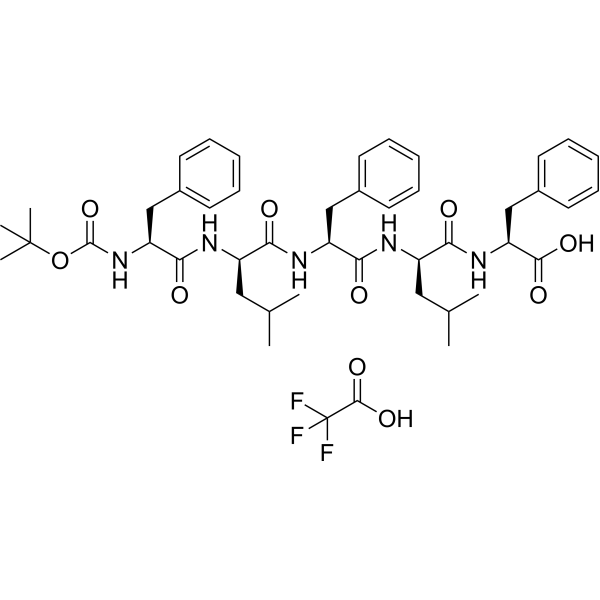
BOC-FlFlF (TFA) (Boc-Phe-dLeu-Phe-dLeu-Phe (TFA)) is a selective FPR1 antagonist. BOC-FlFlF has an apparent dissociation constant (KD) of 230 nM as determined by the intracellular calcium mobilization assay. BOC-FlFlF can be used for the study of inflammation .
loading...
    loading...
Cat. No.: HY-101283R
CAS No.: 1435265-06-7
HCH6-1 (Standard) is the analytical standard of HCH6-1 (HY-101283). This product is intended for research and analytical applications. HCH6-1 is a potent and competitive dipeptide antagonist of Formyl peptide receptor 1 (FPR1). HCH6-1 inhibits chemotaxis, superoxide anion generation, and elastase release in human neutrophils specifically activated by fMLF (an FPR1 agonist). HCH6-1 has protective effects against acute lung injury (ALI) in vivo and can be used for the research of FPR1-involved inflammatory lung diseases .
loading...
    loading...
Cat. No.: HY-189550
CAS No.: 1355994-75-0
Synonyms: AZ2158
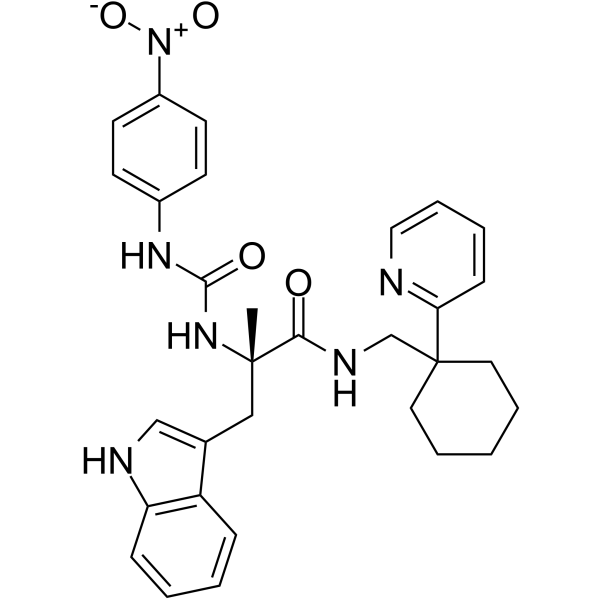
ICT12035 (AZ2158) is a selective small-molecule FPR1 antagonist with an IC50 of 30 nM. ICT12035 reduces fMLF-induced proliferation and invasion and modulates xenograft tumor growth. ICT12035 is used in research on glioblastoma, bladder cancer, and glioma .
loading...
    loading...
Cat. No.: HY-103286R
CAS No.: 204067-01-6
Research Areas:  

Cancer

PD176252 (Standard) is the analytical standard of PD176252 (HY-103286). This product is intended for research and analytical applications. PD176252 is a potent antagonist of neuromedin-B preferring (BB1) and gastrin-releasing peptide-preferring (BB2) receptor with Kis of 0.17 nM and 1 nM for human BB1 and BB2 receptors, and 0.66 nM, 16 nM for Rat BB1 and BB2 receptors, respectively; PD176252 is also an agonist of N-Formyl peptide receptor1/2 (FPR1/FPR2), with EC50s of 0.31 and 0.66 μM in HL-60 cells.
loading...
    loading...
  • 1

