287 Results for "
Fluorescent substrate
" in MedChemExpress (MCE) Product Catalog:
Products (287)
287 Results for "Fluorescent substrate" in MCE Product Catalog:
12
12 Publications Verification
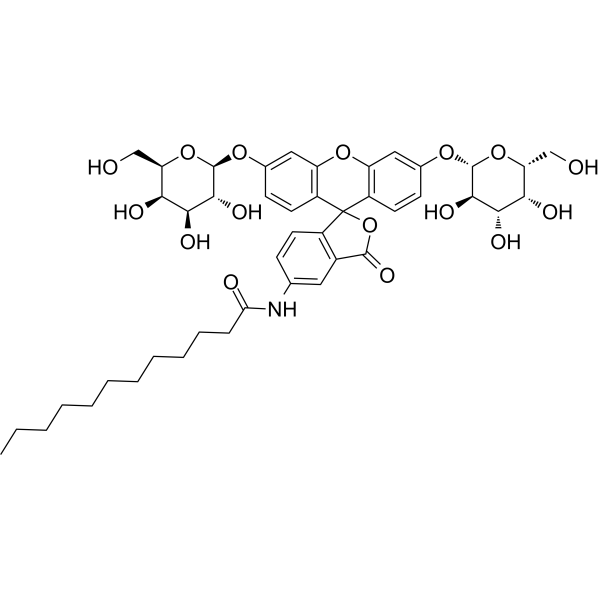
Synonyms: 5-Dodecanoylaminofluorescein di-β-D-Galactopyranoside
5
5 Cited Publications
Cat. No.: HY-P1003
CAS No.: 169332-61-0
Target:
Research Areas:
4
4 Cited Publications
Cat. No.: HY-D1670
CAS No.: 68542-93-8
3
3 Cited Publications
Cat. No.: HY-P1093
CAS No.: 210345-03-2
3
3
3 Cited Publications
Cat. No.: HY-P4931
CAS No.: 720710-69-0
2
2 Cited Publications
2
2 Cited Publications
Target:
Research Areas:
2
2 Cited Publications
Cat. No.: HY-P4217
CAS No.: 201928-42-9
Target:
Research Areas:
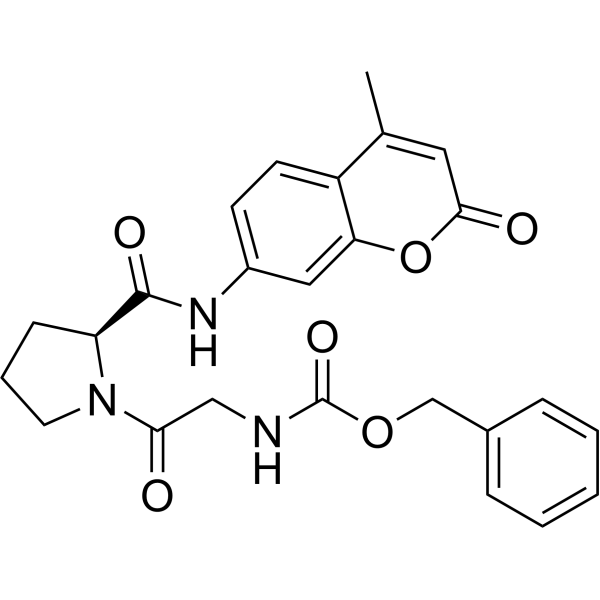
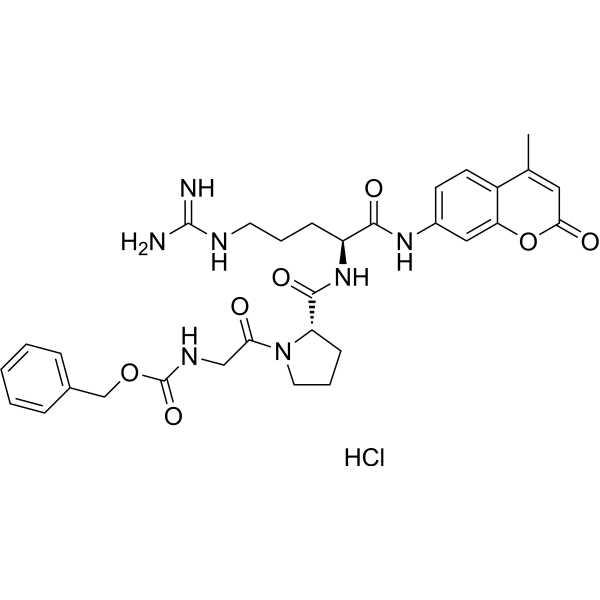
Z-Gly-Pro-Arg-AMC hydrochloride is an AMC-labeled fluorescent peptide substrate used in various in vitro biochemical assays for proteases. Z-Gly-Pro-Arg-AMC hydrochloride releases free AMC upon cleavage of the Arg-AMC peptide bond by proteases, generating a fluorescent signal. Z-Gly-Pro-Arg-AMC hydrochloride is efficiently hydrolyzed by CatCΔEx and recombinant proMlCtL, and can also serve as a detection substrate for KLK family proteases .
2
2 Cited Publications
Target:
Research Areas:
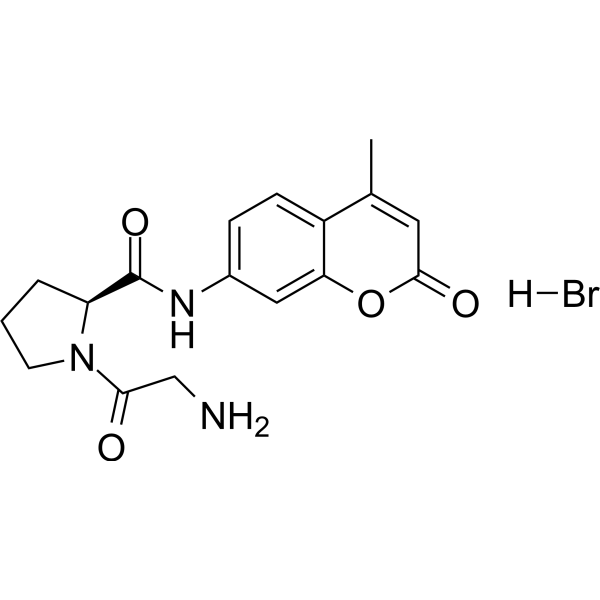
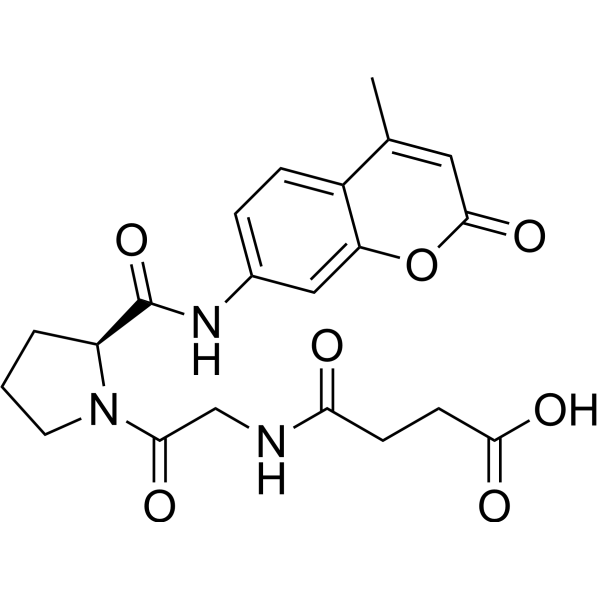
Suc-Gly-Pro-AMC is a fluorescent substrate. Suc-Gly-Pro-AMC is a fibroblast activation protein (FAP) specific substrate. Suc-Gly-Pro-AMC reacts with recombinant porcine prolyl oligopeptidase. Suc-Gly-Pro-AMC can be used to study the activity of FAP, prolyl endopeptidase (PREP). Suc-Gly-Pro-AMC is used in glioma research .
2
2 Cited Publications
Cat. No.: HY-P2615A
Target:
Research Areas:
2
2 Cited Publications
Cat. No.: HY-D1341
CAS No.: 878019-47-7
Research Areas:
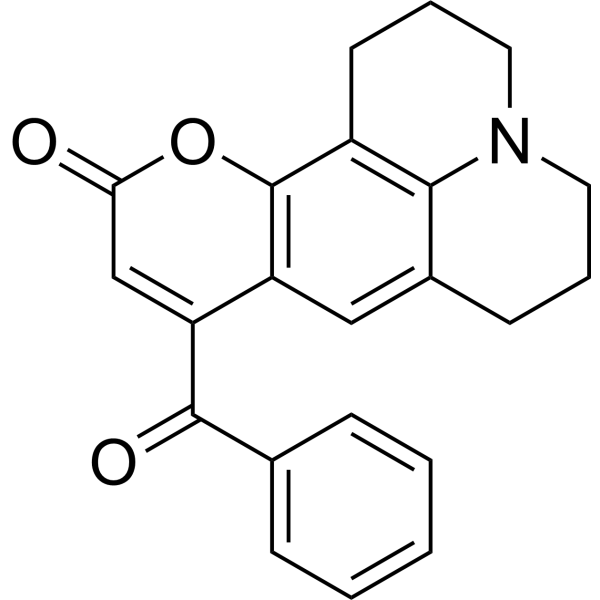
Coumberone is a metabolic fluorogenic probe, and isoform-selective substrate for all AKR1C isoforms. Coumberone can be reduced by all four members of the AKR1C family to its fluorescent alcohol coumberol. Coumberone can be used for the research of AKR1C .
2
2 Cited Publications
Target:
Research Areas:
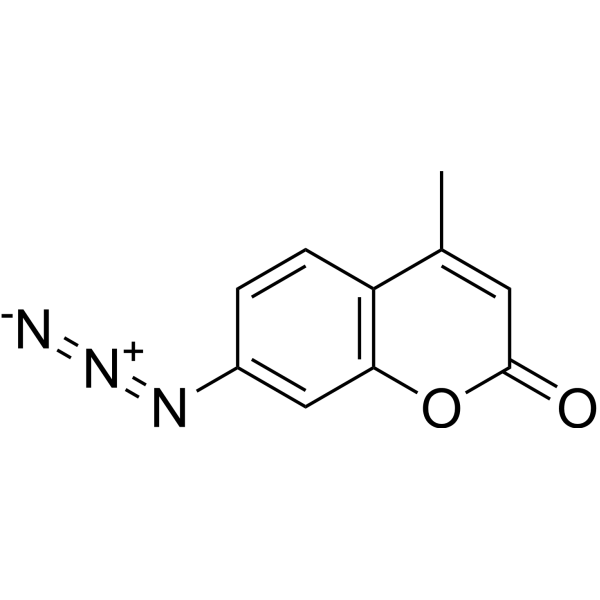
7-Azido-4-methylcoumarin is a selective coumarin-based fluorescent probe for hydrogen sulfide (H2S). In the presence of H2S, the aromatic azido group of 7-Azido-4-methylcoumarin is selectively reduced to produce the fluorescently active 7-amino-4-methylcoumarin (AMC). 7-Azido-4-methylcoumarin binds to the coumarin/phenol-binding site of BSA, the aglycone-binding site of UGT1A6, and the substrate-binding site of SULT1A1, respectively. 7-Azido-4-methylcoumarin retains its fluorescent properties after covalent binding, acts as a fluorescent H2S probe, and does not react with cysteine, homocysteine or glutathione (Ex/Em = 340/445 nm) .
2
2 Cited Publications
Cat. No.: HY-W019823
CAS No.: 76204-02-9
2