
54 Results for "

GC injector

" in MedChemExpress (MCE) Product Catalog:
Products (54)

54 Results for "GC injector" in MCE Product Catalog:

11
11 Publications Verification
Cat. No.: HY-17567
CAS No.: 9005-49-6
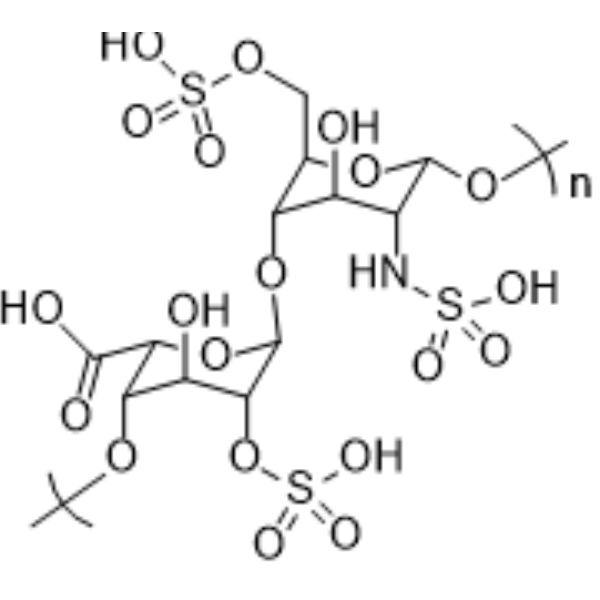
Heparin is a highly sulfated glycosaminoglycan,that is widely used as an injectable anticoagulant, and has the highest negative charge density of any known biological molecule. Heparin significantly inhibits exosome-cell interactions.
loading...
    loading...
7
7 Cited Publications
Cat. No.: HY-100577
CAS No.: 29457-07-6
Purity:  98.42%
Target:  

Bacterial Antibiotic

Research Areas:  

Infection

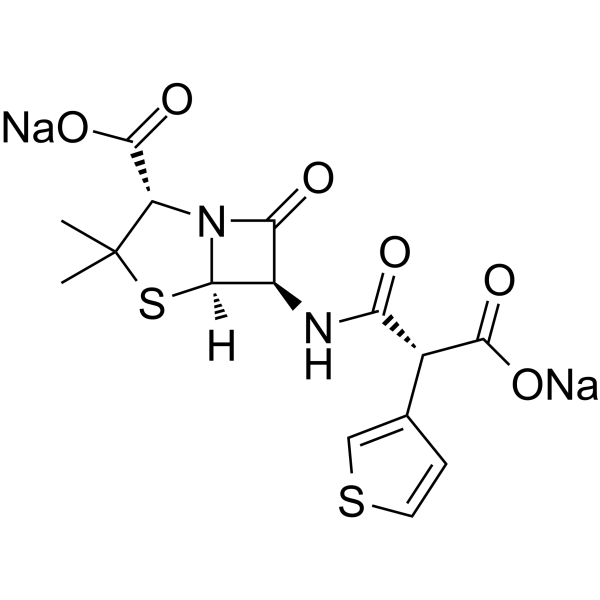
Ticarcillin sodium is an injectable antibiotic for the treatment of Gram-negative bacteria, particularly Pseudomonas aeruginosa. It is also one of the few antibiotics capable of treating Stenotrophomonas maltophilia infections .
loading...
    loading...
5
5 Cited Publications
Cat. No.: HY-K1099

MCE Endotoxin Detection Kit (Recombinant Factor C) is suitable for the detection of endotoxins in therapeutic injectable drugs for human use (such as chemical drugs, antibiotics, and biologics), as well as in medical devices including dialysis fluids and implantable devices. It can be applied throughout raw material screening, process development, manufacturing, and commercialization stages.

loading...
    loading...
3
3 Cited Publications
Cat. No.: HY-B2209A
CAS No.: 59461-30-2
Synonyms: Vitamin B12a monohydrochloride
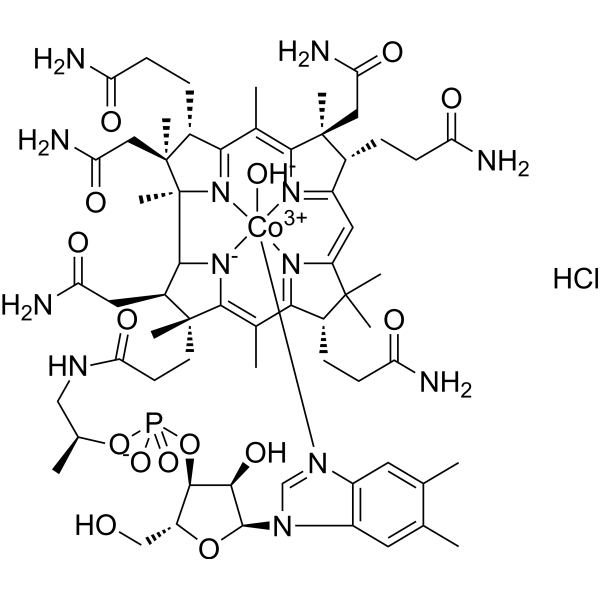
Hydroxocobalamin monohydrochloride (Vitamin B12a monohydrochloride) is an injectable naturally occurring form of vitamin B12 with a favorable adverse effect profile, used as a dietary supplement in the treatment of vitamin B12 deficiency including pernicious anemia .
loading...
    loading...
3
3 Cited Publications
Cat. No.: HY-B2209B
CAS No.: 22465-48-1
Synonyms: Vitamin B12a acetate
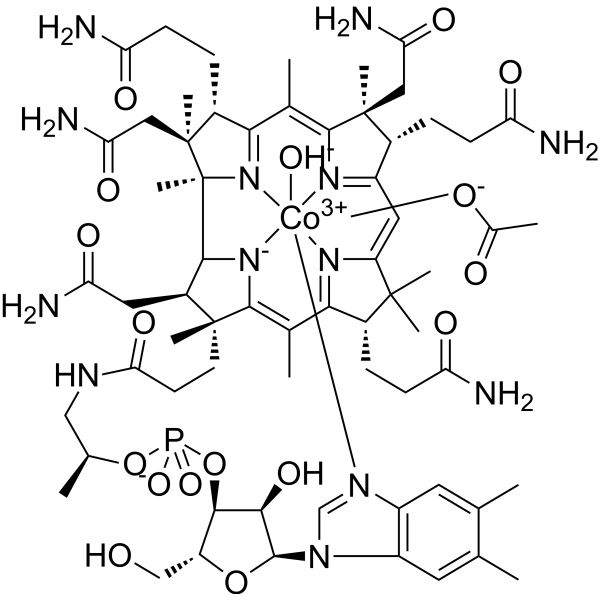
Hydroxocobalamin acetate is an injectable natural vitamin B12. Hydroxocobalamin acetate binds to NO. Hydroxocobalamin acetate detoxifies Cyanide and NaSH. Hydroxocobalamin acetate reduces hypotension. Hydroxocobalamin acetate is used in research related to vitamin B12 deficiency, including pernicious anemia .
loading...
    loading...
2
2 Cited Publications
Cat. No.: HY-108751
CAS No.: 1259305-29-7
Purity:  99.70%
Target:  

Dopamine Receptor

Research Areas:  

Neurological Disease

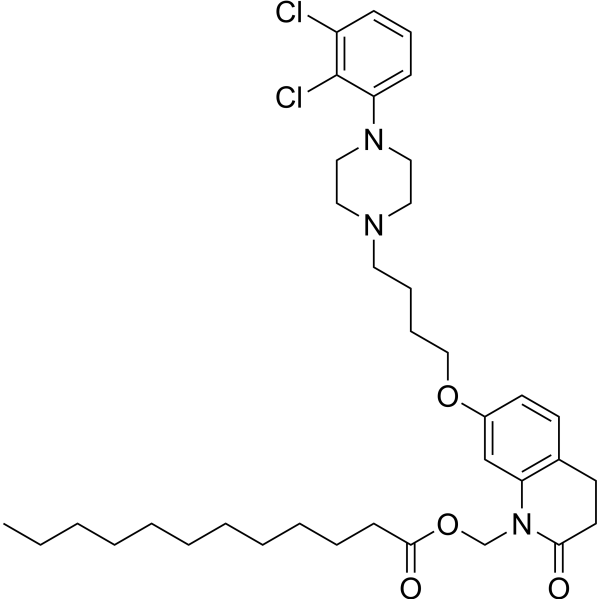
Aripiprazole lauroxil, an N-acyloxymethyl proagent of Aripiprazole (HY-14546), is a Long-acting injectable (LAI) typical antipsychotic for schizophrenia and a ligand of dopamine receptor D2R/D4R. Aripiprazole lauroxil is cleaved by body’s enzyme esterase to N-hydroxymethyl aripiprazole (plus lauric acid) and then to aripiprazole (plus formaldehyde), no toxicity.
loading...
    loading...
1
1 Cited Publications
Cat. No.: HY-W052508
CAS No.: 5747-48-8
Synonyms: N-Desalkylquetiapine
Norquetiapine ( N-Desalkylauetiapine), a metabolite of Quetiapine (HY-14544), is a selective HCN1 channel inhibitor, with an IC50 of 13.9 μM. Norquetiapine selectively inhibits noradrenaline reuptake, is a partial 5-HT1A (Ki = 45 nM) receptor agonist, and acts as an antagonist at presynapticα2 (Ki = 237 nM), 5-HT2C(Ki = 107 nM), and 5-HT7 (Ki = 76 nM) receptors. Norquetiapine blocks the human cardiac sodium channel Nav1.5 in a state-dependent manner. Norquetiapine shows partial anti-inflammatory effects in LPS (HY-D1056) injected C57BL/6 mice. Norquetiapine can be used for the study of depression and inflammation .
loading...
    loading...
1
1 Cited Publications
Cat. No.: HY-172241
CAS No.: 1436920-57-8
Synonyms: RZL-012; Utenpanium chloride
Research Areas:  

Metabolic Disease

Tapencarium (RZL-012; Utenpanium chloride) is an injectable fat volume-reducing agent. Tapencarium irreversibly impairs cell membrane integrity, increases membrane permeability, induces elevated cytoplasmic calcium, alters mitochondrial membrane potential, and triggers necrosis. Tapencarium induces fat necrosis, inflammatory responses and fibrous tissue formation at the injection site. Tapencarium can be used in research related to submental fat excess and Dercum's disease .
loading...
    loading...
1
1 Cited Publications
Cat. No.: HY-W040555
CAS No.: 111974-74-4
Synonyms: N-Desalkylquetiapine dihydrochloride
Norquetiapine ( N-Desalkylauetiapine) dihydrochloride, a metabolite of Quetiapine (HY-14544), is a selective HCN1 channel inhibitor, with an IC50 of 13.9 μM. Norquetiapine dihydrochloride selectively inhibits noradrenaline reuptake, is a partial 5-HT1A (Ki = 45 nM) receptor agonist, and acts as an antagonist at presynapticα2 (Ki = 237 nM), 5-HT2C(Ki = 107 nM), and 5-HT7 (Ki = 76 nM) receptors. Norquetiapine dihydrochloride blocks the human cardiac sodium channel Nav1.5 in a state-dependent manner. Norquetiapine dihydrochloride shows partial anti-inflammatory effects in LPS (HY-D1056) injected C57BL/6 mice. Norquetiapine dihydrochloride can be used for the study of depression and inflammation .
loading...
    loading...
Cat. No.: HY-B1830
CAS No.: 4956-37-0
Synonyms: E2EN
Target:  

Estrogen Receptor/ERR

Research Areas:  

Endocrinology

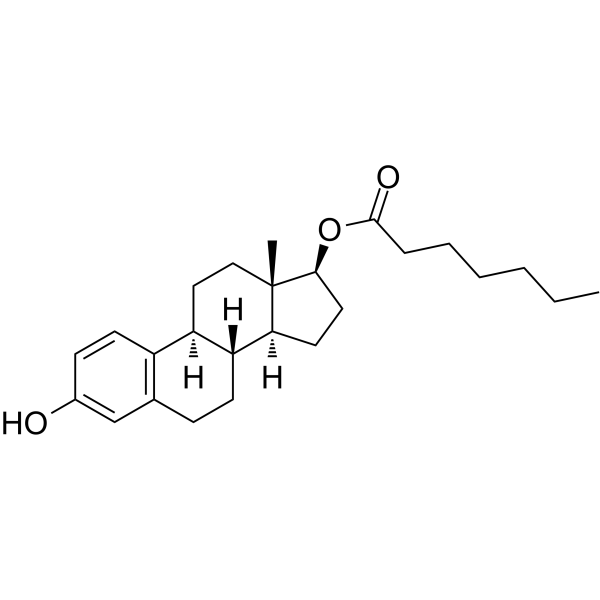
Estradiol enanthate (E2EN) is a shorter-acting estrogen. Estradiol enanthate is an injectable contraceptive in combination with Dihydroxyprogesterone acetophenide. Estradiol enanthate promotes withdrawal bleeding, in a pattern similar to menstruation .
loading...
    loading...
Cat. No.: HY-P10026
CAS No.: 2663844-45-7
Synonyms: LY-3457263
Research Areas:  

Metabolic Disease

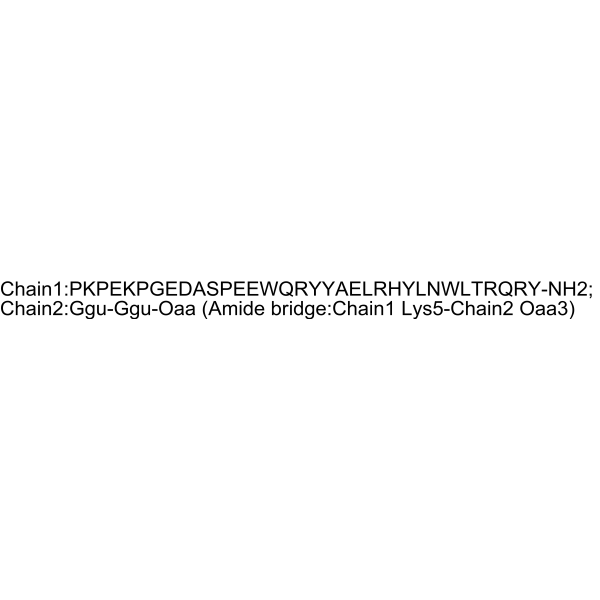
Nisotirotide (LY-3457263) is a subcutaneous injectable NPY2 receptor agonist. By mimicking peptide YY (PYY), Nisotirotide inhibits appetite and can be used in the research of diseases such as obesity and diabetes .
loading...
    loading...
Cat. No.: HY-169841
CAS No.: 2957888-70-7
Target:  

5-HT Receptor Arrestin

Research Areas:  

Neurological Disease

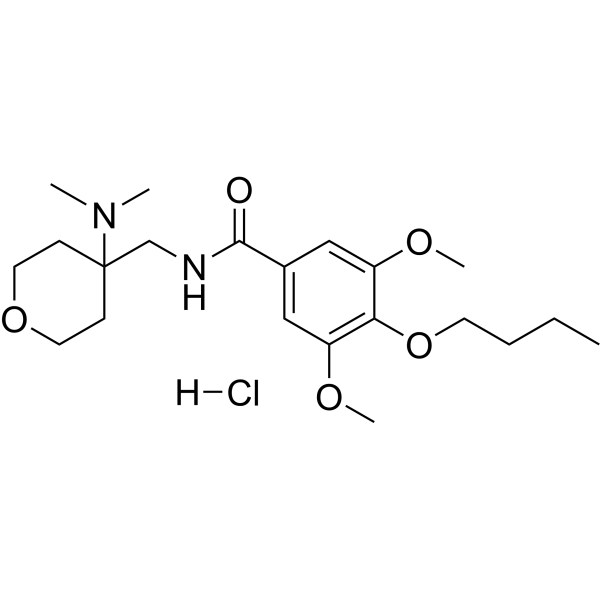
IHCH-7086 is a blood-brain barrier-permeable, partial β-arrestin-biased agonist of 5-HT2AR with a Ki of 12.59 nM. IHCH-7086 blocks D-lysergic acid diethylamide-induced head-twitch response in mice and alleviates depression-like behaviors in mice subjected to acute restraint stress or injected with Corticosterone (HY-B1618). IHCH-7086 is applicable to research related to depression .
loading...
    loading...
Cat. No.: HY-109067A
CAS No.: 1440796-75-7
Purity:  99.62%
Synonyms: VVZ-149 hydrochloride
Research Areas:  

Neurological Disease

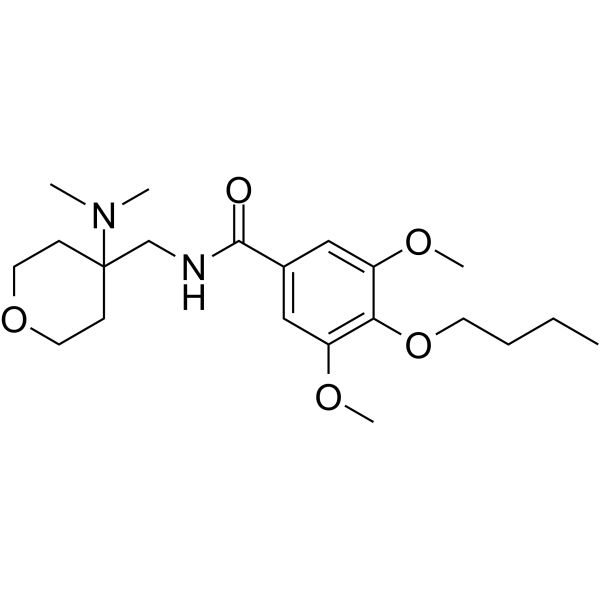
Opiranserin (VVZ-149) hydrochloride, a non-opioid and non-NSAID analgesic candidate, is a dual antagonist of glycine transporter type 2 (GlyT2) and serotonin receptor 2A (5HT2A), with IC50s of 0.86 and 1.3 μM, respectively. Opiranserin hydrochloride shows antagonistic activity on rP2X3 (IC50=0.87 μM). Opiranserin hydrochloride is development as an injectable agent for the treatment of postoperative pain .
loading...
    loading...
Cat. No.: HY-157745
CAS No.: 92451-01-9
Purity:  ≥98.0%
Synonyms: mPEG40000-SC; mPEG40000-Succinimidyl ester
Research Areas:  

Others

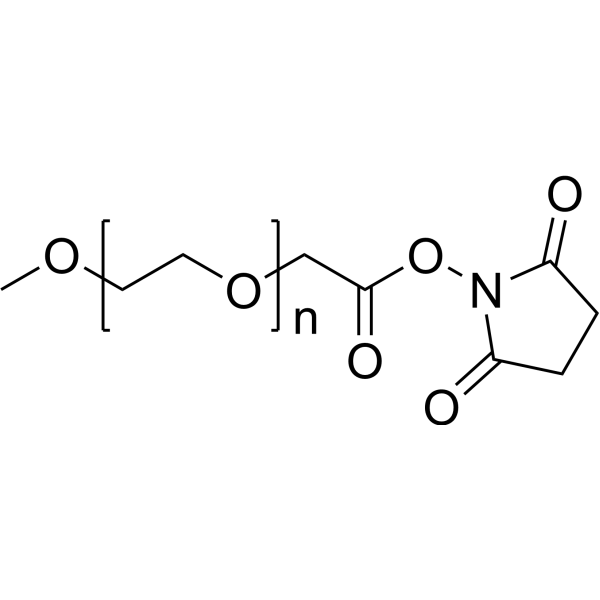
m-PEG-NHS ester (mPEG-SC; mPEG-Succinimidyl ester) (MW 40000) is a polyethylene glycol derivative. m-PEG-NHS ester serves as a modifying agent that reacts with free amino groups on the surface of protein or polypeptide molecules to form stable amide bonds, thereby covalently linking PEG chains to biomacromolecules, improving their antigenicity and immunogenicity, and facilitating the preparation of injectable formulations .
loading...
    loading...
Cat. No.: HY-P2936A
CAS No.: 9031-54-3
Sphingomyelin phosphodiesterase, Bacillus cereus is a sphingomyelin hydrolase and Insecticide. Sphingomyelin phosphodiesterase, Bacillus cereus catalyzes the decomposition of sphingomyelin into ceramide and phosphorylcholine. Sphingomyelin phosphodiesterase, Bacillus cereus causes rapid paralysis and death in injected insects, including German cockroaches and black cutworms. Sphingomyelin phosphodiesterase, Bacillus cereus reduces H2O2 production. Sphingomyelin phosphodiesterase, Bacillus cereus can be used in studies related to sepsis and endophthalmitis .
loading...
    loading...
Cat. No.: HY-108909
CAS No.: 9001-09-6
Chymopapain is a non-specific proteo-glycanase derived from the papaya plant. Chymopapain has neurotoxicity when injected into nerve bundles. Chymopapain directly into the intervertebral disc caused disc narrowing due to dissolution of the extruded material. Chymopapain has the potential for the research of herniated lumbar discs .
loading...
    loading...
Cat. No.: HY-177440
CAS No.: 958860-12-3
Research Areas:  

Metabolic Disease

T26A is a highly selective prostaglandin transporter (PGT) inhibitor.T26A does not interact with the PGT homolog OATPc, blocks PGT-mediated PGE2 influx, and blocks PGE2 metabolism.T26A retains PGE2 in the extracellular compartment and reduces intracellular PGE2 metabolites.T26A elevates circulating endogenous PGE2 levels, reduces circulating endogenous PGE2 metabolite levels, and slows metabolism of exogenously injected PGE2 in Rattus norvegicus via intravenous injection.T26A does not affect PGE2 synthesis.T26A can be used for the research of PGT function in adult animals .
loading...
    loading...
Cat. No.: HY-Y0308D
CAS No.: 7558-79-4
Synonyms: Disodium hydrogen phosphate, meets analytical specification of Ph. Eur. BP USP FCC E339
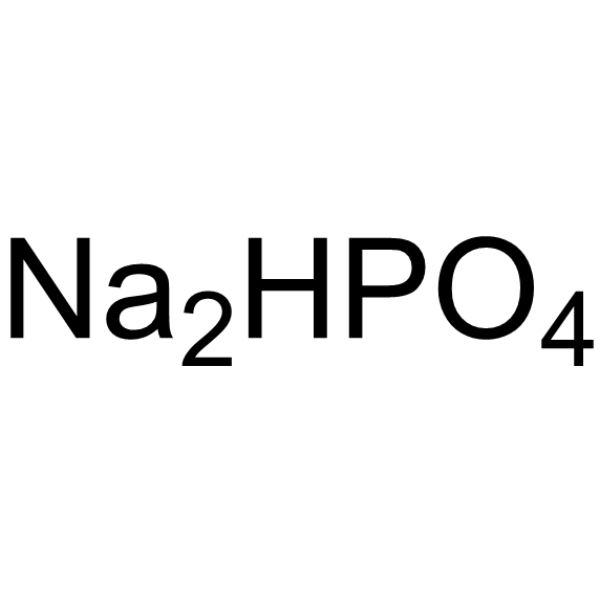
Sodium phosphate dibasic (Disodium hydrogen phosphate), meets analytical specification of Ph. Eur. BP USP FCC E339 is an inorganic dibasic phosphate that functions as an electrolyte supplement, a buffer carrier for injectable drugs, while also exhibiting nephrotoxicity. Sodium phosphate dibasic, meets analytical specification of Ph. Eur. BP USP FCC E339 induces extensive nephrotic syndrome-like changes, including systemic symptoms such as persistent proteinuria, lipemia, hypercholesterolemia, and anemia, and causes severe renal pathological alterations such as renal enlargement, glomerular calcification, podocyte injury, and tubulointerstitial lesions. Sodium phosphate dibasic, meets analytical specification of Ph. Eur. BP USP FCC E339 has the ability to induce phosphate-induced nephropathy and glomerular calcification, and can be widely used in studies on nephrotic syndrome and related renal pathological mechanisms .
loading...
    loading...
Cat. No.: HY-P5142
CAS No.: 193981-10-1
Synonyms: ω-ACTX-Hv1; ω-Atracotoxin-HV1
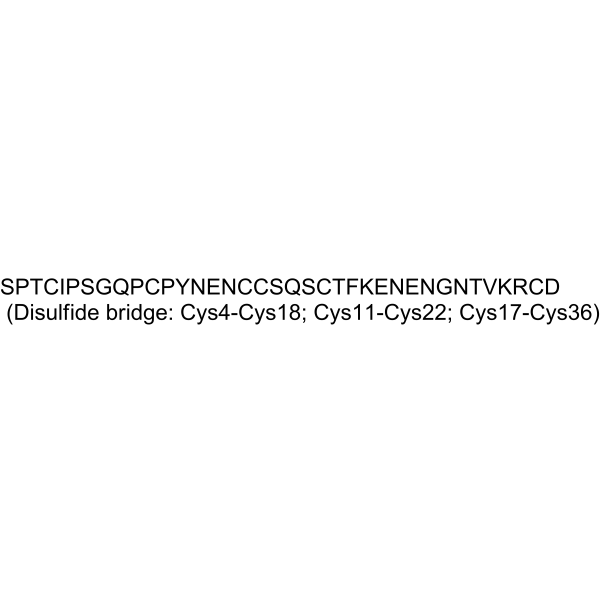
ω-Hexatoxin-Hv1a (ω-ACTX-Hv1; ω-Atracotoxin-HV1) is an orally active insecticidal neurotoxin containing an inhibitor cystine knot motif and a selective calcium channel inhibitor. ω-Hexatoxin-Hv1a blocks L-type voltage-dependent Ca 2+ channels and reduces intracellular calcium ion concentration, thereby decreasing apoptosis, necroptosis and oxidative stress, and promoting cell recovery and energy level elevation. ω-Hexatoxin-Hv1a causes larval paralysis and death by impairing neurotransmission in the central nervous system of insects. It shows high injectable toxicity against insects of multiple orders, but exhibits weak oral toxicity. ω-Hexatoxin-Hv1a is widely applicable to studies related to ischemia-reperfusion injury, atopic dermatitis, and ischemic injury of cardiomyocytes and neurons .
loading...
    loading...
Cat. No.: HY-109067
CAS No.: 1441000-45-8
Synonyms: VVZ-149
Research Areas:  

Neurological Disease

Opiranserin (VVZ-149), a non-opioid and non-NSAID analgesic candidate, is a dual antagonist of glycine transporter type 2 (GlyT2) and serotonin receptor 2A (5HT2A), with IC50s of 0.86 and 1.3 μM, respectively. Opiranserin shows antagonistic activity on rP2X3 (IC50=0.87 μM). Opiranserin is development as an injectable agent for the treatment of postoperative pain .
loading...
    loading...

