
26 Results for "

GFAP

" in MedChemExpress (MCE) Product Catalog:
Products (26)

26 Results for "GFAP" in MCE Product Catalog:

2
2 Cited Publications
Cat. No.: HY-148013
CAS No.: 702668-62-0
Purity:  99.94%
K284-6111 is a high-affinity and orally active CHI3L1 inhibitor, and inhibits CHI3L1 expression. K284-6111 inhibits ERK and NF-κB pathway. K284-6111 suppresses nuclear translocation of p50 and p65, and phosphorylation of IκB. K284-6111 improves memory dysfunction by alleviating amyloidogenesis and neuroinflammation, with the reduction of inflammatory proteins (eg: iNOS, COX-2, GFAP, and Iba-1). K284-6111 reduces atopic-like skin inflammation and inhibits LPS (HY-D1056) -induced liver injury. K284-6111 can be used for the study of Alzheimer's diseases and sepsis like hepatic injury .
loading...
    loading...
2
2 Cited Publications
Cat. No.: HY-P80140

Host:  

Rabbit

Application:  

WB, IHC-P, IHC-F, ICC/IF, IP, IF-Tissue, mIHC

Reactivity:  

Human, Mouse, Rat

loading...
    loading...
1
1 Cited Publications
Cat. No.: HY-W035091
CAS No.: 16903-35-8
Tetrachloroauric acid is an Au (III) compound and bilayer disruptor that can be used to damage red blood cells. Tetrachloroauric acid specifically disrupts the bilayer structure of representative phospholipids (dimyristoylphosphatidylcholine and dimyristoylphosphatidylethanolamine) in human red blood cell membranes, and induces morphological changes in intact human red blood cells. Tetrachloroauric acid causes downregulation of MT I-II and GFAP expression in the mouse brain following chronic treatment. Tetrachloroauric acid is being used in studies related to neurotoxicity and hematotoxicity, including analyses of human red blood cells and molecular models of red blood cell membranes, as well as immunohistochemical evaluation of the mouse brain .
loading...
    loading...
Cat. No.: HY-P3392
CAS No.: 2305355-56-8
Synonyms: ION373
Target:  

FAP

Research Areas:  

Neurological Disease

Zilganersen (ION373) is a gapmer antisense oligonucleotide targeting glial fibrillary acidic protein (GFAP). Zilganersen reduces excess glial fibrillary acidic protein produced by disease-causing variants in the GFAP gene and inhibits synthesis of GFAP. Zilganersen can be used for the research of Alexander disease .
loading...
    loading...
Cat. No.: HY-P3392A
CAS No.: 2305355-64-8
Synonyms: ION373 sodium
Target:  

FAP

Research Areas:  

Neurological Disease

Zilganersen (ION373) sodium is a gapmer antisense oligonucleotide targeting glial fibrillary acidic protein (GFAP). Zilganersen sodium reduces excess glial fibrillary acidic protein produced by disease-causing variants in the GFAP gene and inhibits synthesis of GFAP. Zilganersen sodium can be used for the research of Alexander disease .
loading...
    loading...
Cat. No.: HY-33798
CAS No.: 1592-95-6
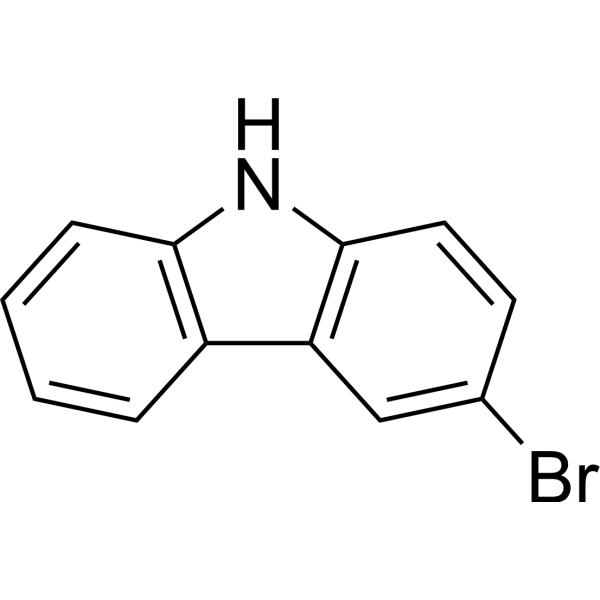
3-Bromocarbazole is an inhibitor of the aryl hydrocarbon receptor (AHR). 3-Bromocarbazole induces the mRNA expression of CYP1A1 and CYP1B1, with EC50 values of 2500 nM and 1100 nM, respectively. 3-Bromocarbazole inhibits motor neuron axon length by downregulating the mRNA transcription levels of α1-tubulin, Gap43, Syn2a and shha in zebrafish larvae. 3-Bromocarbazole reduces central nervous system neurogenesis by downregulating the mRNA transcription levels of elavl3, nrd, mbp and gfap in zebrafish larvae. 3-Bromocarbazole induces developmental neurotoxicity and decreases body length in zebrafish larvae or embryos; at high concentrations, it also reduces hatching rate, and increases mortality and malformation rate. 3-Bromocarbazole can be used in studies related to developmental neurotoxicity and breast cancer .
loading...
    loading...
Cat. No.: HY-101059
CAS No.: 142720-24-9
Purity:  99.95%
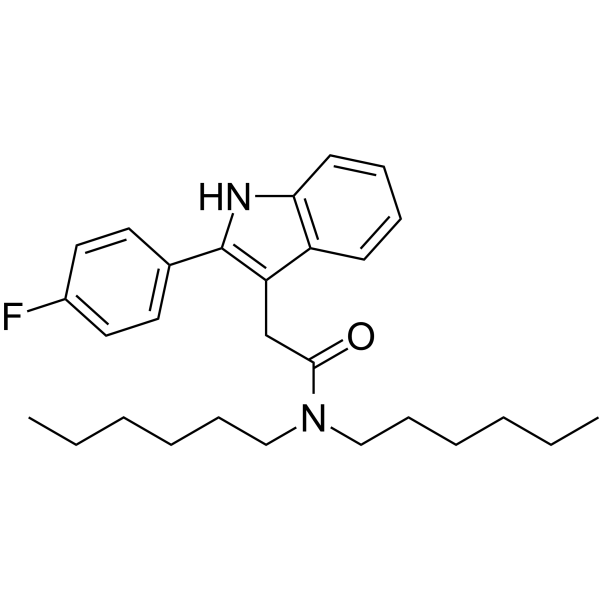
FGIN-1-27 is a blood-brain barrier-penetrant TSPO ligand with a Ki value of 5 nM. FGIN 1-27 inhibits PKC-β, PKA/CREB, p38/ERK MAPK, MITF, tyrosinase, TRP-1, and TRP-2, thereby inhibiting melanogenesis and pigmentation. FGIN-1-27 alleviates X-ray radiation-induced astrocyte mitochondrial hyperfunction, reduces ROS and superoxide production, inhibits excessive activation of A1-type astrocytes, downregulates GFAP and C3 protein expression, and restores astrocyte proliferative capacity. FGIN-1-27 produces anticonvulsant effects in normal mice; in diazepam-withdrawn mice, the brain MDR pathway becomes subsensitive, and the anticonvulsant activity disappears. FGIN-1-27 attenuates pigmentation in zebrafish embryos and ameliorates UVB-induced skin pigmentation in guinea pigs. FGIN-1-27 directly stimulates testicular Leydig cells while upregulating luteinizing hormone levels, causing an acute increase in serum testosterone in male rats. FGIN 1-27 can be used for research related to hyperpigmentation, epilepsy, brain injury, and other diseases .
loading...
    loading...
Cat. No.: HY-176311S
GFAP, U- 15N is the 15N-labeled GFAP.
loading...
    loading...
Cat. No.: HY-RS05376
Research Areas:  

Others

GFAP Human Pre-designed siRNA Set A contains three designed siRNAs for GFAP gene (Human), as well as a negative control, a positive control, and a FAM-labeled negative control.

loading...
    loading...
Cat. No.: HY-RS17035
Research Areas:  

Others

Gfap Mouse Pre-designed siRNA Set A contains three designed siRNAs for Gfap gene (Mouse), as well as a negative control, a positive control, and a FAM-labeled negative control.

loading...
    loading...
Cat. No.: HY-RS23479
Research Areas:  

Others

Gfap Rat Pre-designed siRNA Set A contains three designed siRNAs for Gfap gene (Rat), as well as a negative control, a positive control, and a FAM-labeled negative control.

loading...
    loading...
Cat. No.: HY-183796
GFAP/NF-κB/APOE/NLRP3-IN-1 is an orally active, blood-brain barrier-permeable multi-target inhibitor with an IC50 of 3.50 nM against Acetylcholinesterase. GFAP/NF-κB/APOE/NLRP3-IN-1 inhibits BACE-1 with an IC50 of 14.61 nM. GFAP/NF-κB/APOE/NLRP3-IN-1 inhibits Aβ1-42 aggregation with an IC50 of 8.63 μM. GFAP/NF-κB/APOE/NLRP3-IN-1 reduces the levels of GFAP, NLRP3 inflammasome, NF-κB and APOE. GFAP/NF-κB/APOE/NLRP3-IN-1 is applicable for the research of Alzheimer's disease and neuroblastoma .
loading...
    loading...
Cat. No.: HY-33798S
CAS No.: 2764814-81-3
3-Bromocarbazole-d7 is the d7-labeled 3-Bromocarbazole (HY-33798). 3-Bromocarbazole is an inhibitor of the aryl hydrocarbon receptor (AHR). 3-Bromocarbazole induces the mRNA expression of CYP1A1 and CYP1B1, with EC50 values of 2500 nM and 1100 nM, respectively. 3-Bromocarbazole inhibits motor neuron axon length by downregulating the mRNA transcription levels of α1-tubulin, Gap43, Syn2a and shha in zebrafish larvae. 3-Bromocarbazole reduces central nervous system neurogenesis by downregulating the mRNA transcription levels of elavl3, nrd, mbp and gfap in zebrafish larvae. 3-Bromocarbazole induces developmental neurotoxicity and decreases body length in zebrafish larvae or embryos; at high concentrations, it also reduces hatching rate, and increases mortality and malformation rate. 3-Bromocarbazole can be used in studies related to developmental neurotoxicity and breast cancer .
loading...
    loading...
Cat. No.: HY-101059R
CAS No.: 142720-24-9
FGIN 1-27 (Standard) is the analytical standard of FGIN 1-27 (HY-101059). This product is intended for research and analytical applications. FGIN-1-27 is a blood-brain barrier-penetrant TSPO ligand with a Ki value of 5 nM. FGIN 1-27 inhibits PKC-β, PKA/CREB, p38/ERK MAPK, MITF, tyrosinase, TRP-1, and TRP-2, thereby inhibiting melanogenesis and pigmentation. FGIN-1-27 alleviates X-ray radiation-induced astrocyte mitochondrial hyperfunction, reduces ROS and superoxide production, inhibits excessive activation of A1-type astrocytes, downregulates GFAP and C3 protein expression, and restores astrocyte proliferative capacity. FGIN-1-27 produces anticonvulsant effects in normal mice; in diazepam-withdrawn mice, the brain MDR pathway becomes subsensitive, and the anticonvulsant activity disappears. FGIN-1-27 attenuates pigmentation in zebrafish embryos and ameliorates UVB-induced skin pigmentation in guinea pigs. FGIN-1-27 directly stimulates testicular Leydig cells while upregulating luteinizing hormone levels, causing an acute increase in serum testosterone in male rats. FGIN 1-27 can be used for research related to hyperpigmentation, epilepsy, brain injury, and other diseases .
loading...
    loading...
Cat. No.: HY-P704632
Purity:  ≥ 95%, as determined by reducing SDS-PAGE.
Synonyms: GFAP; Intermediate Filament Protein; Glial Fibrillary Acidic Protein; ALXDRD; FLJ45472
Species:  
Mouse
Source:  
E. coli
loading...
    loading...
Cat. No.: HY-P86700
Synonyms: Astrocyte Marker; FLJ45472; GFAP; Glial Fibrillary Acidic Protein; Intermediate filament protein; GFAP_HUMAN.

Host:  

Rabbit

Application:  

WB, IHC-P, IHC-F, IF-Tissue

Reactivity:  

Human, Mouse, Rat

loading...
    loading...
Cat. No.: HY-P72203
Purity:  ≥ 90%, as determined by reducing SDS-PAGE.
Synonyms: GFAP; Intermediate Filament Protein; Glial Fibrillary Acidic Protein; ALXDRD; FLJ45472
Species:  
Mouse
Source:  
E. coli
loading...
    loading...
Cat. No.: HY-P86514
Synonyms: GFAP; Glial fibrillary acidic protein; GFAP

Host:  

Rabbit

Application:  

WB, IHC-P, ICC/IF, IP, ELISA

Reactivity:  

Human, Mouse, Rat

loading...
    loading...
Cat. No.: HY-P706270
Purity:  ≥ 90%, as determined by reducing SDS-PAGE.
Synonyms: ¹⁵N-GFAP; ¹⁵N-alxdrd; GFAP; Intermediate Filament Protein; Glial Fibrillary Acidic Protein; ALXDRD; FLJ45472
Species:  
Human
Source:  
E. coli
loading...
    loading...
Cat. No.: HY-P70287
Purity:  ≥ 95%, as determined by reducing SDS-PAGE.
Synonyms: GFAP; Intermediate Filament Protein; Glial Fibrillary Acidic Protein; ALXDRD; FLJ45472
Species:  
Human
Source:  
E. coli
loading...
    loading...

