5 Results for "

HBT

" in MedChemExpress (MCE) Product Catalog:
Products (5)

5 Results for "HBT" in MCE Product Catalog:

Cat. No.: HY-122742
CAS No.: 489408-02-8
Purity:  99.83%
Target:  

iGluR

Research Areas:  

Neurological Disease

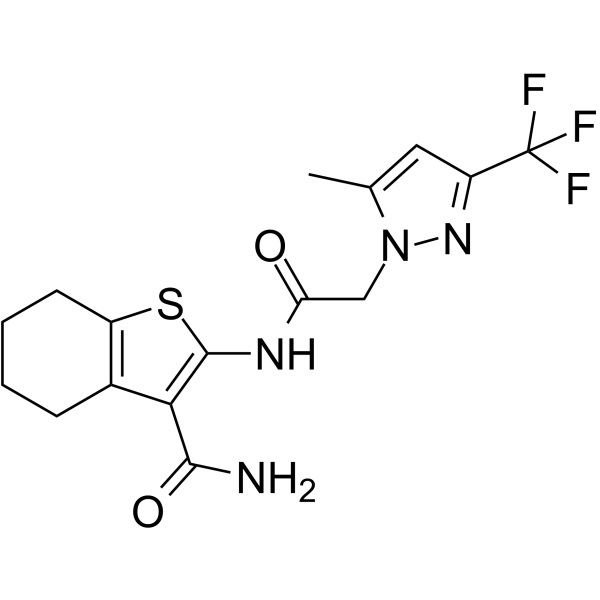
HBT1 is an effective AMPA receptor AMPA-R potentiator. HBT1 specifically binds to the ligand-binding domain (LBD) of AMPAR and enhances receptor activity only when AMPA is present., HBT1 has almost no agonistic effect (i.e., reaching the optimal concentration, and then the efficacy decreases as the concentration continues to increase) compared with traditional AMPA-R potentiator, avoiding the bell-shaped reaction of brain-derived neurotrophic factor (BDNF) production in primary neurons. HBT1 can be applicable to a wider range of neurological and psychiatric diseases (such as depression, Alzheimer's disease, etc.) .
loading...
    loading...
Cat. No.: HY-136672
CAS No.: 2056899-56-8
Target:  

Fluorescent Dye

Research Areas:  

Others

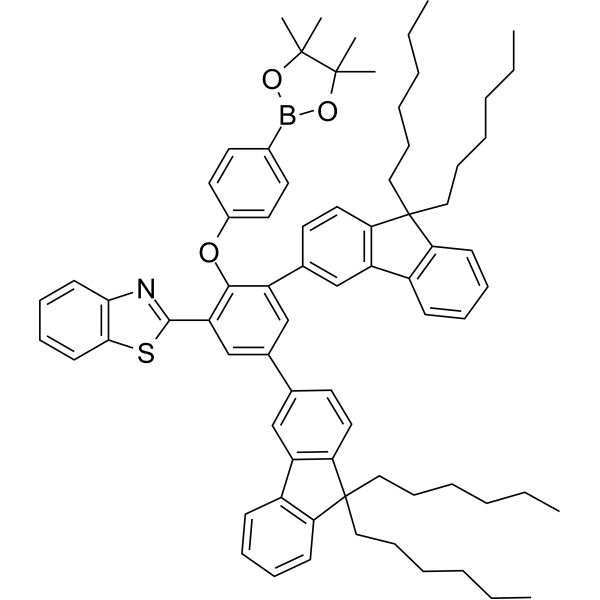
(E)-HBT-O is an isomer of HBT-O. HBT-O is a fluorescent probe used to monitor subtle pH fluctuations in living cells .
loading...
    loading...
Cat. No.: HY-D2286
HBT-Fl-BnB is a fluorescent probe for the ratiometric detection of ONOO - in vitro and in vivo. HBT-Fl-BnB consists of an HBT core with Fl groups at the ortho and para positions responding to the zwitterionic excited-state intramolecular proton-transfer (zwitterionic ESIPT) process and a boronic acid pinacol ester with dual roles that block the zwitterionic ESIPT and recognize ONOO - .
loading...
    loading...
Cat. No.: HY-189294
CAS No.: 2894038-40-3
HBT-CUR is a lysosome-targeted and polarity-responsive tumor photosensitizer. HBT-CUR generates singlet oxygen under light irradiation. HBT-CUR induces photodynamic apoptosis through oxidative stress. As a polarity-sensitive NIR fluorescent probe, HBT-CUR distinguishes tumor cells and tissues from normal ones. HBT-CUR enables tumor-specific in vivo fluorescence imaging with rapid response and long-lasting duration. HBT-CUR is used for breast cancer research .
loading...
    loading...
Cat. No.: HY-D3067
Target:  

Fluorescent Dye

Research Areas:  

Metabolic Disease Cancer

ASSI-Leu is a novel AIE fluorescent probe based on an asymmetric tetraaryl imidazole skeleton, which can be used for ratiometric imaging detection of endogenous leucine aminopeptidase. ASSI-Leu contains an L-leucine-based recognition group that blocks the excited-state intramolecular proton transfer (ESIPT) in its 2-(2'-hydroxyphenyl) benzothiazole (HBT) skeleton, thereby generating an enol-form emission signal at Ex/Em = 365/417 nm. ASSI-Leu undergoes cleavage of the L-leucine group mediated by LAP to form ASSI-OH, which further activates aggregation-induced emission (AIE) and ESIPT, generating a keto-form emission signal at Ex/Em = 365/554 nm and producing a ratiometric fluorescent signal. ASSI-Leu enables real-time tracking of LAP in cancer cells and zebrafish models .\n
loading...
    loading...

