9 Results for "

Hairless mice

" in MedChemExpress (MCE) Product Catalog:
Products (9)

9 Results for "Hairless mice" in MCE Product Catalog:

1
1 Cited Publications
Cat. No.: HY-A0169A
CAS No.: 79416-27-6
Research Areas:  

Cancer

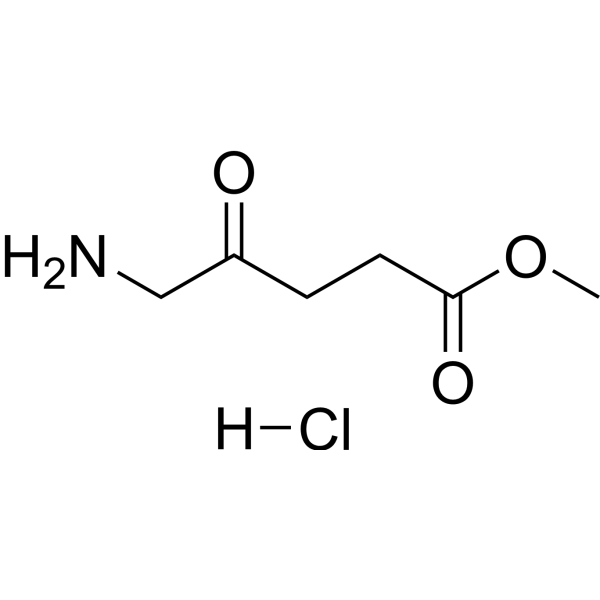
Methyl aminolevulinate hydrochloride is a sensitizer used in photodynamic therapy (PDT). Methyl aminolevulinate hydrochloride penetrates the skin and induces the production of photoactive porphyrins including protoporphyrin IX in cells; upon exposure to appropriate light, it generates ROS, which triggers cellular oxidation and cell death. Methyl aminolevulinate hydrochloride acts as a photo-damage reversing agent through epidermal reconstruction, cytokine-mediated activation of dermal fibroblasts, elastin breakdown, new collagen formation, and compression of dilated capillaries. Methyl aminolevulinate hydrochloride reduces the expression of the proliferation marker Ki-67 and the early skin carcinogenesis marker TP53. Methyl aminolevulinate hydrochloride delays the onset of ultraviolet-induced skin tumors and reduces tumor burden in hairless mice. Methyl aminolevulinate hydrochloride is applicable to research related to actinic keratosis and basal cell carcinoma .
loading...
    loading...
1
1 Cited Publications
Cat. No.: HY-B0708
CAS No.: 1743-60-8
Synonyms: 1,3,5(10)-Estratriene-3,17β-diol 17-acetate
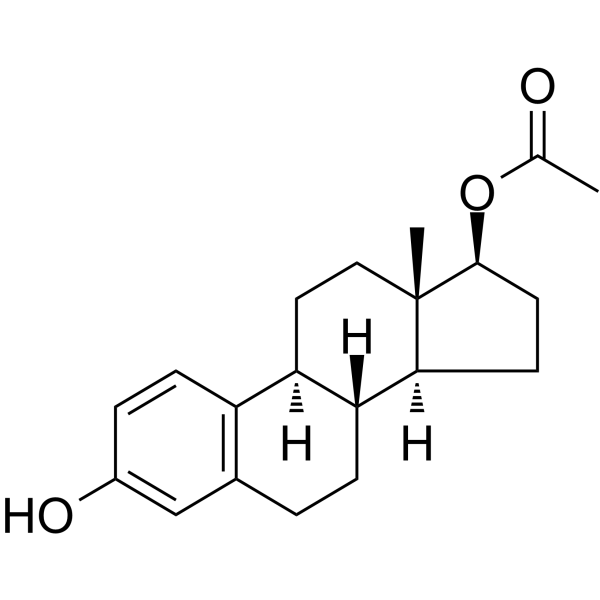
β-Estradiol 17-acetate (1,3,5(10)-Estratriene-3,17β-diol 17-acetate) is a long-acting endogenous estrogen precursor and also a cell viability and proliferation enhancer. β-Estradiol 17-acetate promotes the adhesion and proliferation of freshly isolated and revived female-derived human brain microvascular endothelial cells, and reverses the decreased viability of revived male-derived human brain microvascular endothelial cells. β-Estradiol 17-acetate exerts the microvascular protective effect of estrogen, enabling non-tumor human brain microvascular endothelial cells to be cultured in vitro for 2 months after cryopreservation. β-Estradiol 17-acetate is biotransformed into β-estradiol via hydrolase action in the in vitro skin of humans, hairless dogs, rats and hairless mice .
loading...
    loading...
Cat. No.: HY-133079
CAS No.: 183476-82-6
Purity:  ≥98.0%
Synonyms: tetra-isopalmitoyl Ascorbic acid; IPAA; Tetrahexyldecyl Ascorbate
Research Areas:  

Endocrinology

Ascorbyl tetra-2-hexyldecanoate (tetra-isopalmitoyl Ascorbic acid; IPAA) is a lipophilic derivative of vitamin C (L-ascorbic acid). Ascorbyl tetra-2-hexyldecanoate (100 μM ) can prevent the decrease in viability of HaCaT keratinocytes induced by UVB, hydrogen peroxide, or tert-butyl hydroperoxide, and reduce the production of IL-1α and prostaglandin E2 (PGE2). Topical application of ascorbyl tetra-2-hexyldecanoate (1%) increases epidermal viability thickness, stratum corneum water content, and skin smoothness, and reduces skin roughness in hairless mice. Ascorbyl tetra-2-hexyldecanoate can be used to develop skin whitening agents in the beauty industry.
loading...
    loading...
Cat. No.: HY-122056
CAS No.: 39036-04-9
Synonyms: L-α-Diheptanoyllecithin; 12-Diheptanoyl-sn-glycero-3-PC
Research Areas:  

Others

1,2-Diheptanoyl-SN-glycero-3-phosphocholine (L-α-Diheptanoyllecithin; 12-Diheptanoyl-sn-glycero-3-PC) is a short-chain phospholipid. 11,2-Diheptanoyl-SN-glycero-3-phosphocholine forms bimolecular micelles with long-chain phospholipids, and these micelles undergo adsorption and spontaneous fusion to generate supported lipid bilayers. 1,2-Diheptanoyl-SN-glycero-3-phosphocholine enhances the transdermal penetration of hydrophilic low-molecular-weight compounds via micellar pretreatment of the skin of hairless mice. 1,2-Diheptanoyl-SN-glycero-3-phosphocholine can be used in studies of membrane biology, structural biology and transdermal drug delivery .
loading...
    loading...
Cat. No.: HY-19380
CAS No.: 241151-12-2
Target:  

Drug Derivative VD/VDR

Research Areas:  

Inflammation/Immunology

Ro-65-2299 is an orally active retiferol Vitamin D analogue and a potential VDR agonist (ED50 = 180 nM). Ro-65-2299 can induce thickening of the epidermis and exhibits antipsoriatic effect in hairless mice (ED50 = 7.5 mg/kg). Ro-65-2299 can be used for the researches of inflammation and immunology, such as psoriasis .
loading...
    loading...
Cat. No.: HY-106317
CAS No.: 97451-46-2
Synonyms: Glutathione isopropyl ester; YM 737
Glutathione monoisopropyl ester (Glutathione isopropyl ester) is an ester derivative of glutathione. Glutathione monoisopropyl ester can increase glutathione concentrations in tissues such as the liver, lungs, heart, and brain of mice, exerting a dose-dependent protective effect against liver injury. Glutathione monoisopropyl ester effectively inhibits ultraviolet-induced lipid peroxidation, inflammatory responses, and tumorigenesis in the skin of hairless mice by maintaining epidermal glutathione levels. Glutathione monoisopropyl ester also inhibits the progression of X-ray-induced cataracts in rats .
loading...
    loading...
Cat. No.: HY-A0169
CAS No.: 33320-16-0
Research Areas:  

Cancer

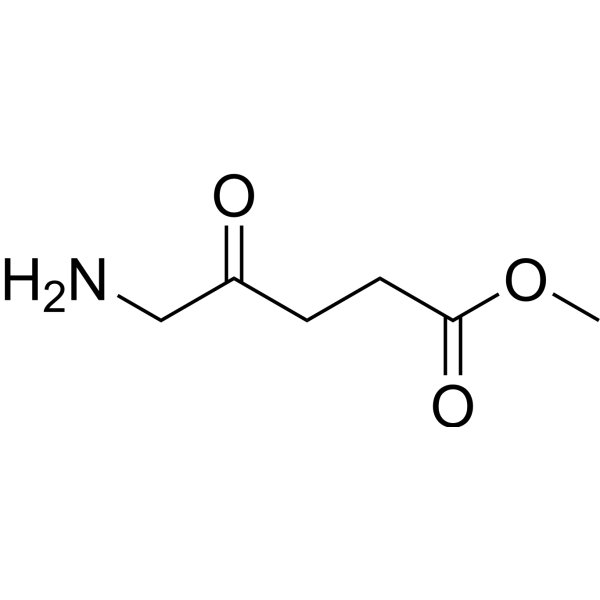
Methyl aminolevulinate is a sensitizer used in photodynamic therapy (PDT). Methyl aminolevulinate penetrates the skin and induces the production of photoactive porphyrins including protoporphyrin IX in cells; upon exposure to appropriate light, it generates ROS, which triggers cellular oxidation and cell death. Methyl aminolevulinate acts as a photo-damage reversing agent through epidermal reconstruction, cytokine-mediated activation of dermal fibroblasts, elastin breakdown, new collagen formation, and compression of dilated capillaries. Methyl aminolevulinate reduces the expression of the proliferation marker Ki-67 and the early skin carcinogenesis marker TP53. Methyl aminolevulinate delays the onset of ultraviolet-induced skin tumors and reduces tumor burden in hairless mice. Methyl aminolevulinate is applicable to research related to actinic keratosis and basal cell carcinoma .
loading...
    loading...
Cat. No.: HY-122859
CAS No.: 2252153-94-7
Target:  

TOPK ERK p38 MAPK JNK AP-1

Research Areas:  

Inflammation/Immunology

ADA-07 is a TOPK inhibitor with activity at the ATP-binding pocket that does not inhibit MEK1 activity. ADA-07 suppresses solar ultraviolet (SUV)-induced phosphorylation of ERK1/2, p38, and JNKs, and inhibits AP-1 activity. ADA-07 attenuates tumor incidence, multiplicity, and volume in SUV-exposed SKH-1 hairless mice. ADA-07 can be used for the research of solar ultraviolet-induced skin carcinogenesis .
loading...
    loading...
Cat. No.: HY-A0169AR
CAS No.: 79416-27-6
Methyl aminolevulinate hydrochloride (Standard) is the analytical standard of Methyl aminolevulinate hydrochloride. This product is intended for research and analytical applications. Methyl aminolevulinate hydrochloride is a sensitizer used in photodynamic therapy (PDT). Methyl aminolevulinate hydrochloride penetrates the skin and induces the production of photoactive porphyrins including protoporphyrin IX in cells; upon exposure to appropriate light, it generates ROS, which triggers cellular oxidation and cell death. Methyl aminolevulinate hydrochloride acts as a photo-damage reversing agent through epidermal reconstruction, cytokine-mediated activation of dermal fibroblasts, elastin breakdown, new collagen formation, and compression of dilated capillaries. Methyl aminolevulinate hydrochloride reduces the expression of the proliferation marker Ki-67 and the early skin carcinogenesis marker TP53. Methyl aminolevulinate hydrochloride delays the onset of ultraviolet-induced skin tumors and reduces tumor burden in hairless mice. Methyl aminolevulinate hydrochloride is applicable to research related to actinic keratosis and basal cell carcinoma .
loading...
    loading...

