118 Results for "

Hemolytic

" in MedChemExpress (MCE) Product Catalog:
Products (118)

118 Results for "Hemolytic" in MCE Product Catalog:
79
79 Publications Verification
Cat. No.: HY-N1446A
CAS No.: 25496-72-4
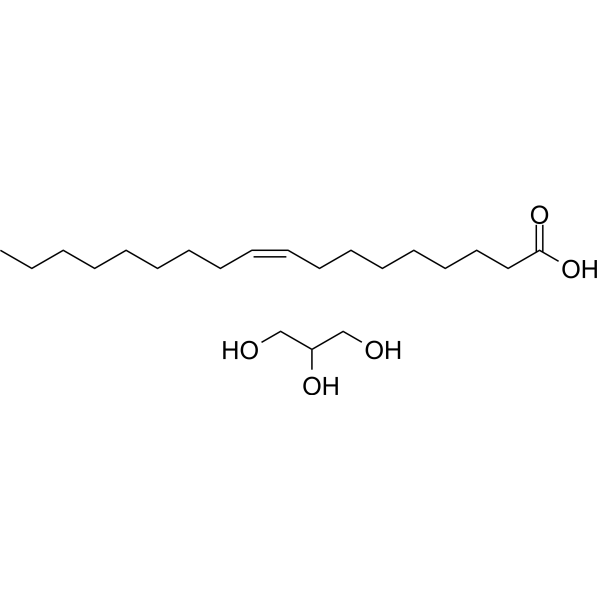
Glycerol Monoleate is a non-toxic, biodegradable, biocompatible, lipophilic glycerol fatty acid ester. Glycerol Monoleate exhibits hemolytic properties. Glycerol Monoleate is combined with bile salts for use as an emulsifier and absorption enhancer. Glycerol Monoleate can be applied in drug delivery systems and in vitro siRNA delivery .
loading...
    loading...
7
7 Cited Publications
Cat. No.: HY-129555
CAS No.: 252023-70-4
Purity:  98.96%
Surfactin is a potent cyclic lipopeptide biosurfactants consists of four isomers (Surfactin A, B, C and D), which mediates flux of mono-and divalent cations, such as calcium, across lipid bilayer membranes. Surfactin can act as an antimicrobial adjuvant with anti-bacterial, anti-fungal, antimycoplasma and hemolytic effects . Surfactin also has antiviral activity against a variety of enveloped viruses .
loading...
    loading...
7
7 Cited Publications
Cat. No.: HY-110082
CAS No.: 130-89-2
Quinine hydrochloride is an alkaloid extracted from cinchona bark and exhibits oral activity, acting as a potassium channel inhibitor. Quinine hydrochloride modulates the tolerance of red blood cells and presents dose-dependent toxicity and embryonic effects. Quinine hydrochloride is a typical hemolysin that directly lyses red blood cells, with cellular components of red blood cell membranes as its action targets. Quinine hydrochloride disrupts red blood cell membranes and induces hemolysis at high concentrations, while merely weakening the anti-hemolytic capacity of red blood cells at low concentrations. Quinine hydrochloride continuously reduces red blood cell tolerance after in vivo administration, and high doses can also alter blood cell counts. Quinine hydrochloride can be applied to researches related to red blood cell hemolysis, cancer and malaria .
loading...
    loading...
6
6 Cited Publications
Cat. No.: HY-117930
CAS No.: 1903768-17-1
Purity:  99.91%
Synonyms: ACH-4471
Target:  

Complement System

Research Areas:  

Inflammation/Immunology

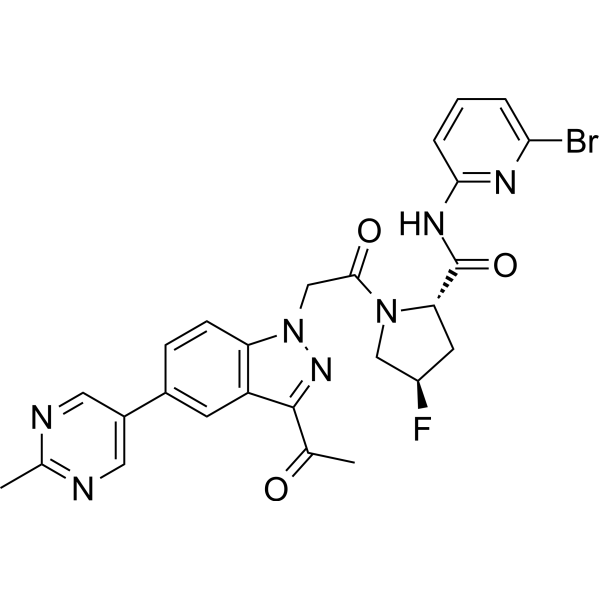
Danicopan (ACH-4471), a selective and orally active small-molecule factor D inhibitor, shows high binding affinity to human Factor D with Kd value of 0.54 nM. Danicopan (ACH-4471) inhibits alternative pathway of complement (APC) activity, has potential to block the alternative pathway of complement in paroxysmal nocturnal hemoglobinuria (PNH) and atypical hemolytic uremic syndrome (aHUS) .
loading...
    loading...
3
3 Cited Publications
Cat. No.: HY-P99037
CAS No.: 2211985-36-1
Synonyms: M281

Target:  

Fc Receptor (FcR)

Research Areas:  

Inflammation/Immunology

Nipocalimab (M281) is a fully humanized, recombinant, and non-glycosylated IgG1 monoclonal antibody. Nipocalimab can bind to the IgG-binding site of FcRn with high affinity and inhibit the transplacental transfer of IgG. Nipocalimab can be used in the research of fetal and neonatal hemolytic disease, myasthenia gravis, and various IgG-mediated autoimmune diseases .
loading...
    loading...
3
3 Cited Publications
Cat. No.: HY-W010155
CAS No.: 526-55-6
Synonyms: Indole-3-ethanol
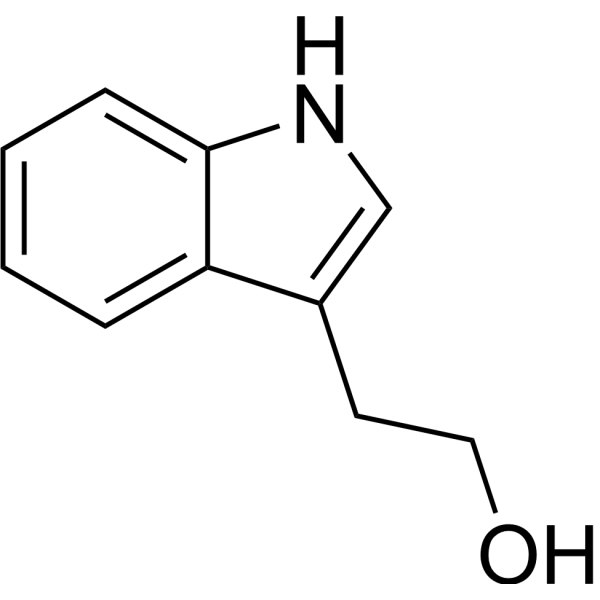
Tryptophol is an aromatic alcohol and secondary metabolite produced by microorganisms. Tryptophol induces apoptosis and cleavage of caspase-8. Tryptophol inhibits Cunninghamella blakesleeana biofilm. Tryptophol has anti-phage infection, biofilm formation regulation, anti-inflammatory, hemolytic, sleep induction, temperature change, seizure susceptibility and immune regulation activities. Tryptophol is used in the research of African trypanosomiasis, sleep disorders, epilepsy .
loading...
    loading...
3
3 Cited Publications
Cat. No.: HY-N4087
CAS No.: 66663-90-9
Category:  

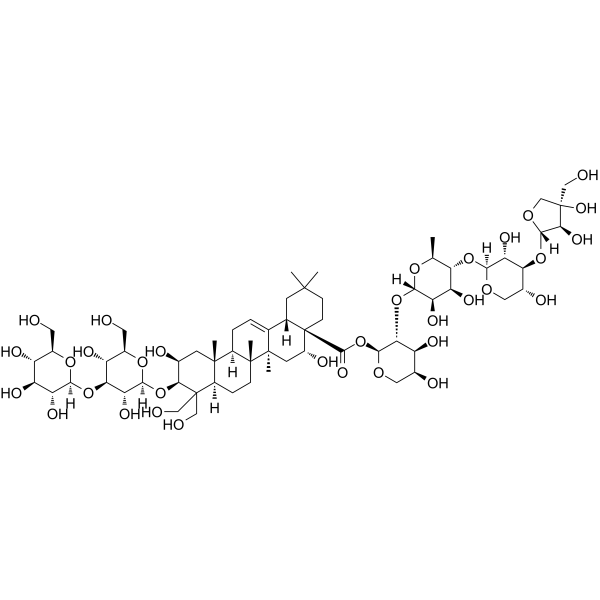
Campanulaceae Extract Triterpenes Terpenoids 500 - Internal Server Error | MedChemExpress

Oops!

Sorry, Something went wrong on our server.
Our team has been notified and is working to fix the issue.