11 Results for "

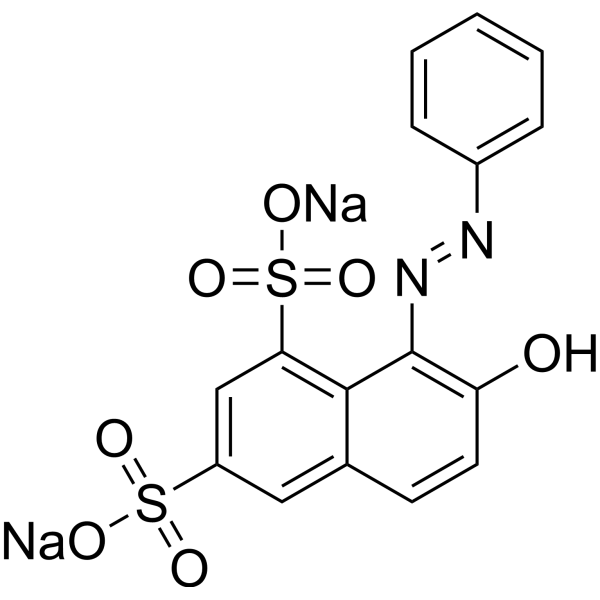
Orange G

" in MedChemExpress (MCE) Product Catalog:
Products (11)

11 Results for "Orange G" in MCE Product Catalog:

Cat. No.: HY-135712
CAS No.: 1936-15-8
Synonyms: Acid Orange GG
Orange G is an azo dye commonly found in textile wastewater and is mainly used for textile dyeing. Orange G has a coloring function and can give textiles a specific color. The stability and potential hazards of Orange G in the environment are often used to study the removal effects of various wastewater treatment technologies on difficult-to-degrade organic pollutants, especially the degradation of azo dyes. Related research focuses on how to destroy the azo bond of Orange G through chemical, physical or biological methods to achieve harmless treatment to solve the problem of textile wastewater pollution .
loading...
    loading...
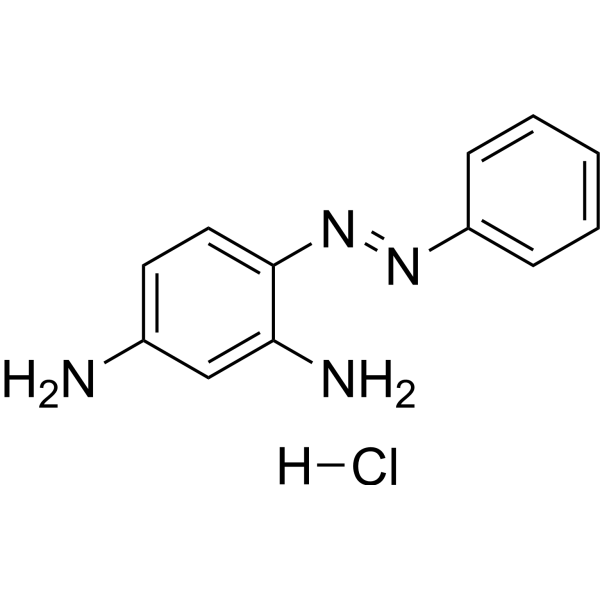
Cat. No.: HY-D0303A
CAS No.: 532-82-1
Synonyms: Solvent Orange 3 hydrochloride; Basic Orange 2; Chrysoidine Y
Research Areas:  

Others

Chrysoidine G (Solvent Orange 3 hydrochloride; Basic Orange 2) is an industrial azo dye. Chrysoidine G is used in most textile dyeing, absorption fluorescent probes, and colorimetric sensors. Chrysoidine G can chemically complex with Co 2+, or bind with Cs + to inhibit the intramolecular charge transfer process, thereby triggering a red shift in the absorption spectrum and producing a significant color change. Chrysoidine G can induce DNA damage, and has moderate toxicity and carcinogenicity .
loading...
    loading...
Cat. No.: HY-W145129
CAS No.: 1934-20-9
Crocein orange G is a biological material or organic compound that can be used in life science research .
loading...
    loading...
Cat. No.: HY-119987R
CAS No.: 2051-85-6
Synonyms: SOG (Standard)
Sudan orange G (Standard) is the analytical standard of Sudan orange G. This product is intended for research and analytical applications. Sudan orange G is an azo dye. Sudan orange G, after enzymatic oxidation, generates oligomers and even polymers through free radical coupling reactions .
loading...
    loading...
Cat. No.: HY-119987
CAS No.: 2051-85-6
Synonyms: SOG
Sudan orange G is an azo dye. Sudan orange G, after enzymatic oxidation, generates oligomers and even polymers through free radical coupling reactions .
loading...
    loading...
Cat. No.: HY-D0303AR
CAS No.: 532-82-1
Synonyms: Solvent Orange 3 hydrochloride (Standard); Basic Orange 2 (Standard); Chrysoidine Y (Standard)
Chrysoidine G (Solvent Orange 3 hydrochloride; Basic Orange 2) Standard is the analytical standard of Chrysoidine G (HY-D0303A). This product is intended for research and analytical applications. Chrysoidine G (Solvent Orange 3 hydrochloride; Basic Orange 2) is an industrial azo dye. Chrysoidine G is used in most textile dyeing, absorption fluorescent probes, and colorimetric sensors. Chrysoidine G can chemically complex with Co 2+, or bind with Cs + to inhibit the intramolecular charge transfer process, thereby triggering a red shift in the absorption spectrum and producing a significant color change. Chrysoidine G can induce DNA damage, and has moderate toxicity and carcinogenicity .
loading...
    loading...
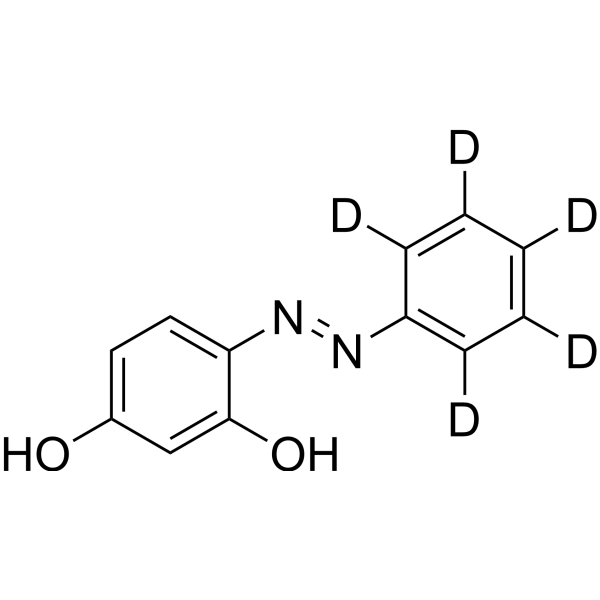
Cat. No.: HY-119987S
Synonyms: SOG-d5
Sudan Orange G-d5 (SOG-d5) is the deuterated labeled Sudan Orange G (HY-119987) .
loading...
    loading...
Cat. No.: HY-D0303
CAS No.: 495-54-5
Synonyms: Solvent Orange 3; Basic Orange 2 free base; Chrysoidine Y free base
Research Areas:  

Others

Chrysoidine G free base (Solvent Orange 3; Basic Orange 2 free base) is an industrial azo dye. Chrysoidine G free base is used in most textile dyeing, absorption fluorescent probes, and colorimetric sensors. Chrysoidine G free base can chemically complex with Co 2+, or bind with Cs + to inhibit the intramolecular charge transfer process, thereby triggering a red shift in the absorption spectrum and producing a significant color change. Chrysoidine G free base can induce DNA damage, and has moderate toxicity and carcinogenicity .
loading...
    loading...
Cat. No.: HY-D2772
CAS No.: 383912-87-6
5-TAMRA cadaverine can used to modify carboxylic acid group in the presence of activators (e.g. EDC, or DCC) or activated esters (e.g. NHS esters) through a stable amide bond. It also can be reversibly coupled to aldehydes and ketones to form a Schiff base – which can be reduced to a generate stable amine derivative by sodium borohydride (NaBH4) or sodium cyanoborohydride (NaCNH3). Although the mixed isomers of 5(6)-TAMRA cadaverine is a preferred, routinely used orange-fluorescent dye for staining proteins, it is rearly used for labeling peptides and nucleotides. Purification of 5(6)-TAMRA labeled peptide and nucleotides might be troublesome due to significant signal broadening in HPLC purification. Peptides and nucleotides labeled with a single isomer TAMRA usually give better resolution in HPLC purification that is often required in the conjugation processes.
loading...
    loading...
Cat. No.: HY-D0303AS
CAS No.: 1450729-16-4
Synonyms: Solvent Orange 3-d5 hydrochloride; Basic Orange 2-d5 hydrochloride; Chrysoidine Y-d5 hydrochloride
Chrysoidine G-d5 (Solvent Orange 3-d5 hydrochloride; Basic Orange 2-d5) is the deuterated-labeled Chrysoidine G (HY-D0303A). Chrysoidine G (Solvent Orange 3 hydrochloride; Basic Orange 2) is an industrial azo dye. Chrysoidine G is used in most textile dyeing, absorption fluorescent probes, and colorimetric sensors. Chrysoidine G can chemically complex with Co 2+, or bind with Cs + to inhibit the intramolecular charge transfer process, thereby triggering a red shift in the absorption spectrum and producing a significant color change. Chrysoidine G can induce DNA damage, and has moderate toxicity and carcinogenicity .
loading...
    loading...
Cat. No.: HY-K1032

MCE 6× DNA Loading Buffer with SDS is a modified 6-fold buffer and mainly consists of glycerin, EDTA, SDS, Orange G and Xylene Cyanol FF. The 1 mL is defined as the base specification. All larger sizes correspond to incremental volumes of this base.

loading...
    loading...
  • 1

