
136 Results for "

PD model

" in MedChemExpress (MCE) Product Catalog:
Products (136)

136 Results for "PD model" in MCE Product Catalog:

36
36 Publications Verification
Cat. No.: HY-136927
CAS No.: 129425-81-6
Purity:  99.81%
Target:  

STING

Research Areas:  

Inflammation/Immunology Cancer

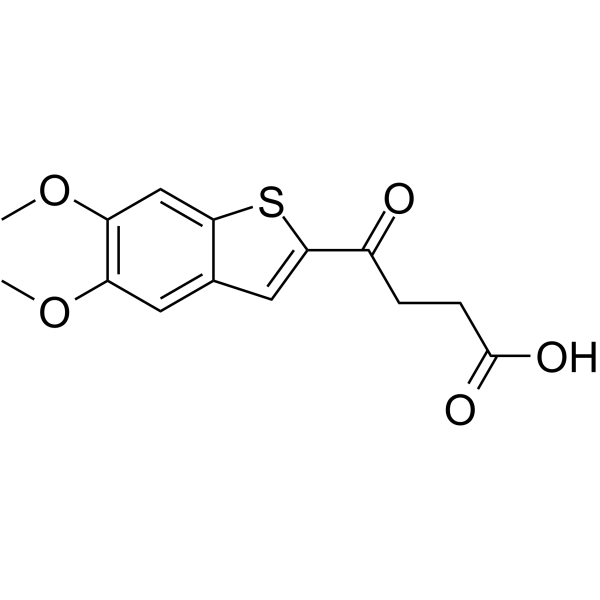
MSA-2, a potent and orally available non-nucleotide STING agonist, is bound to STING as a noncovalent dimer with nanomolar affinity. MSA-2 shows EC50s of 8.3 and 24 μM for human STING isoforms WT and HAQ, respectively. MSA-2 stimulates interferon-β secretion in tumors, induces tumor regression with durable antitumor immunity, and synergizes with anti-PD-1 in syngeneic mouse tumor models .
loading...
    loading...
18
18 Cited Publications
Cat. No.: HY-N0120A
CAS No.: 27208-80-6
Synonyms: Piceid
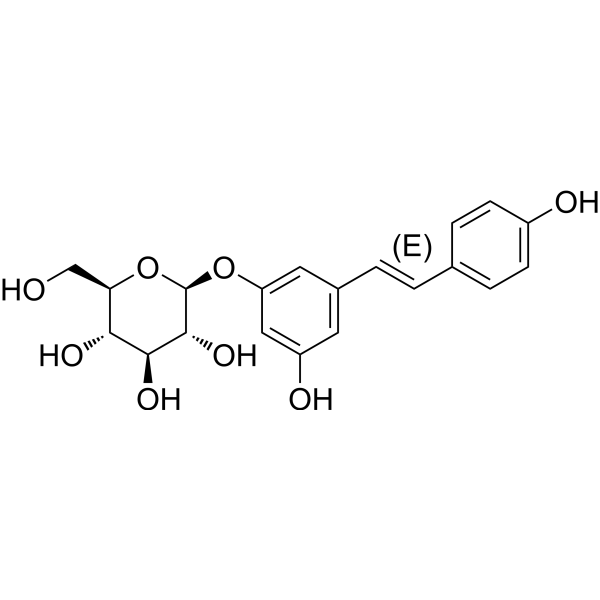
Polydatin (Piceid), extracted from the roots of Reynoutria japonica, a widely used traditional Chinese remedies, possesses anti-inflammatory activity in several experimental models. Polydatin (Piceid) inhibits G6PD and induces oxidative and ER stresses.
loading...
    loading...
4
4 Cited Publications
Cat. No.: HY-132192
CAS No.: 2628506-54-5
Purity:  99.59%
Target:  

PD-1/PD-L1

Research Areas:  

Cancer

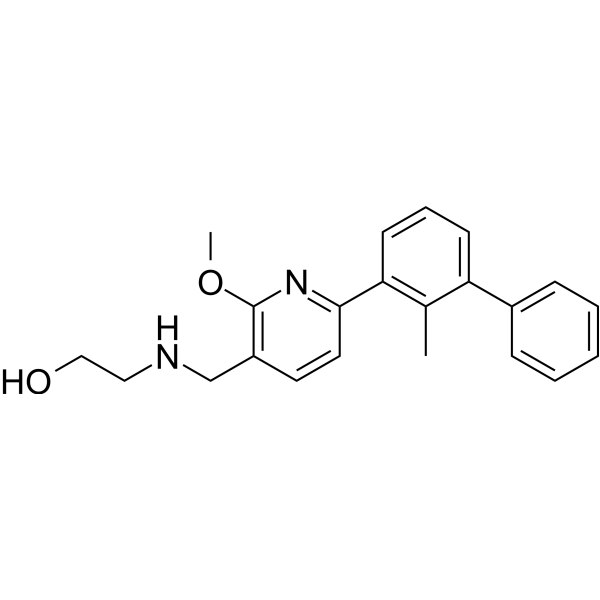
PD-1/PD-L1-IN-9 is a potent and orally active inhibitor of PD-1/PD-L1 interaction, with an IC50 of 3.8 nM. PD-1/PD-L1-IN-9 can enhance the killing activity of tumor cells by immune cells. PD-1/PD-L1-IN-9 also exhibits significant in vivo antitumor activity in a CT26 mouse model .
loading...
    loading...
4
4 Cited Publications
Cat. No.: HY-132192A
Purity:  99.26%
Target:  

PD-1/PD-L1

Research Areas:  

Cancer

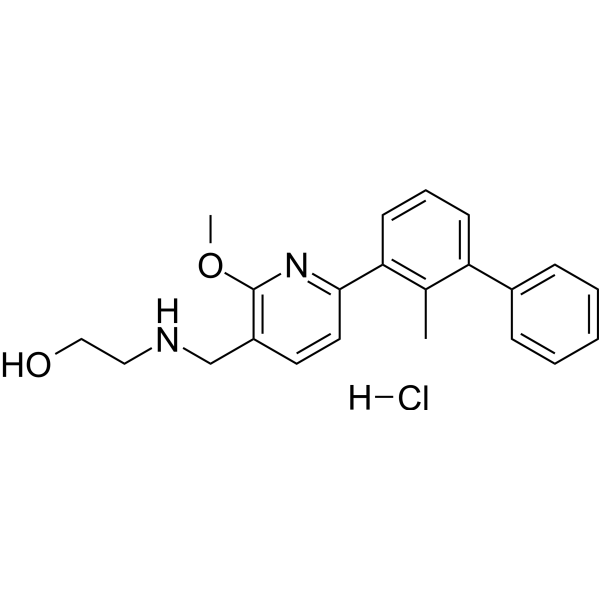
PD-1/PD-L1-IN-9 hydrochloride is a potent and orally active inhibitor of PD-1/PD-L1 interaction, with an IC50 of 3.8 nM. PD-1/PD-L1-IN-9 hydrochloride can enhance the killing activity of tumor cells by immune cells. PD-1/PD-L1-IN-9 hydrochloride also exhibits significant in vivo antitumor activity in a CT26 mouse model .
loading...
    loading...
3
3 Cited Publications
Cat. No.: HY-164992
Synonyms: MRG002; Trastuzumab MMAE
Trastuzumab vedotin (MRG002; Trastuzumab MMAE) is an antibody-drug conjugate and cytotoxin targeting HER2, with a Kd of 7.50E-11 M for human HER2. After binding to HER2, Trastuzumab vedotin undergoes internalization and lysosomal trafficking, delivering a cytotoxic payload to HER2-expressing cells and inducing tumor regression in in vivo xenograft models with HER2-expressing tumors. The anti-tumor activity of Trastuzumab vedotin is enhanced when used in combination with anti-PD-1 antibodies, and it exhibits preclinical anti-tumor activity in drug-resistant breast cancer, gastric cancer, and urothelial carcinoma PDX models. Trastuzumab vedotin has low antibody-dependent cellular cytotoxicity activity and can be used in studies related to HER2-positive breast cancer, HER2-positive gastric cancer, and unresectable locally advanced or metastatic HER2-positive urothelial carcinoma .
loading...
    loading...
2
2 Cited Publications
Cat. No.: HY-144088
CAS No.: 2380300-79-6
Purity:  98.86%
Synonyms: HPK1-IN-22
Target:  

MAP4K

Research Areas:  

Inflammation/Immunology Cancer

ZYF0033 is an orally active inhibitor of the hematopoietic progenitor cell kinase HPK1 with an IC50 of less than 10 nM based on the phosphorylation inhibition of MBP protein. ZYF0033 promotes anti-cancer immune responses and reduces phosphorylation of SLP76 (serine 376). ZYF0033 inhibits tumor growth in the 4T-1 syngeneic mouse model and leads to increased intratumoral infiltration of DCs, NK cells, and CD107a +CD8 + T cells, but not T cells, PD-1 +CD8 + T cells, TIM-3 +CD8 + Infiltration of T cells and LAG3 +CD8 + T cells was reduced .
loading...
    loading...
1
1 Cited Publications
Cat. No.: HY-107428
CAS No.: 199850-67-4
Purity:  99.21%
Target:  

MMP

Research Areas:  

Cardiovascular Disease

PD-166793 is a potent, selective, orally active and wide-broad spectrum inhibitor of MMP, exhibiting nanomolar potency against MMP-2, MMP-3 and MMP-13 (IC50=4, 7, and 8 nM, respectively) and micromolar potency vs MMP-1, -7 and -9 (IC50=6.0, 7.2, and 7.9 μM, respectively). PD-166793 can attenuate left ventricular remodeling and dysfunction in a rat model of progressive heart failure .
loading...
    loading...
1
1 Cited Publications
Cat. No.: HY-P10908
CAS No.: 3020015-02-2
Research Areas:  

Neurological Disease

H-20 is a PD-1 agonist peptide. H-20 increases μOR mRNA in DRG neurons and modulates μOR-mediated analgesia. H-20 produces synergistic analgesic effects in inflammatory pain models and can reduce analgesic-induced tolerance, hyperalgesia, constipation, and motor impairment. H-20 can be used in pain-related research .
loading...
    loading...
1
1 Cited Publications
Cat. No.: HY-139616
CAS No.: 2484865-72-5
Purity:  99.51%
Target:  

Sec61 PD-1/PD-L1

Research Areas:  

Cancer

Sec61-IN-2 is a Sec61 inhibitor. Sec61-IN-2 shows a significant inhibitory effect on PD-1 related reporter gene cell models (PD1tsGluc) (IC50 = 42 nM), while it has almost no inhibitory activity in TNFα, Her3, and IL-2 pathway models. Sec61-IN-2 can be used for cancer research .
loading...
    loading...
1
1 Cited Publications
Cat. No.: HY-120553
CAS No.: 1261576-81-1
Purity:  ≥99.0%
Target:  

Apoptosis

Research Areas:  

Neurological Disease

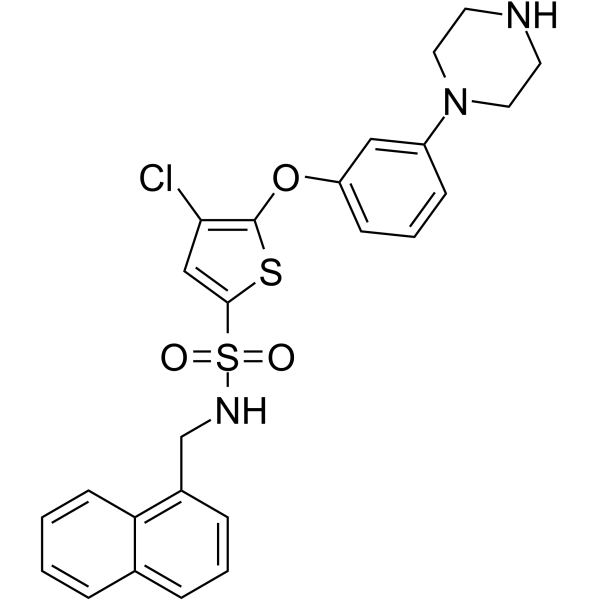
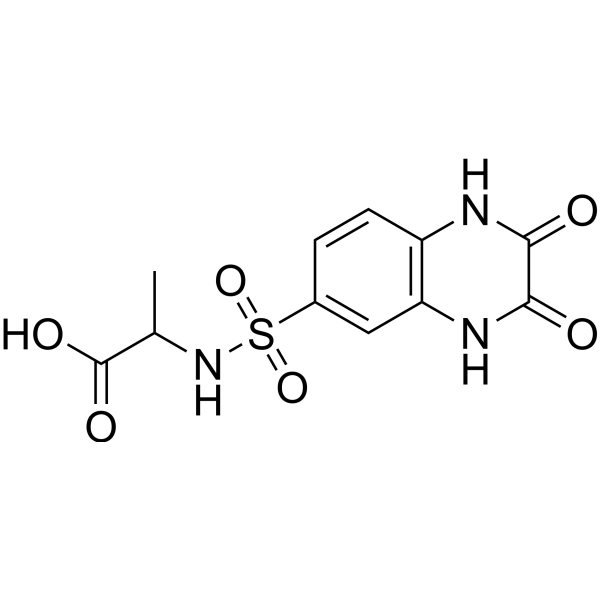
B355252, a phenoxy thiophene sulfonamide small molecule, is a potent NGF receptor agonist. B355252 potentiates NGF-induced neurite outgrowth. B355252 protects ischemic neurons from neuronal loss by attenuating DNA damage, reducing ROS production and the LDH level, and preventing neuronal apoptosis. B355252 has anti-apoptotic effects in glutamate-induced excitotoxicity, as well as in a murine hippocampal cell line (HT22) model of Parkinson disease (PD) .
loading...
    loading...
1
1 Cited Publications
Cat. No.: HY-119024
CAS No.: 112170-24-8
Purity:  98.88%
Target:  

SHP1 STAT

Research Areas:  

Cancer

BCI-137 is a Argonaute 2 (AGO2) inhibitor. By inhibiting AGO2 function, reducing PTPN6/SHP-1 protein levels and enhancing STAT1 phosphorylation, BCI-137 restores the sensitivity of tumor cells to IFN-γ. BCI-137 effectively enhances the recruitment, activation and cytotoxicity of CD8 + T cells. BCI-137 exerts a synergistic effect with anti-PD-1 antibodies and significantly reduces tumor volume in preclinical mouse models. BCI-137 exhibits favorable safety profiles and does not cause significant weight loss or death in mice. BCI-137 can be used in research related to bladder cancer, colorectal cancer, melanoma and other related fields .
loading...
    loading...
Cat. No.: HY-145746
CAS No.: 1782950-80-4
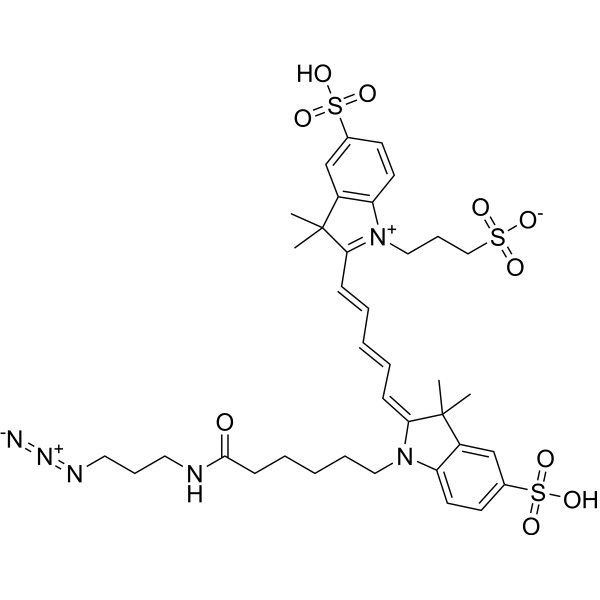
Sulfo-Cy5 azide is a near-infrared fluorescent probe with favorable click chemistry reactivity. Sulfo-Cy5 azide enables fluorescence imaging, tissue and cellular visualization of PD-L1 in tumors, and site-specific modification of anti-PD-L1 antibodies. Sulfo-Cy5 azide has been employed for RNA labeling and imaging. Sulfo-Cy5 azide can be conjugated to targeting agents for fluorescence imaging in atherosclerosis and breast cancer models (Ex/Em = 645/670 nm) .
loading...
    loading...
Cat. No.: HY-148794
CAS No.: 2031185-00-7
Purity:  98.42%
Synonyms: IkT-148009
Target:  

c-Met/HGFR Bcr-Abl

Research Areas:  

Neurological Disease Cancer

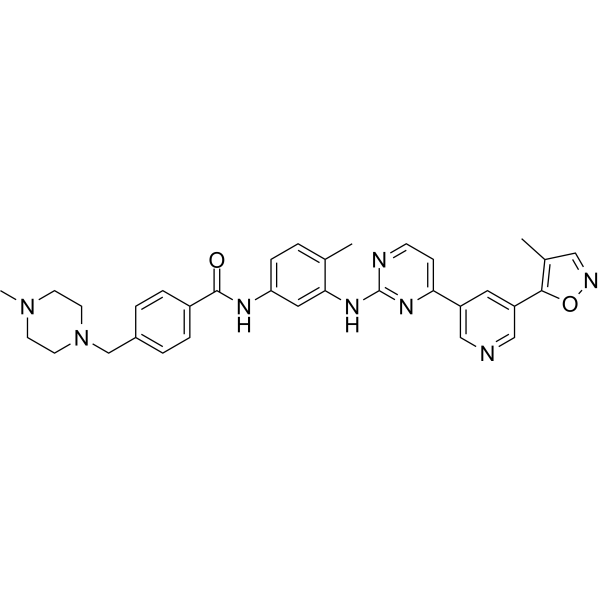
Risvodetinib (IkT-148009) is an orally active, selective and brain-penetrant protein tyrosine kinase inhibitor, displaying excellent target efficacy against c-Abl1, c-Abl2/Arg with IC50 values of 33 nM, 14 nM, respectively. Risvodetinib suppresses c-Abl activation and substantially protects dopaminergic neurons from degeneration in mouse models of both inherited and sporadic Parkinson’s disease (PD), which is promising for research in the field of PD .
loading...
    loading...
Cat. No.: HY-131183
CAS No.: 2447066-37-5
Purity:  99.52%
Target:  

PROTACs PD-1/PD-L1

Research Areas:  

Inflammation/Immunology

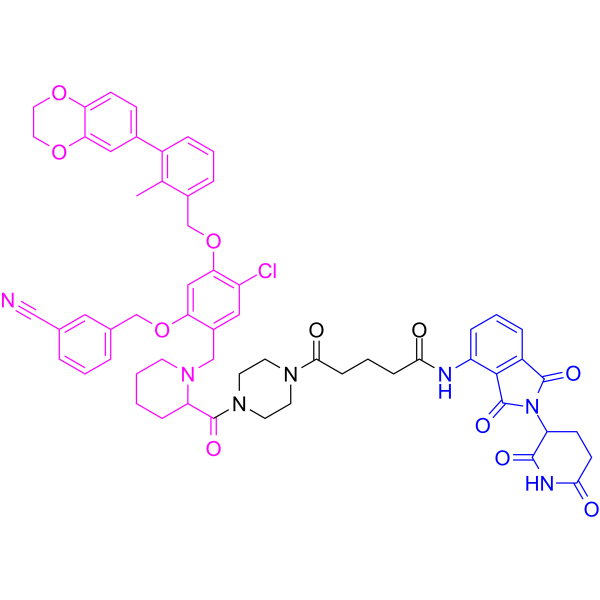
PROTAC PD-1/PD-L1 degrader-1, a PD-1/PD-L1 PROTAC based on Cereblon E3 ligand, inhibits PD-1/PD-L1 interaction with an IC50 of 39.2 nM. PROTAC PD-1/PD-L1 degrader-1 significantly restores the immunity repressed in a co-culture model of Hep3B/OS-8/hPD-L1 and CD3 T cells. PROTAC PD-1/PD-L1 degrader-1 moderately reduces the protein levels of PD-L1 in a lysosome-dependent manner .
loading...
    loading...
Cat. No.: HY-118144
CAS No.: 185039-91-2
Purity:  99.99%
Target:  

Src Bcr-Abl p38 MAPK

Research Areas:  

Cancer

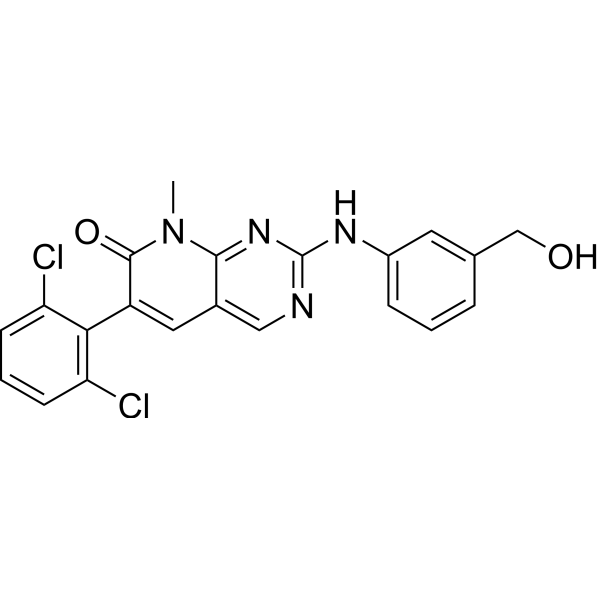
PD166326 is an orally active tyrosine kinase inhibitor with a IC50 of 8 nM against abl tyrosine kinase and a IC50 of 6 nM against src tyrosine kinase. PD166326 blocks Bcr/Abl kinase activity. PD166326 inhibits Bcr/Abl-dependent proliferation and cell cycle progression. PD166326 reduces peripheral blood granulocytosis, alleviates splenomegaly and prolongs survival in a mouse model of chronic myeloid leukemia. PD166326 can be used in research related to chronic myeloid leukemia .
loading...
    loading...
Cat. No.: HY-P10439
CAS No.: 2349354-64-7
Target:  

PD-1/PD-L1

Research Areas:  

Inflammation/Immunology Cancer

CVRARTR is a programmed cell death ligand-1 (PD-L1) antagonist with a KD of 281 nM. CVRARTR induces the internalization of PD-L1 and downregulates PD-L1 on the cell surface. CVRARTR restores cytokine secretion and T cell proliferation in cell CT26. CVRARTR exhibits antitumor efficacy against in CT26 homograft mouse model. CVRARTR can be used in melanoma research .
loading...
    loading...
Cat. No.: HY-P99943
CAS No.: 2367013-69-0
Synonyms: KN-046

Target:  

PD-1/PD-L1 CTLA-4

Research Areas:  

Cancer

Erfonrilimab (KN-046) is a monoclonal antibody targeting PD-L1/CTLA-4. Erfonrilimab blocks the PD-L1 and CTLA-4 pathways, thereby regulating T cell function. Erfonrilimab enhances the secretion of IL-2 in superantigen-stimulated peripheral blood mononuclear cells. Erfonrilimab inhibits tumor growth in xenograft and double gene knock-in mouse models. Erfonrilimab can be used in research related to a variety of advanced solid tumors, including non-small cell lung cancer and nasopharyngeal carcinoma.
loading...
    loading...
Cat. No.: HY-138742
CAS No.: 2320462-65-3
Purity:  99.33%
Target:  

MAP4K

Research Areas:  

Cancer

HPK1-IN-7 is a potent, orally active HPK1 (hematopoietic progenitor kinase 1, MAP4K1) inhibitor (IC50=2.6 nM) with excellent family and kinome selectivity. HPK1-IN-7 shows selectivity against IRAK4 (59 nM) and GLK (140 nM). HPK1-IN-7 shows robust efficacy against MC38 syngeneic tumor model in combination with anti-PD1 .
loading...
    loading...
Cat. No.: HY-P9996
CAS No.: 2445259-99-2
Synonyms: LY3434172; IBI-318

Target:  

PD-1/PD-L1

Research Areas:  

Cancer

Reozalimab (LY3434172; IBI-318) is an IgG1 monoclonal antibody targeting PD-1/PD-L1, with an IC50 of 2.27 nM and an EC50 of 0.080 nM against human PD-1, as well as an IC50 of 0.75 nM and an EC50 of 0.455 nM against human PD-L1. Reozalimab blocks the binding of PD-1 to PD-L1/PD-L2, as well as the binding of PD-L1 to PD-1/CD80, thereby inhibiting the inhibitory signal transduction of the PD-1 pathway. Reozalimab enhances the functional activation of T cells and induces anti-tumor activity in mouse tumor models reconstituted with human immune cells. Reozalimab can be used in research related to cancers such as non-small cell lung cancer and ovarian cancer .
loading...
    loading...
Cat. No.: HY-112411
CAS No.: 216163-53-0
Purity:  98.35%
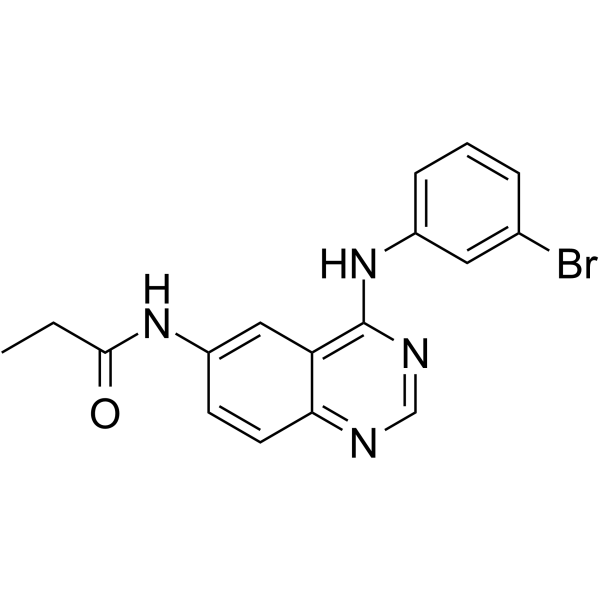
PD 174265 is a highly selective, reversible EGFR/ErbB2 tyrosine kinase inhibitor (IC50=0.45 nM) and cell differentiation inducer. By blocking receptor autophosphorylation and the downstream ERK signaling pathway (with an IC50 of 0.45 μM for full-length ERK), PD 174265 effectively inhibits tumor growth and exhibits antitumor activity without obvious toxicity in in vivo models. PD 174265 drives oligodendrocyte precursor cells to switch from a proliferative state to a differentiated state, significantly upregulates the expression of myelin proteins such as CNP, PLP and MBP, and induces neurite branching. PD 174265 shows no inhibitory effect on other kinases including insulin, PDGF and basic FGF receptors, and serves as a crucial tool molecule for investigating the treatment of human epidermoid carcinoma and the mechanism of myelin repair in multiple sclerosis .
loading...
    loading...

