15 Results for "

Pentobarbital

" in MedChemExpress (MCE) Product Catalog:
Products (15)

15 Results for "Pentobarbital" in MCE Product Catalog:

Cat. No.: HY-171844
CAS No.: 1086377-48-1
Target:  

iGluR

CX1739 is an orally active, blood-brain barrier permeable, low-efficacy AMPA-glutamate receptor (AMPAR) potentiator. CX1739 enhances excitatory neurotransmission by potentiating glutamate-induced excitatory currents and promoting in vivo long-term potentiation. CX1739 eliminates amphetamine-induced locomotor activity, reverses opioid-, pentobarbital- and ethanol-induced respiratory depression, and exerts pro-cognitive effects in animals. CX1739 impairs motor function recovery and increases the risk of post-injury complications. CX1739 can be used in research related to attention-deficit/hyperactivity disorder, dementia, respiratory depression and spinal cord injury .
loading...
    loading...
Cat. No.: HY-Y1840
CAS No.: 150-19-6
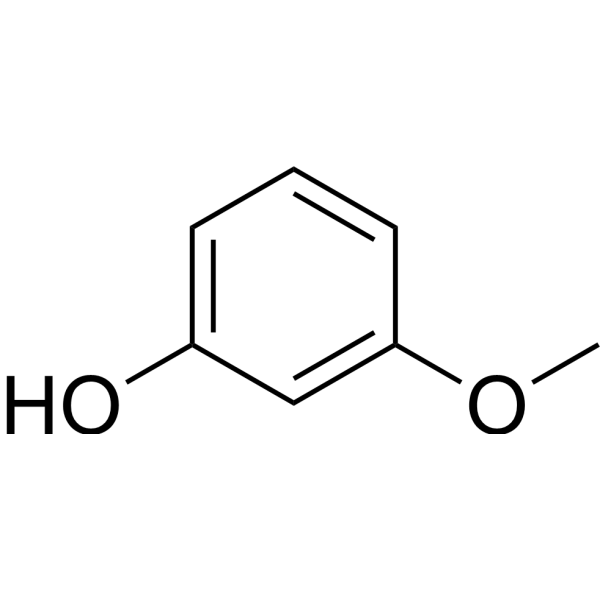
3-Methoxyphenol is an environmental pollutant. 3-Methoxyphenol occurs in the aroma components of dried bonito. 3-Methoxyphenol potentially enhances GABA-evoked responses of α1β1 GABAA receptors by increasing the affinity of GABA binding sites. 3-Methoxyphenol is used as a flavoring substance in food and animal feed. 3-Methoxyphenol prolongs pentobarbital-induced sleeping time and reduces elevated plus maze behavior .
loading...
    loading...
Cat. No.: HY-B1341
CAS No.: 68-23-5
Synonyms: Enidrel; SC-4642; NSC 15432
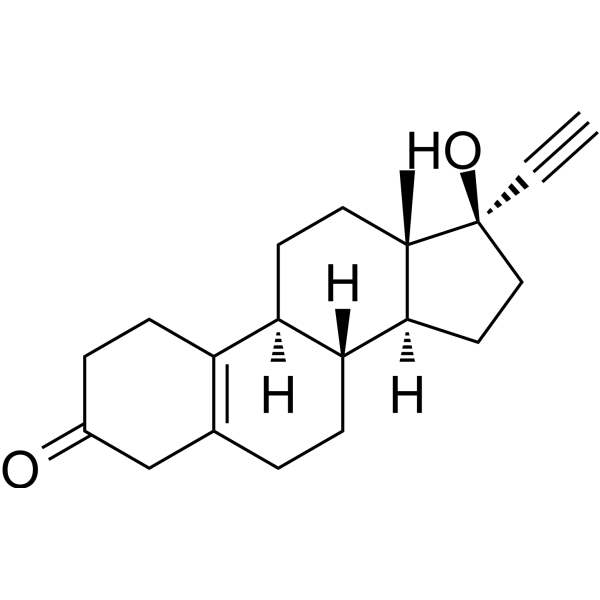
Norethynodrel (Enidrel; SC-4642) is an orally active progestogen analog that reduces estrogen-like effects and enhances progestogen-like responses in endometrial stromal cells. Norethynodrel also promotes cell maturation and predecidual cell formation by inducing organelle hyperplasia and glycogen accumulation. Norethynodrel competitively inhibits drug-metabolizing enzymes in rat liver microsomes, thereby prolonging Pentobarbital sleep time, while exhibiting multiple effects including reduced body weight gain, attenuated heart rate elevation and ovulation inhibition. In mouse models, Norethynodrel significantly increases the incidence of mammary adenocarcinoma, cervical cancer and pituitary tumors. Norethynodrel can be used for mechanism research on related diseases such as mammary adenocarcinoma, cervical cancer, ovarian tubular adenoma and pituitary adenoma .
loading...
    loading...
Cat. No.: HY-W009713
CAS No.: 951-82-6
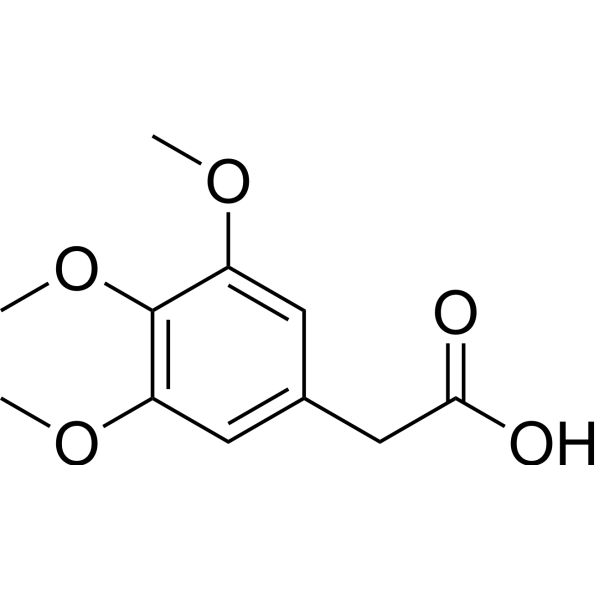
3,4,5-Trimethoxyphenylacetic acid is a trimethoxylated phenylacetic acid derivative and also a major metabolite of 3,4,5-trimethoxyphenylethylamine. 3,4,5-Trimethoxyphenylacetic acid is produced from the oxidation of 3,4,5-trimethoxyphenylacetaldehyde catalyzed by mouse CYP2C29, and it also serves as a starting material for the synthesis of intermediates of methoxylated phenylacetamides. 3,4,5‑Trimethoxyphenylacetic acid exhibits no significant cataleptic activity and does not prolong pentobarbital-induced sleep duration. 3,4,5-Trimethoxyphenylacetic acid is used in metabolism-related studies .
loading...
    loading...
Cat. No.: HY-116629
CAS No.: 55306-12-2
Target:  

Drug Derivative

Research Areas:  

Neurological Disease

Dactylyne is an ethyl dibromochloroether isolated from the sea hare Dactylomela. Dactylyne has the ability to inhibit Pentobarbital (PTB) metabolism and potentiate the effects of other hypnotic drugs .
loading...
    loading...
Cat. No.: HY-121328
CAS No.: 54406-48-3
Synonyms: S-2852F
Target:  

Parasite

Research Areas:  

Infection Neurological Disease

Empenthrin (S-2852F) is a synthetic pyrethroid. Empenthrin can be used in insecticides. Empenthrin shows a clear species-specificity in the inhibitory effect on the Pentobarbital (PTB)-metabolizing enzyme(s). Empenthrin prolongs PTB induced-sleeping time in mice through an inhibition of the PTB-metabolizing enzyme(s) in the liver, an effect that does not occur in rats. Empenthrin shows a clear species-specificity in the inhibitory effect on the PTB-metabolizing enzyme(s) .
loading...
    loading...
Cat. No.: HY-Y1840R
CAS No.: 150-19-6
3-Methoxyphenol (Standard) is the analytical standard of 3-Methoxyphenol (HY-Y1840). This product is intended for research and analytical applications. 3-Methoxyphenol is an environmental pollutant. 3-Methoxyphenol occurs in the aroma components of dried bonito. 3-Methoxyphenol potentially enhances GABA-evoked responses of α1β1 GABAA receptors by increasing the affinity of GABA binding sites. 3-Methoxyphenol is used as a flavoring substance in food and animal feed. 3-Methoxyphenol prolongs pentobarbital-induced sleeping time and reduces elevated plus maze behavior .
loading...
    loading...
Cat. No.: HY-Y1840S
CAS No.: 104714-88-7
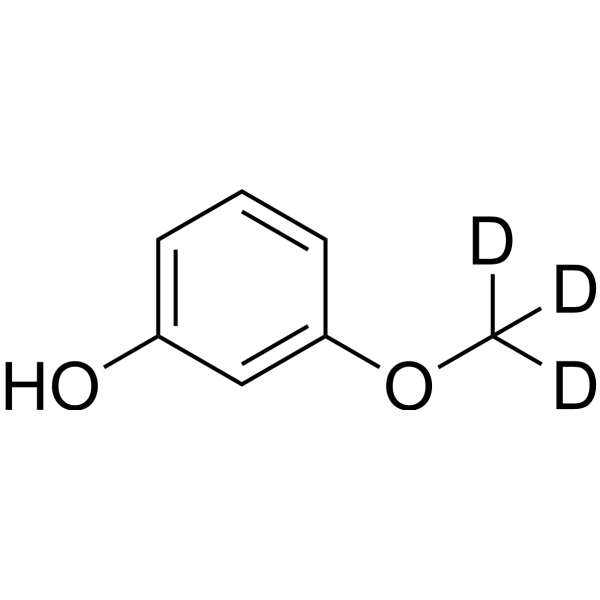
3-Methoxyphenol-d3 is the d3-labeled 3-Methoxyphenol (HY-Y1840). 3-Methoxyphenol is an environmental pollutant. 3-Methoxyphenol occurs in the aroma components of dried bonito. 3-Methoxyphenol potentially enhances GABA-evoked responses of α1β1 GABAA receptors by increasing the affinity of GABA binding sites. 3-Methoxyphenol is used as a flavoring substance in food and animal feed. 3-Methoxyphenol prolongs pentobarbital-induced sleeping time and reduces elevated plus maze behavior .
loading...
    loading...
Cat. No.: HY-W009713R
CAS No.: 951-82-6
3,4,5-Trimethoxyphenylacetic acid (Standard) is the analytical standard of 3,4,5-Trimethoxyphenylacetic acid (HY-W009713). This product is intended for research and analytical applications. 3,4,5-Trimethoxyphenylacetic acid is a trimethoxylated phenylacetic acid derivative and also a major metabolite of 3,4,5-trimethoxyphenylethylamine. 3,4,5-Trimethoxyphenylacetic acid is produced from the oxidation of 3,4,5-trimethoxyphenylacetaldehyde catalyzed by mouse CYP2C29, and it also serves as a starting material for the synthesis of intermediates of methoxylated phenylacetamides. 3,4,5‑Trimethoxyphenylacetic acid exhibits no significant cataleptic activity and does not prolong pentobarbital-induced sleep duration. 3,4,5-Trimethoxyphenylacetic acid is used in metabolism-related studies .
loading...
    loading...
Cat. No.: HY-W009713S
CAS No.: 344299-45-2
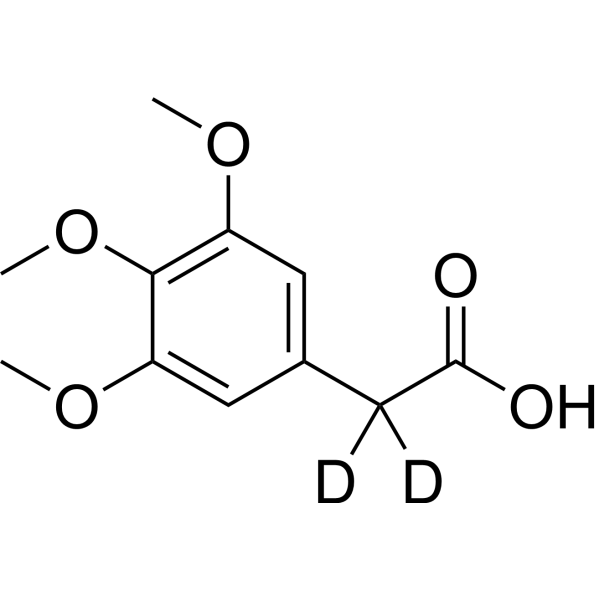
3,4,5-Trimethoxyphenylacetic acid-d2 is the deuterated-labeled 3,4,5-Trimethoxyphenylacetic acid (HY-W009713). 3,4,5-Trimethoxyphenylacetic acid is a trimethoxylated phenylacetic acid derivative and also a major metabolite of 3,4,5-trimethoxyphenylethylamine. 3,4,5-Trimethoxyphenylacetic acid is produced from the oxidation of 3,4,5-trimethoxyphenylacetaldehyde catalyzed by mouse CYP2C29, and it also serves as a starting material for the synthesis of intermediates of methoxylated phenylacetamides. 3,4,5‑Trimethoxyphenylacetic acid exhibits no significant cataleptic activity and does not prolong pentobarbital-induced sleep duration. 3,4,5-Trimethoxyphenylacetic acid is used in metabolism-related studies .
loading...
    loading...
Cat. No.: HY-123320S
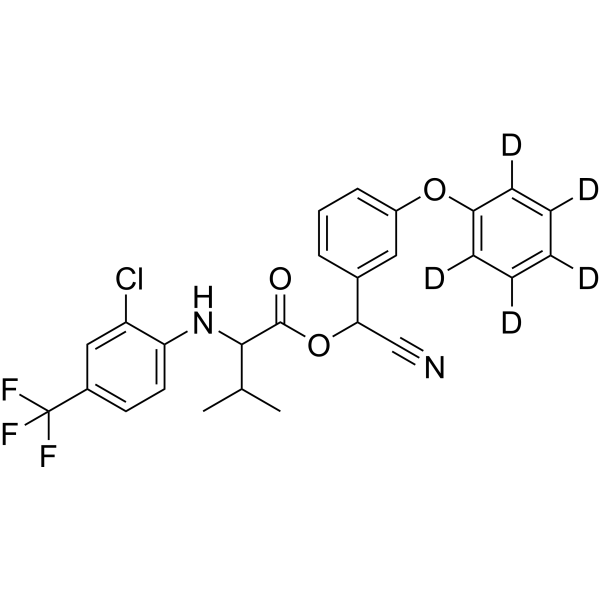
Fluvalinate-d5 is the deuterated-labeled Fluvalinate (HY-123320). Fluvalinate is an orally active acaricide classified as a sodium channel inhibitor. Fluvalinate delays sodium channel closure, prolongs cell membrane depolarization, inhibits the excitability of honeybee brain neurons, and exerts a central nervous system inhibitory effect. Fluvalinate negatively affects the learning ability, memory ability, sucrose responsiveness, and survival of honeybees. Fluvalinate potentiates pentobarbital-induced hypnosis, reduces spontaneous activity in mice, and decreases the total white blood cell count and absolute lymphocyte count in mice. Fluvalinate induces acute toxic symptoms in rats, acts as a cholinergic stimulant, and induces the production of hepatic enzymes in rats. Fluvalinate causes the death of Varroa jacobsoni sensitive to τ-Fluvalinate (HY-B2021). Fluvalinate can be used in studies related to mite pest control .
loading...
    loading...
Cat. No.: HY-W744266
CAS No.: 56687-60-6
Target:  

Drug Metabolite

Research Areas:  

Neurological Disease

9α,10α-Epoxyhexahydrocannabinol is an active metabolite of delta 9-tetrahydrocannabinol. 9α,10α-Epoxyhexahydrocannabinol has anti-convulsant activity. 9α,10α-Epoxyhexahydrocannabinol reduces body temperature, prolongs pentobarbital-induced sleep, and exerts anticonvulsant activity against pentylenetetrazol-induced seizures in mice .
loading...
    loading...
Cat. No.: HY-114833
CAS No.: 27591-01-1
Synonyms: (Rac)-Bunolol; dl-Bunolol
Bunolol ((Rac)-Bunolol) is a β-adrenergic receptor blocker. Bunolol antagonizes the β-receptor agonist activity induced by Isoproterenol (HY-B0468) and Dichloroisoproterenol. Bunolol reduces the heart rate and mean blood pressure of anesthetized dogs. Bunolol decreases spontaneous motor activity and Amphetamine-induced hyperactivity in rats, potentiates Pentobarbital-induced hypnosis in mice, and protects rats from extensor tonic convulsions induced by maximal electroshock .
loading...
    loading...
Cat. No.: HY-123320
CAS No.: 69409-94-5
Research Areas:  

Infection Neurological Disease

Fluvalinate is an orally active acaricide classified as a sodium channel inhibitor. Fluvalinate delays sodium channel closure, prolongs cell membrane depolarization, inhibits the excitability of honeybee brain neurons, and exerts a central nervous system inhibitory effect. Fluvalinate negatively affects the learning ability, memory ability, sucrose responsiveness, and survival of honeybees. Fluvalinate potentiates pentobarbital-induced hypnosis, reduces spontaneous activity in mice, and decreases the total white blood cell count and absolute lymphocyte count in mice. Fluvalinate induces acute toxic symptoms in rats, acts as a cholinergic stimulant, and induces the production of hepatic enzymes in rats. Fluvalinate causes the death of Varroa jacobsoni sensitive to τ-Fluvalinate (HY-B2021). Fluvalinate can be used in studies related to mite pest control .
loading...
    loading...
Cat. No.: HY-19091
CAS No.: 123297-52-9
ICI-170777 is an orally active cardiotonic agent and type III Phosphodiesterase inhibitor, with an IC50 of 2.5 μM against cyclic AMP phosphodiesterase type III from canine cardiac fractions. ICI-170777 inhibits Aldrin epoxidase and pentobarbital metabolism. It enhances β-adrenergic receptor-mediated positive inotropic effects without causing chronotropic effects, while also exerting balanced arteriolar/venular vasodilator, platelet aggregation inhibitor and smooth muscle relaxant activities. ICI-170777 restores cardiac function in an acute canine heart failure model, exhibits additive effects when combined with Ouabain (HY-B1457), and shows no significant activity against multiple receptor classes or non-cardiac systems. ICI-170777 can be used in research related to congestive heart failure .
loading...
    loading...
  • 1

