21 Results for "

Polymeric Cross-Linker

" in MedChemExpress (MCE) Product Catalog:
Products (21)

21 Results for "Polymeric Cross-Linker" in MCE Product Catalog:

2
2 Cited Publications
Cat. No.: HY-125865
CAS No.: 9000-71-9
Purity:  97.40%
Casein is an orally active phosphoprotein that can be separated into various electrophoretic components, such as α2-Casein, κ-Casein, β-casein, and γ-casein. Casein has also been blended and grafted with other polymers, cross-linkers, or monomers to improve its functional properties. Casein enhances calcium absorption and reduces the extent of fissure as well as smooth-surface caries. Casein promotes proliferation of prostate cancer. Casein has various applications in the paper, leather, textile, and food industries, serving as coatings, adhesives, and packaging materials .
loading...
    loading...
Cat. No.: HY-W110542L
CAS No.: 26570-48-9
Synonyms: PEGDA (MW 3500)
Poly(ethylene glycol) diacrylate (MW 3500) (PEGDA (MW 3500)) is a derivative of polyethylene glycol. Poly(ethylene glycol) diacrylate (MW 3500) can be used in the formation of a cross-linked polymers .
loading...
    loading...
Cat. No.: HY-W110542N
CAS No.: 26570-48-9
Synonyms: PEGDA (MW 250),MEHQ as inhibitor
Poly(ethylene glycol) diacrylate (PEGDA) (MW 250), MEHQ as inhibitor is a versatile polymer material that is widely used as a building material for hydrogel scaffolds, especially in the fields of tissue engineering and regenerative medicine. Poly(ethylene glycol) diacrylate (MW 250), MEHQ as inhibitor can be used to construct optical cross-linked hydrogel implants .
loading...
    loading...
Cat. No.: HY-W014940
CAS No.: 97-90-5
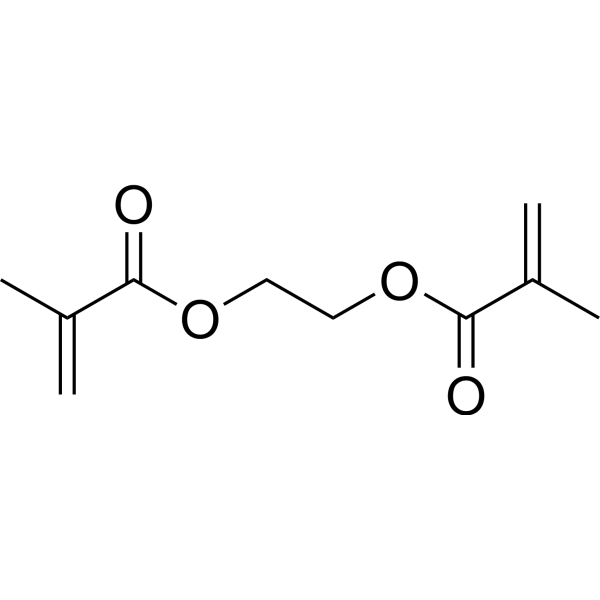
Ethylene glycol dimethacrylate is a diester formed by the condensation of Ethylene glycol (HY-Y0338) and Methacrylic acid. Ethylene glycol dimethacrylate is a cross-linking agent for polymers. Ethylene glycol dimethacrylate increases Apoptosis, GPx4, SOD2, ROS. Ethylene glycol dimethacrylate is cytotoxic and genotoxic. Ethylene glycol dimethacrylate exhibits cross-linking activity, enhancing the mechanical properties and stability of materials .
loading...
    loading...
Cat. No.: HY-112624M
CAS No.: 9004-54-0
Synonyms: Dextran 150; Dextran D150; Dextran T150(MW 130000-170000)
Dextran T150 (Dextran 150; Dextran D150) (MW 150,000) is a dehydrated glucose polymer with an average molecular weight of 150,000. Dextran T150 (MW 150,000) has excellent biodegradability and good biocompatibility, and can be used as a fluorescent labeling tracer and a high-molecular cross-linking agent .
loading...
    loading...
Cat. No.: HY-W110542M
CAS No.: 26570-48-9
Synonyms: PEGDA (MW 20000)
Poly(ethylene glycol) diacrylate (MW 20000) (PEGDA (MW 20000)) is a derivative of polyethylene glycol. Poly(ethylene glycol) diacrylate (MW 20000) can be used in the formation of a cross-linked polymers .
loading...
    loading...
Cat. No.: HY-172380A
PCL-PEG-PCL diacrylate (MW 800) is an amphiphilic triblock copolymer composed of PEG and two polycaprolactones (PCL). PCL-PEG-PCL diacrylate (MW 800) can be cross-linked by free radical polymerization and/or photopolymerization to form a cross-linked hydrogel network .
loading...
    loading...
Cat. No.: HY-W099538
CAS No.: 123-28-4
Synonyms: Dilauryl 3,3'-Thiodipropionate
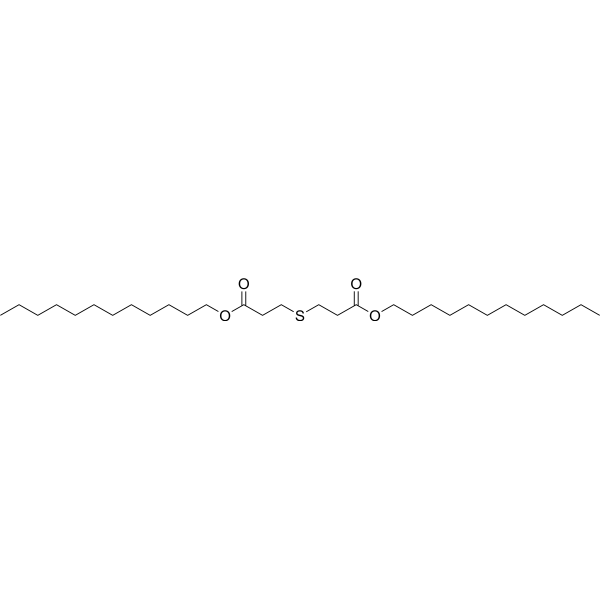
Dilauryl thiodipropionate (DLTDP), which is a sulfur-containing antioxidant commonly used to stabilize polymers and plastics against degradation caused by heat, oxygen, and UV light, acts to scavenge free radicals and others that may cause polymer chain scission and cross-linked active substances, in addition, DLTDP has been used as an additive to lubricants, oils and other industrial fluids to improve their oxidation stability, the long hydrocarbon chain in DLTDP makes it low volatility and compatible with many materials and Good compatibility with substrates.
loading...
    loading...
Cat. No.: HY-W087905
CAS No.: 1889-67-4
Research Areas:  

Others

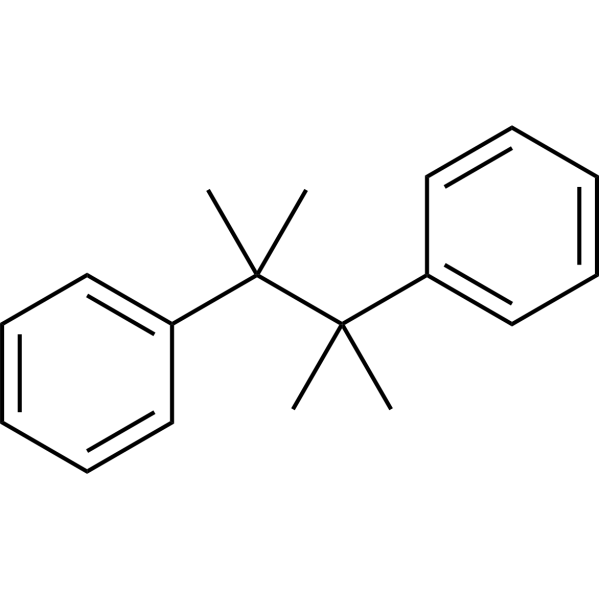
2,3-Dimethyl-2,3-diphenylbutane is a minor product formed during the thermal decomposition of dicumyl peroxide (DCP) in cumene, generated through radical coupling reactions. As an initiator capable of producing free radicals, 2,3-dimethyl-2,3-diphenylbutane promotes cross-linking or decomposition processes via initiating free radical reactions in fields such as polymer polymerization (e.g., modification of polyphenylene oxide processing), organic synthesis (e.g., DCP decomposition reactions), and coal processing (e.g., oxidation stabilization of coal tar pitch), thereby enhancing material properties or reaction efficiency .
loading...
    loading...
Cat. No.: HY-172380
PCL-PEG-PCL diacrylate (MW 800) is an amphiphilic triblock copolymer composed of PEG and two polycaprolactones (PCL). PCL-PEG-PCL diacrylate (MW 800) can be cross-linked by free radical polymerization and/or photopolymerization to form a cross-linked hydrogel network .
loading...
    loading...
Cat. No.: HY-Y0850U2
CAS No.: 9002-89-5
Synonyms: Polyvinyl alcohol (Mw 130000, 87-89% hydrolyzed, ~2700 polymerization); Poly(Ethenol) (Mw 130000, 87-89% hydrolyzed, ~2700 polymerization)
PVA (Polyvinyl alcohol; Poly(Ethenol)) (Mw 130000, 87-89% hydrolyzed, ~2700 polymerization) is a non-toxic, biodegradable, and highly biocompatible semicrystalline synthetic polymer. PVA (Mw 130000, 87-89% hydrolyzed, ~2700 polymerization) acts as a coating agent to improve tableting performance, and can be cross-linked with sodium trimetaphosphate to prepare tubular vascular grafts or form hydrogels for use as artificial articular cartilage and sustained-release matrices for growth factors. PVA (Mw 130000, 87-89% hydrolyzed, ~2700 polymerization) enhances the redox cycle of iron species in photo-assisted Fenton reactions to simultaneously generate hydrogen peroxide and degrade pollutants, enabling integrated sustainable waste management and water treatment. PVA (Mw 130000, 87-89% hydrolyzed, ~2700 polymerization) is used in the manufacture of biodegradable films and in studies of dry or minimally invasive ex vivo wounds, but cannot form freeze-thaw cross-linked solid sheets for wound dressings .
loading...
    loading...
Cat. No.: HY-Y0850U1
CAS No.: 9002-89-5
Synonyms: Polyvinyl alcohol (Mw 61000, 98-99% hydrolyzed, ~1400 polymerization); Poly(Ethenol) (Mw 61000, 98-99% hydrolyzed, ~1400 polymerization)
PVA (Mw 61000, 98-99% hydrolyzed, ~1400 polymerization) is a semicrystalline and biocompatible synthetic polymer with excellent safety properties including non-toxicity, no accumulation, and non-mutagenicity. PVA (Mw 61000, 98-99% hydrolyzed, ~1400 polymerization) undergoes cross-linking via acetal bond formation between hydroxyl and aldehyde groups, and it can be used to prepare highly rigid, low-solubility degradable films as well as for dry or minimally invasive in vitro wound studies. PVA (Mw 61000, 98-99% hydrolyzed, ~1400 polymerization) can construct a hydroxyl-rich microenvironment to trap photogenerated holes, thereby promoting hydrogen peroxide production and enhancing the redox cycle of iron species in the photo-Fenton reaction. PVA (Mw 61000, 98-99% hydrolyzed, ~1400 polymerization) can act as a sacrificial agent and substrate to achieve synchronous degradation with pollutants, and it is applicable to sustainable waste management and water treatment .
loading...
    loading...
Cat. No.: HY-117112
CAS No.: 3089-11-0
Synonyms: Hexakis(methoxymethyl)melamine; HMMM
Research Areas:  

Others

Hexamethoxymethylmelamine (Hexakis(methoxymethyl)melamine; HMMM) is a type of multifunctional melamine-formaldehyde crosslinker. Under acid-catalyzed conditions, Hexamethoxymethylmelamine enables chemical crosslinking between hydroxyl-functionalized polymers and hydroxyl groups in coating systems via methoxy-hydroxyl reactions, forming an interconnected network structure. Hexamethoxymethylmelamine can be used in organic synthesis-related research, such as thermosetting coatings .
loading...
    loading...
Cat. No.: HY-23497
CAS No.: 24979-70-2
Target:  

Others

Research Areas:  

Others

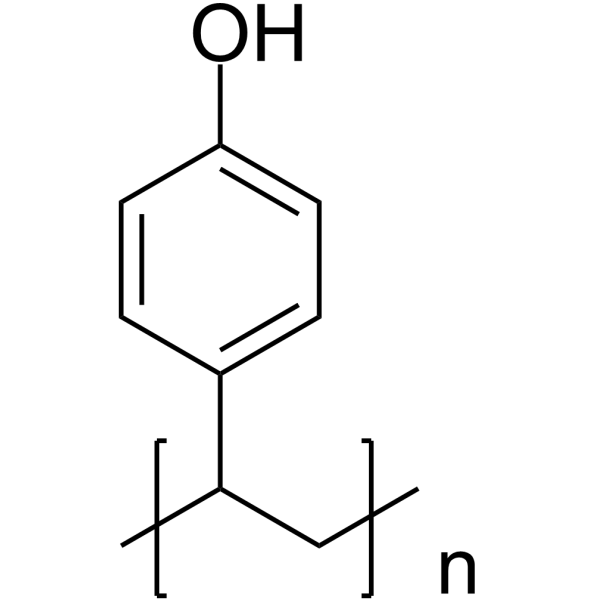
Poly(4-vinylphenol) is a polymer cross-linking agent that can be used to prepare non-toxic films. Poly(4-vinylphenol) is a sensitizer of titania for visible light photocatalysis. Poly(4-vinylphenol) also can be used as a water resistive wood adhesive, as a gate dielectric insulator in organic field effect transistors, and as a responsive surface coating .
loading...
    loading...
Cat. No.: HY-W127344
CAS No.: 112-77-6
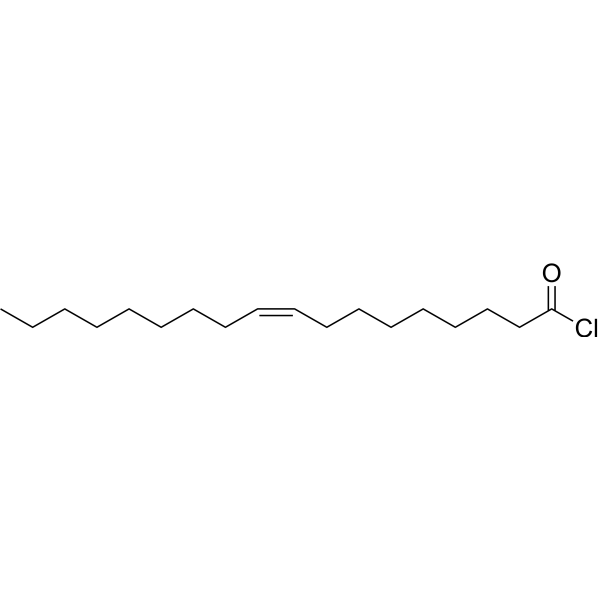
Oleoyl chloride A pungent-smelling liquid commonly used as a reagent in organic synthesis, especially for the production of a variety of organic compounds, including pharmaceuticals and agrochemicals. In addition, it can also be used as a cross-linking agent or surfactant in polymer chemistry. Its unique chemical properties make it an important ingredient in a variety of industrial processes, including petrochemical refining and materials science.
loading...
    loading...
Cat. No.: HY-151744
CAS No.: 1993119-45-1
Target:  

ADC Linkers

Research Areas:  

Others

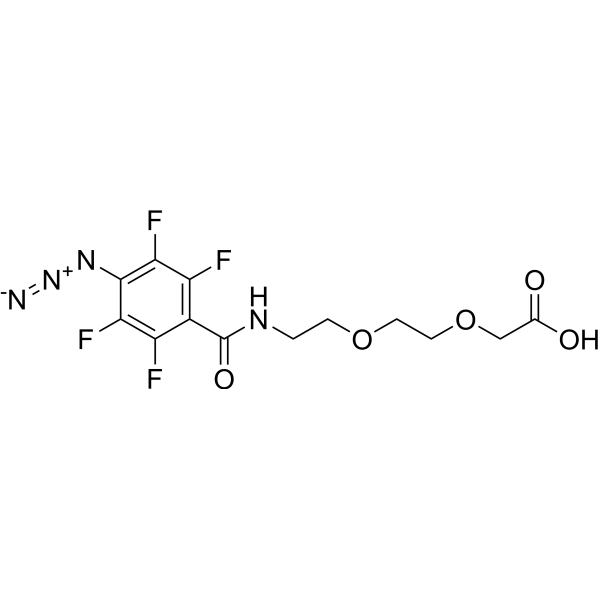
N3-TFBA-O2Oc is a click chemistry reagent containing an azide group and an aryl group. Aryl azides are well-known precursors of nitrenes and have been introduced by Fleet et al. as versatile photoaffinity labeling agents to probe biological receptors. This type of compounds has been used as photo-cross linker (λmax=258 nm) in estrogen receptor studies and for direct surface coating of carbon and organic based polymers . N3-TFBA-O2Oc is a click chemistry reagent, it contains an Azide group and can undergo copper-catalyzed azide-alkyne cycloaddition reaction (CuAAc) with molecules containing Alkyne groups. It can also undergo strain-promoted alkyne-azide cycloaddition (SPAAC) reactions with molecules containing DBCO or BCN groups.
loading...
    loading...
Cat. No.: HY-W099538R
CAS No.: 123-28-4
Synonyms: Dilauryl 3,3'-Thiodipropionate (Standard)
Research Areas:  

Others

Dilauryl thiodipropionate (Standard) is the analytical standard of Dilauryl thiodipropionate. This product is intended for research and analytical applications. Dilauryl thiodipropionate (DLTDP), which is a sulfur-containing antioxidant commonly used to stabilize polymers and plastics against degradation caused by heat, oxygen, and UV light, acts to scavenge free radicals and others that may cause polymer chain scission and cross-linked active substances, in addition, DLTDP has been used as an additive to lubricants, oils and other industrial fluids to improve their oxidation stability, the long hydrocarbon chain in DLTDP makes it low volatility and compatible with many materials and Good compatibility with substrates.
loading...
    loading...
Cat. No.: HY-184600
Reactive oxygen species responsive hydrogels are a novel class of smart hydrogels, formed by the cross-linking of ROS-responsive modules through covalent, coordination, or supramolecular interactions. Due to the introduction of these ROS-responsive modules, these hydrogels exhibit a sensitive response to the oxidative stress microenvironment present in organisms. PVA-TSPBA hydrogel is a hydrogel formed by the cross-linking polymerization of polyvinyl alcohol (PVA) and the reactive oxygen species-sensitive cross-linking agent N1-(4-benzyl borate)-N3-(4-phenyl borate)N1,N1,N3,N3-tetramethyl-1,3-propanediamine (TSPBA). This hydrogel consists of two parts: a boric acid precursor (TSPBA) and an aqueous solution of PVA. The boric acid bonds on TSPBA and the hydroxyl groups on PVA rapidly cross-link to form borate ester bonds, thus forming the hydrogel.
loading...
    loading...
Cat. No.: HY-135721
CAS No.: 13304-62-6
Synonyms: Benzyl acrylamide
Research Areas:  

Others

N-Benzylacrylamide (Benzyl acrylamide) is a hydrophobic monomer. N-Benzylacrylamide can form hydrophobic microdomains that act as physical cross-linking sites to connect polymer chains to each other into a three-dimensional network; dynamically reversible hydrophobic interactions enable the spontaneous reformation of physical cross-linking sites after contact of fractured surfaces, thereby achieving autonomous self-healing. N-Benzylacrylamide can promote the synthesis of carboxymethyl cellulose-modified amphiphilic copolymers, and enhance the intermolecular association, viscoelasticity, thermal stability, as well as fire resistance/fire extinguishing performance of the resulting hydrogels .
loading...
    loading...
Cat. No.: HY-79587
CAS No.: 134-81-6
Research Areas:  

Others

Benzil is a 1,2-diketone compound with multiple functions including photo-peroxidation initiator, crosslinking initiator and pattern-forming agent, and is commonly used as a precursor for photodegradable network crosslinkers. In oxygen-purged polymer films or glassy matrices, Benzil reacts with molecular oxygen under illumination at wavelengths greater than 370 nm or 400 nm, and converts to benzoyl peroxide in nearly quantitative yield. Subsequently, the generated benzoyl peroxide groups produce free radicals via thermal or photochemical decomposition, thereby enabling crosslinking of polymer chains, grafting of new monomers, and preparation of patterned polymers on solid surfaces using mask irradiation. Benzil also induces crosslinking of photodegradable poly (phenyl vinyl ketone) to form a stable photodegradable polymer network .
loading...
    loading...

