10 Results for "

ROS-responsive

" in MedChemExpress (MCE) Product Catalog:
Products (10)

10 Results for "ROS-responsive" in MCE Product Catalog:

Cat. No.: HY-W002879
CAS No.: 269409-70-3
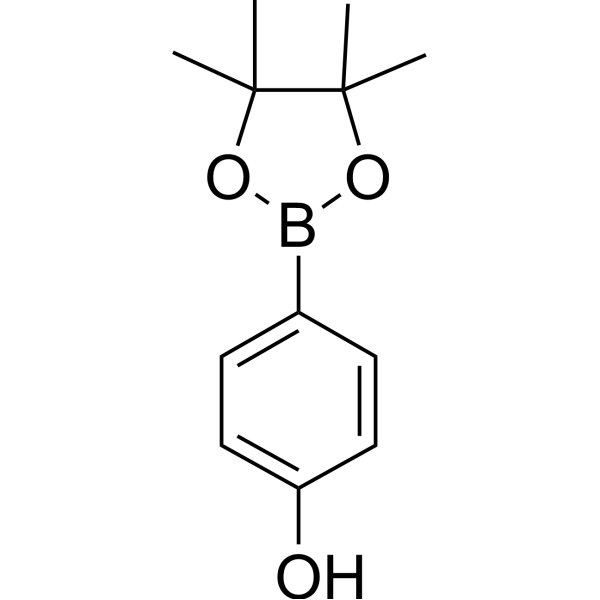
4-Hydroxyphenylboronic acid pinacol ester is a ROS-responsive component. 4-Hydroxyphenylboronic acid pinacol ester can structurally modify hyaluronic acid to prepare ROS-responsive intelligent nanocarriers and compound delivery systems. 4-Hydroxyphenylboronic acid pinacol ester endows hyaluronic acid-based nanocarriers with ROS responsiveness, enabling them to rapidly release the encapsulated Curcumin (HY-N0005) in the presence of reactive oxygen species. 4-Hydroxyphenylboronic acid pinacol ester is applicable to research related to periodontitis. 4-Hydroxyphenylboronic acid pinacol ester can also be used for the synthesis of boronic acid-modified resins .
loading...
    loading...
Cat. No.: HY-188196
Research Areas:  

Neurological Disease

PVtCD-cTP-AlkF-2 is a ROS-responsive DAPK1 BmTAC activator with blood-brain barrier permeability. PVtCD-cTP-AlkF-2 is equipped with a VHL E3 ubiquitin ligase ligand modified with a ROS-responsive phenylboronic acid caging group, and undergoes uncaging activation only in a high-ROS microenvironment. PVtCD-cTP-AlkF-2 can selectively recognize and degrade dephosphorylated activated DAPK1. PVtCD-cTP-AlkF-2 exerts its activator function through caveolae-mediated transcytosis. PVtCD-cTP-AlkF-2 reduces APP and Tau phosphorylation, decreases Aβ oligomer deposition, and improves cognitive function in aged APP/PS1 mice. PVtCD-cTP-AlkF-2 can be used for research on Alzheimer's disease .
loading...
    loading...
Cat. No.: HY-185646
CAS No.: 2222566-33-6
Research Areas:  

Metabolic Disease

TSPBA is a bis-terminal phenylboronic acid-spacer diammonium salt crosslinker. TSPBA forms dynamic phenylboronate ester bonds with PVA, enabling the preparation of injectable self-healing hydrogels and endowing them with injectability, self-healing property, ROS-responsive degradation, tissue adhesion, and weak glucose-binding ability. TSPBA is applicable to research related to diabetic wounds .
loading...
    loading...
Cat. No.: HY-184600
Reactive oxygen species responsive hydrogels are a novel class of smart hydrogels, formed by the cross-linking of ROS-responsive modules through covalent, coordination, or supramolecular interactions. Due to the introduction of these ROS-responsive modules, these hydrogels exhibit a sensitive response to the oxidative stress microenvironment present in organisms. PVA-TSPBA hydrogel is a hydrogel formed by the cross-linking polymerization of polyvinyl alcohol (PVA) and the reactive oxygen species-sensitive cross-linking agent N1-(4-benzyl borate)-N3-(4-phenyl borate)N1,N1,N3,N3-tetramethyl-1,3-propanediamine (TSPBA). This hydrogel consists of two parts: a boric acid precursor (TSPBA) and an aqueous solution of PVA. The boric acid bonds on TSPBA and the hydroxyl groups on PVA rapidly cross-link to form borate ester bonds, thus forming the hydrogel.
loading...
    loading...
Cat. No.: HY-D3168
CAS No.: 1421277-81-7
PCL-2 is a reactive oxygen species (ROS)-responsive fluorescent probe. PCL-2 reacts with ROS to release 6-hydroxy-2-cyanobenzothiazole (HCBT), which then reacts with D-cysteine ​​to form firefly luciferin in situ. PCL-2 must be used in conjunction with IETDC (HY-D3169) to detect the co-existence of hydrogen peroxide and caspase 8. PCL-2 is applicable to studies related to acute inflammation .
loading...
    loading...
Cat. No.: HY-133566
CAS No.: 2415259-07-1
Target:  

Topoisomerase Apoptosis

Research Areas:  

Cancer

Antitumor agent-22 is an inhibitor of topoisomerase I and II. Antitumor agent-22 can serve as a ROS-responsive prodrug, in which the boronate ester unit undergoes cleavage under the high ROS tumor microenvironment to release the active parent core, thereby inhibiting Top1/Top2. Antitumor agent-22 induces apoptosis in HCT116 cells and triggers G2 phase cell cycle arrest. Antitumor agent-22 exhibits antitumor activity in HCT116 xenograft mouse models in vivo. Antitumor agent-22 can be used for colon cancer-related research .
loading...
    loading...
Cat. No.: HY-189571
Cou-Coxib is a ROS-responsive fluorescent Celecoxib (HY-14398) prodrug that is activated by ROS triggering and self-immolation to release Celecoxib and the fluorophore Cou-OH. Celecoxib released from Cou-Coxib elevates intracellular ROS levels, induces S-phase arrest in MDA-MB-231 triple-negative breast cancer cells, and downregulates the expression of apoptosis-related proteins Bcl2, Survivin, and procaspase-3. In the H9C2 cardiomyoblast model, Cou-Coxib attenuates the cardiotoxicity caused by Celecoxib, maintains mitochondrial membrane potential, upregulates IL-10, and exhibits biocompatibility in developing zebrafish embryos. Cou-Coxib can be used for research on triple-negative breast cancer .
loading...
    loading...
Cat. No.: HY-P11902
Research Areas:  

Cancer

IRS1 is an integrin-targeted, ROS-responsive self-assembling peptide prodrug molecule with selective anti-cancer activity against integrin-overexpressing tumor cells. IRS1 contains an RGD motif for integrin binding, can covalently bind to DR4/DR5, and promotes DR4/DR5 aggregation. After oxidation by ROS, IRS1 undergoes a morphological transition from nanoparticles to nanofibers, exposes the pharmacophore of Chlorambucil (HY-13593), disrupts cell membrane integrity, activates the extrinsic apoptosis pathway, and can penetrate and inhibit the three-dimensional uveal melanoma spheroid model. IRS1 can be used for the research of uveal melanoma .
loading...
    loading...
Cat. No.: HY-187473
PARP1-IN-58 is a ROS-responsive prodrug constructed based on a natural stilbene scaffold, and its active parent nucleus 24c acts as a selective PARP-1 inhibitor. PARP1-IN-58 only hydrolyzes to release the active parent compound in the high-ROS microenvironment of tumors; the active parent compound competitively binds to PARP-1 and blocks DNA single-strand damage repair, upregulates intracellular ROS levels, reduces mitochondrial membrane potential, and thereby induces cell cycle arrest and mitochondria-dependent apoptosis. PARP1-IN-58 exerts potent proliferation-inhibiting effects on BRCA-deficient breast cancer cells under simulated tumor oxidative stress conditions, and exhibits tumor growth inhibitory activity in breast cancer xenograft models. PARP1-IN-58 can be used in cancer-related research .
loading...
    loading...
Cat. No.: HY-L924
1,487 compounds

Boronic acid and boronic ester represent a relatively novel and promising chemical structure in drug design. Boronic acid exists in an sp²-hybridized state, possessing an empty p-orbital that can act as a Lewis acid to accept lone pairs from heteroatoms (O, N, or S). This Lewis acidity enables it to form reversible covalent bonds with amino acid residues such as lysine, serine, threonine, and histidine. Currently, five FDA-approved drugs containing boronic acid or boronic ester predominantly involve such covalent binding mechanisms in their interactions with target proteins. Furthermore, boronic acid can serve as a bioisostere for carboxylic acids, phosphates, and phenolic groups, utilized to improve pharmacokinetic properties and enhance drug efficacy.

To date, five boron-containing drugs have been approved by the FDA. The unique properties of boronic acids and boronic esters confer significant potential in drug design, with applications spanning cancer therapy (e.g., multiple myeloma), anti-infectives (e.g., fungal infections, tuberculosis), anti-inflammatory treatments (e.g., atopic dermatitis), antibacterial agents (e.g., carbapenem-resistant bacterial infections), and Reactive Oxygen Species (ROS)-responsive prodrugs, among others. The MCE Boronic Acid/Boronic Ester Fragment Library, which contains 1,487 compounds, serves as a valuable tool for the development of boron-containing drugs.

