20 Results for "

Snake venoms

" in MedChemExpress (MCE) Product Catalog:
Products (20)

20 Results for "Snake venoms" in MCE Product Catalog:
11
11 Cited Publications
Cat. No.: HY-P1902
CAS No.: 115722-23-1
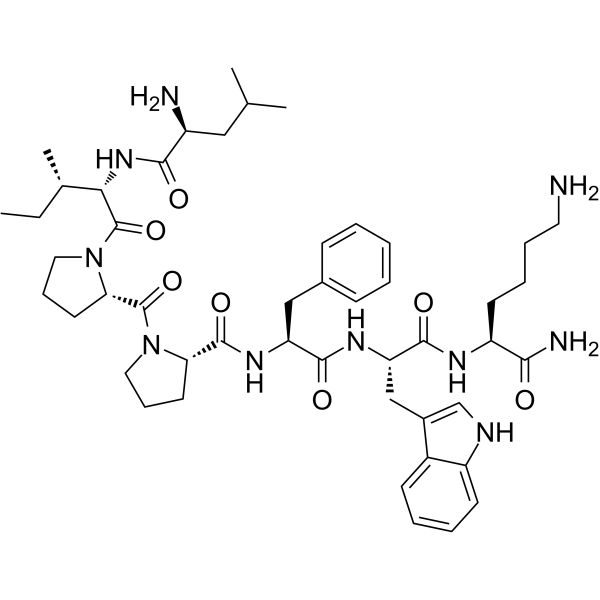
Cardiotoxin Analog (CTX) IV (6-12) is a membrane active peptide that specifically targets negatively charged phospholipid membranes (such as phosphatidylserine and phosphatidylinositol). Cardiotoxin Analog (CTX) IV (6-12) was discovered in the venom of the Taiwan cobra. Cardiotoxin Analog (CTX) IV (6-12) is a chemically synthesized snake venom cardiotoxin that binds to cell membranes and embeds into lipid bilayers through hydrophobic interactions and electrostatic attraction, thereby destroying the stability of membrane structure. Cardiotoxin Analog (CTX) IV (6-12) can induce membrane lipid disorder and cell lysis, exhibiting hemolysis and cytotoxicity .
loading...
    loading...
11
11 Cited Publications
Cat. No.: HY-P1902A
CAS No.: 2918768-05-3
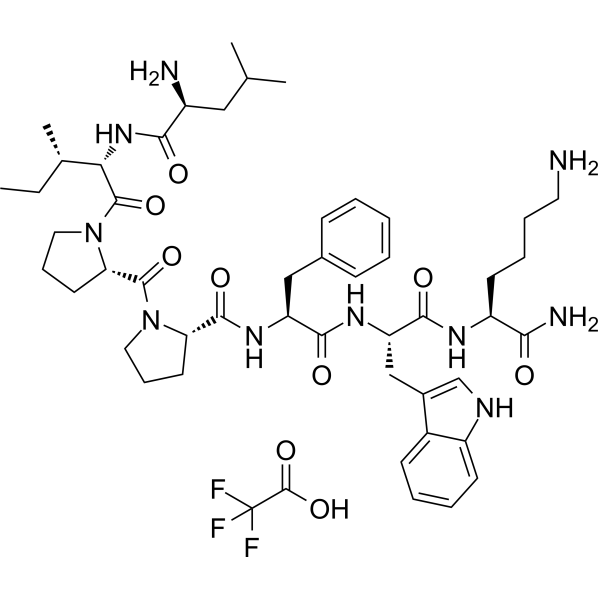
Cardiotoxin Analog (CTX) IV (6-12) TFA is a membrane active peptide that specifically targets negatively charged phospholipid membranes (such as phosphatidylserine and phosphatidylinositol). Cardiotoxin Analog (CTX) IV (6-12) TFA was discovered in the venom of the Taiwan cobra. Cardiotoxin Analog (CTX) IV (6-12) TFA is a chemically synthesized snake venom cardiotoxin that binds to cell membranes and embeds into lipid bilayers through hydrophobic interactions and electrostatic attraction, thereby destroying the stability of membrane structure. Cardiotoxin Analog (CTX) IV (6-12) TFA can induce membrane lipid disorder and cell lysis, exhibiting hemolysis and cytotoxicity .
loading...
    loading...
Cat. No.: HY-P1189
CAS No.: 154303-05-6
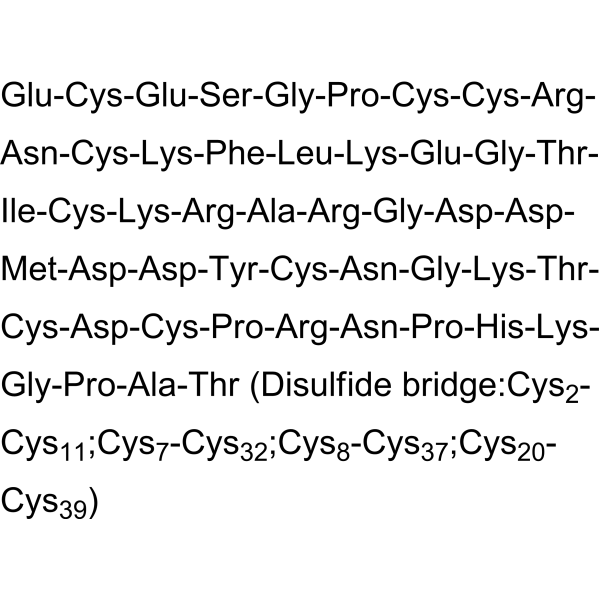
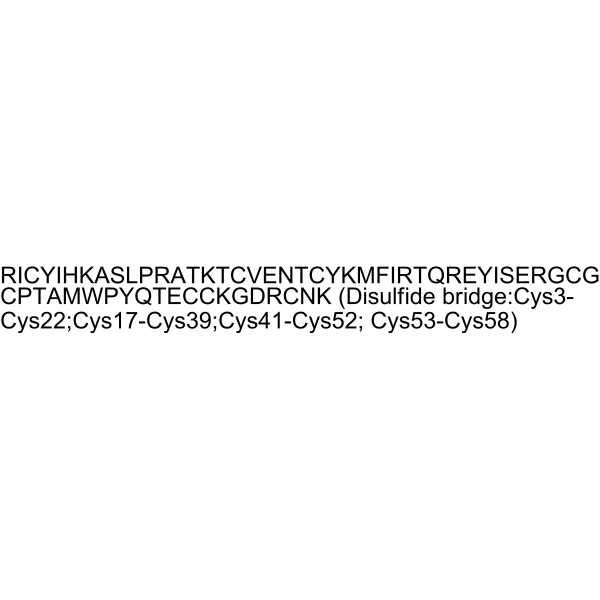
Echistatin is a naturally derived RGD-containing snake venom peptide. Echistatin exhibits an IC50 of 0.6 nM against mouse αvβ3 integrin, and acts as an antagonist against αvβ3, αIIbβ3, α5β1 integrins, pp125 FAK and paxillin. Echistatin reduces the phosphorylation of pp125 FAK and paxillin, inhibits the autophosphorylation and kinase activity of pp125 FAK, and weakens its binding to pp60src and paxillin. Echistatin disrupts the actin cytoskeleton and focal adhesions, induces melanoma cell detachment from fibronectin, and regulates cell adhesion and motility. Echistatin inhibits osteoclast maturation and migration, bone resorption, platelet aggregation, bone loss, as well as adhesion and metastasis of Lewis lung cancer cells; it also increases the number of osteoclasts and bone coverage area in mice with secondary hyperparathyroidism. Echistatin can be used in research related to melanoma, lung cancer and secondary hyperparathyroidism .
loading...
    loading...
Cat. No.: HY-P1189A
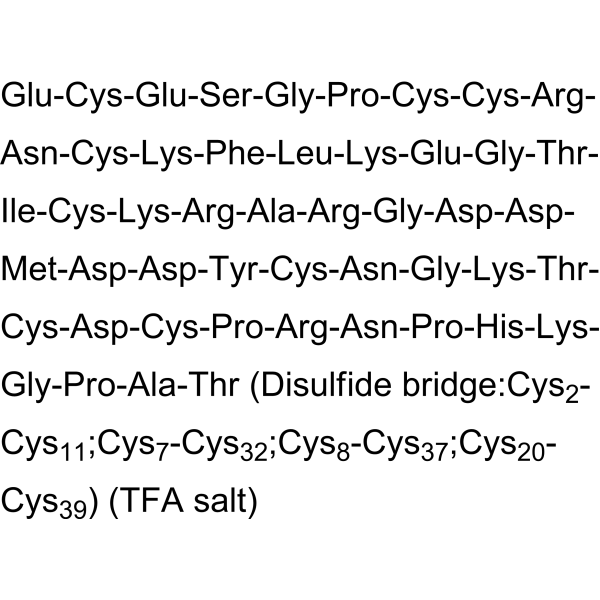
Echistatin TFA is a naturally derived RGD-containing snake venom peptide. Echistatin TFA exhibits an IC50 of 0.6 nM against mouse αvβ3 integrin, and acts as an antagonist against αvβ3, αIIbβ3, α5β1 integrins, pp125 FAK and paxillin. Echistatin TFA reduces the phosphorylation of pp125 FAK and paxillin, inhibits the autophosphorylation and kinase activity of pp125 FAK, and weakens its binding to pp60src and paxillin. Echistatin TFA disrupts the actin cytoskeleton and focal adhesions, induces melanoma cell detachment from fibronectin, and regulates cell adhesion and motility. Echistatin TFA inhibits osteoclast maturation and migration, bone resorption, platelet aggregation, bone loss, as well as adhesion and metastasis of Lewis lung cancer cells; it also increases the number of osteoclasts and bone coverage area in mice with secondary hyperparathyroidism. Echistatin TFA can be used in research related to melanoma, lung cancer and secondary hyperparathyroidism .
loading...
    loading...
Cat. No.: HY-120078
CAS No.: 1845753-81-2
Target:  

Phospholipase

Research Areas:  

Cardiovascular Disease

AZD2716 is an orally active secretory phospholipase A2 (sPLA2) inhibitor. AZD2716 inhibits human GIIA sPLA2 (IC50=10 nM), human GV sPLA2 (IC50=40 nM), human GX sPLA2 (IC50=400 nM), snake venom sPLA2 (IC50=2 pM), and snake (Bothrops jararacussu) Lys49-PLA2-like toxin (Kd=110 μM). AZD2716 inhibits sPLA2 isoforms IIa, V, X, snake venom sPLA2s, and snake venom Lys49-PLA2-like toxin myotoxic activity via hydrophobic channel binding. AZD2716 suppresses GIIA sPLA2 production, neutralizes snake venom-induced myotoxicity, and improves survival in envenomed mice. AZD2716 can be used for the research of coronary artery disease, atherosclerosis, and snakebite envenoming .
loading...
    loading...
Cat. No.: HY-W013741
CAS No.: 2491-17-0
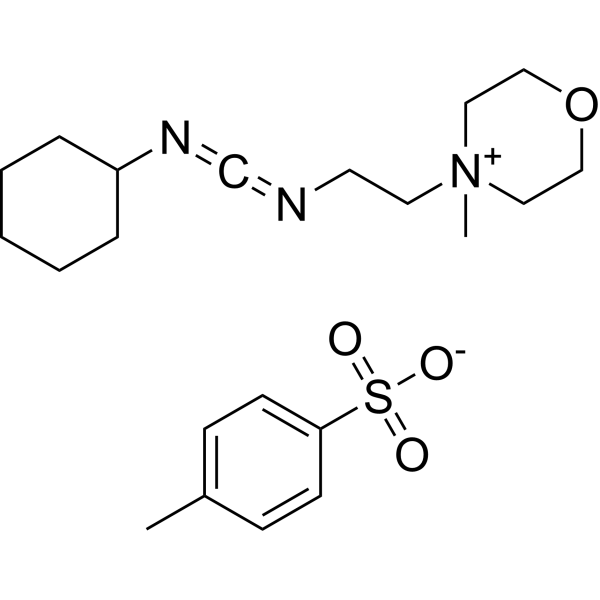
CME-carbodiimide is a nucleic acid modification reagent. CME-carbodiimide reacts specifically with uracil and guanine residues of RNA, as well as guanine and thymine residues of denatured DNA; it does not react with native DNA. Modification of DNA by CME-carbodiimide inhibits phosphodiester bond cleavage or DNA hydrolysis mediated by pancreatic ribonuclease, snake venom phosphodiesterase and deoxyribonuclease .
loading...
    loading...
Cat. No.: HY-P3269
CAS No.: 178805-91-9
Target:  

Calcium Channel

Research Areas:  

Cardiovascular Disease

Calciseptine is a natural polypeptide toxin found in the venom of the black mamba snake (Dendroaspis p. polylepis). Calciseptine is a highly effective and selective blocker of the L-type channel of the Cav1.2 subtype, with an IC50 value of 92 nM. Calciseptine has no effect on Cav3.1, Cav2.2, Cav2.1, Cav1.1, voltage-sensitive sodium channels and potassium channels. Calciseptine exhibits negative inotropic and negative relaxant effects on mice, and does not affect heart rate or the action potential of sinoatrial node pacemaker cells. Calciseptine can be used for research on cardiovascular diseases[1].
loading...
    loading...
Cat. No.: HY-23909
CAS No.: 89560-01-0
Synonyms: DEDA
Target:  

Phospholipase

Research Areas:  

Inflammation/Immunology

7,7-Dimethyl-(5Z,8Z)-eicosadienoic acid (DEDA), a phospholipase inhibitor, is a non-metabolizable analog of arachidonic or eicosadienoic acid. 7,7-Dimethyl-(5Z,8Z)-eicosadienoic acid (DEDA) inhibits P388D1 cell phospholipase A2 (PLA2) (IC50 = 16 µM) and snake venom PLA2 (IC50 = 14 µM) .
loading...
    loading...
Cat. No.: HY-P11214
CAS No.: 2243975-43-9
Synonyms: H-TL1
Hydrostatin-TL1 (H-TL1), a nine-amino-acid peptide, is a TNF-α antagonist. Hydrostatin-TL1 can be isolated from the venom gland of sea snake Hydrophis cyanocinctus. H-TL1 competitively inhibits the interaction between TNF-α/TNFR1 and attenuates the cytotoxicity and inflammation of TNF-α. Hydrostatin-TL1 can be used for TNF-α-associated inflammatory diseases, such as rheumatoid arthritis, osteoporosis and inflammatory bowel disease (IBD) research .
loading...
    loading...
Cat. No.: HY-NP024
Snake poison protein is a venom protein secreted by the salivary glands of venomous snakes .
loading...
    loading...
Cat. No.: HY-176241
Target:  

Others

Research Areas:  

Cardiovascular Disease

DC-174 is an orally active inhibitor of snake venom metalloproteinases (SVMP) with a broad spectrum of inhibitory activity against a variety of snake venom SVMPs. DC-174 acts directly on the active site of SVMPs via zinc-binding groups, inhibiting their enzymatic activity and procoagulant toxicity. DC-174 can significantly prolong the survival time of mice attacked by snake venom. DC-174 can be used in the study of first aid for snake bites .
loading...
    loading...
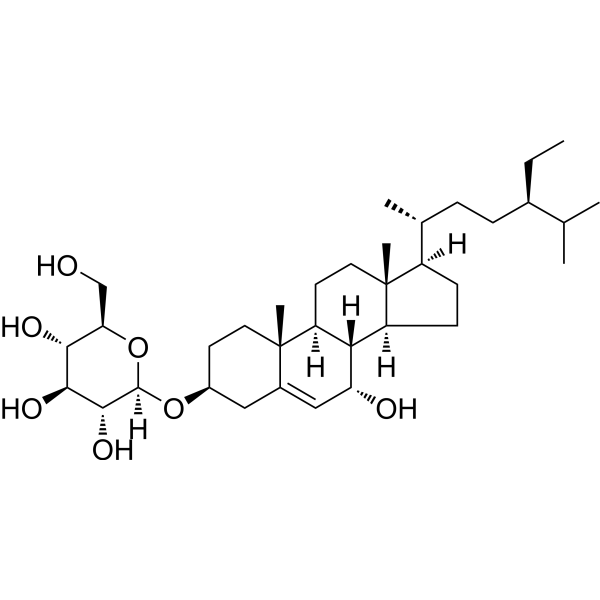
Cat. No.: HY-N4016
CAS No.: 112137-81-2
Category:  

500 - Internal Server Error | MedChemExpress

Oops!

Sorry, Something went wrong on our server.
Our team has been notified and is working to fix the issue.