14 Results for "

Stachybotrys microspore

" in MedChemExpress (MCE) Product Catalog:
Products (14)

14 Results for "Stachybotrys microspore" in MCE Product Catalog:

Cat. No.: HY-P4087
CAS No.: 1417221-06-7
Target:  

HIV

Research Areas:  

Infection Cancer

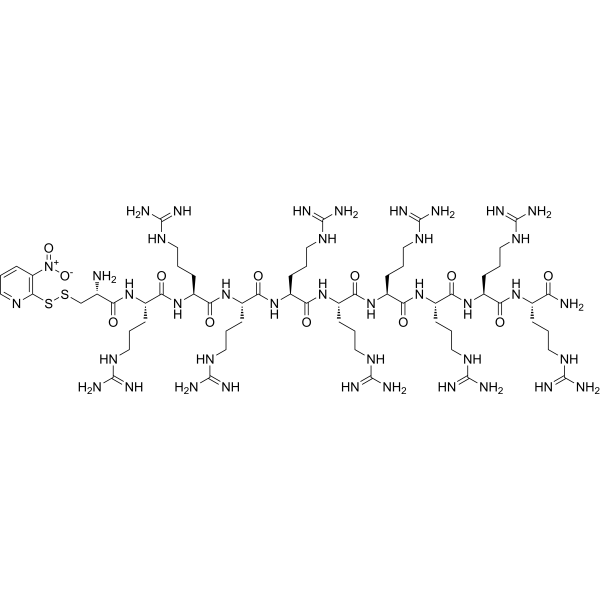
Cys(Npys)-(Arg)9 is a synthetic cationic cell-penetrating peptide with a reversible thiol-reactive nitropyridyl (Npys) group. Cys(Npys)-(Arg)9 efficiently mediates the internalization and delivery of various "cargo" such as proteins and antibodies by forming reversible disulfide bonds with surface-exposed cysteine residues. Cys(Npys)-(Arg)9 endows TALEN proteins with cell-penetrating activity, enabling gene knockout in mammalian cells and protein transduction in wheat microspores. Cys(Npys)-(Arg)9 can be conjugated with antibodies to form cationized IgG for enhancing endosomal escape of oligonucleotides, or form siRNA delivery complexes. When the molar ratio of Cys(Npys)-(Arg)9 to loaded molecules is higher than 1:1, it exerts certain cytotoxic effects on cells. Cys(Npys)-(Arg)9 can be used in studies related to oral squamous cell carcinoma and HIV infection .
loading...
    loading...
Cat. No.: HY-P4099A
Target:  

Inhibitory Antibodies

Research Areas:  

Others

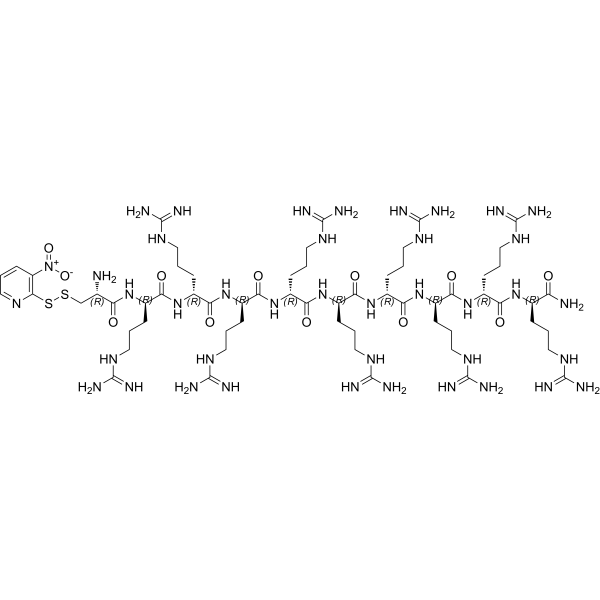
Cys(Npys)-(D-Arg)9 TFA is an amphipathic R9 cell penetrating peptide (CPP). Cys(Npys)-(D-Arg)9 TFA has cytotoxicity for microspore cells with the amount higher than 1 nmol .
loading...
    loading...
Cat. No.: HY-P4087B
Target:  

HIV

Research Areas:  

Others

Cys(Npys)-(Arg)9 acetate is a synthetic cationic cell-penetrating peptide with a reversible thiol-reactive nitropyridyl (Npys) group. Cys(Npys)-(Arg)9 acetate efficiently mediates the internalization and delivery of various "cargo" such as proteins and antibodies by forming reversible disulfide bonds with surface-exposed cysteine residues. Cys(Npys)-(Arg)9 acetate endows TALEN proteins with cell-penetrating activity, enabling gene knockout in mammalian cells and protein transduction in wheat microspores. Cys(Npys)-(Arg)9 acetate can be conjugated with antibodies to form cationized IgG for enhancing endosomal escape of oligonucleotides, or form siRNA delivery complexes. When the molar ratio of Cys(Npys)-(Arg)9 acetate to loaded molecules is higher than 1:1, it exerts certain cytotoxic effects on cells. Cys(Npys)-(Arg)9 acetate can be used in studies related to oral squamous cell carcinoma and HIV infection .
loading...
    loading...
Cat. No.: HY-P4099
Target:  

Inhibitory Antibodies

Research Areas:  

Others

Cys(Npys)-(D-Arg)9 is an amphipathic R9 cell penetrating peptide (CPP). Cys(Npys)-(D-Arg)9 has cytotoxicity for microspore cells with the amount higher than 1 nmol .
loading...
    loading...
Cat. No.: HY-119328
CAS No.: 34565-32-7
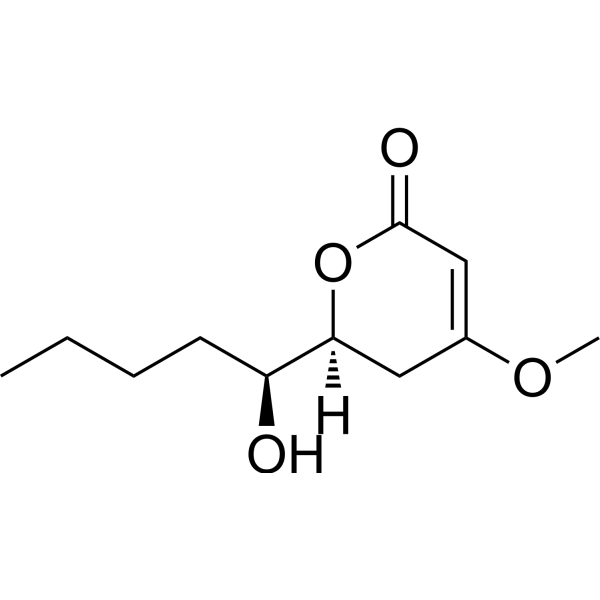
Pestalotin, a fungal lactone, is a secondary metabolite of endophytic fungus Pestalotiopsis microspore .
loading...
    loading...
Cat. No.: HY-N8334
CAS No.: 2098376-42-0
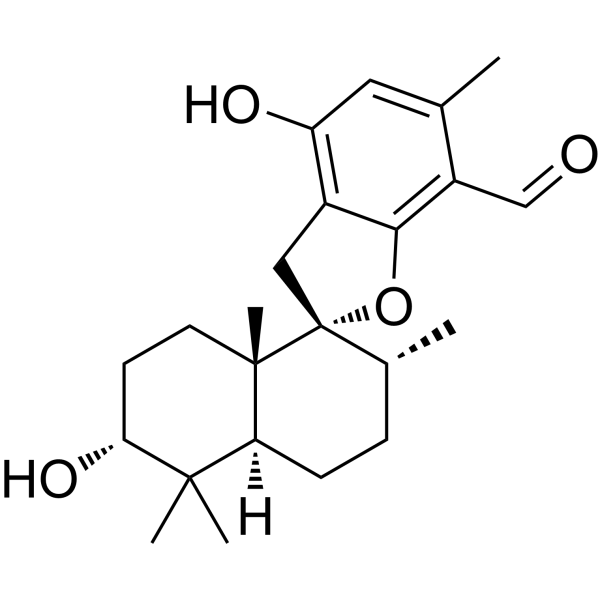
Stachybotrysin B is a phenylspirodrimane derivative. Stachybotrysin B is isolated from Stachybotrys chartarum CGMCC 3.5365 .
loading...
    loading...
Cat. No.: HY-124477
CAS No.: 163391-76-2
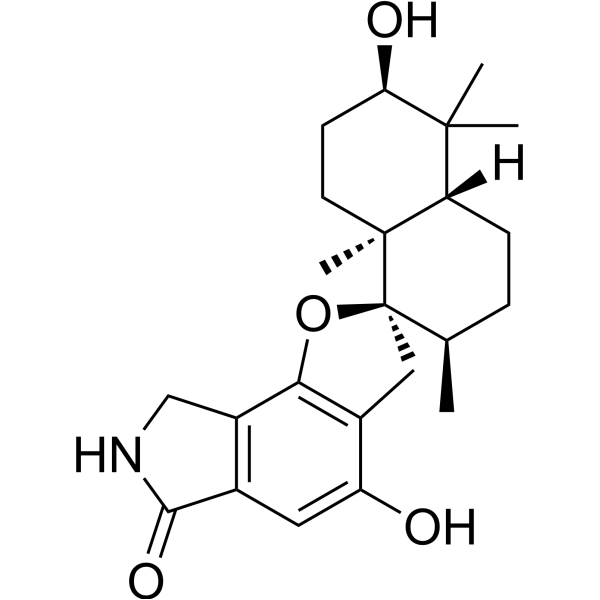
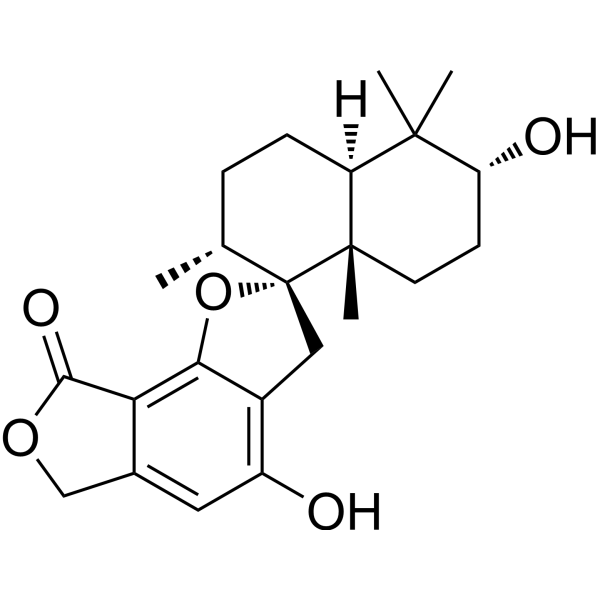
Stachybotrylactam (17) is a phenylspirodrimane isolated from Stachybotrys chartarum with antihyperlipidemic activity. Stachybotrylactam also has antiviral activity .
loading...
    loading...
Cat. No.: HY-N7251
CAS No.: 1978388-54-3
Synonyms: Stachybotrysin
Stachartin A is a phenylspirodrimane-type analogue. Stachartin A can be isolated from the tin mine tailings-associated fungus Stachybotrys chartarum .
loading...
    loading...
Cat. No.: HY-N11430
CAS No.: 159096-49-8
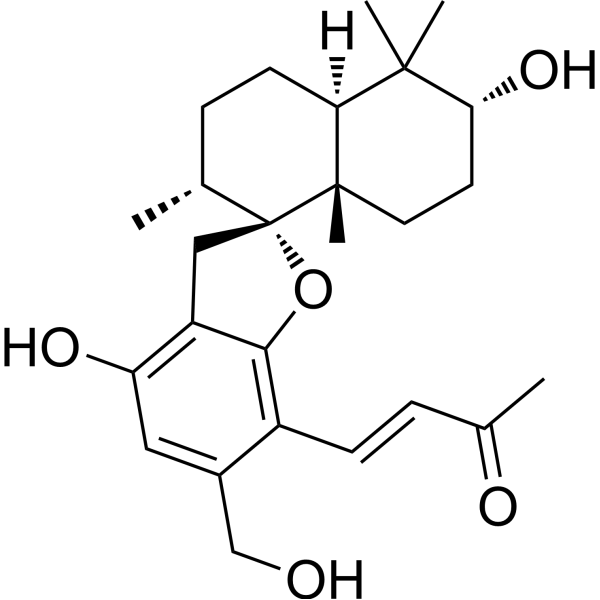
F1839-I is a compound that can be isolated from Stachybotrys. F1839-I has weak cytotoxicity and anti-HIV activity with an IC50 value of 15.6 μM .
loading...
    loading...
Cat. No.: HY-123647
CAS No.: 53126-64-0
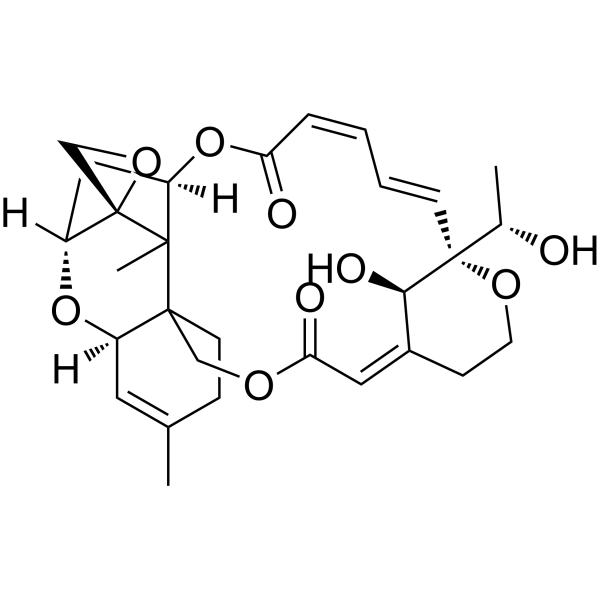
Satratoxin H is a toxic metabolite of Stachybotrys atra. Satratoxin H induces caspase-3 and PARP cleavage via p38 MAPK and JNK pathways, stimulates JNK, ERK, and p38 MAPK phosphorylation, and activates JNK and p38 MAPK in a glutathione-sensitive manner. Satratoxin H induces DNA double-stranded breaks, apoptotic body formation, intracellular reactive oxygen species generation, and endoplasmic reticulum stress via ATF6, PERK, and IRE1 pathways. Satratoxin H can be used for the research of central nervous system disorders and melanoma .
loading...
    loading...
Cat. No.: HY-137985
CAS No.: 149598-70-9
Synonyms: Stachybotrydial; F 1839M; Stachybotrydial
Target:  

HSV Virus Protease

Research Areas:  

Infection

Mer-NF5003F (Stachybotrydial; F 1839M), a sesquiterpene isolated from Stachybotrys, inhibits avian medulloblastoma virus (AMV) protease (IC50=7.8 μM). Mer-NF5003F inhibits sialyltransferase 6N (ST6N), ST3O, and ST3N (IC50=0.61, 6.7, and 10 μg/mL, respectively), and fucosyltransferase (IC50=11.3 μg/mL). Mer-NF5003F has in vitro activity against herpes simplex virus HSV-1 (IC50=4.32 μg/mL) and multidrug-resistant Plasmodium falciparum K1 strain (IC50=0.85 μg/mL).
loading...
    loading...
Cat. No.: HY-N7353
CAS No.: 1978388-56-5
Stachartin C is a Sesquiterpenoids product that can be isolated from the cultures of the tin mine tailings-associated fungus Stachybotrys chartarum. .
loading...
    loading...
Cat. No.: HY-N9026
CAS No.: 1978388-55-4
Stachartin B is a phenylspirodrimane-type analogue. Stachartin B can be isolated from the tin mine tailings-associated fungus Stachybotrys chartarum .
loading...
    loading...
Cat. No.: HY-N16672
CAS No.: 951393-54-7
Synonyms: ent-Stachybotrin B
SMTP-0 (ent-Stachybotrin B) is an enantiomer of Stachybotrin B isolated from Stachybotrys microspora. SMTP-0 is the simple homologues of the SMTP nonlysine-analog plasminogen modulator family but shows no plasminogen modulator activity. SMTP-0 exhibits antibacterial and antifungal effects. SMTP-0 can be used for the research of infection .
loading...
    loading...
  • 1

