63 Results for "

Striatum

" in MedChemExpress (MCE) Product Catalog:
Products (63)

63 Results for "Striatum" in MCE Product Catalog:

11
11 Cited Publications
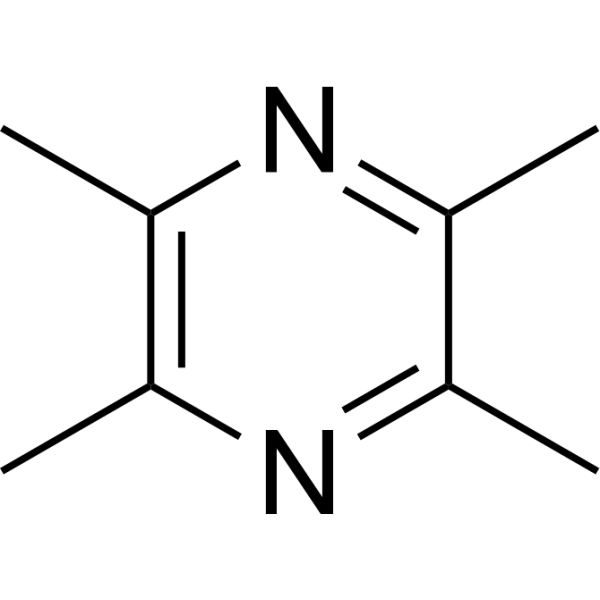
Cat. No.: HY-N0264
CAS No.: 1124-11-4
Synonyms: Chuanxiongzine; Tetramethylpyrazine
Ligustrazine (Chuanxiongzine) is an orally active, blood-brain barrier-permeable alkaloid. It can be isolated from Ligusticum striatum DC. Ligustrazine reduces ROS, upregulates the levels of p-Akt/Akt and p-eNOS/eNOS, and decreases ALT and AST. It inhibits glutamate excitotoxicity, calcium overload, oxidative stress, ischemia-reperfusion injury and atherosclerotic plaque progression, enhances synaptic plasticity, and improves neurological function, cerebral infarct volume and brain water content. Ligustrazine possesses anti-inflammatory, antioxidant, lipid-lowering, endothelial protective and hepatoprotective activities. It can be used in studies related to ischemic stroke, cerebral ischemia-reperfusion injury and atherosclerosis .
loading...
    loading...
11
11 Cited Publications
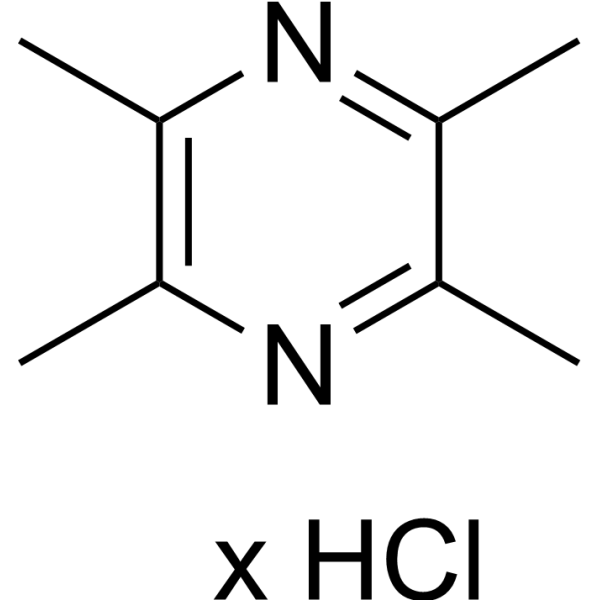
Cat. No.: HY-N0935
CAS No.: 76494-51-4
Synonyms: Chuanxiongzine hydrochloride; Tetramethylpyrazine hydrochloride
Ligustrazine hydrochloride (Chuanxiongzine hydrochloride) is an orally active, blood-brain barrier-permeable alkaloid. It can be isolated from Ligusticum striatum DC. Ligustrazine hydrochloride reduces ROS, upregulates the levels of p-Akt/Akt and p-eNOS/eNOS, and decreases ALT and AST. It inhibits glutamate excitotoxicity, calcium overload, oxidative stress, ischemia-reperfusion injury and atherosclerotic plaque progression, enhances synaptic plasticity, and improves neurological function, cerebral infarct volume and brain water content. Ligustrazine hydrochloride possesses anti-inflammatory, antioxidant, lipid-lowering, endothelial protective and hepatoprotective activities. It can be used in studies related to ischemic stroke, cerebral ischemia-reperfusion injury and atherosclerosis .
loading...
    loading...
9
9 Cited Publications
Cat. No.: HY-B2194
CAS No.: 11042-64-1
γ-Oryzanol is a potent DNA methyltransferases (DNMTs) inhibitor in the striatum of mice. γ-Oryzanol significantly inhibits the activities of DNMT1 (IC50=3.2 μM), DNMT3a (IC50=22.3 μM).
loading...
    loading...
5
5 Cited Publications
Cat. No.: HY-B1752
CAS No.: 80373-22-4
Synonyms: LY 171555; (-)-LY 141865
Quinpirole (LY 171555; (-)-LY 141865) is a D2/D3 dopamine receptor agonist and a CaV1.3 calcium channel modulator. Quinpirole normalizes dendritic spine density in dopamine-depleted striatum, upregulates the protein expression of BCL2 and GluR2, downregulates the protein expression of BAX, and delays the onset of seizures. Quinpirole enhances learning and memory, inhibits neuronal apoptosis (apoptosis), and induces anxiety-like, stereotyped, and compulsive behaviors. Quinpirole disrupts prepulse inhibition in rhesus monkeys, enhances the activity of paraventricular thalamic neurons to promote recovery from Isoflurane anesthesia, and alters the composition of the gut microbiota in rats. Quinpirole can be used in research related to dyskinesia, pain, epilepsy, and neurological disorders including anxiety disorder, obsessive-compulsive disorder, and schizophrenia .
loading...
    loading...
2
2 Cited Publications
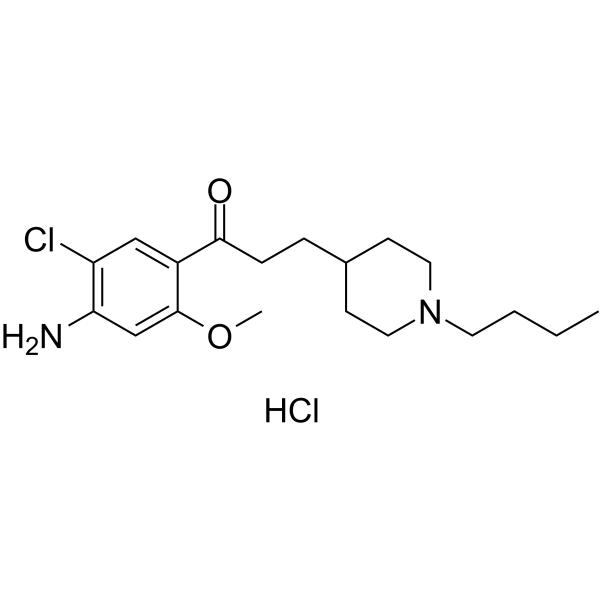
Cat. No.: HY-101341
CAS No.: 168986-60-5
Purity:  99.68%
Target:  

5-HT Receptor

Research Areas:  

Neurological Disease

RS 67333 hydrochloride is a potent and selective 5-HT4 receptor (5-HT4R) partial agonist with a pKi of 8.7 in guinea-pig striatum. RS 67333 hydrochloride exhibits lower affinities at several other receptors including 5-HT1A, 5-HT1D, 5-HT2A, 5-HT2C, dopamine D1, D2 and muscarinic M1-M3 receptors. RS 67333 hydrochloride has neuroprotective effects, and can be used for Alzheimer's disease research .
loading...
    loading...
2
2 Cited Publications
Cat. No.: HY-B0115
CAS No.: 15574-96-6
Synonyms: Pizotyline; BC-105
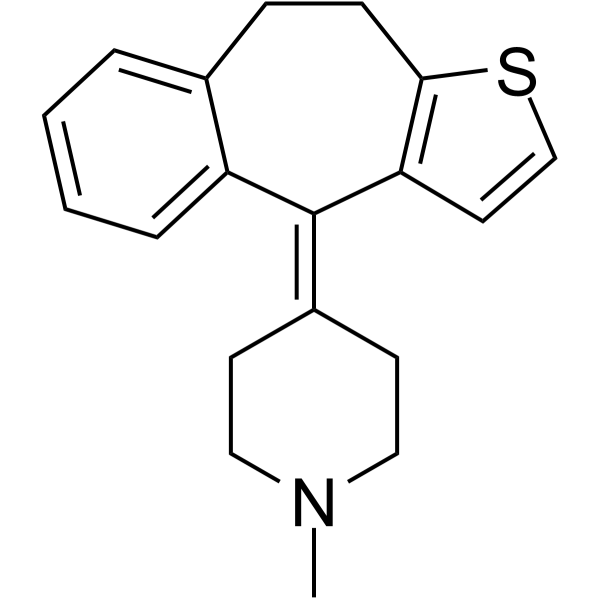
Pizotifen (Pizotyline) is a 5-HT2 receptor antagonist. Pizotifen inhibits the Wnt/β-catenin-EMT signaling pathway and induces mitochondria-mediated Apoptosis. Pizotifen causes transient ERK1/2 phosphorylation and restores ATP. Pizotifen blocks Serotonin (HY-B1473A)-mediated platelet activation, inhibits Serotonin-enhanced ADP-induced platelet aggregation, and prolongs carotid artery occlusion and tail bleeding time. Pizotifen exhibits anticancer activity against gastric cancer and colon cancer. Pizotifen exerts neuroprotective effects in the striatum of R6/2 mice. Pizotifen can be used for research on Huntington's disease, metastasis, and thromboembolic diseases .
loading...
    loading...
2
2 Cited Publications
Cat. No.: HY-B0115A
CAS No.: 5189-11-7
Synonyms: Pizotyline malate; BC-105 malate
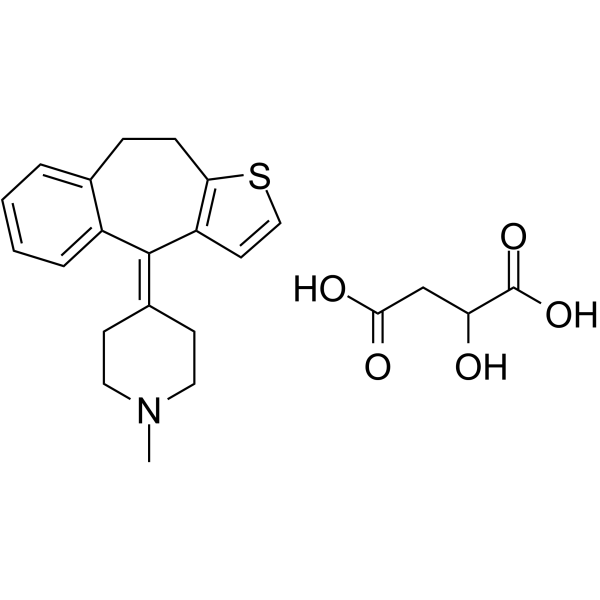
Pizotifen malate (Pizotyline malate) is a 5-HT2 receptor antagonist. Pizotifen malate inhibits the Wnt/β-catenin-EMT signaling pathway and induces mitochondria-mediated Apoptosis. Pizotifen malate causes transient ERK1/2 phosphorylation and restores ATP. Pizotifen malate blocks Serotonin (HY-B1473A)-mediated platelet activation, inhibits Serotonin-enhanced ADP-induced platelet aggregation, and prolongs carotid artery occlusion and tail bleeding time. Pizotifen malate exhibits anticancer activity against gastric cancer and colon cancer. Pizotifen malate exerts neuroprotective effects in the striatum of R6/2 mice. Pizotifen malate can be used for research on gastric cancer, colon cancer, Huntington's disease, metastasis, and thromboembolic diseases .
loading...
    loading...
2
2 Cited Publications
Cat. No.: HY-A0151
CAS No.: 316-81-4
Synonyms: RP 7843; SKF 5883; Thioperazine
Target:  

Dopamine Receptor

Research Areas:  

Neurological Disease

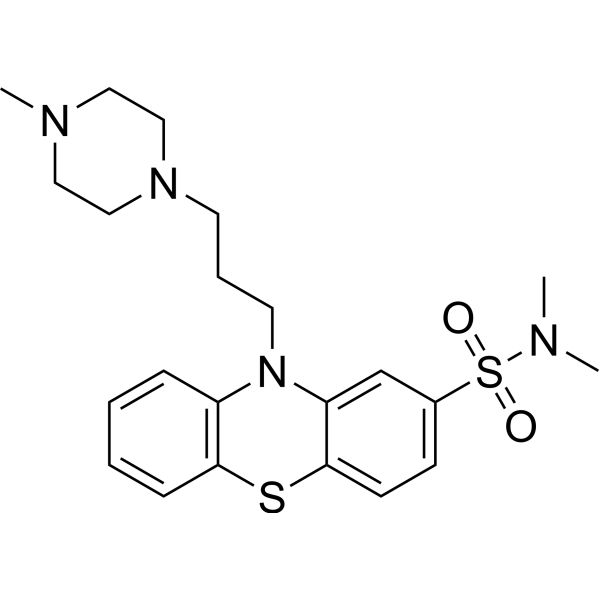
Thioproperazine (RP 7843) is an orally active antipsychotic agent with calming, antiemetic activity. Thioproperazine is effective in promoting the release of dopamine in rat striatum. Thioproperazine can be used in studies of schizophrenia and bipolar disorder .
loading...
    loading...
1
1 Cited Publications
Cat. No.: HY-12363
CAS No.: 96744-75-1
Purity:  99.73%
Target:  

Opioid Receptor

Research Areas:  

Neurological Disease

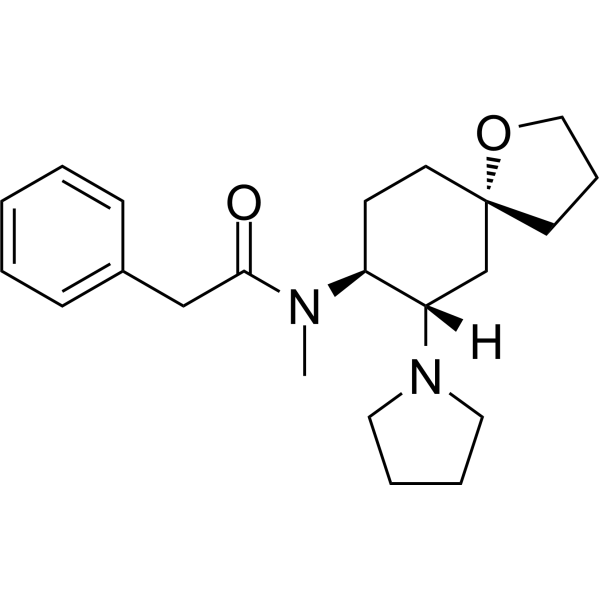
U-69593 is a potent and selective κ1-opioid receptor agonist . U-69593 attenuates addictive agent-induced behavioral sensitization in the rat . U-69593 reduces anxiety and enhances spontaneous alternation memory in mice . U-69593 reduces calcium-dependent dialysate levels of dopamine and glutamate in the ventral striatum .
loading...
    loading...
1
1 Cited Publications
Cat. No.: HY-B0344
CAS No.: 155-41-9
Synonyms: (-)-Scopolamine methyl bromide; Hyoscine methyl bromide
Target:  

mAChR

Research Areas:  

Neurological Disease

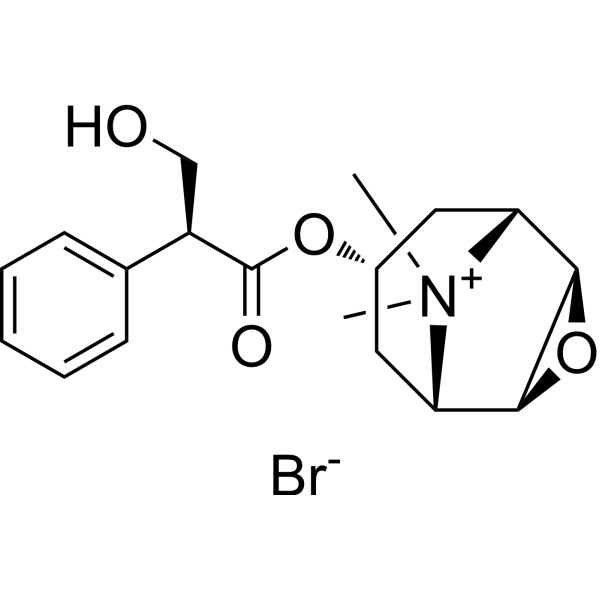
Methscopolamine bromide ((-)-Scopolamine methyl bromide; Hyoscine methyl bromide) is a peripherally acting muscarinic receptor (mAChR) antagonist that cannot cross the blood-brain barrier. Methscopolamine bromide blocks the muscarinic negative feedback regulation of acetylcholine release from striatal cholinergic terminals, thereby increasing acetylcholine release in the striatum of freely moving rats. Methscopolamine bromide does not induce motor excitation in freely moving rats, nor does it alter the duration of ethanol-induced loss of righting reflex in mice. Methscopolamine bromide fails to antagonize the arecoline-mediated reduction in the duration of ethanol-induced loss of righting reflex in mice .
loading...
    loading...
1
1 Cited Publications
Cat. No.: HY-120511
CAS No.: 1256921-89-7
Purity:  99.60%
Target:  

Opioid Receptor

Research Areas:  

Neurological Disease

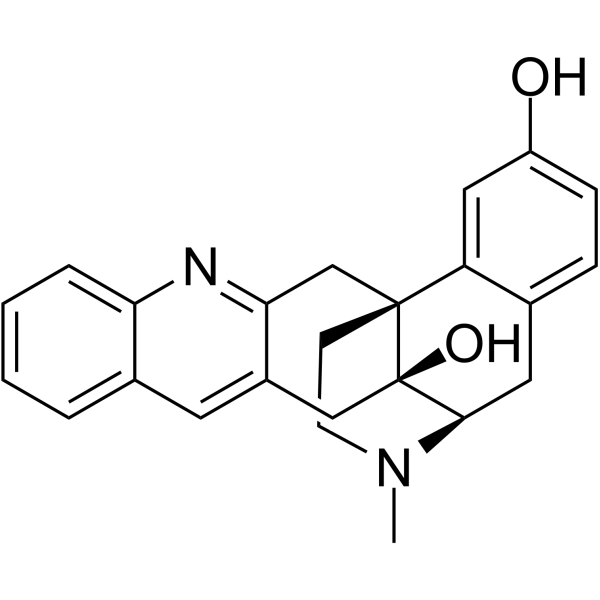
KNT-127 is a selective and BBB-penetrant δ-opioid receptor (DOR) agonist (Ki = 0.16 nM). KNT-127 is highly selective to the δ receptor, with Ki values of 0.16, 21.3 and 153 nM for δ, μ and κ receptors, respectively. KNT-127 acts as a biased ligand that mainly activates cyclic adenosine monophosphate (cAMP) signaling with lower beta-arrestin signaling activation. KNT-127 increases the release of dopamine and L-glutamate in the striatum, nucleus accumbens, and prefrontal cortex. KNT-127 exhibits antidepressant- and anxiolytic-like effects. KNT-127 can be studied in research on neurological diseases .
loading...
    loading...
Cat. No.: HY-107343
CAS No.: 81926-94-5
Purity:  96.22%
Synonyms: Ethyl docosahexaenoate
Target:  

COX

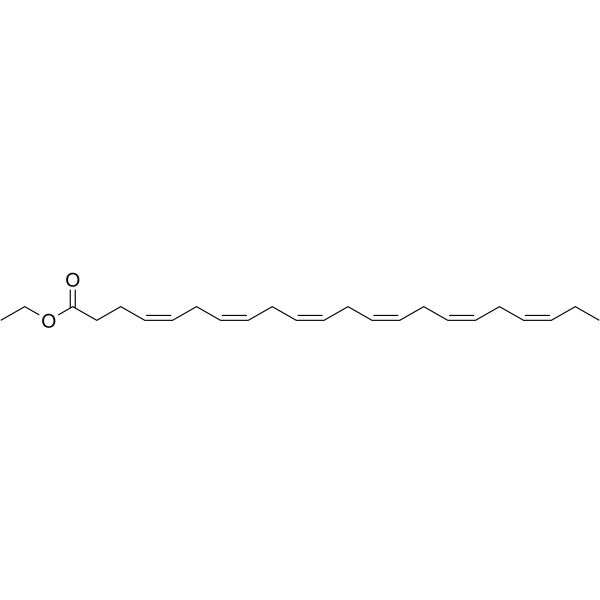
Docosahexaenoic acid ethyl ester (Ethyl docosahexaenoate) is a 90% concentrated ethyl ester of docosahexaenoic acid manufactured from the microalgal oil. Docosahexaenoic acid ethyl ester enhances 6-hydroxydopamine-induced neuronal damage by induction of lipid peroxidation in mouse striatum. Docosahexaenoic acid (DHA) is a key component of the cell membrane, and its peroxidation is inducible due to the double-bond chemical structure. Docosahexaenoic acid has neuroprotective effects .
loading...
    loading...
Cat. No.: HY-145512
CAS No.: 259143-19-6
Synonyms: NLT
Target:  

Dopamine Receptor

Research Areas:  

Neurological Disease

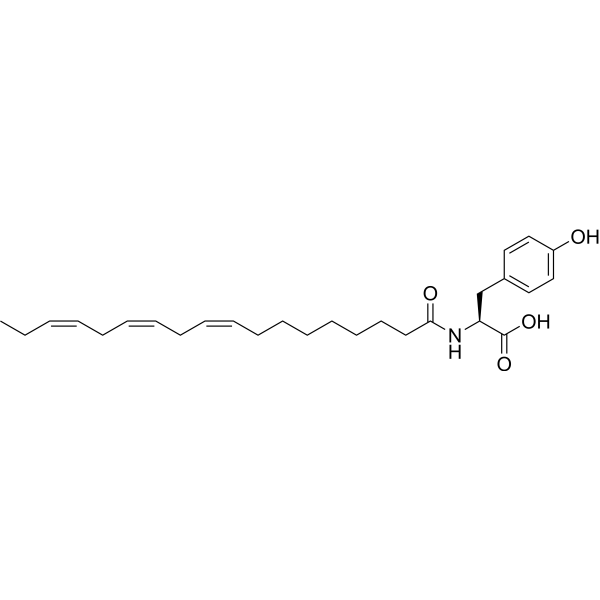
N-(α-Linolenoyl) tyrosine (NLT) is a dopaminergic agonist capable of crossing the blood-brain barrier. N-(α-Linolenoyl) tyrosine increases the level, turnover rate and release amount of dopamine in the striatum. N-(α-Linolenoyl) tyrosine modulates rotational behavior in a rat model with unilateral striatal injury and alleviates excessive blinking symptoms in models induced by dopamine-depleting agents. N-(α-Linolenoyl) tyrosine can be used for research on Parkinson's disease and idiopathic blepharospasm .
loading...
    loading...
Cat. No.: HY-E70199
CAS No.: 9054-63-1
Synonyms: APN/CD13
Target:  

Aminopeptidase

Research Areas:  

Cardiovascular Disease

Aminopeptidase N (rat) (APN/CD13) is a Zn 2+-dependent membrane-bound exopeptidase that preferentially degrades proteins and peptides with N-terminal neutral amino acids. Aminopeptidase N (rat) is inhibited by angiotensin IV and participates in the regulation of angiotensin IV half-life in the rat striatum .
loading...
    loading...
Cat. No.: HY-160959
CAS No.: 946074-35-7
Target:  

nAChR

Research Areas:  

Neurological Disease

AN317 is a selective agonist for α6β2-containing nicotinic acetylcholine receptor (nAChR) with Ki of 6.2 nM and 4.1 nM, for α6/α3β2β3 receptor and α4β2 receptor, respectively. AN317 induces dopamine release in the synaptosomes of the rat striatum, enhances dopaminergic neuronal activity in substantia nigra, and exhibits protective efficacy to rat neurons against dopamine neurotoxin MPP +. AN317 exhibits good pharmacokinetic characteristics in rats. AN317 penetrates the blood-brain barrier (BB) .
loading...
    loading...
Cat. No.: HY-124501
CAS No.: 1814-64-8
Purity:  99.24%
Synonyms: p-NH2-PE-TFMPP
Target:  

5-HT Receptor

Research Areas:  

Neurological Disease

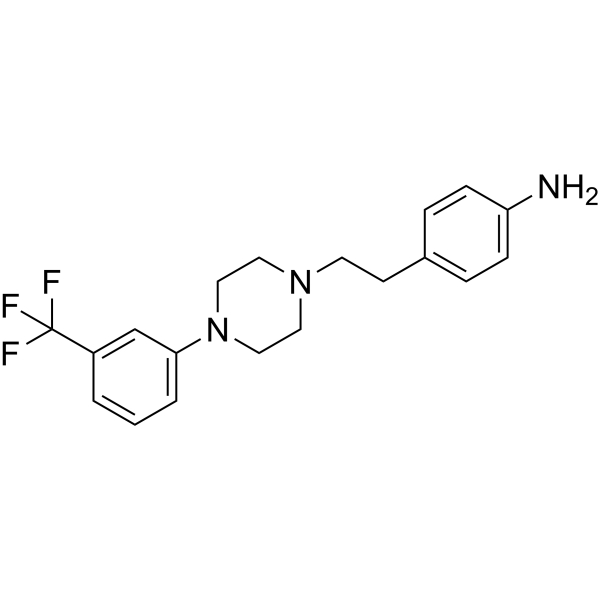
LY 165163 is a potent 5-HT presynaptic receptor agonist. LY 165163 significantly decreases 5-HTP accumulation and increases DOPA accumulation in the cortex and striatum .
loading...
    loading...
Cat. No.: HY-P3800
CAS No.: 56104-22-4
Target:  

Neurokinin Receptor

Research Areas:  

Neurological Disease Endocrinology

[Glp5] Substance P (5-11) is an octapeptide. [Glp5] Substance P (5-11) is one of the main substance P fragments in rat central nervous system (CNS). [Glp5] Substance P (5-11) locally modulates dopamine release in rat striatum .
loading...
    loading...
Cat. No.: HY-14547A
CAS No.: 350992-13-1
Purity:  99.89%
Research Areas:  

Neurological Disease

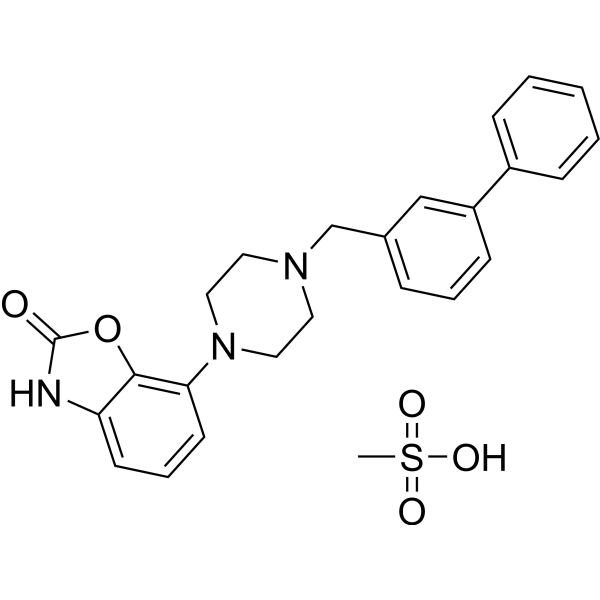
Bifeprunox mesylate is a potent dopamine D2-like and 5-HT1A receptor partial agonist with pKis of 7.19 and 8.83 for cortex 5-HT1A and striatum D2, and a pEC50 of 6.37 for hippocampus 5-HT1A, respectively. Bifeprunox mesylate is an antipsychotic for the research of schizophrenia .
loading...
    loading...
Cat. No.: HY-14547
CAS No.: 350992-10-8
Research Areas:  

Neurological Disease

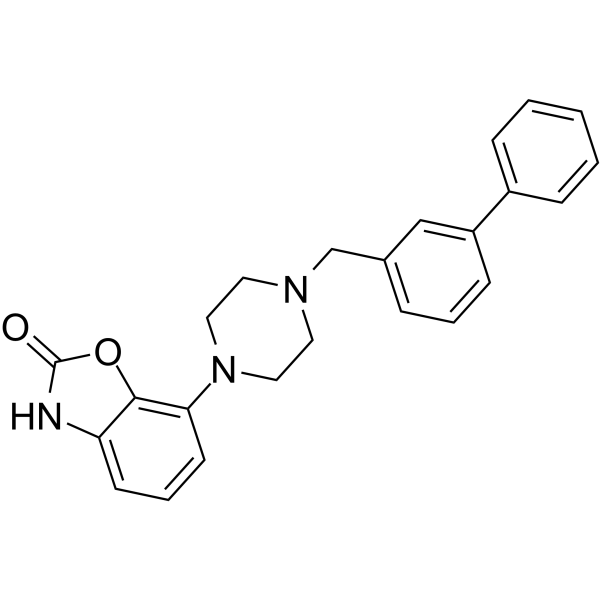
Bifeprunox is a potent dopamine D2-like and 5-HT1A receptor partial agonist with pKis of 7.19 and 8.83 for cortex 5-HT1A and striatum D2, and a pEC50 of 6.37 for hippocampus 5-HT1A, respectively. Bifeprunox is an antipsychotic for the research of schizophrenia .
loading...
    loading...
Cat. No.: HY-12813
CAS No.: 1516896-09-5
Purity:  99.44%
Research Areas:  

Neurological Disease Cancer

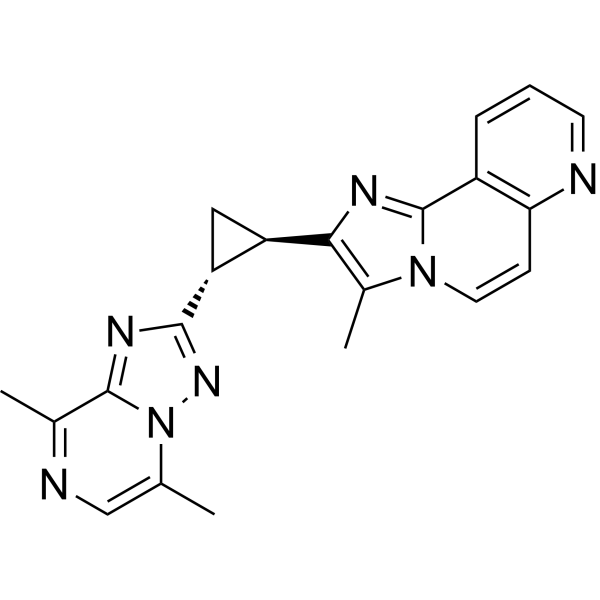
PDE10-IN-1 is a highly potent and selective phosphodiesterase 10A (PDE10A) inhibitor. PDE10-IN-1 regulates neuronal signaling by inhibiting PDE10A-mediated hydrolysis of cAMP/cGMP in the striatum. PDE10-IN-1 can be used in the research of central nervous system diseases, metabolic diseases, neurological disorders, psychosis, schizophrenia, obesity and diabetes .
loading...
    loading...

