6 Results for "

TERT mRNA

" in MedChemExpress (MCE) Product Catalog:
Products (6)

6 Results for "TERT mRNA" in MCE Product Catalog:

  • Categories Recommended:
    More
1
1 Cited Publications
Cat. No.: HY-N6973
CAS No.: 476-70-0
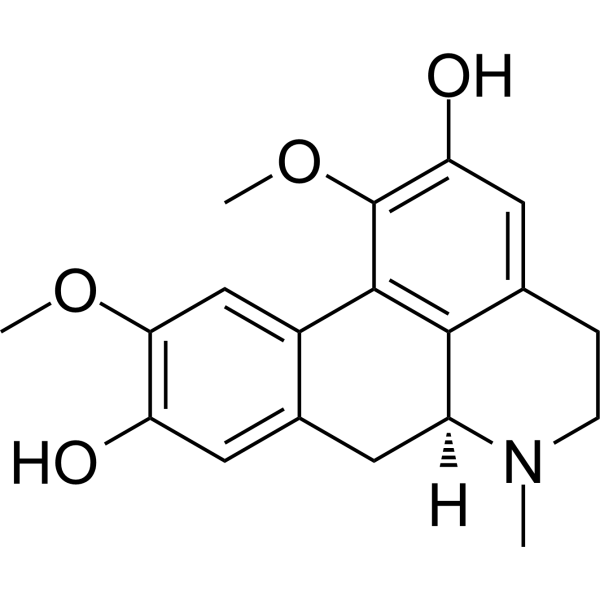
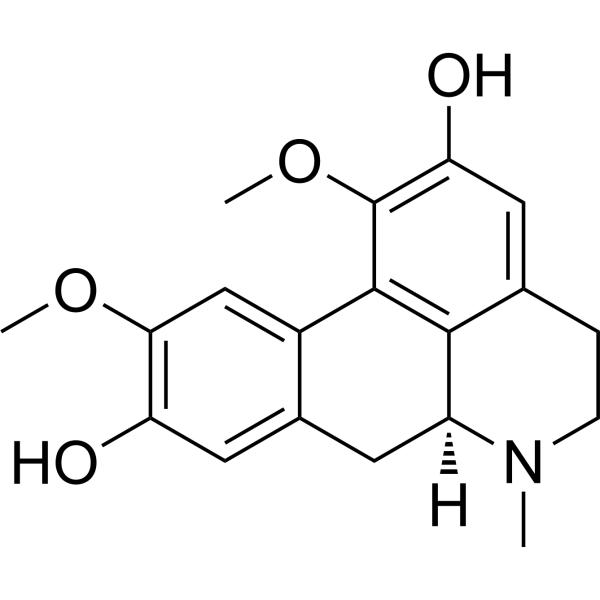
Boldine is an aporphine alkaloid telomerase (telomerase) inhibitor (IC50 of 0.17 μM for TERT) and a pannexin/connexin hemichannel blocker, with oral activity and blood-brain barrier permeability. Boldine inhibits telomerase activity through direct interaction with the telomerase ribonucleoprotein and non-competitive binding near the TERT active site, and downregulates hTERT mRNA while shifting alternative splicing toward non-functional transcripts. Boldine blocks Panx1, Cx43, Cx26, and Cx30 hemichannels as well as P2X7 receptor-mediated calcium influx. Boldine exhibits antioxidant, anti-inflammatory, antiproliferative, and cytotoxic activities by scavenging ROS, inhibiting NFκB, dephosphorylating SGK1, and reducing TNF-alpha levels. Boldine can be used in research on breast cancer, Alzheimer's disease, glioblastoma, diabetes, and spinal cord injury .
loading...
    loading...
Cat. No.: HY-N6973R
CAS No.: 476-70-0
Boldine (Standard) is the analytical standard of Boldine (HY-N6973). This product is intended for research and analytical applications. Boldine is an aporphine alkaloid telomerase (telomerase) inhibitor (IC50 of 0.17 μM for TERT) and a pannexin/connexin hemichannel blocker, with oral activity and blood-brain barrier permeability. Boldine inhibits telomerase activity through direct interaction with the telomerase ribonucleoprotein and non-competitive binding near the TERT active site, and downregulates hTERT mRNA while shifting alternative splicing toward non-functional transcripts. Boldine blocks Panx1, Cx43, Cx26, and Cx30 hemichannels as well as P2X7 receptor-mediated calcium influx. Boldine exhibits antioxidant, anti-inflammatory, antiproliferative, and cytotoxic activities by scavenging ROS, inhibiting NFκB, dephosphorylating SGK1, and reducing TNF-alpha levels. Boldine can be used in research on breast cancer, Alzheimer's disease, glioblastoma, diabetes, and spinal cord injury .
loading...
    loading...
Cat. No.: HY-150361
Target:  

mRNA

Research Areas:  

Cancer

Mouse Tert mRNA encodes the mouse telomerase reverse transcriptase (Tert) protein that plays important roles in aging and antiapoptosis.
loading...
    loading...
Cat. No.: HY-174537
Target:  

mRNA

Research Areas:  

Cancer

Human TERT mRNA encodes the human telomerase reverse transcriptase (TERT) protein, a catalytic subunit of the enzyme telomerase, which, together with the telomerase RNA component (TERC), comprises the most important unit of the telomerase complex.
loading...
    loading...
Cat. No.: HY-W683756
CAS No.: 16625-69-7
Boldine hydrochloride is an aporphine alkaloid telomerase (telomerase) inhibitor (IC50 of 0.17 μM for TERT) and a pannexin/connexin hemichannel blocker, with oral activity and blood-brain barrier permeability. Boldine hydrochloride inhibits telomerase activity through direct interaction with the telomerase ribonucleoprotein and non-competitive binding near the TERT active site, and downregulates hTERT mRNA while shifting alternative splicing toward non-functional transcripts. Boldine hydrochloride blocks Panx1, Cx43, Cx26, and Cx30 hemichannels as well as P2X7 receptor-mediated calcium influx. Boldine hydrochloride exhibits antioxidant, anti-inflammatory, antiproliferative, and cytotoxic activities by scavenging ROS, inhibiting NFκB, dephosphorylating SGK1, and reducing TNF-alpha levels. Boldine hydrochloride can be used in research on breast cancer, Alzheimer's disease, glioblastoma, diabetes, and spinal cord injury .
loading...
    loading...
Cat. No.: HY-186330
CAS No.: 2763421-81-2
Synonyms: PMMB-302
Research Areas:  

Cancer

PMM-302 (PMMB-302) is a shikonin N-benzyl sophoridate derivative and a telomerase inhibitor. PMM-302 downregulates the telomerase core proteins DKC1 and NHP2 as well as TERT mRNA, and inhibits telomerase activity. PMM-302 induces G2/M phase cell cycle arrest and apoptosis, accompanied by downregulation of Bcl2, Bcl-XL, and FADD and upregulation of cleaved caspase-3 and cleaved caspase-9. PMM-302 can be used for lung cancer-related research .
loading...
    loading...

