101 Results for "
Tie-2
" in MedChemExpress (MCE) Product Catalog:
Products (101)
101 Results for "Tie-2" in MCE Product Catalog:
61
61 Publications Verification
Synonyms: XL184; BMS-907351
Target:
Research Areas:
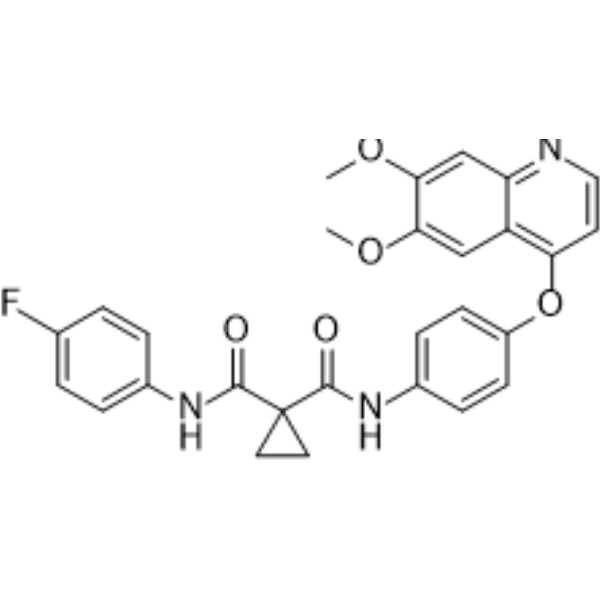
Cabozantinib is a potent and orally active inhibitor of VEGFR2 and MET, with IC50 values of 0.035, and 1.3 nM, respectively. Cabozantinib displays strong inhibition of KIT, RET, AXL, TIE2, and FLT3 (IC50=4.6, 5.2, 7, 14.3, and 11.3 nM, respectively). Cabozantinib shows antiangiogenic activity. Cabozantinib disrupts tumor vasculature and promotes tumor and endothelial cell apoptosis [2].
13
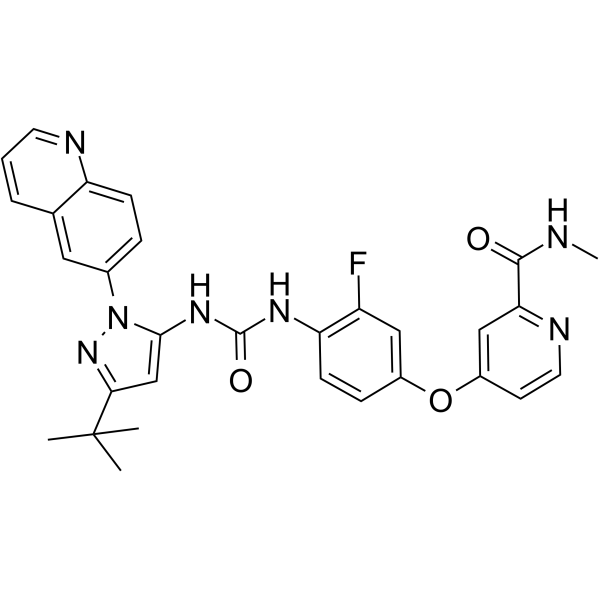
Rebastinib (DCC-2036) is an orally active, non-ATP-competitive Bcr-Abl inhibitor, with IC50 values of 0.8 nM and 4 nM against Abl1 WT and Abl1 T315I, respectively. Rebastinib potently inhibits CYP2C8 (IC50 = 0.0533 μM) and CYP2C9 (IC50 = 2.54 μM). Rebastinib allosterically inhibits Tie2 with an IC50 of 0.63 nM. Rebastinib inhibits the transcriptional activity of FoxO1. Rebastinib inhibits SRC family kinases, KDR and FLT3 kinases. Rebastinib induces Apoptosis. Rebastinib exerts anti-tumor activity in breast cancer. Rebastinib exerts anti-angiogenic effects. Rebastinib increases myotube diameter and improves reduced contractility. Rebastinib can be used in research related to triple-negative breast cancer, luminal breast cancer, pancreatic neuroendocrine tumors, muscle atrophy, cancer cachexia, chronic myeloid leukemia, and B-lymphocytic leukemia [2] .
8
Target:
Research Areas:
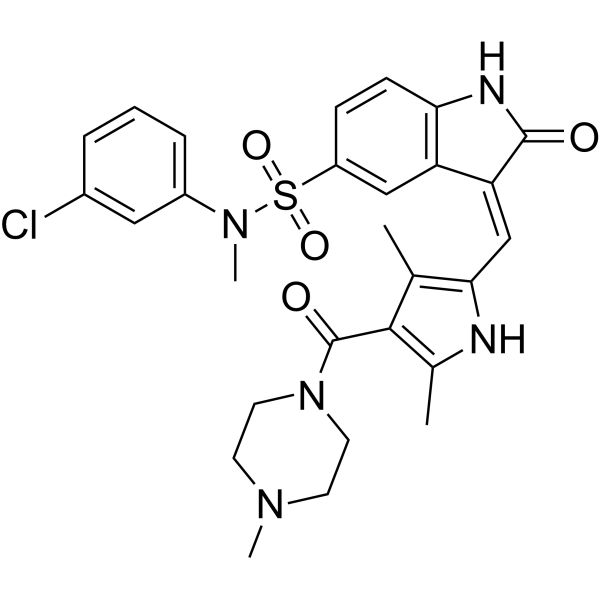
SU11274 is a selective Met inhibitor with IC50 of 10 nM, but has no effects on PGDFRβ, EGFR or Tie2.
4
Target:
Research Areas:
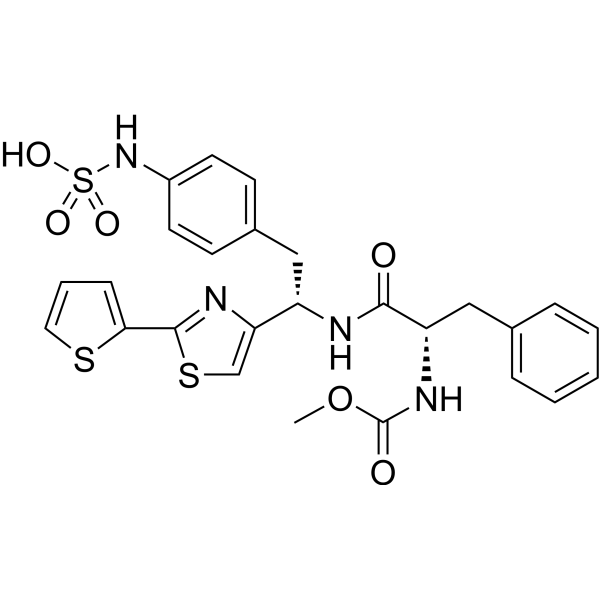
Razuprotafib (AKB-9778) is a potent and selective inhibitor of the catalytic activity of VE-PTP (vascular endothelial protein tyrosine phosphatase) with an IC50of 17 pM. Razuprotafib promotes TIE2 activation, enhances ANG1-induced TIE2 activation, and stimulates phosphorylation of signaling molecules in the TIE2 pathway, including AKT, eNOS, and ERK. Razuprotafib inhibits the structurally related phosphatase PTP1B with an IC50 of 780 nM. Razuprotafib shows excellent selectivity for VE-PTP versus a variety of phosphatases, with the exception of HPTPη (IC50=36 pM) and HPTPγ (100 pM) .
4
4 Cited Publications
Target:
Research Areas:
SB-633825 is a potent and ATP-competitive inhibitor of TIE2, LOK (STK10) and BRK with IC50s of 3.5 nM, 66 nM, 150 nM, respectively. SB-633825 can inhibit cancer cell growth and angiogenesis .
4
Target:
Research Areas:
Razuprotafib (AKB-9778) sodium is a potent and selective inhibitor of the catalytic activity of VE-PTP (vascular endothelial protein tyrosine phosphatase) with an IC50of 17 pM. Razuprotafib sodium promotes TIE2 activation, enhances ANG1-induced TIE2 activation, and stimulates phosphorylation of signaling molecules in the TIE2 pathway, including AKT, eNOS, and ERK. Razuprotafib sodium inhibits the structurally related phosphatase PTP1B with an IC50 of 780 nM. Razuprotafib sodium shows excellent selectivity for VE-PTP versus a variety of phosphatases, with the exception of HPTPη (IC50=36 pM) and HPTPγ (100 pM) .
3
2
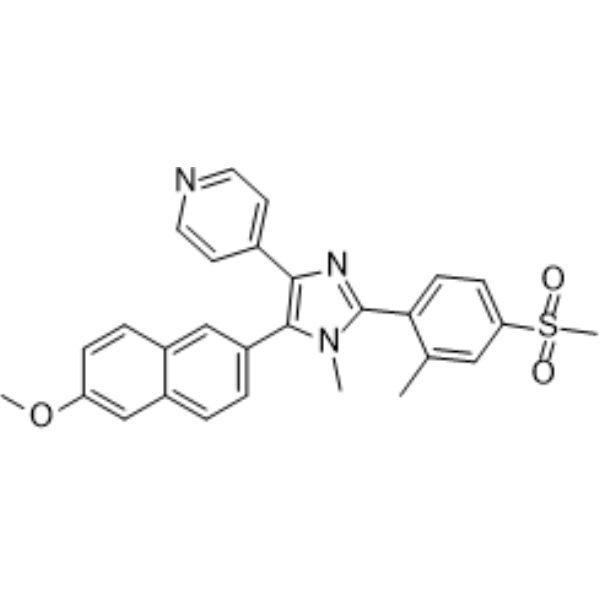
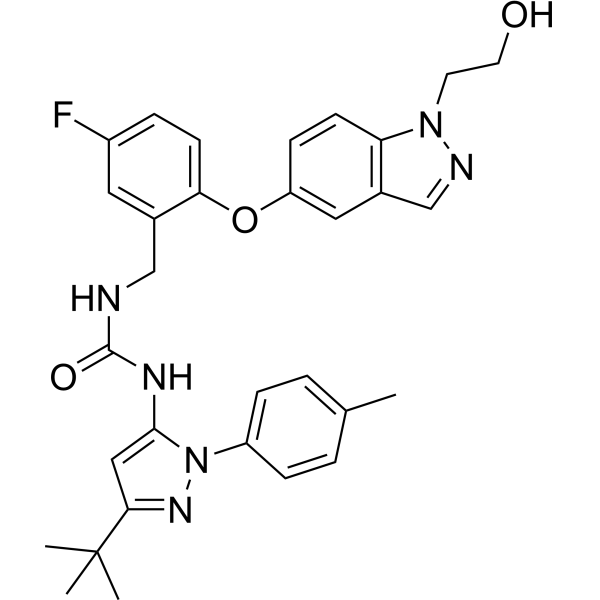
Pexmetinib (ARRY-614) is an orally active dual Tie-2 and p38 MAPK inhibitor. Pexmetinib binds to Tie-2 and p38 MAPK in a "DFG-out" conformation, attenuates the phosphorylation of p38, inhibits STAT3 activation, reduces the promoter-binding activity of NFATc1, and decreases the expression of MMPs. Pexmetinib inhibits leukemia cell proliferation, abrogates TNF-α-mediated myelosuppression of healthy hematopoietic stem cells, stimulates hematopoiesis in primary myelodysplastic syndrome (MDS) samples, inhibits RANKL-induced osteoclast formation and bone resorption, and suppresses migration, invasion and induced osteolysis of breast cancer cells. Pexmetinib can be used in research related to myelodysplastic syndrome, acute myeloid leukemia and breast cancer-induced osteolysis [2].
2