883 Results for "
UBR recognition
" in MedChemExpress (MCE) Product Catalog:
Products (883)
883 Results for "UBR recognition" in MCE Product Catalog:
12
12 Publications Verification
Synonyms: eFT226
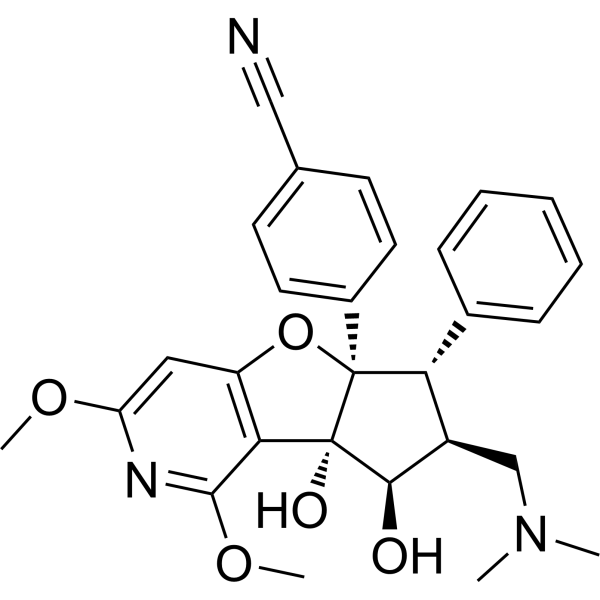
Zotatifin (eFT226) is a potent, selective, and well-tolerated eIF4A inhibitor. Zotatifin promotes eIF4A binding to specific mRNA sequences with recognition motifs in the 5’-UTRs (IC50=2 nM) and interferes with the assembly of the eIF4F initiation complex . Zotatifin shows robust antiviral effects, it effectively reduces viral infectivity by inhibiting SARS-CoV-2 NP protein biogenesis (IC90=37 nM) . Zotatifin induces cell apoptosis .
11
11 Cited Publications
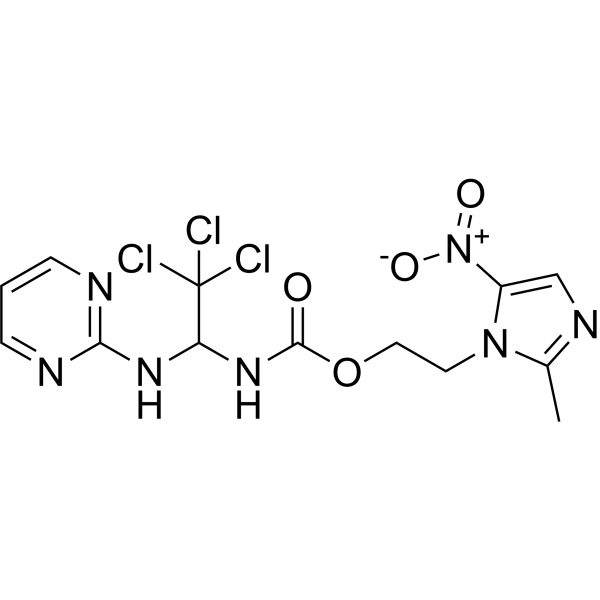
Apcin, a ligand of Cdc20, is a potent and competitive anaphase-promoting complex/cyclosome (APC/C(Cdc20)) E3 ligase activity inhibitor. Apcin competitively inhibits APC/C-dependent ubiquitylation by binding to Cdc20 and preventing substrate recognition. Apcin occupes the D-box-binding pocket on the side face of the WD40-domain and can prolong mitosis .
9
Target:
Research Areas:
Thrombin (MW 37kDa) is a Na +-activated, allosteric serine protease that plays opposing functional roles in blood coagulation. Thrombin recognition sequence and can be used to digest GST-tagged proteins.
9
9 Cited Publications
Research Areas:
Rabbit Thrombin is a Na +-activated, allosteric serine protease that plays opposing functional roles in blood coagulation. Thrombin recognition sequence and can be used to digest GST-tagged proteins .
9
9 Cited Publications
Cat. No.: HY-114164D
CAS No.: 9002-04-4
Target:
Research Areas:
Rat Thrombin is a Na +-activated, allosteric serine protease that plays opposing functional roles in blood coagulation. Thrombin recognition sequence and can be used to digest GST-tagged proteins .
3
3 Cited Publications
Target:
Research Areas:
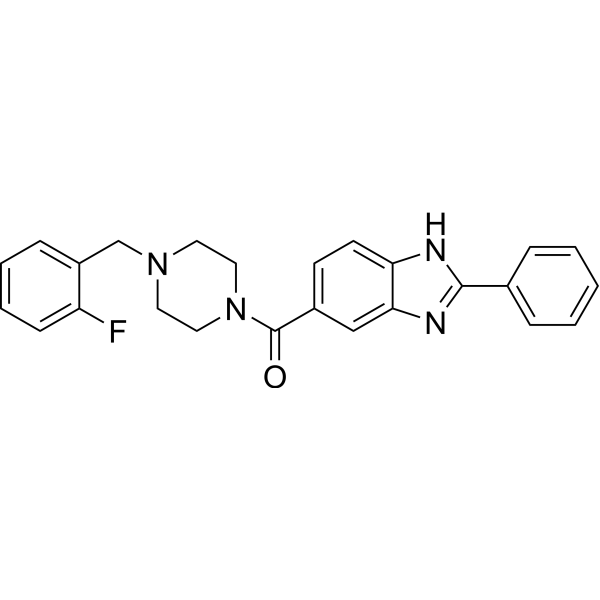
Bractoppin is a potent and selective agent-like inhibitor of phosphopeptide recognition by the human BRCA1 tandem(t) BRCT domain (binding IC50: 74 nM). Bractoppin diminishes BRCA1 recruitment to DNA breaks, in turn suppressing damage-induced G2 arrest and assembly of the recombinase, RAD51. Bractoppin preferentially inhibits BRCA1 tBRCT-dependent steps in the DNA damage response .
2
2 Cited Publications
Target:
Research Areas:
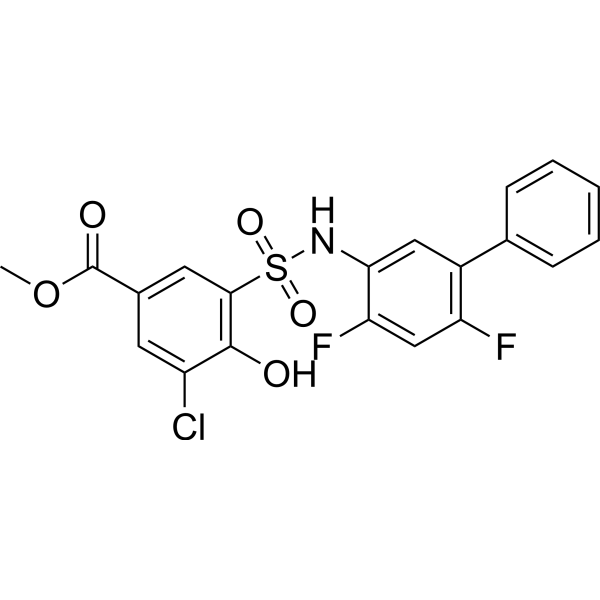
NDI-091143 is a potent and high-affinity human ATP-citrate lyase (ACLY) inhibitor with an IC50 of 2.1 nM (ADP-Glo assay), a Ki of 7.0 nM and a Kd of 2.2 nM. NDI-091143 inhibits ACLY catalysis allosterically, by stabilizing large conformational changes in the citrate domain that indirectly block the binding and recognition of citrate .
2
2 Cited Publications
Cat. No.: HY-108679
CAS No.: 1432043-31-6
Target:
Research Areas:
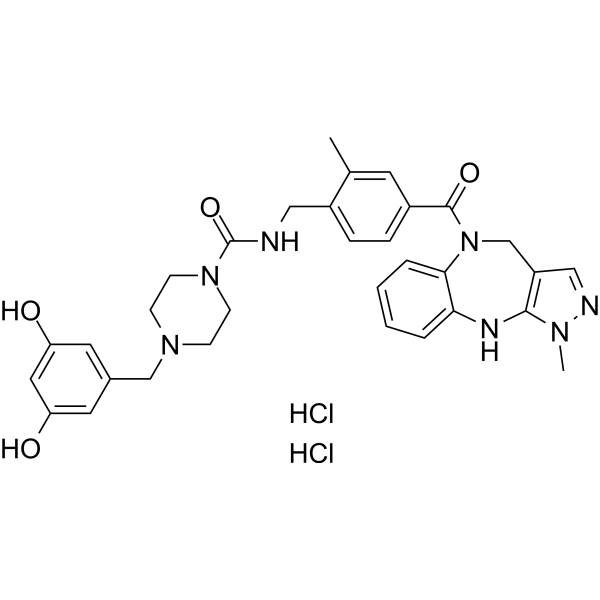
WAY-267464 (hydrochloride) is a non-peptide oxytocin receptor (OTR) agonist. WAY-267464 (hydrochloride) can impair social recognition memory in rats through a vasopressin 1A receptor antagonist action. WAY-267464 (hydrochloride) can be used for the research of psychiatric disorders, such disorders include autism spectrum disorder, schizophrenia, and social anxiety disorder .
2
2 Cited Publications
Cat. No.: HY-15522
CAS No.: 847375-16-0
Target:
Research Areas:
WAY-267464 is a non-peptide oxytocin receptor (OTR) agonist. WAY-267464 can impair social recognition memory in rats through a vasopressin 1A receptor antagonist action. WAY-267464 can be used for the research of psychiatric disorders, such disorders include autism spectrum disorder, schizophrenia, and social anxiety disorder .
2
2 Cited Publications
Synonyms: ANSA; 8-Anilino-1-naphthalenesulfonic acid
2
2 Cited Publications
Target:
Research Areas:
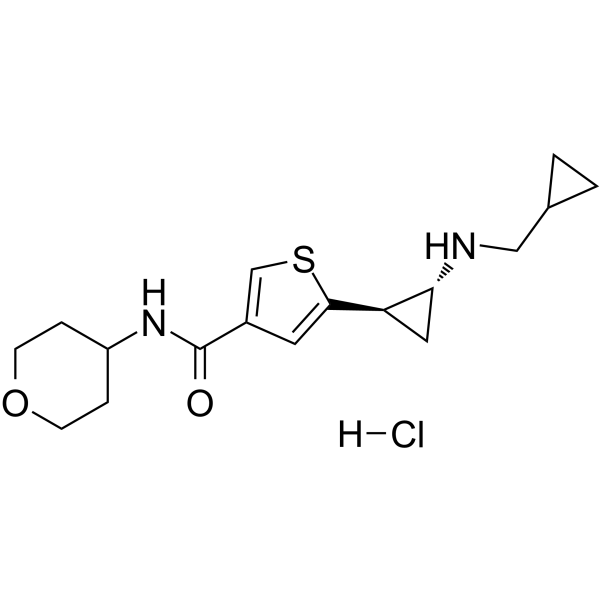
TAK-418 is an orally active, blood-brain barrier-penetrant LSD1 inhibitor with a human IC50 of 2.9 nM. TAK-418 irreversibly inhibits LSD1 by forming a compact flavin-FAD adduct with the catalytic domain FAD, blocking the demethylation of H3K4me1/2 and H3K9me1/2 without disrupting the LSD1-GFI1B interaction. TAK-418 restores normally dysregulated brain gene expression and DNA methylation, increases H3K4me1/2/3 and H3K9me2 at the Ucp2 locus, and induces Ucp2 mRNA expression. TAK-418 rescues defective H3K4 histone modifications, normalizes adult neurogenesis, and improves recognition memory, social behavior, and cognition in rodent models. TAK-418 can be used in research related to neurodevelopmental disorders, Alzheimer's disease, and autism spectrum disorders .
1
1 Cited Publications
Cat. No.: HY-N4134
CAS No.: 114906-74-0