4 Results for "

UGT1A7

" in MedChemExpress (MCE) Product Catalog:
Products (4)

4 Results for "UGT1A7" in MCE Product Catalog:

  • Categories Recommended:
    More
Cat. No.: HY-RS15431
Research Areas:  

Others

UGT1A7 Human Pre-designed siRNA Set A contains three designed siRNAs for UGT1A7 gene (Human), as well as a negative control, a positive control, and a FAM-labeled negative control.

loading...
    loading...
Cat. No.: HY-E72109
Target:  

UGT

Research Areas:  

Cancer

Human UGT1A7 is a UDP-glucuronosyltransferase. UGT1A7 catalyzes the glucuronidation of hydrophobic substrates, polycyclic aromatic hydrocarbons, dietary heterocyclic amines, and 1-Hydroxypyrene (HY-W014075). Human UGT1A7 is applicable to research related to sporadic colorectal cancer .
loading...
    loading...
Cat. No.: HY-N3989
CAS No.: 5876-17-5
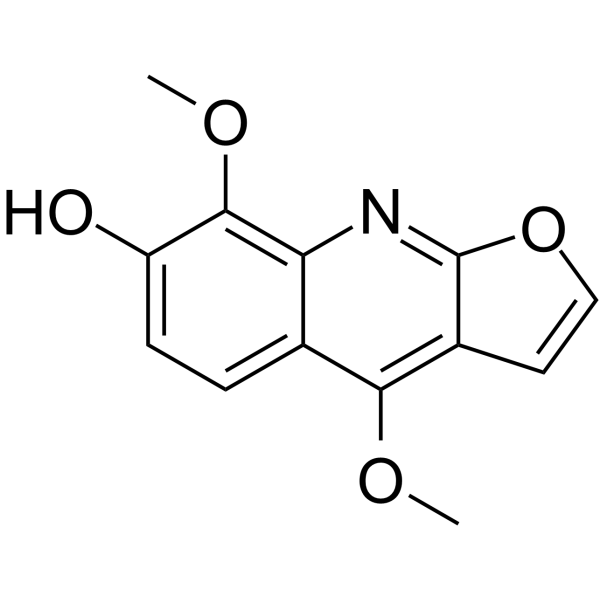
Haplopine is a substance with anti-inflammatory, antioxidant and photoactivated antibacterial activities. It also acts as an inhibitor of UGT1A7 and a photoactivated restriction endonuclease inhibitor. Haplopine inhibits the mRNA/protein expression of IL-6, TSLP, GM-CSF, G-CSF, IL-4, IL-13 and COX-2, while upregulating the mRNA/protein expression of SOD, CAT and HO-1. Haplopine inhibits the glucuronidation reaction catalyzed by UGT1A7 through competitive hydrophobic binding. Haplopine exerts photoactivated restriction endonuclease inhibitory effects by binding to DNA. Haplopine exhibits photoactivated activity against methicillin-resistant Staphylococcus aureus. Haplopine alleviates symptoms of atopic dermatitis. Haplopine can be used in research related to atopic dermatitis and methicillin-resistant Staphylococcus aureus infections .
loading...
    loading...
Cat. No.: HY-D3180
CAS No.: 1201643-01-7
CDr20 is a fluorescent chemical probe capable of crossing the blood-brain barrier. CDr20 undergoes glucuronidation catalyzed by the UDP-glucuronosyltransferase Ugt1a7c, which triggers a fluorescence turn-on response. CDr20 enables visualization of live microglial cells. CDr20 can be used for research on Alzheimer's disease, stroke, and autism .
loading...
    loading...

