4 Results for "

adulteration

" in MedChemExpress (MCE) Product Catalog:
Products (4)

4 Results for "adulteration" in MCE Product Catalog:

1
1 Cited Publications
Cat. No.: HY-139338
CAS No.: 13101-54-7
Purity:  ≥99.0%
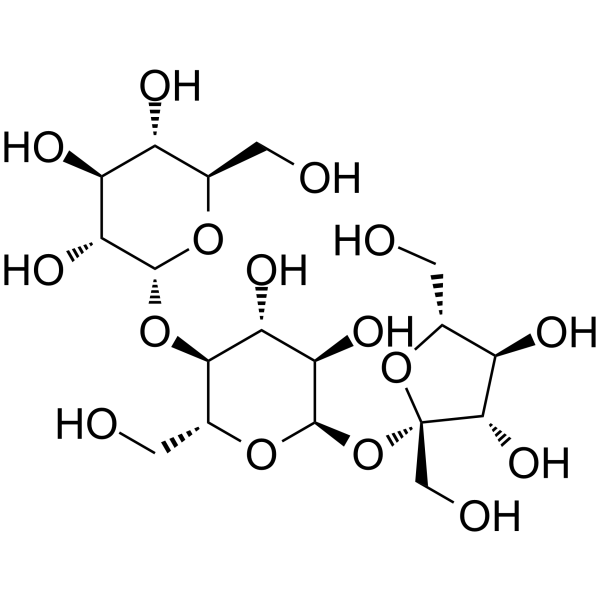
Erlose is a trisaccharide sucrose derivative and low-calorie sweetener synthesized from glucose and sucrose via an α-glucosidase-mediated transglycosylation reaction. Erlose is often used as a marker to identify whether honey is adulterated with artificial sucrose. Erlose has approximately half the sweetness of sucrose but a similar taste, and it effectively inhibits crystal formation and browning reactions during food heat treatment .
loading...
    loading...
Cat. No.: HY-N7930
CAS No.: 63026-02-8
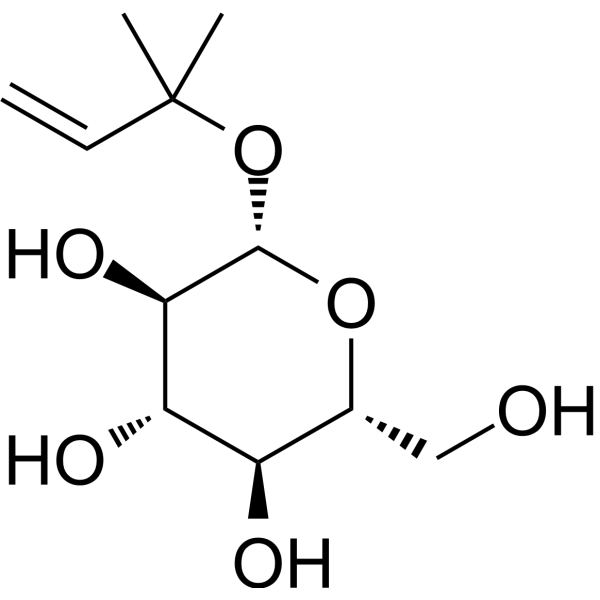
Crenulatin is a gallotannin that can be isolated from Rhodiola rosea. Crenulatin can be used as a biomarker to identify potentially adulterated R. rosea products. Crenulatin has dual- direction effects on apoptosis of cerebral microvascular endothelial cells, via regulating Fas/Bcl-2 expression and caspase-3 activity .
loading...
    loading...
Cat. No.: HY-76633R
CAS No.: 5985-24-0
Research Areas:  

Others

Dimethyl 4-hydroxyisophthalate (Standard) is the analytical standard of Dimethyl 4-hydroxyisophthalate. This product is intended for research and analytical applications. Dimethyl 4-hydroxyisophthalate is a methyl salicylate analog. Dimethyl 4-hydroxyisophthalate serves as a synthetic marker for detecting adulteration of wintergreen essential oil with synthetic methyl salicylate, and is also a by-product of Kolbe-Schmitt reaction impurities, which is not detected in authentic wintergreen essential oil .
loading...
    loading...
Cat. No.: HY-187587
CAS No.: 105791-89-7
Research Areas:  

Others

Cu (II) Pyropheophytin a is a chlorophyll derivative. Copper-chlorophyll derivatives are absent in olive oil. Cu (II) Pyropheophytin a can be applied in the research of olive oil adulteration .
loading...
    loading...

