19 Results for "

alkenes

" in MedChemExpress (MCE) Product Catalog:
Products (19)

19 Results for "alkenes" in MCE Product Catalog:

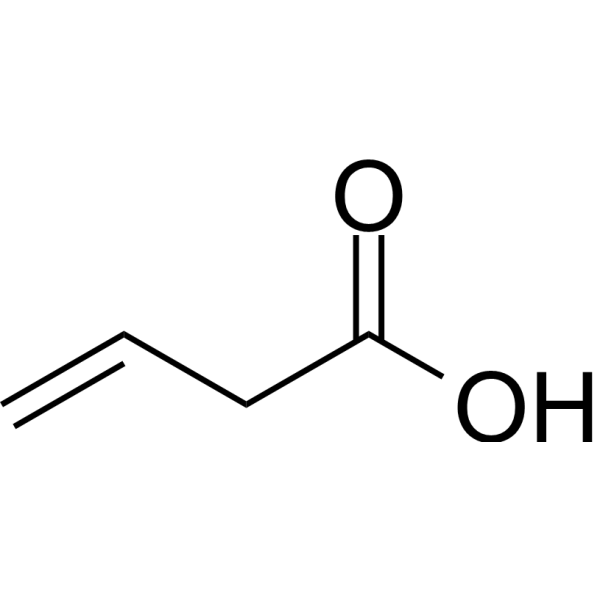
Cat. No.: HY-W068697
CAS No.: 625-38-7
Synonyms: Vinylacetic acid
Research Areas:  

Others

3-Butenoic acid (Vinylacetic acid) can be used to synthesize bicyclic 3,6-dihydro-1,2-oxazine. Strained bicyclic 3,6-dihydro-1,2-oxazine is a reactive substrate in domino metathesis with an external alkene .
loading...
    loading...
Cat. No.: HY-W026277
CAS No.: 930-88-1
Synonyms: 1-Methyl-1H-pyrrole-2,5-dione
N-Methylmaleimide (1-Methyl-1H-pyrrole-2,5-dione) is an electron-deficient alkene that can be used as a thiol blocking agent .
loading...
    loading...
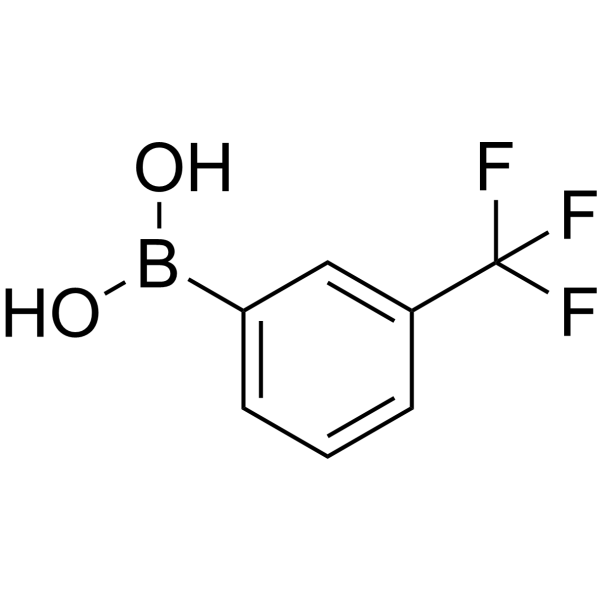
Cat. No.: HY-32902
CAS No.: 1423-26-3
Research Areas:  

Others

3-(Trifluoromethyl) phenylboronic acid is an arylboronic acid. 3-(Trifluoromethyl) phenylboronic acid can serve as a substrate for linear-selective hydroarylation reactions with alkenes .
loading...
    loading...
Cat. No.: HY-W145053
CAS No.: 149358-73-6
Synonyms: Sodium chloro(4-methylbenzenesulfonyl)azanide hydrate
Target:  

Factor Xa Bacterial

Research Areas:  

Infection

ChloraMine-T hydrate (Sodium chloro(4-methylbenzenesulfonyl)azanide (hydrate)) is a common reagent in various synthetic processes. It has been used as a reagent in aminohydroxylation and allylic amination reactions, a nitrogen source in aziridination reactions of alkenes and alkenes, and deprotection of sulfur groups in sulfur-containing compounds. It has been used as a reagent in the synthesis of factor Xa inhibitors. ChloraMine-T hydrate (Sodium chloro(4-methylbenzenesulfonyl)azanide (hydrate)) (0.2% w/v) is also an antimicrobial agent that kills Staphylococcus epidermidis, Staphylococcus aureus, Enterococcus faecalis, Escherichia coli, Proteus mirabilis, and Enterococcus cloacae.
loading...
    loading...
Cat. No.: HY-132178
CAS No.: 9035-51-2
Cytochrome P450 is a family of monooxygenase enzymes that catalyzes the conversion of fatty acids to terminal alkenes using hydrogen peroxide as a cosubstrate. Cytochrome P450 as membrane-bound hemoproteins, plays important roles in the detoxification of drugs, cellular metabolism, and homeostasis .
loading...
    loading...
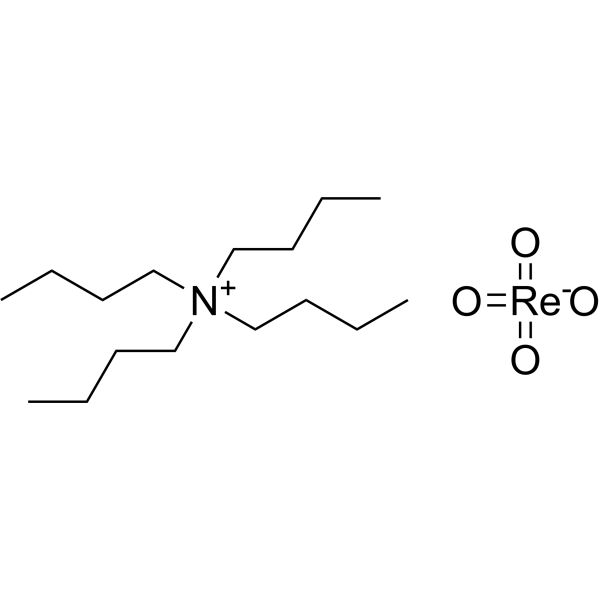
Cat. No.: HY-W109978
CAS No.: 16385-59-4
Tetrabutylammonium perrhenate is a quaternary ammonium salt belonging to the class of alkylammonium salts. This compound is used as a catalyst in organic synthesis, especially in the production of alkenes and alcohols. Furthermore, due to its ability to bind radioisotopes, it is useful as a radiopharmaceutical in nuclear medicine. Its unique chemical properties make it an essential ingredient in a variety of industrial processes, including petrochemical refining and pharmaceuticals.
loading...
    loading...
Cat. No.: HY-W068697R
CAS No.: 625-38-7
Synonyms: Vinylacetic acid (Standard)
Research Areas:  

Others

3-Butenoic acid (Standard) is the analytical standard of 3-Butenoic acid. This product is intended for research and analytical applications. 3-Butenoic acid (Vinylacetic acid) can be used to synthesize bicyclic 3,6-dihydro-1,2-oxazine. Strained bicyclic 3,6-dihydro-1,2-oxazine is a reactive substrate in domino metathesis with an external alkene[1][2].
loading...
    loading...
Cat. No.: HY-119465
CAS No.: 135357-96-9
Restricticin is a compound obtained from marine fungi, whose structure contains alkene, tetrahydropyran ring and glycine ester functional groups, and has anti-neuroinflammatory effects in lipopolysaccharide-induced BV-2 microglia by inhibiting the production of proinflammatory mediators.
loading...
    loading...
Cat. No.: HY-W112005
CAS No.: 121309-88-4
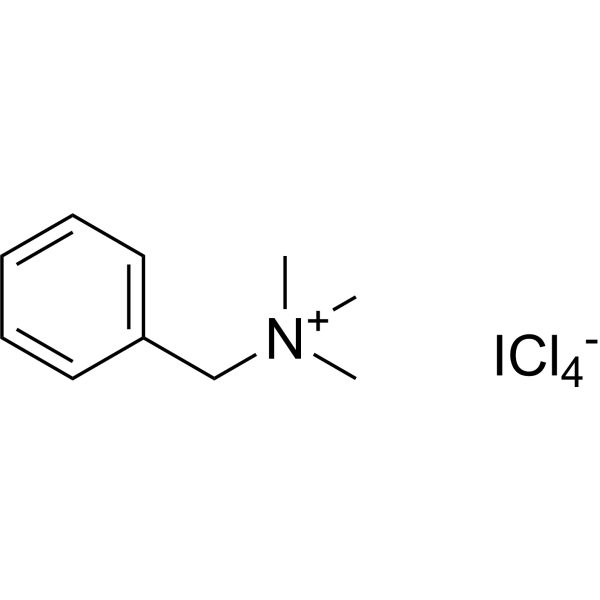
Benzyltrimethylammonium tetrachloroiodate is a quaternary ammonium salt belonging to the class of alkylammonium salts. The compound is used as a reagent in organic synthesis, especially in the oxidation of alkenes and alcohols. Its unique chemical properties make it an important ingredient in a variety of industrial processes, including pharmaceuticals and agrochemicals.
loading...
    loading...
Cat. No.: HY-176560
CAS No.: 184091-74-5
Target:  

Estrogen Receptor/ERR

Research Areas:  

Metabolic Disease Cancer

Raloxifene alkene (Compound 101) is a serum cholesterol clearance agent. Raloxifene alkene has significant anti-proliferation activity against breast adenocarcinoma cells. Raloxifene alkene effectively reduces serum cholesterol level without significant uterine weight and increase of number oieosinoohils in the stromallaver of ovarleclomized rat models. Raloxifene alkene can be used for post-menopausasyndrome, particularly osteoporosis, estrogen-dependent breast and uterine carcinoma research .
loading...
    loading...
Cat. No.: HY-Z14907A
CAS No.: 896134-06-8
Synonyms: Donepezil alkene pyridine N-oxide
Target:  

Drug Intermediate

Research Areas:  

Others

Donepezil impurity 4 (Donepezil alkene pyridine N-oxide) is an impurity of Donepezil.
loading...
    loading...
Cat. No.: HY-N18171
CAS No.: 13877-93-5
Category:  

Natural Products

Target:  

Others

Caryophyllene is a macrocyclic sesquiterpene alkene present in the essential oil of Artemisia annua, with anti-inflammatory and anticancer activities. Caryophyllene plays a role in the plant defense of Artemisia annua .
loading...
    loading...
Cat. No.: HY-171185
CAS No.: 368454-88-0
Target:  

Drug Metabolite

Research Areas:  

Others

CP-611,781 is a diol metabolite of ezlopitant alkene (CJ-12,458). In human liver microsomes, the apparent KM value of 5.4 μM for the formation of CP-611,781 .
loading...
    loading...
Cat. No.: HY-186155
CAS No.: 1273323-44-6
Target:  

AMPK

Research Areas:  

Metabolic Disease

AMPK activator 19 (Compound 57), alkene oxindole derivative, is an AMPK activator. AMPK activator 19 can be used for the research of diseases that are related to AMPK regulation, such as obesity, dyslipidemia, hyperglycemia, type 1 or type 2 diabetes .
loading...
    loading...
Cat. No.: HY-E71542
Research Areas:  

Others

2-Hydroxy-2-methylpropanal dehydrogenase (EC 1.2.1.98) is involved in the degradation pathways of the alkene 2-methylpropene and the fuel additive tert-butyl methyl ether (MTBE), a widely occurring groundwater contaminant.
loading...
    loading...
Cat. No.: HY-E71582
Research Areas:  

Others

2-Methyl-1,2-propanediol dehydrogenase (EC 1.1.1.400) is involved in the degradation pathways of the alkene 2-methylpropene and the fuel additive tert-butyl methyl ether (MTBE), a widely occurring groundwater contaminant.
loading...
    loading...
Cat. No.: HY-W035708
CAS No.: 485-64-3
Research Areas:  

Others

Hydrocinchonidine is an alkaloid that can be used as a chiral base in the 1,3-dipolar cycloaddition reactions of alkenes and azomethine ylides using silver fluoride. Hydrocinchonidine can also be used to synthesize molecules withoptically active quaternary centers via the aza-Henry reaction .
loading...
    loading...
Cat. No.: HY-N15624
CAS No.: 112448-70-1
1-(3,4-Methylenedioxy-phenyl)-(1E)-tetradecene is an aromatic alkene and Antibacterial agent. 1-(3,4-Methylenedioxy-phenyl)-(1E)-tetradecene can be derived from the roots of Piper sarmentosum. 1-(3,4-Methylenedioxy-phenyl)-(1E)-tetradecene exhibits antimycobacterial activity. 1-(3,4-Methylenedioxy-phenyl)-(1E)-tetradecene is inactive against Plasmodium falciparum and Candida albicans .
loading...
    loading...
Cat. No.: HY-L241
678 compounds

Chinese Baijiu is one of the oldest alcoholic beverages in the world, with a history of over 2,000 years. It can be classified into 12 aroma types based on its fragrance and flavor characteristics. The specific flavor profile of Baijiu is determined by the composition and concentration of certain compounds. These trace compounds, present in low concentrations yet rich in esters, alcohols, acids, lactones, aldehydes, ketones, acetals, alkenes, and others, significantly influence the flavor of Baijiu. Additionally, some active components in Baijiu possess antioxidant properties, and moderate consumption may help reduce the risk of cardiovascular diseases, dementia, and insulin resistance. Therefore, studying the chemical composition of Baijiu is crucial for promoting its fermentation process and enhancing its flavor and quality.

MCE has compiled included 678 Chinese Baijiu components, which can be used for drug development, Baijiu fermentation, and research related to Baijiu flavor and aroma.

  • 1

