65 Results for "

autoimmune response

" in MedChemExpress (MCE) Product Catalog:
Products (65)

65 Results for "autoimmune response" in MCE Product Catalog:

51
51 Publications Verification
Cat. No.: HY-108882B
CAS No.: 9003-98-9
Target:  

DNA/RNA Synthesis

Research Areas:  

Inflammation/Immunology

DNase I is an enzyme that degrades DNA. DNase I is mainly produced by digestive system organs, such as the pancreas and parotid gland. Three types of DNase I are known in mammals: pancreatic type, parotid type, and pancreatico-parotid type. DNase I plays a key role in the cleavage of extracellular DNA, and is critical for limiting inflammatory responses and maintaining homeostasis. DNase I is responsible for digesting extracellular nucleoproteins, which may be essential for preventing autoimmune responses. Decreased DNase I activity may be associated with the onset and progression of systemic lupus erythematosus (SLE). DNase I (RNase & Protease free) is a molecular biology-grade DNase I purified by chromatography to remove RNase and protease .
loading...
    loading...
51
51 Publications Verification
Cat. No.: HY-108882C
CAS No.: 9003-98-9
Target:  

DNA/RNA Synthesis

Research Areas:  

Inflammation/Immunology

DNase I is an enzyme that degrades DNA. DNase I is mainly produced by digestive system organs, such as the pancreas and parotid gland. Three types of DNase I are known in mammals: pancreatic type, parotid type, and pancreatico-parotid type. DNase I plays a key role in the cleavage of extracellular DNA, and is critical for limiting inflammatory responses and maintaining homeostasis. DNase I is responsible for digesting extracellular nucleoproteins, which may be essential for preventing autoimmune reactions. Decreased DNase I activity may be associated with the occurrence and development of systemic lupus erythematosus (SLE). DNase I (filtered) is filtered through a 0.22 μM membrane and is not tested for pyrogenicity .
loading...
    loading...
25
25 Cited Publications
Cat. No.: HY-153808
CAS No.: 9007-81-2
Research Areas:  

Inflammation/Immunology

Complete Freund's adjuvant (CFA) is an immunoadjuvant emulsified with antigen by its discoverer Jules T. Freund to enhance an animal's immune response to an antigen. Complete Freund's adjuvant (CFA) is also an inducer of the Th1 immune response and a ligand of TLRs. Complete Freund's adjuvant (CFA) contains heat-killed inactive tuberculosis bacilli and consists of a paraffin oil-in-water emulsion. Complete Freund's adjuvant (CFA) stimulates a strong and durable immune response and can be used to induce persistent inflammatory pain models in mice, experimental autoimmune myocarditis (EAM) models, and more. Incomplete Freund's adjuvant (IFA) (HY-153808A) is another type of Freund's Adjuvant that stimulates a weaker immune response .
loading...
    loading...
9
9 Cited Publications
Cat. No.: HY-P1240
CAS No.: 149635-73-4
Synonyms: Myelin Oligodendrocyte Glycoprotein Peptide (35-55), mouse, rat
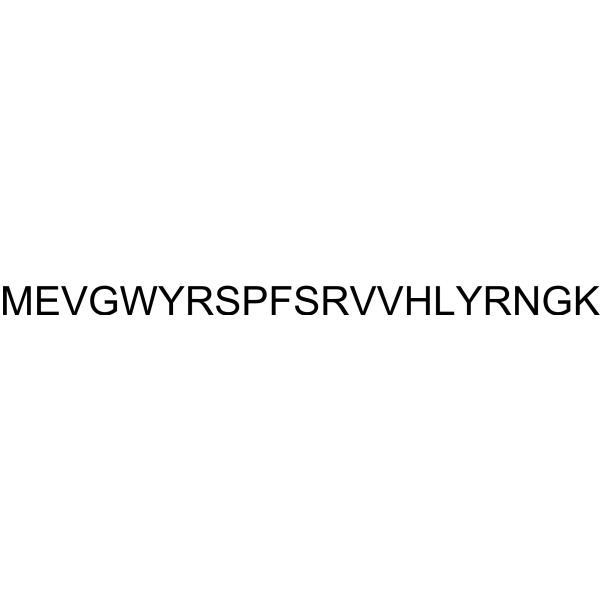
MOG (35-55) mouse, rat (Myelin Oligodendrocyte Glycoprotein Peptide (35-55), mouse, rat) is a minor component of CNS myelin. MOG (35-55) mouse, rat has encephalitogenic activity and induces T cell proliferative. MOG (35-55) mouse, rat induces Th1 cytokine response as well as relatively high levels of IgG antibodies. MOG (35-55) mouse, rat produces a relapsing-remitting neurological disease with extensive plaque-like demyelination. MOG (35-55) mouse, rat (MOG (35-55)) can be used for experimental autoimmune encephalomyelitis (EAE) modeling .
loading...
    loading...
9
9 Cited Publications
Cat. No.: HY-P1240A
Synonyms: Myelin Oligodendrocyte Glycoprotein Peptide (35-55), mouse, rat TFA
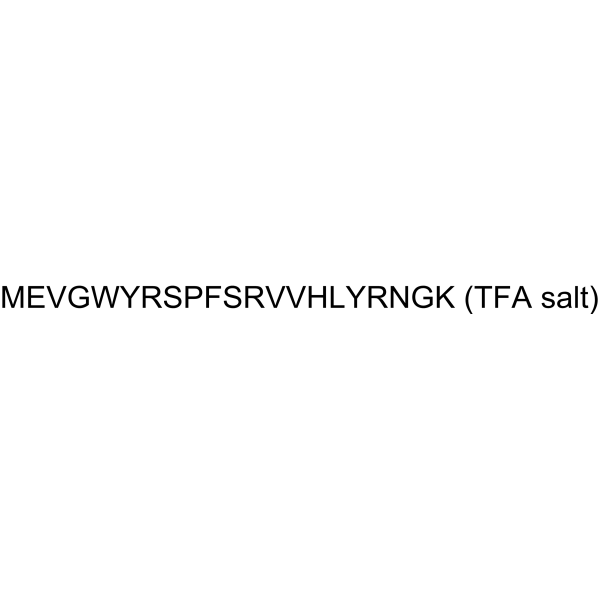
MOG (35-55) (MOG (35-55)) TFA is a minor component of CNS myelin. MOG (35-55) (TFA) has encephalitogenic activity and induces T cell proliferative. MOG (35-55) (TFA) induces Th1 cytokine response as well as relatively high levels of IgG antibodies. MOG (35-55) (TFA) produces a relapsing-remitting neurological disease with extensive plaque-like demyelination. MOG (35-55) (MOG (35-55)) TFA can be used for experimental autoimmune encephalomyelitis (EAE) modeling .
loading...
    loading...
9
9 Cited Publications
Cat. No.: HY-P1240B
Synonyms: Myelin Oligodendrocyte Glycoprotein Peptide (35-55), mouse, rat acetate
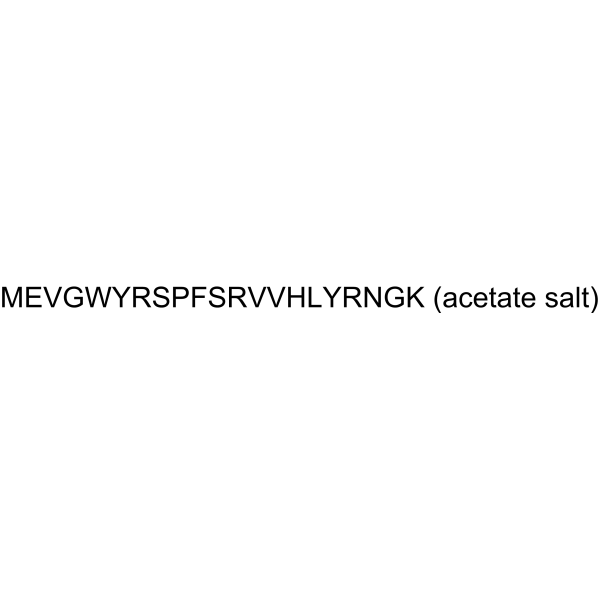
MOG (35-55) (Myelin Oligodendrocyte Glycoprotein Peptide (35-55), mouse, rat) acetate is a minor component of CNS myelin. MOG (35-55) (acetate) has encephalitogenic activity and induces T cell proliferative. MOG (35-55) (acetate) induces Th1 cytokine response as well as relatively high levels of IgG antibodies. MOG (35-55) (acetate) produces a relapsing-remitting neurological disease with extensive plaque-like demyelination. MOG (35-55) (Myelin Oligodendrocyte Glycoprotein Peptide (35-55), mouse, rat) acetate can be used for experimental autoimmune encephalomyelitis (EAE) modeling .
loading...
    loading...
6
6 Cited Publications
Cat. No.: HY-156677
CAS No.: 2648257-56-9
Purity:  99.90%
Target:  

METTL3

Research Areas:  

Cancer

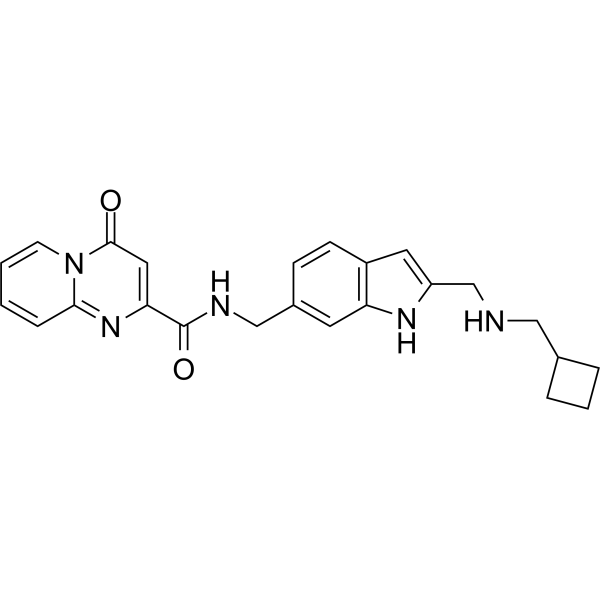
STC-15 is an orally active RNA methyltransferase METTL3 inhibitor with the activity of activating anti-tumor immunity and reshaping the tumor microenvironment. STC-15 inhibits tumor growth by activating anti-cancer immune responses associated with increased interferon signaling and synergizes with T-cell checkpoint blockade. STC-15 can be used in the study of proliferative diseases such as cancer and autoimmune diseases .
loading...
    loading...
3
3 Cited Publications
Cat. No.: HY-128879A
CAS No.: 1281681-33-1
Purity:  98.01%
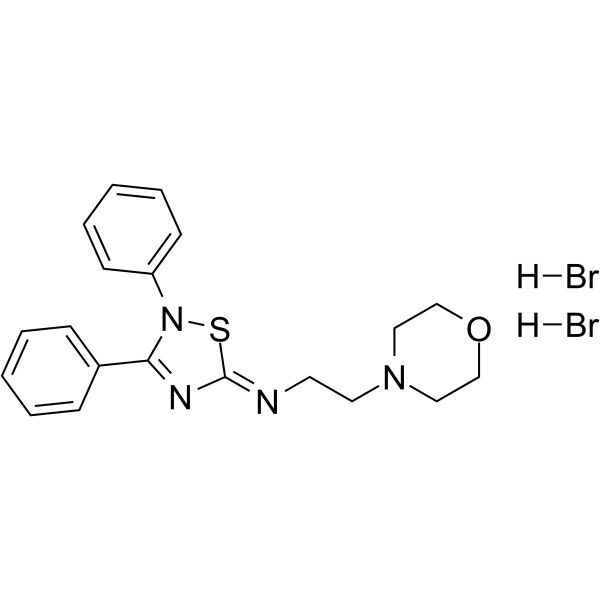
VP3.15 dihydrobromide is a highly potent, orally bioavailable, and CNS-penetrant PDE7-GSK3 dual inhibitor, with IC50 values of 1.59 μM and 0.88 μM against PDE7 and GSK3, respectively . VP3.15 dihydrobromide elevates intracellular cAMP levels, suppresses immune responses, enhances remyelination, limits excessive tau phosphorylation, and alleviates neuroinflammation and neuronal loss. VP3.15 dihydrobromide promotes oligodendrocyte precursor cell differentiation, improves in vivo remyelination, inhibits autoimmune encephalomyelitis, and mitigates germinal matrix-intraventricular hemorrhage-related brain injury, cerebral atrophy, ventricular enlargement, and cognitive impairment. VP3.15 dihydrobromide can be used in research related to multiple sclerosis and germinal matrix-intraventricular hemorrhage .
loading...
    loading...
1
1 Cited Publications
Cat. No.: HY-11062
CAS No.: 36945-98-9
Purity:  99.26%
Synonyms: AG-3-5
Target:  

TRP Channel

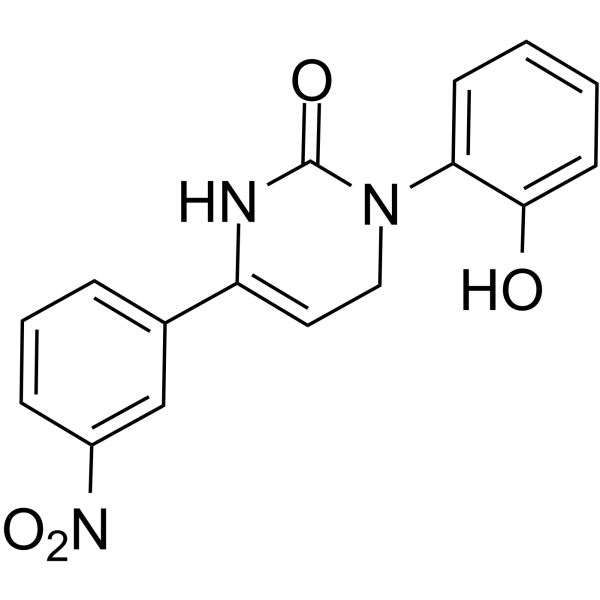
Icilin (AG-3-5) is a super-agonist of the transient receptor potential M8 (TRPM8) ion channel. Icilin activates TRPM8 in EGTA in a dose-dependent manner (EC50=1.4 μM). Icilin is a "super-cooling agent" . Icilin attenuates autoimmune neuroinflammation through modulation of the T-cell response .
loading...
    loading...
1
1 Cited Publications
Cat. No.: HY-P99414
CAS No.: 1523164-68-2
Synonyms: AMG 557
Prezalumab (AMG 557) is a humanized IgG2 monoclonal antibody targeting ICOSL. Prezalumab inhibits T cell activation and related immune responses by binding to ICOSL and blocking the interaction between ICOS and ICOSL. Prezalumab can be used in the research of autoimmune diseases and inflammatory diseases such as systemic lupus erythematosus. Recommend Isotype Controls: Human IgG2 kappa, Isotype Control (HY-P99002) .
loading...
    loading...
Cat. No.: HY-P1680
CAS No.: 148057-23-2
Synonyms: Asterin
Category:  

Natural Products Plants 500 - Internal Server Error | MedChemExpress

Oops!

Sorry, Something went wrong on our server.
Our team has been notified and is working to fix the issue.