48 Results for "

beetle

" in MedChemExpress (MCE) Product Catalog:
Products (48)

48 Results for "beetle" in MCE Product Catalog:
153
153 Publications Verification
Cat. No.: HY-12591B
CAS No.: 115144-35-9
Purity:  99.97%
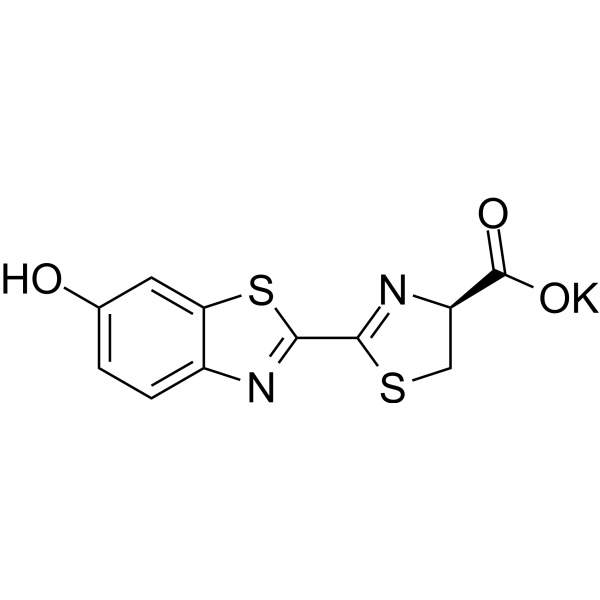
Synonyms: D-(-)-Luciferin potassium; Firefly luciferin potassium; beetle Luciferin potassium
D-luciferin potassium is the natural substrate of the enzyme luciferase (Luc) that catalyzes the production of the typical yellowgreen light of fireflies. The 560 nm chemiluminescence from this reaction peaks within seconds, with light output that is proportional to luciferase concentration when the substrate luciferin is present in excess. The luciferase (luc) gene is a popular reporter gene for research and agent screening. Chemiluminescent techniques are virtually background-free, making the luc reporter gene ideal for detecting low-level gene expression. As little as 0.02 pg of luciferase can be reliably measured in a standard scintillation counter. In addition to its role as a reporter of gene expression, luciferase is commonly used in an extremely sensitive assay for ATP . We offer the firefly luciferase (HY-P1004A), luciferin free acid (HY-12591A), as well as its water-soluble sodium salts (HY-12591) and potassium salts (HY-12591B) .
loading...
    loading...
153
153 Publications Verification
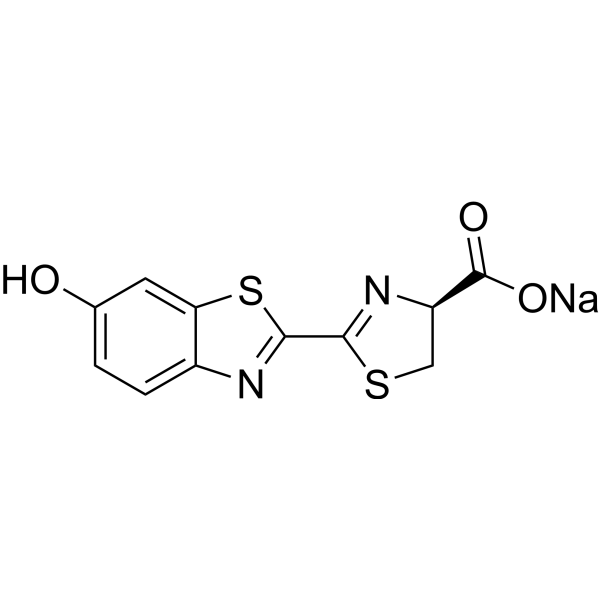
Cat. No.: HY-12591
CAS No.: 103404-75-7
Purity:  99.92%
Synonyms: D-(-)-Luciferin sodium; Firefly luciferin sodium; beetle Luciferin sodium
D-luciferin sodium is the natural substrate of the enzyme luciferase (Luc) that catalyzes the production of the typical yellowgreen light of fireflies. The 560 nm chemiluminescence from this reaction peaks within seconds, with light output that is proportional to luciferase concentration when the substrate luciferin is present in excess. The luciferase (luc) gene is a popular reporter gene for research and agent screening. Chemiluminescent techniques are virtually background-free, making the luc reporter gene ideal for detecting low-level gene expression. As little as 0.02 pg of luciferase can be reliably measured in a standard scintillation counter. In addition to its role as a reporter of gene expression, luciferase is commonly used in an extremely sensitive assay for ATP . We of er the firefly luciferase (HY-P1004A), luciferin free acid (HY-12591A), as well as its water-soluble sodium salts (HY-12591) and potassium salts (HY-12591B) .
loading...
    loading...
153
153 Publications Verification
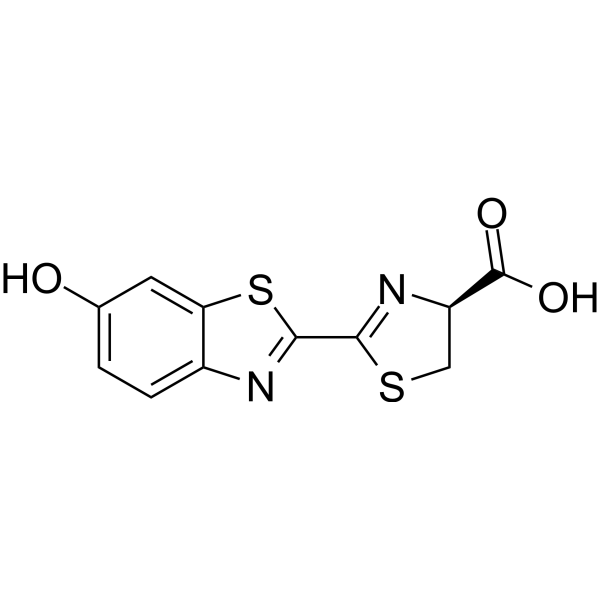
Cat. No.: HY-12591A
CAS No.: 2591-17-5
Purity:  99.54%
Synonyms: D-(-)-Luciferin; Firefly luciferin; beetle Luciferin
D-luciferin is the natural substrate of the enzyme luciferase (Luc) that catalyzes the production of the typical yellowgreen light of fireflies. The 560 nm chemiluminescence from this reaction peaks within seconds, with light output that is proportional to luciferase concentration when the substrate luciferin is present in excess. The luciferase (luc) gene is a popular reporter gene for research and agent screening. Chemiluminescent techniques are virtually background-free, making the luc reporter gene ideal for detecting low-level gene expression. As little as 0.02 pg of luciferase can be reliably measured in a standard scintillation counter. In addition to its role as a reporter of gene expression, luciferase is commonly used in an extremely sensitive assay for ATP . We of er the firefly luciferase (HY-P1004A), luciferin free acid (HY-12591A), as well as its water-soluble sodium salts (HY-12591) and potassium salts (HY-12591B) .
loading...
    loading...
1
1 Cited Publications
Cat. No.: HY-P1004A
CAS No.: 61970-00-1
Target:  

Fluorescent Dye

Research Areas:  

Others

Luciferase, firefly is the light-emitting enzyme responsible for the bioluminescence of fireflies and click beetles. Luciferase, firefly catalytic substrate is D-luciferin (HY-12591B) .
loading...
    loading...
1
1 Cited Publications
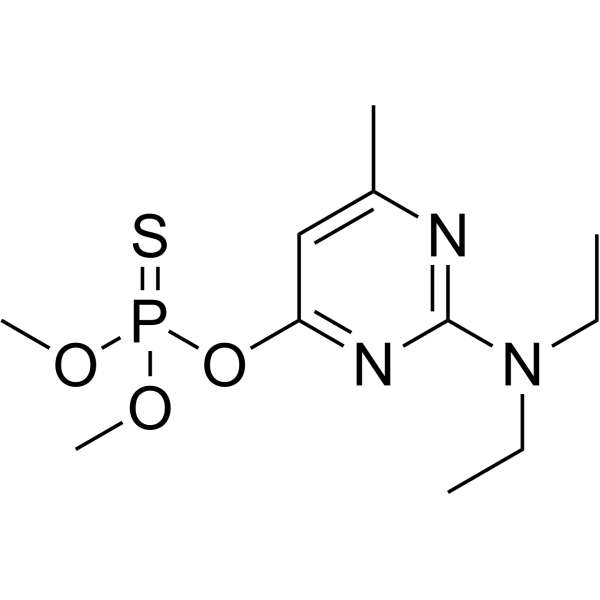
Cat. No.: HY-B1881
CAS No.: 29232-93-7
Pirimiphos-methyl is an organophosphorus insecticide and acaricide that can inhibit AChE in target organisms. Pirimiphos-methyl is often used for prevention and control of beetles, snout beetles, moths and Ephestia cautella during storage of agricultural grains .
loading...
    loading...
1
1 Cited Publications
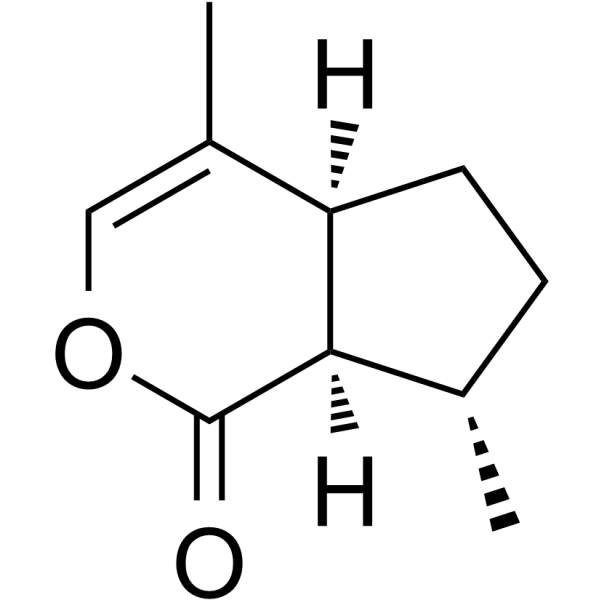
Cat. No.: HY-129434A
CAS No.: 21651-62-7
Purity:  99.69%
4aα,7α,7aα-Nepetalactone is an iridoid compound, a TRPA1 agonist, a repellent, and an attractant. 4aα,7α,7aα-Nepetalactone can be isolated from the oil of N. crispa. 4aα,7α,7aα-Nepetalactone induces repellent responses in three sap-sucking pests (Chinese psyllid, Asian citrus psyllid, and western flower thrips) via PKCα. Nepetalactone attracts two predatory lady beetles (Harmonia axyridis and Propylea japonica) through CaMKII. 4aα,7α,7aα-Nepetalactone causes mortality in Pogonomyrmex sp. ants. 4aα,7α,7aα-Nepetalactone can be used in studies related to bacterial infections and mandibulate pest infestations .
loading...
    loading...
Cat. No.: HY-W087952
CAS No.: 14898-79-4
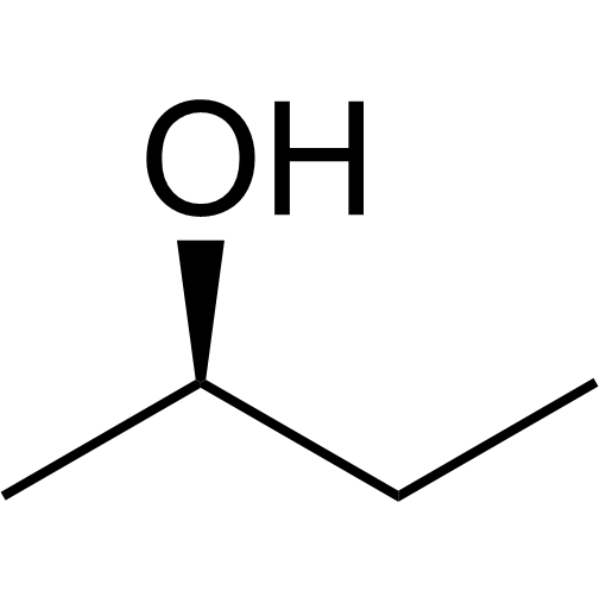
(R)-(-)-2-Butanol is the isomer of 2-Butanol, which is found in the females of the white grub beetle, Dasylepida ishigakiensis, to attract males. (R)-(-)-2-Butanol is an intermediate of pharmaceutical synthesis by coupling .
loading...
    loading...
Cat. No.: HY-N6661
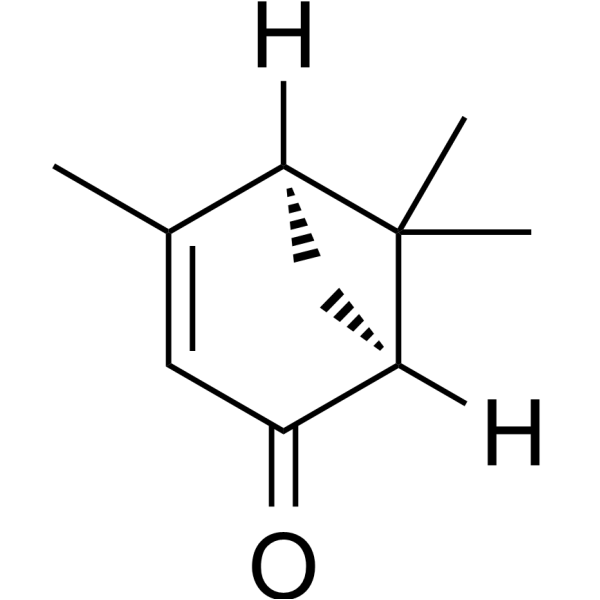
CAS No.: 1196-01-6
Synonyms: (-)-Verbenone
Category:  

Infection Other Monoterpenes Terpenoids 500 - Internal Server Error | MedChemExpress

Oops!

Sorry, Something went wrong on our server.
Our team has been notified and is working to fix the issue.