
42 Results for "

binding energy

" in MedChemExpress (MCE) Product Catalog:
Products (42)

42 Results for "binding energy" in MCE Product Catalog:

2
2 Cited Publications
Cat. No.: HY-157189
CAS No.: 898211-21-7
Purity:  99.72%
Synonyms: GPR132 antagonist 1
Target:  

G2A (GPR132)

Research Areas:  

Metabolic Disease

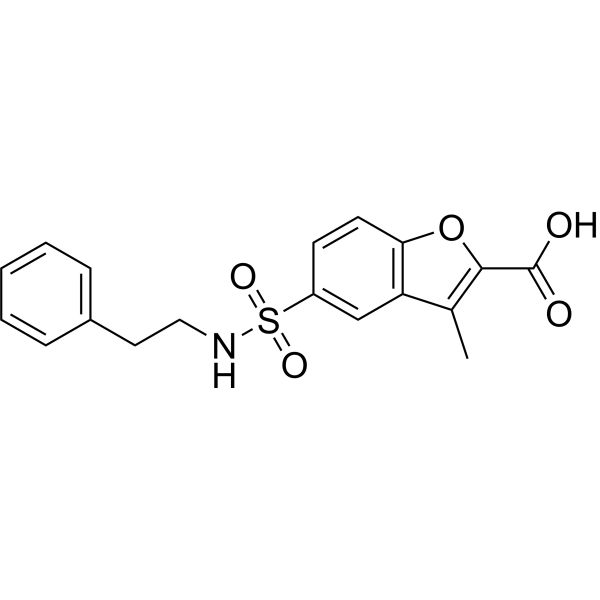
NOX-6-18 (GPR132 antagonist 1) is a GPR132 antagonist with an IC50 of 15.17 nM against the human target. NOX-6-18 inhibits GPR132 activation via interaction with non-conserved residues, blocks activities induced by endogenous agonists and 9 (S)-HODE, and exhibits selectivity for other fatty acid-binding GPCRs. NOX-6-18 regulates macrophage reprogramming, alleviates inflammatory responses, downregulates inflammatory markers and signaling pathways, and reduces the degree of hepatic steatosis and hepatic triglyceride levels. NOX-6-18 regulates metabolic homeostasis, reduces weight gain, enhances glucose metabolism, improves glucose tolerance, decreases fasting blood glucose and insulin levels, and partially reverses reductions in energy expenditure and respiratory quotient. NOX-6-18 can be used in the research of type 2 diabetes .
loading...
    loading...
1
1 Cited Publications
Cat. No.: HY-N0468
CAS No.: 63279-13-0
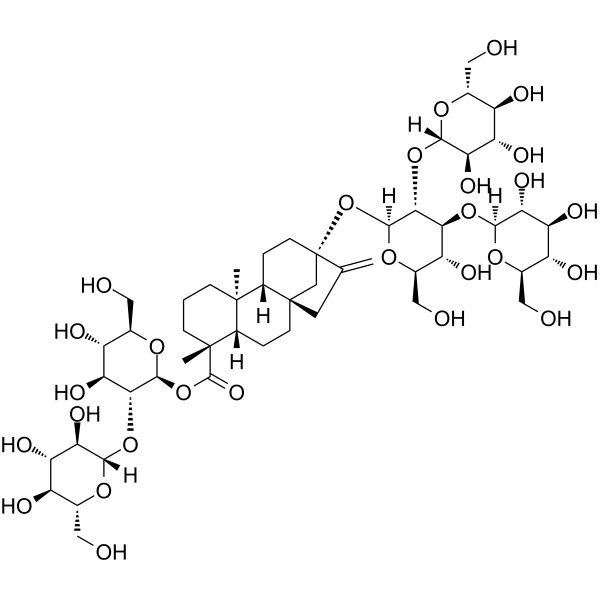
Rebaudioside D is an orally active sweetener that targets and activates FXR, modulates Acetyl-CoA Carboxylase, and inhibits 3-hydroxy-3-methylglutaryl-CoA reductase. Rebaudioside D regulates bile acid homeostasis and lipid metabolism, reduces the synthesis rates of fatty acids and cholesterol, and exerts multiple effects including anti-adipogenesis, hepatoprotection, anti-steatosis, gut microbiota modulation, enhancement of secondary bile acid metabolism, anti-endotoxin activity, regulation of bile acid transport, and inhibition of bile acid efflux. Rebaudioside D also reduces body weight gain, visceral fat accumulation, hepatic triglyceride and cholesterol accumulation, hepatic lipid peroxidation, and decreases the circulating level of lipopolysaccharide-binding protein. Rebaudioside D additionally enhances the secondary bile acid metabolic pathway of intestinal bacteria, upregulates the gene expression of ileal organic solute transporter α, and downregulates the gene expression of hepatic bile salt export pump. Rebaudioside D does not affect glucose homeostasis, alter total caloric intake or fecal energy excretion, induce weight gain, exacerbate obesity, promote hepatic steatosis, impair brown adipose tissue function, nor change skeletal muscle metabolism-related proteins. Rebaudioside D can be used in diet-induced obesity and obesity-related research .
loading...
    loading...
1
1 Cited Publications
Cat. No.: HY-P1205A
Synonyms: Melanin-concentrating hormone(human, mouse, rat) TFA
Target:  

MCHR1 (GPR24)

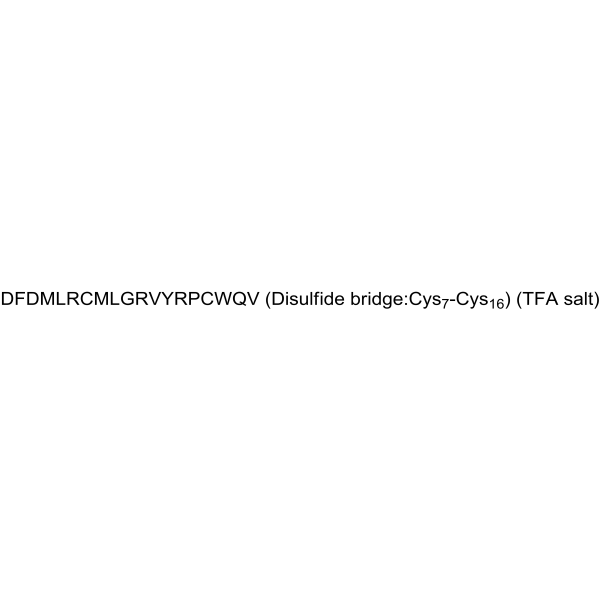
MCH (human, mouse, rat) TFA is a cyclic neuropeptide mainly synthesized by neurons in the lateral hypothalamic area. MCH (human, mouse, rat) TFA also serves as an endogenous ligand for the melanin-concentrating hormone receptor (MHC receptor), with a binding IC50 of 0.3 nM and 1.5 nM for human MCH-1R and MCH-2R, respectively; its functional EC50 values are 3.9 nM and 88.7 nM. MCH (human, mouse, rat) TFA acts not only as an orexigenic signal but also as a key integrating and regulatory hormone for energy homeostasis and sleep-wake cycles. MCH (human, mouse, rat) TFA can be used in studies related to obesity, sleep disorders, and other associated conditions .
loading...
    loading...
1
1 Cited Publications
Cat. No.: HY-P1205
CAS No.: 128315-56-0
Synonyms: Melanin-concentrating hormone(human, mouse, rat)
Target:  

MCHR1 (GPR24)

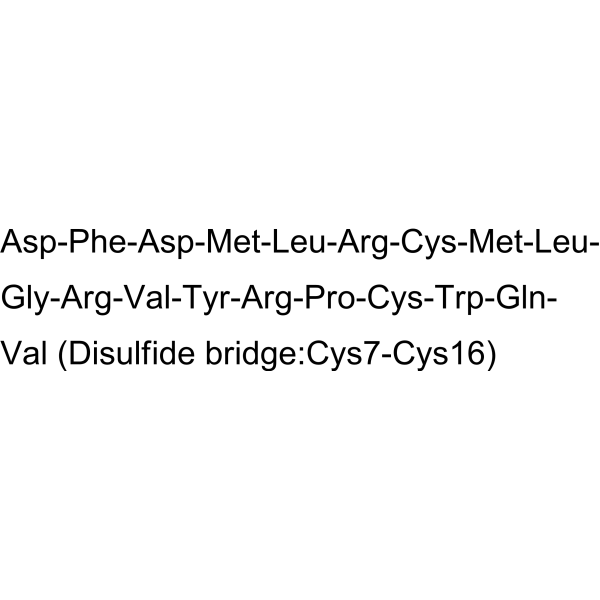
MCH (human, mouse, rat) is a cyclic neuropeptide mainly synthesized by neurons in the lateral hypothalamic area. MCH (human, mouse, rat) also serves as an endogenous ligand for the melanin-concentrating hormone receptor (MHC receptor), with a binding IC50 of 0.3 nM and 1.5 nM for human MCH-1R and MCH-2R, respectively; its functional EC50 values are 3.9 nM and 88.7 nM. MCH (human, mouse, rat) acts not only as an orexigenic signal but also as a key integrating and regulatory hormone for energy homeostasis and sleep-wake cycles. MCH (human, mouse, rat) can be used in studies related to obesity, sleep disorders, and other associated conditions .
loading...
    loading...
Cat. No.: HY-152231
CAS No.: 2740620-18-0
Purity:  99.20%
Research Areas:  

Others

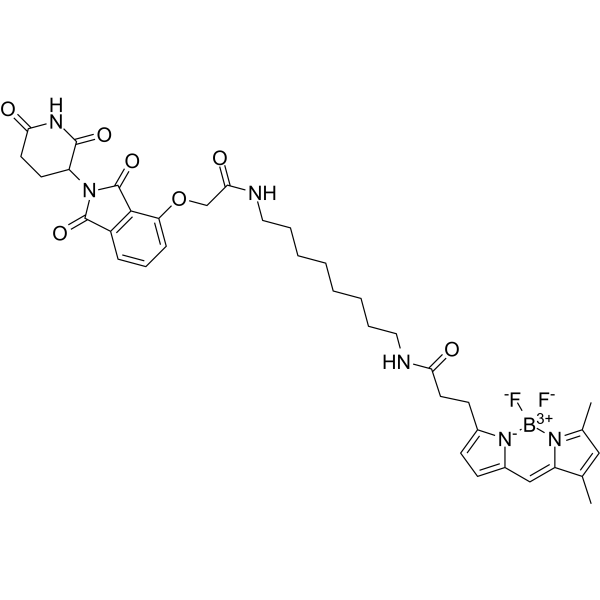
BODIPY FL thalidomide is a high-affinity and selective human cereblon (CRBN)-targeting fluorescent probe with a Kd of 3.6 nM. BODIPY FL thalidomide enables use as a probe in time-resolved fluorescence resonance energy transfer (TR-FRET) binding assays for cereblon ligands. BODIPY FL thalidomide supports development of highly sensitive, selective, stable cereblon TR-FRET binding assays (Ex/Em = 502/510 nm) .
loading...
    loading...
Cat. No.: HY-D2017
CAS No.: 1251752-59-6
Target:  

Fluorescent Dye

Research Areas:  

Others

ATTO 550 is a fluorescent dye in the orange spectral range, commonly used as a fluorescent probe for the labeling and detection of biomolecules. ATTO 550 can be used to label nucleic acids, proteins, and small molecules, and is widely applied in super-resolution imaging, flow cytometry, fluorescence lifetime imaging (FLIM), fluorescence resonance energy transfer (FRET), and fluorescence intensity-based cell uptake and binding assays. The excitation/emission wavelengths of ATTO 550 are approximately Ex/Em = 554/576 nm .
loading...
    loading...
Cat. No.: HY-B1036
CAS No.: 18507-89-6
Target:  

Parasite

Research Areas:  

Infection

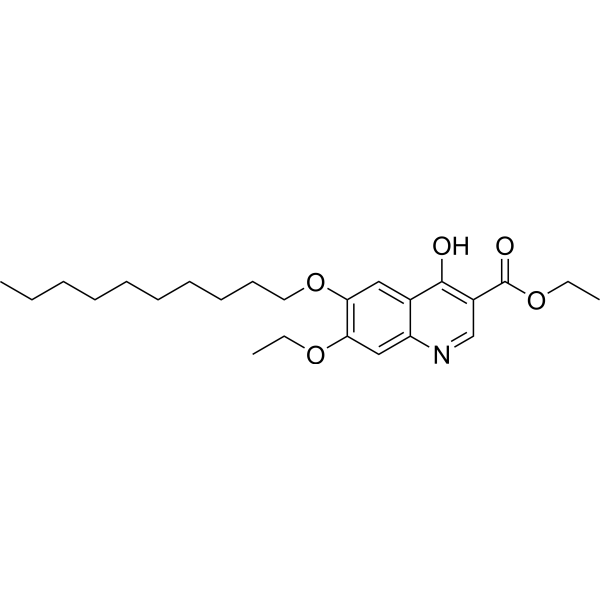
Decoquinate is an orally active, selective inhibitor of the mitochondrial bc1 complex, targeting Eimeria spp. sporozoites and first generation schizonts, and Plasmodium spp. Decoquinate inhibits electron transfer by competitively binding to the mitochondrial cytochrome b system, blocking the parasite's energy metabolism, thereby inhibiting its development and reproduction. Decoquinate has significant anticoccidial activity, preventing intestinal damage and improving host growth performance, and also has inhibitory effects on the liver and blood stages of Plasmodium. Decoquinate is mainly used in veterinary research to prevent and treat coccidiosis in ruminants and poultry .
loading...
    loading...
Cat. No.: HY-100935
CAS No.: 54239-37-1
Purity:  99.13%
Synonyms: CL 263780; (±)-2-Amino-5-[1-hydroxy-2-[(1-methylethyl)amino]ethyl]benzonitrile
Target:  

Adrenergic Receptor

Research Areas:  

Metabolic Disease

Cimaterol (CL 263780) is a β-adrenergic agonist on energy metabolism in ob/ob mice . The Kd for Cimaterol binding to the L6 β-receptor is 26 nM which is compatible with its EC50 for the stimulation of protein synthesis (approx 5 nM) .
loading...
    loading...
Cat. No.: HY-U00035
CAS No.: 1000277-08-6
Research Areas:  

Infection

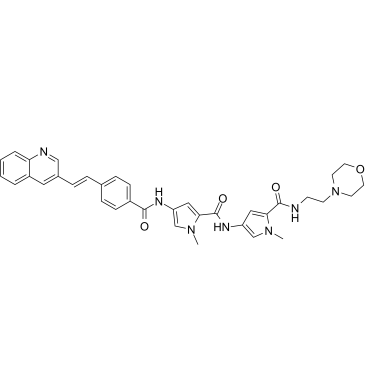
MGB-BP-3 is an orally aective Gram-positive bactericide and DNA-binding agent. MGB-BP-3 blocks transcription initiation by binding to AT-rich bacterial DNA regions, and interferes with the functions of DNA gyrase and topoisomerase IV, but does not stabilize cleavage complexes or induce the SOS response. MGB-BP-3 induces energy depletion in *Staphylococcus aureus* and inhibits spore formation in *Clostridioides difficile*, exhibiting intrinsic resistance resilience. MGB-BP-3 can be used in the research of *Clostridioides difficile*-associated diseases .
loading...
    loading...
Cat. No.: HY-128866
CAS No.: 2332841-25-3
Target:  

Bacterial

Research Areas:  

Infection

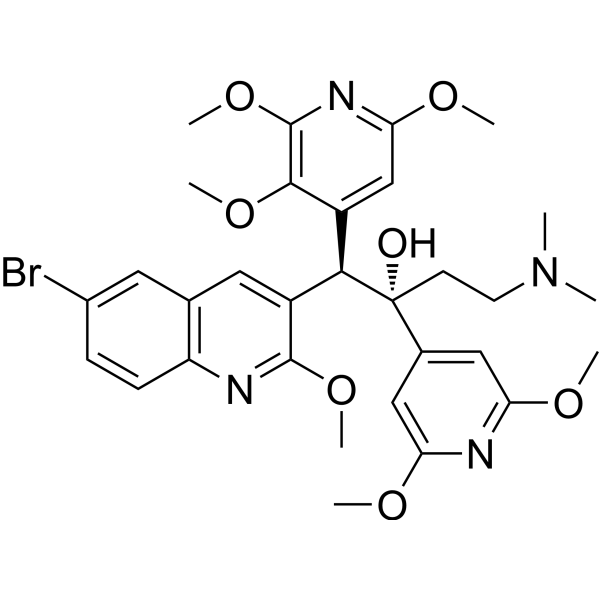
TBAJ-876 is an orally active diarylquinoline anti-Mycobacterium agent. TBAJ-876 regulates energy metabolism by targeting the c and ε subunits of Mycobacterium tuberculosis F-ATP synthase, exerts bactericidal activity against replicating Mycobacterium tuberculosis, and retains activity against strains carrying the Rv0678 mutation. TBAJ-876 undergoes N-demethylation in vivo to form its major active metabolite TBAJ-876-M3, which has lower lipophilicity and hERG potassium channel binding affinity. TBAJ-876 is well tolerated in BALB/c mice and significantly reduces the colony-forming units of Mycobacterium tuberculosis in the lungs. In addition, TBAJ-876 exhibits inhibitory activity against Mycobacterium abscessus, reduces bacterial loads in the lungs and spleens of infected mice, and shows no antagonistic effect when used in combination with common antibiotics. TBAJ-876 can be used in studies related to tuberculosis and Mycobacterium abscessus pulmonary diseases .
loading...
    loading...
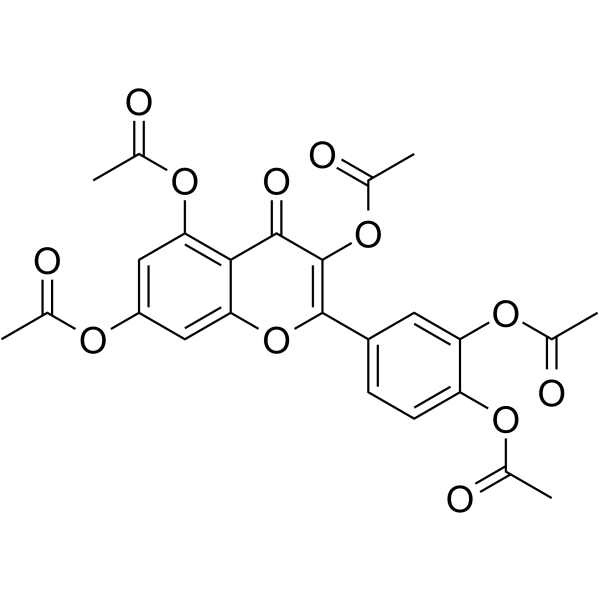
Cat. No.: HY-124512
CAS No.: 1064-06-8
Purity:  96.50%
Synonyms: Pentaacetylquercetin
Target:  

RSV

Research Areas:  

Infection Inflammation/Immunology

Quercetin pentaacetate could interact with F-protein with lower binding energy and better stability to block viral adhesion. Quercetin pentaacetate interacts with RSV and inhibit the viral adhesion on cell surface .
loading...
    loading...
Cat. No.: HY-137115
CAS No.: 334658-24-1
Target:  

Smo

Research Areas:  

Cancer

BODIPY-Cyclopamine is a fluorescently labeled ligand for the Smoothened (SMO) receptor. The activation of SMO is regulated by Patch protein, and over-activated SMO signaling pathways are associated with tumorigenesis. The NanoBRET (Nanofluorescein bioluminescence resonance energy transfer) technique used in the study can sensitively detect the resonance energy transfer between SMO and BODIPY-Cyclopamine, which can be used for high-throughput screening and kinetic analysis. Studying the binding site of BODIPY-Cyclopamine on SMO can also further explore SMO-targeted drugs .
loading...
    loading...
Cat. No.: HY-P10413
Target:  

Androgen Receptor

Research Areas:  

Metabolic Disease Endocrinology

SHBG 141-161 is a GPRC6A receptor agonist. SHBG 141-161 mimics the action of GPRC6A endogenous agonist uncarboxylated osteocalcin by binding to GPRC6A and promoting downstream signaling to increase testosterone and insulin secretion. SHBG 141-161 also reduces the affinity of GPRC6A to GDP protein by binding to the outer cell domain of GPRC6A thus affecting the dynamics of signal transduction. SHBG 141-161 can be used to study GPRC6A in energy metabolism and endocrine regulation .
loading...
    loading...
Cat. No.: HY-W587772
CAS No.: 1684398-38-6
Synonyms: MEHHTP
Target:  

Drug Metabolite

Research Areas:  

Metabolic Disease

Mono (2-ethyl-5-hydroxyhexyl) terephthalate (MEHHTP), a hydroxyl metabolite of the phthalate alternative Di-2-ethylhexyl terephthalate (DEHTP), is a liver X receptor α (LXRα) agonist with a binding energy of -7.41 kcal/mol. Mono (2-ethyl-5-hydroxyhexyl) terephthalate upregulates LXRα downstream targets such as SREBP-1c and FASN and increases lipogenic enzyme activity in hepatocytes, and elevating triglyceride (TG) levels. Mono (2-ethyl-5-hydroxyhexyl) terephthalate is promising for research of nonalcoholic fatty liver disease (NAFLD) .
loading...
    loading...
Cat. No.: HY-125385
CAS No.: 187099-99-6
Purity:  ≥95.0%
Target:  

Endogenous Metabolite

Research Areas:  

Metabolic Disease

Sulforhodamine 101 DHPE is a fluorescent probe made from the conjugation of the phospholipid 1,2-dipalmitoyl-sn-glycero-3-PE to sulforhodamine 101, a red fluorescent dye that displays excitation/emission spectra of 586/605 nm, respectively. It integrates into phospholipid bilayers and has been used for imaging of solid supported lipid bilayers, detection of protein-ligand binding on bilayers, and to monitor colocalization of lipid probes in liposomes via resonance energy transfer (RET).
loading...
    loading...
Cat. No.: HY-144800
CAS No.: 219542-52-6
Purity:  ≥95.0%
Target:  

SARS-CoV

Research Areas:  

Infection

FWM-1 is a potent SARS-COV-2 NSP13 helicase enzyme inhibitor with binding free energy equals -328.6 kcal/mol. FWM-1 effectively disrupts the binding of ATP to the SARS-COV2 helicase enzyme .
loading...
    loading...
Cat. No.: HY-106969A
CAS No.: 170142-29-7
ZD 9379 sodium is a competitive glycine/NMDA receptor antagonist, with an IC50 value of 75 nM (glutamate site). ZD 9379 sodium selectively antagonizes the glycine binding site (GlyB site) on the NMDA receptor, inhibiting the binding of glycine to the NMDA receptor and alleviating excitotoxicity. ZD 9379 sodium reduces the frequency of cortical spreading depression (SDs), alleviates energy depletion in the ischemic penumbra, and delays the expansion of infarction. ZD 9379 sodium reduces the infarct volume and improves neurological function in mouse models. ZD 9379 sodium can be used in studies of acute ischemic stroke, etc .
loading...
    loading...
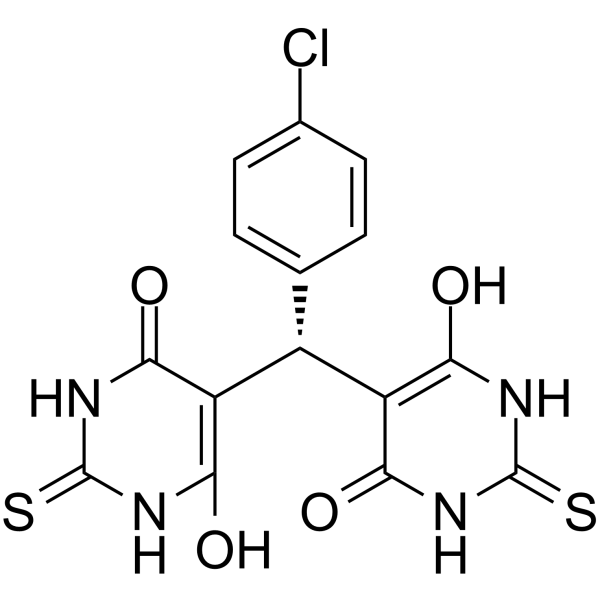
Cat. No.: HY-170811
CAS No.: 27631-29-4
Target:  

Cholinesterase (ChE)

Research Areas:  

Neurological Disease

DCDQ is a potent acetylcholinesterase (AChE) inhibitor. DCDQ shows a strong binding affinity with the 4EY7 protein (binding energy: −8.2 kcal/mol). DCDQ is promising for research of Alzheimer's disease (AD) .
loading...
    loading...
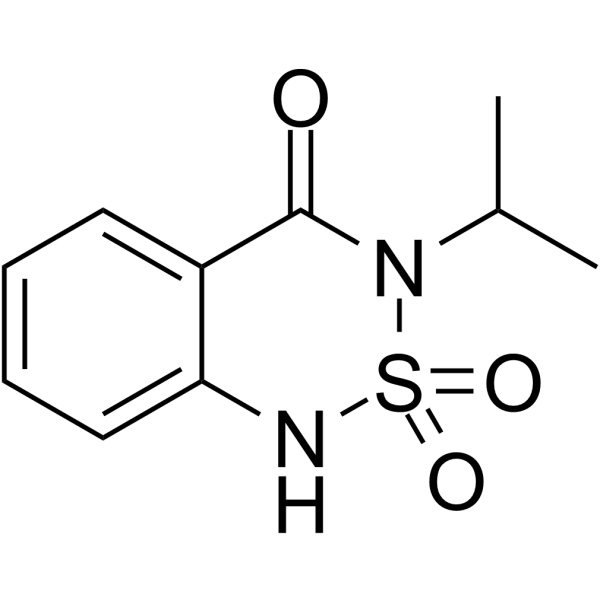
Cat. No.: HY-B2039
CAS No.: 25057-89-0
Research Areas:  

Others

Bentazone is a selective post-emergence herbicide and a Photosystem II inhibitor targeting the quinone B binding site, with activity against broadleaf weeds. Bentazone interferes with photosynthetic electron transport, blocks sunlight-dependent energy production, and acts as a phytotoxin to induce leaf damage, growth inhibition, lipid peroxidation, and reduced chlorophyll content .
loading...
    loading...
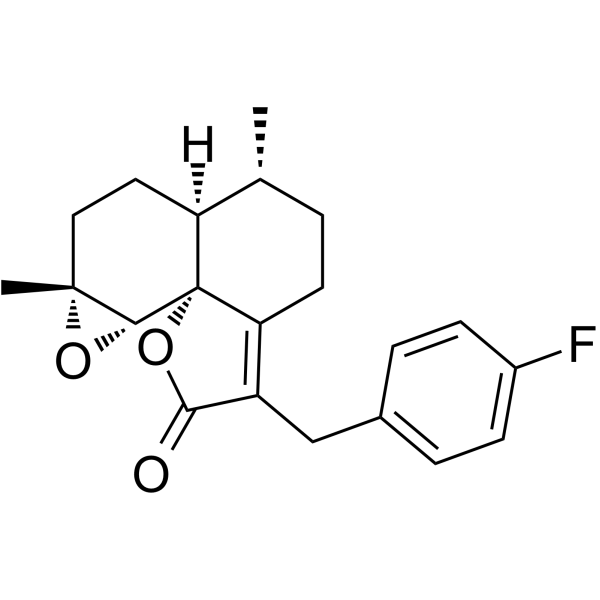
Cat. No.: HY-145857
Target:  

HSP Apoptosis

Research Areas:  

Cancer

GRP78-IN-1 exhibits several interactions with GRP78 residues with binding energy of -8.07 kcal/mol. GRP78-IN-1 shows the potent cytotoxic, anti-proliferative in cancer cells. GRP78-IN-1 exhibits promising apoptosis in breast cancer cells and stalls wound healing properties .
loading...
    loading...

