223 Results for "

biomaterials

" in MedChemExpress (MCE) Product Catalog:
Products (223)

223 Results for "biomaterials" in MCE Product Catalog:

10
10 Publications Verification
Cat. No.: HY-Y0623
CAS No.: 6066-82-6
Synonyms: HOSu; 1-Hydroxy-2,5-pyrrolidinedione
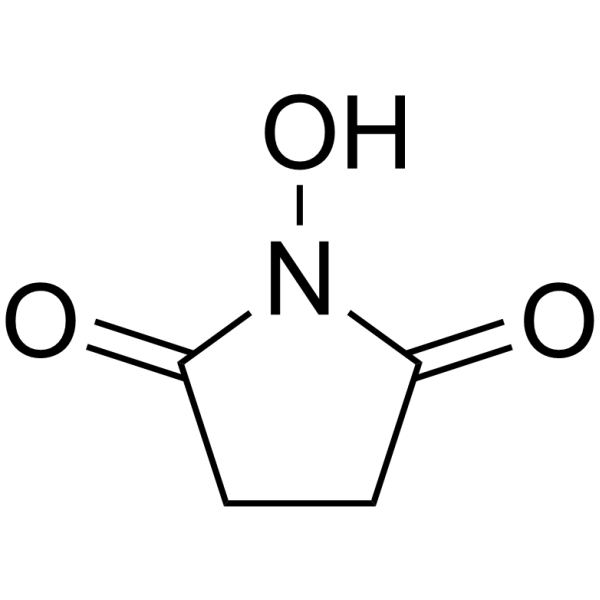
N-Hydroxysuccinimide (HOSu; 1-Hydroxy-2,5-pyrrolidinedione) is a covalent crosslinker commonly used in bioconjugation technology with a primary amine group. N-Hydroxysuccinimide reacts with amino groups (-NH2) to form a stable amide bond, which can modify amino-containing biomolecules. N-Hydroxysuccinimide can be used, for example, for protein labeling with fluorescent dyes and enzymes, surface activation of chromatography supports, microbeads, nanoparticles and microarray slides, and chemical synthesis of peptides. N-Hydroxysuccinimide has a wide range of applications in biomaterial synthesis (such as collagen, chitosan crosslinking), drug delivery systems (such as hydrogel preparation) and tissue engineering .
loading...
    loading...
5
5 Cited Publications
Cat. No.: HY-B2144A
CAS No.: 9012-76-4
Synonyms: Deacetylated chitin (MW 150000) (≥85% deacetylated); Poly(D-glucosamine) (MW 150000) (≥85% deacetylated)
Research Areas:  

Infection Cancer

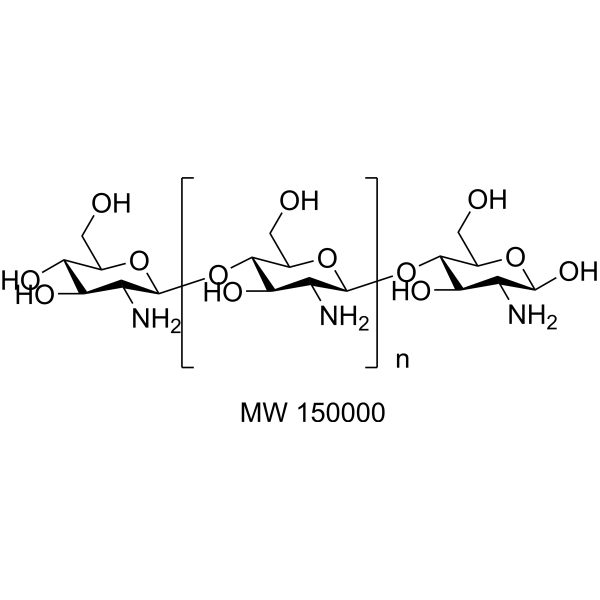
Chitosan (MW 150000) (Deacetylated chitin (MW 150000)) is a polycationic linear polysaccharide derived from chitin with the molecular weight of 150000. Chitosan is an versatile biomaterial because of its non-toxicity, low allergenicity, biocompatibility and biodegradability. Chitosan also has antitumor, antibacterial, antifungal, and antioxidant activities .
loading...
    loading...
2
2 Cited Publications
Cat. No.: HY-Y1878C
CAS No.: 7758-98-7
Synonyms: Cupric sulfate anhydrous, 99%
Anhydrous copper sulfate, 99% (Cupric sulfate anhydrous, 99%) is an orally administerable disinfectant. Anhydrous copper sulfate, 99% can be used as a biomaterial or organic compound related to life sciences research, and it can increase the Cu content in rat organs .
loading...
    loading...
2
2 Cited Publications
Cat. No.: HY-B2144B
CAS No.: 9012-76-4
Synonyms: Deacetylated chitin (MW 30000) (≥85% deacetylated); Poly(D-glucosamine) (MW 30000) (≥85% deacetylated)
Research Areas:  

Infection Cancer

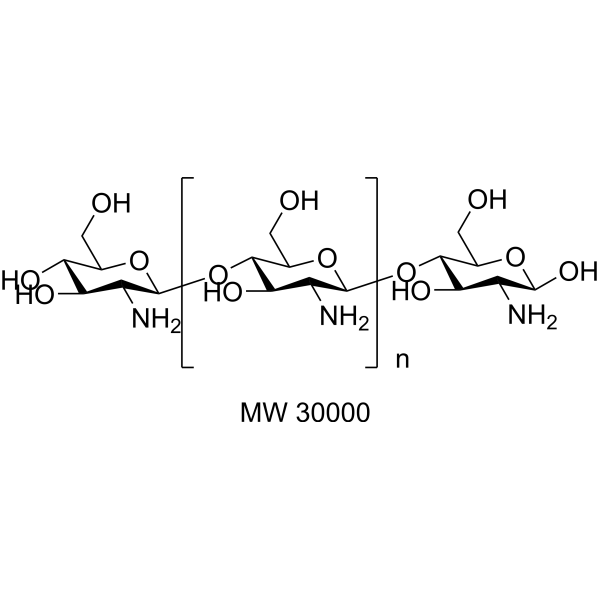
Chitosan (MW 30000) (Deacetylated chitin (MW 30000)) is a polycationic linear polysaccharide derived from chitin with the molecular weight of 30000. Chitosan is an versatile biomaterial because of its non-toxicity, low allergenicity, biocompatibility and biodegradability. Chitosan also has antitumor, antibacterial, antifungal, and antioxidant activities .
loading...
    loading...
2
2 Cited Publications
Cat. No.: HY-Y1168
CAS No.: 3945-69-5
Synonyms: 4-(4,6-Dimethoxy-1,3,5-triazin-2-yl)-4-methylmorpholinium chloride
DMTMM (4-(4,6-dimethoxy-1,3,5-triazine-2-yl)-4-methylmorpholinium chloride) is a coupling agent. DMTMM can activate carboxyl groups and promote the formation of amide bonds. DMTMM plays an important role in promoting the chemical modification of biomacromolecules such as polysaccharides and proteins. DMTMM can be used for research of tissue engineering, breast cancer, corneal regeneration, and biomaterials .
loading...
    loading...
1
1 Cited Publications
Cat. No.: HY-B2205
CAS No.: 1343-88-0
Synonyms: Activated magnesium silicate
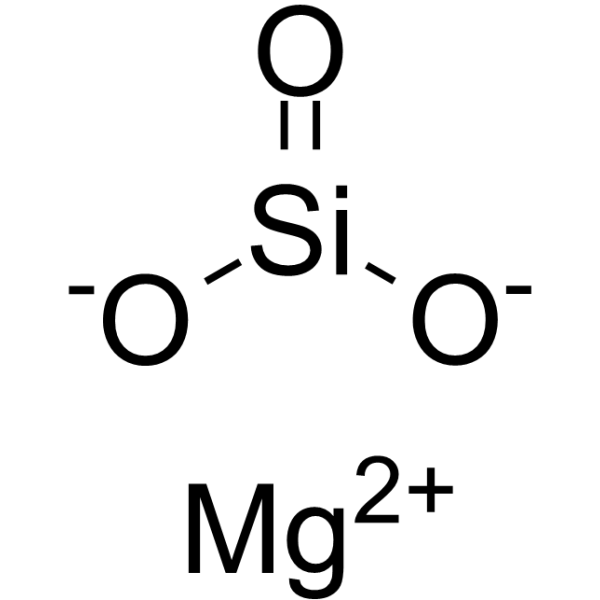
Magnesium silicate (Activated magnesium silicate) is an orally active compound composed of magnesium oxide (MgO) and silicon dioxide (SiO2). Magnesium silicate can be used in the preparation of food additives, antacids and anti-ulcer agents. Magnesium silicate is also a piezoelectric biomaterial, deodorant, decolorizing agent and antifungal agent .
loading...
    loading...
1
1 Cited Publications
Cat. No.: HY-B2235B
CAS No.: 8002-43-5
Synonyms: L-α-Phosphatidylcholine (egg yolk, Type XVI-E), 99%, lyophilized powder; 1,2-Diacyl-sn-glycero-3-phosphocholine (egg yolk, Type XVI-E), 99%; egg yolk Lecithins, Type XVI-E, 99%
L-α-Lecithin (egg yolk, Type XVI-E), 99% (L-α-Phosphatidylcholine (egg yolk, Type XVI-E), 99%) is an active biomaterial. L-α-Lecithin (egg yolk, Type XVI-E), 99% forms liposomes with compounds (PF or BA). L-α-Lecithin (egg yolk, Type XVI-E), 99% increases membrane fluidity and affects microemulsion stability and fluorescence intensity stained with Nile red (HY-D0718). L-α-Lecithin (egg yolk, Type XVI-E), 99% It can be used for cell membrane structure research, biological membrane potential research, and liposome research .
loading...
    loading...
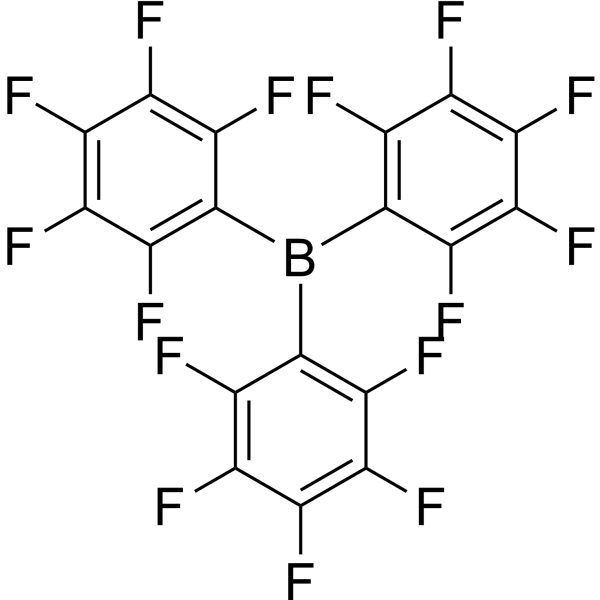
Cat. No.: HY-W008525
CAS No.: 1109-15-5
Tris (perfluorophenyl) borane is a biochemical reagent that can be used as a biomaterial or organic compound for life science-related research .
loading...
    loading...
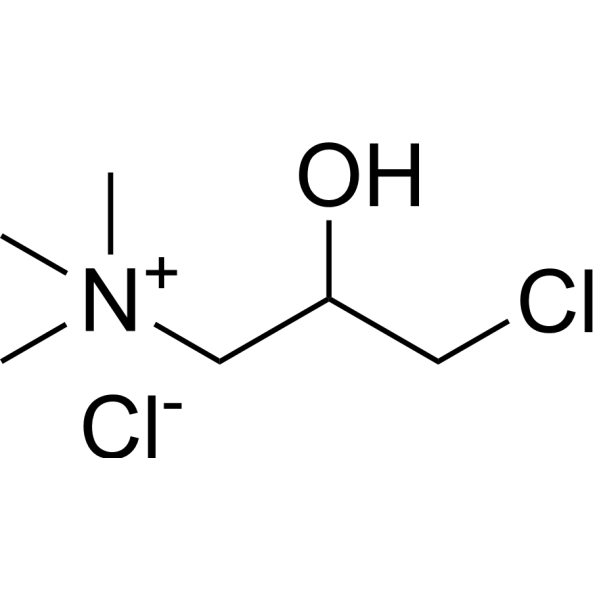
Cat. No.: HY-D0176
CAS No.: 3327-22-8
Synonyms: (3-Chloro-2-hydroxypropyl)trimethylammonium chloride
Dextrosil KA ((3-Chloro-2-hydroxypropyl) trimethylammonium (chloride)) is a biological dye and indicator that can be used as a biomaterial or organic compound in life science-related research .
loading...
    loading...
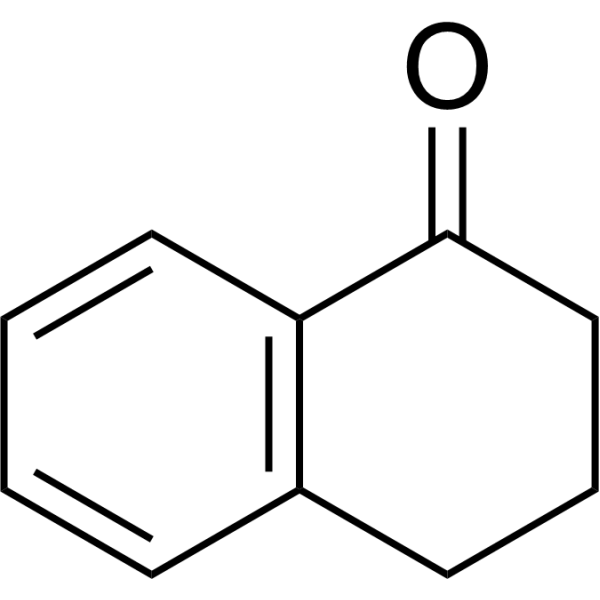
Cat. No.: HY-76194A
CAS No.: 529-34-0
Synonyms: 3,4-Dihydro-1(2H)-naphthalenone
3,4-Dihydronaphthalen-1-one (3,4-Dihydro-1 (2H)-naphthalenone) is a biochemical reagent that can serve as a biomaterial or organic compound for life science-related research .
loading...
    loading...
Cat. No.: HY-W392100C
CAS No.: 36890-68-3
Synonyms: PCL-diol (MW 10000)
Polycaprolactone diol (MW 10000) is a biocompatible, biodegradable polymer and also a castor oil-based polyurethane additive. Polycaprolactone diol (MW 10000) is used in studies of wound dressings and non-absorbable suture biomaterials .
loading...
    loading...
Cat. No.: HY-W105775
CAS No.: 2226-88-2
Synonyms: Ammonium succinate
Diammonium succinate (Ammonium succinate) is a hydrophobic hydrocarbon compound that can be used to study its interaction with microbial cells, especially the mechanisms of degradation and bioavailability. Diammonium succinate is a biomaterial or organic compound that can be used as a biomaterial or organic compound related to life science research.
loading...
    loading...
Cat. No.: HY-173592
Synonyms: KerMA
Keratin methacryloyl (KerMA) is a photosensitive biomaterial that can be used to synthesize hydrogels .
loading...
    loading...
Cat. No.: HY-W011579
CAS No.: 4551-69-3
4-Benzoyl-3-methyl-1-phenyl-5-pyrazolone, is a heterocyclic compound with a five-membered ring structure, which can be used as a starting material for organic synthesis, a reagent for organic transformation, and a biological probe for studying biological processes. 4-Benzoyl-3-methyl-1-phenyl-5-pyrazolone is a biomaterial or organic compound that can be used as a research-related biomaterial or organic compound in life sciences .
loading...
    loading...
Cat. No.: HY-W105411
CAS No.: 6342-17-2
N,N'-Diacryloylpiperazine can be used to synthesize bioconjugates and other compounds, and can also be used in the fields of medicine and biotechnology. N,N'-Diacryloylpiperazine is a biomaterial or organic compound that can be used for life science research .
loading...
    loading...
Cat. No.: HY-Y1184C
CAS No.: 298-14-6
Synonyms: Potassium hydrogen carbonate, meets analytical specification of Ph. Eur., BP, USP, E501, 99.5%(T)
Potassium bicarbonate (Potassium hydrogen carbonate) is a commonly used biochemical reagent. Potassium bicarbonate, meets analytical specification of Ph. Eur., BP, USP, E501, 99.5%(T) can be used as a biomaterial related to life science research .
loading...
    loading...
Cat. No.: HY-21323
CAS No.: 121-91-5
Research Areas:  

Others

Isophthalic acid is a biomaterial or organic compound that can be used in life science research .
loading...
    loading...
Cat. No.: HY-W243303C
CAS No.: 9003-01-4
Poly (acrylic acid) (MW 4000000) is an anionic polyacrylic acid. Poly (acrylic acid) (MW 4000000) acts as a corrosion inhibitor and surface stabilizer. Poly (acrylic acid) (MW 4000000) serves as a biomaterial or organic compound for life science research .
loading...
    loading...
Cat. No.: HY-164068
Cross-linked sodium hyaluronate gel is a biomaterial formed by cross-linking sodium hyaluronate. Cross-linked sodium hyaluronate gel has good moisturizing properties, viscoelasticity and biocompatibility. Cross-linked sodium hyaluronate gel can be used for the treatment of arthritis and the development of auxiliary materials in ophthalmic surgery .
loading...
    loading...
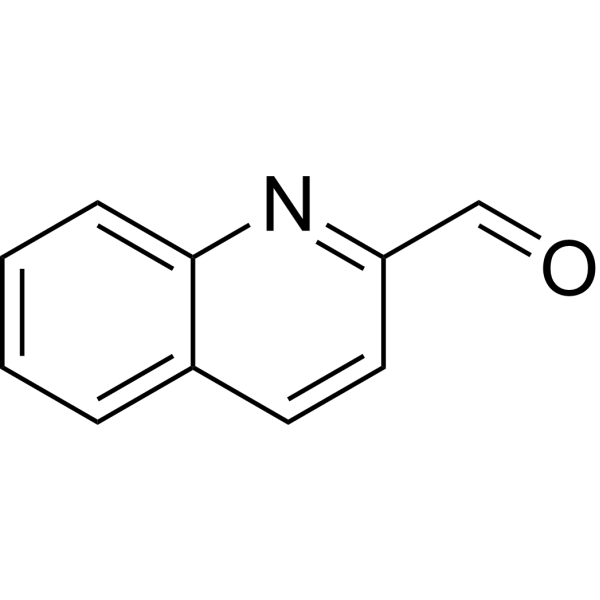
Cat. No.: HY-W008168
CAS No.: 5470-96-2
Synonyms: 2-Quinolinecarboxaldehyde
Quinoline-2-carboxaldehyde (2-Quinolinecarboxaldehyde) is a quinoline derivative that serves as a synthetic precursor for Schiff base copper complexes. Quinoline-2-carboxaldehyde is applicable to research related to the synthetic design of biomaterials or organic compounds, such as fluorescent sensors .
loading...
    loading...

