112 Results for "

biomedical chips

" in MedChemExpress (MCE) Product Catalog:
Products (112)

112 Results for "biomedical chips" in MCE Product Catalog:

34
34 Publications Verification
Cat. No.: HY-W018746
CAS No.: 139-33-3
Synonyms: Ethylenediaminetetraacetic acid disodium
EDTA disodium salt, also known as ethylenediaminetetraacetic acid disodium, belongs to the chelating agent category, which is formed by chelating a central metal ion with four carboxylate groups and two amine groups. This compound, with its ability to bind and chelate metal ions such as calcium, magnesium and iron, is commonly used in a variety of applications, including industrial, medical and research settings. It is used as a preservative in food and beverage, as a stabilizer in medicine, as a chelating agent in water treatment, and as a reagent in biochemical and biomedical research. In addition, EDTA disodium salt has been studied for potential research effects such as improving heavy metal poisoning and cardiovascular disease.
loading...
    loading...
12
12 Cited Publications
Cat. No.: HY-128868E
CAS No.: 60842-46-8
FITC-Dextran (MW 70000) is a compound belonging to the class of fluorescent dyes. It is commonly used in biomedical research as a tracer molecule to label and track cells or other biological matter. FITC-Dextran consists of fluorescein isothiocyanate (FITC) and dextran, a complex carbohydrate derived from starch. The combination of the two creates a stable fluorescent tracer that can be viewed under a microscope or quantified using specialized detection instruments.
loading...
    loading...
4
4 Cited Publications
Cat. No.: HY-128868C
CAS No.: 60842-46-8
FITC-Dextran (MW 20000) is a compound belonging to the class of fluorescent dyes. It is commonly used in biomedical research as a tracer molecule to label and track cells or other biological matter. FITC-Dextran consists of fluorescein isothiocyanate (FITC) and dextran, a complex carbohydrate derived from starch. The combination of the two creates a stable fluorescent tracer that can be viewed under a microscope or quantified using specialized detection instruments.
loading...
    loading...
3
3 Cited Publications
Cat. No.: HY-Y0850
CAS No.: 9002-89-5
Research Areas:  

Neurological Disease

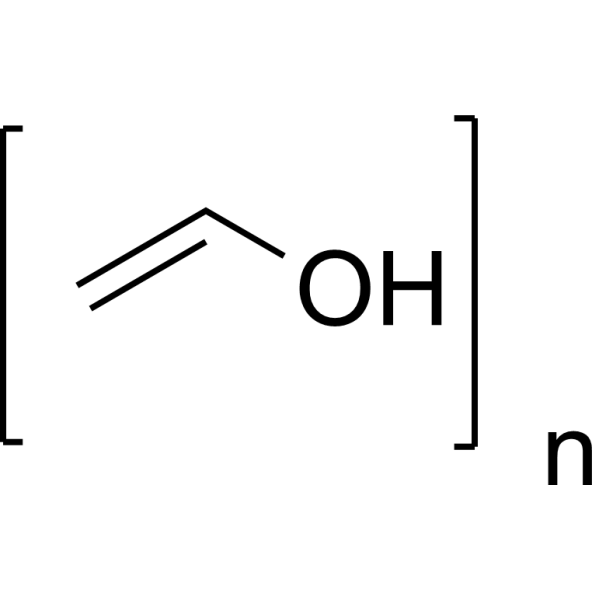
Polyvinyl alcohol (Mw 146000-186000, 99+% hydrolyzed) is a non-biodegradable, hydrophilic, odorless biomedical polymer with cell adhesion/proliferation inhibition, peripheral nerve regeneration induction, dissolution enhancement, and non-toxic, biocompatible properties .
loading...
    loading...
3
3 Cited Publications
Cat. No.: HY-W075707
CAS No.: 55266-17-6
Synonyms: Iron(III) meso-Tetra(4-carboxyphenyl)porphine chloride
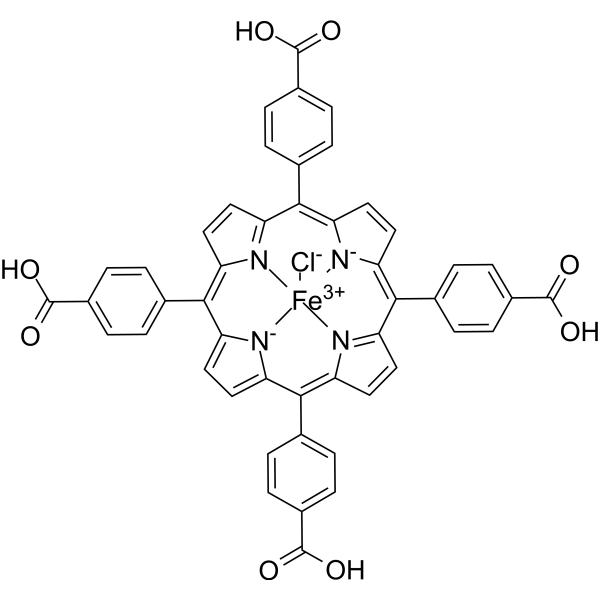
FeTCPP chloride (Iron(III) meso-Tetra(4-carboxyphenyl)porphine chloride) is a metallic porphyrin compound formed by the coordination of a central iron ion (Fe 3+) with four 4-carboxyphenylporphyrins (TCPP). FeTCPP chloride can be used as a catalyst for catalytic, electrochemical, photochemical and biomedical research. FeTCPP chloride has high photocatalytic performance for p-nitrophenol under visible light. FeTCPP chloride also has peroxisase-like activity, which is used in bionic catalysis research .
loading...
    loading...
2
2 Cited Publications
Cat. No.: HY-W004563
CAS No.: 484-11-7
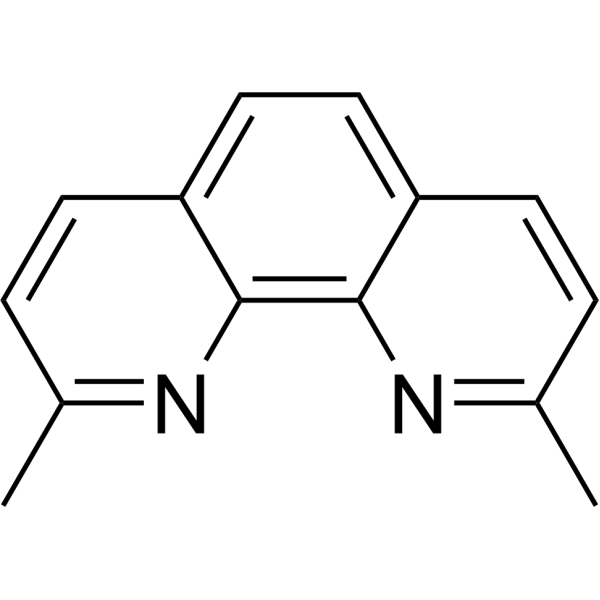
Neocuproine is an organic compound commonly used as a complexing reagent and copper ion detector. It can form stable complexes with copper ions, and can play a catalytic role in certain chemical reactions and analytical methods. In addition, this compound is also widely used in some biomedical fields, such as in the study of copper metabolism disorders and neurodegenerative diseases
loading...
    loading...
2
2 Cited Publications
Cat. No.: HY-18619
CAS No.: 36341-25-0
Research Areas:  

Cancer

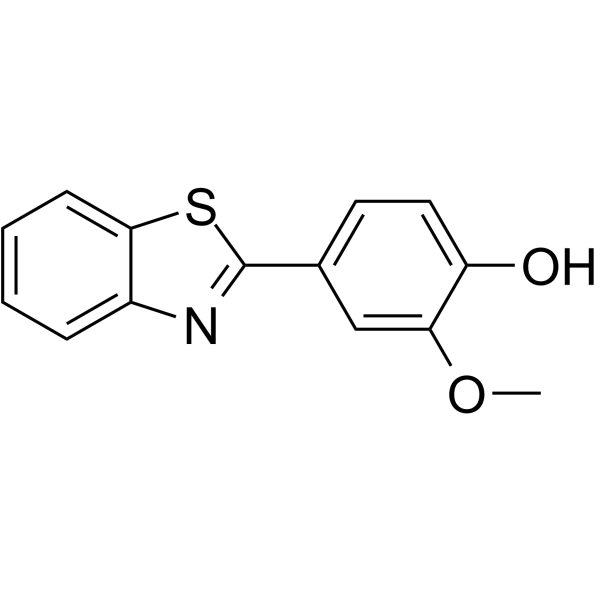
YL-109 is an antitumor agent that can induce carboxyl terminus of Hsp70-interacting protein (CHIP) expression through aryl hydrocarbon receptor (AhR) signaling. YL-109 has ability to inhibit breast cancer cell growth and invasiveness .
loading...
    loading...
1
1 Cited Publications
Cat. No.: HY-P2738
CAS No.: 9007-34-5
Collagen, Type I, from bovine achilles tendon are extracellular matrix proteins and show many applications in food, cosmetic, pharmaceutical and biomedical industries. This product is enzymatically hydrolyzed collagen peptide .
loading...
    loading...
1
1 Cited Publications
Cat. No.: HY-128868I
CAS No.: 60842-46-8
FITC-Dextran (MW 2000000) is a compound belonging to the class of fluorescent dyes. It is commonly used in biomedical research as a tracer molecule to label and track cells or other biological matter. FITC-Dextran consists of fluorescein isothiocyanate (FITC) and dextran, a complex carbohydrate derived from starch. The combination of the two creates a stable fluorescent tracer that can be viewed under a microscope or quantified using specialized detection instruments.
loading...
    loading...
1
1 Cited Publications
Cat. No.: HY-B2221C
CAS No.: 9000-11-7
Synonyms: Carboxymethyl cellulose CM-32; CM-32
CM Cellulose CM-32 (Carboxymethyl cellulose) is a cellulose derivative. CM Cellulose CM-32 has a wide range of applications in the biomedical field, including tissue engineering, wound dressing, absorbent nonwovens, fabrication of 3D-scaffolds for biocompatible implants, artificial organs or mimics of extracellular polymeric matrix and diagnosis of various diseases. CM Cellulose CM-32 can decrease osteoclasts formation. CM Cellulose CM-32 can be used as a biological material or organic compound for life science related research .
loading...
    loading...
1
1 Cited Publications
Cat. No.: HY-W123005
CAS No.: 58537-94-3
Research Areas:  

Others

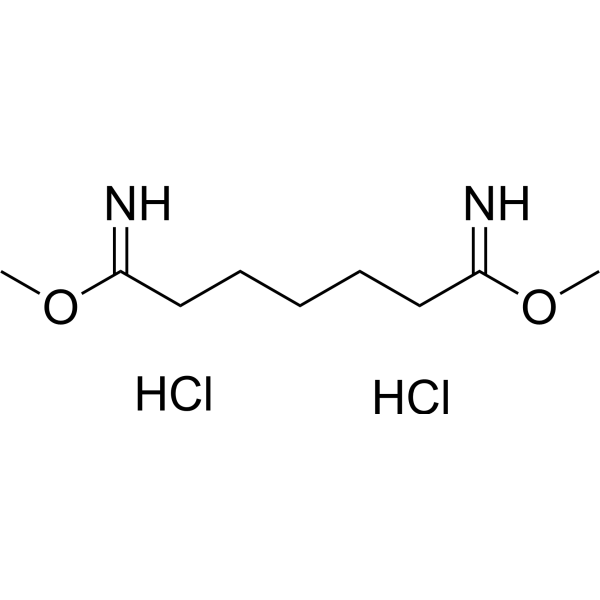
Dimethyl pimelimidate dihydrochloride is a bifunctional imidoester protein-protein crosslinker used in chromatin immunoprecipitation (ChIP) assays .
loading...
    loading...
1
1 Cited Publications
Cat. No.: HY-W036410
CAS No.: 13822-56-5
Synonyms: 3-Aminopropyltrimethoxysilane; APTMS
Research Areas:  

Others

Aminopropyltrimethoxysilane (3-Aminopropyltrimethoxysilane; APTMS) is an aminosilane coupling agent and self-assembled molecule that can form self-assembled monolayers or multilayers on the surfaces of silicon-based materials, platinum, pullulan (Viscosity (10%): 15-180 mPa.s) (HY-W145522), and magnesium alloys through silanization or amine-mediated adsorption, serving for surface functionalization and performance regulation. Aminopropyltrimethoxysilane is applicable in research related to biomedical materials, antibacterial materials, and corrosion protection .
loading...
    loading...
1
1 Cited Publications
Cat. No.: HY-W250312
CAS No.: 24980-41-4
Polycaprolactone is a biodegradable polyester commonly used in various biomedical and industrial applications. It is a white waxy polymer that can be molded into various shapes and forms. Polycaprolactone has various properties suitable for these applications, including low melting point, high flexibility and slow biodegradation rate. It can be used as a raw material for the production of tissue engineering scaffolds, drug delivery systems, and medical implants. In addition, it is used as a binder in the production of adhesives, coatings and paints.
loading...
    loading...
Cat. No.: HY-126389
CAS No.: 1398-61-4
Chitin, from crab carapace (powder),biomedical research grade is a long-chain polymer of N-acetylglucosamine with β-(1-4) linkages. Chitin, from crab carapace (powder),biomedical research grade is found in the exoskeleton of crabs. Chitin, from crab carapace (powder),biomedical research grade inhibits the activation of NF-κB p65, alters the translocation of NF-κB p65 to the nucleus, and interacts with the cell wall of Candida species. Chitin, from crab carapace (powder),biomedical research grade exerts antifungal and anti-inflammatory effects. Chitin, from crab carapace (powder),biomedical research grade can be used in the research of gastric ulcer and candidiasis .
loading...
    loading...
Cat. No.: HY-145898
CAS No.: 2095780-08-6
Purity:  ≥95.0%
Synonyms: 14-D-Valine-TPL
Target:  

c-Myc Molecular Glues

Research Areas:  

Cancer

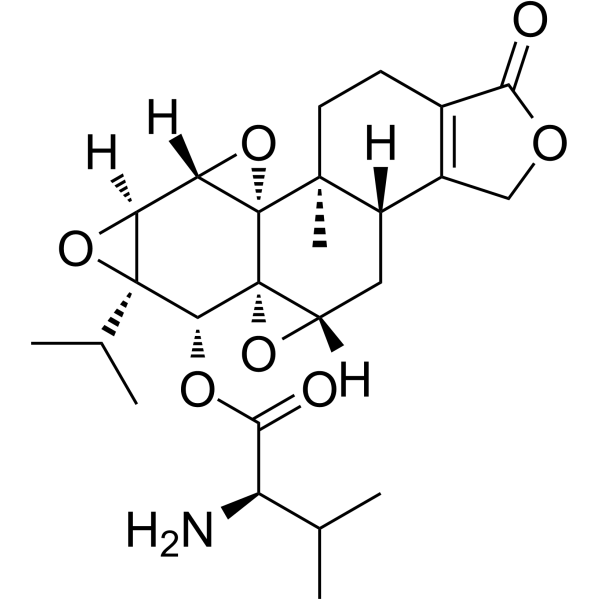
WBC100 (14-D-Valine-TPL) is a potent, selective, and orally active c-Myc molecule glue degrader. WBC100 is a c-Myc degrader and targets ubiquitin E3 ligase CHIP mediated 26S proteasome pathway. WBC100 is used for c-Myc overexpressing tumors research .
loading...
    loading...
Cat. No.: HY-W763582B
CAS No.: 2280018-77-9
Synonyms: Gelatin Methacryloyl, 90% methacrylation
GelMA (Gelatin Methacryloyl), 90% methacrylation, is a derivative obtained by the reaction of Methacrylic anhydride (MA) (HY-W017330) and gelatin. GelMA exhibits excellent biocompatibility, biodegradability, and moldability. GelMA can be photocrosslinked into hydrogels and can be used for research in regeneration of tissues, such as skin, tendon, bone, cartilage, blood vessel, and cardiovascular system. GelMA hydrogel also can be used for research on drug delivery, organ-on-a-chip, and biosensing .
loading...
    loading...
Cat. No.: HY-128868H
CAS No.: 60842-46-8
FITC-Dextran (MW 500000) is a compound belonging to the class of fluorescent dyes. It is commonly used in biomedical research as a tracer molecule to label and track cells or other biological matter. FITC-Dextran consists of fluorescein isothiocyanate (FITC) and dextran, a complex carbohydrate derived from starch. The combination of the two creates a stable fluorescent tracer that can be viewed under a microscope or quantified using specialized detection instruments.
loading...
    loading...
Cat. No.: HY-19204
CAS No.: 14320-04-8
Synonyms: ZnPc
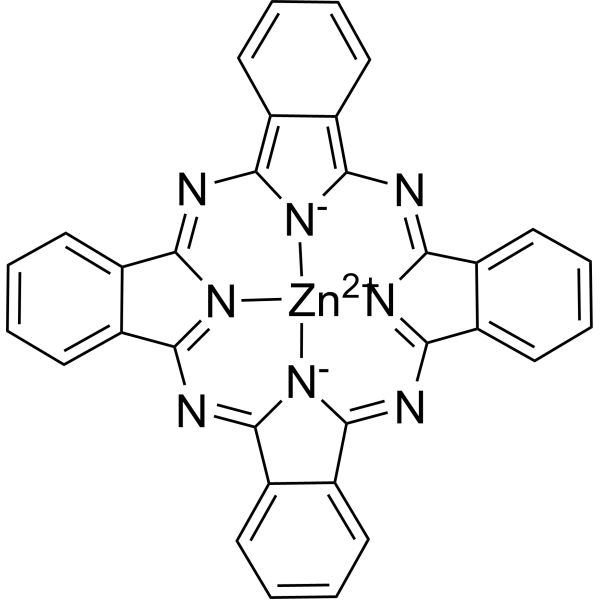
Zinc phthalocyanine (ZnPc) is commonly applied in industry (catalysts, photoconductors) and biomedical (photodynamic therapy, PDT). Zinc phthalocyanine can be used to photooxidise cyclohexane and is promising for research of solar-cell applications .
loading...
    loading...
Cat. No.: HY-W763582
CAS No.: 2280018-77-9
Synonyms: Gelatin Methacryloyl, 30% methacrylation
GelMA (Gelatin Methacryloyl), 30% methacrylation, is a derivative obtained by the reaction of Methacrylic anhydride (MA) (HY-W017330) and gelatin. GelMA exhibits excellent biocompatibility, biodegradability, and moldability. GelMA can be photocrosslinked into hydrogels and can be used for research in regeneration of tissues, such as skin, tendon, bone, cartilage, blood vessel, and cardiovascular system. GelMA hydrogel also can be used for research on drug delivery, organ-on-a-chip, and biosensing .
loading...
    loading...
Cat. No.: HY-W243303M
CAS No.: 9003-01-4
Poly(acrylic acid) (MW 100000) (35% in water) is a polyacrylic acid with a molecular weight of 100000 (an anionic polymer), which can be used as a corrosion inhibitor and surface stabilizer. Poly(acrylic acid) (MW 100000) can be used for biomedical applications, such as drug delivery .
loading...
    loading...

