16 Results for "

blood samples

" in MedChemExpress (MCE) Product Catalog:
Products (16)

16 Results for "blood samples" in MCE Product Catalog:

34
34 Publications Verification
Cat. No.: HY-D0836
CAS No.: 25102-12-9
Synonyms: Ethylenediaminetetraacetic acid dipotassium dihydrate
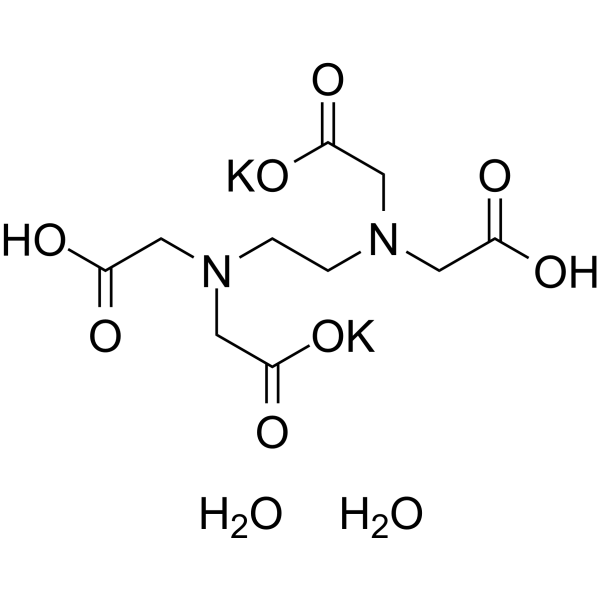
EDTA dipotassium dihydrate is a metal ion chelator that forms stable and water-soluble chelates with a variety of metal ions. EDTA dipotassium is commonly used as a blood anticoagulant, which can effectively prevent blood coagulation and maintain the morphology and function of cells in blood samples. In the industrial field, EDTA dipotassium can be used to remove the adverse effects of metal ions and prevent oxidation and deterioration caused by metal ions .
loading...
    loading...
4
4 Cited Publications
Cat. No.: HY-W018781
CAS No.: 1670-14-0
Target:  

Ser/Thr Protease

Research Areas:  

Cancer

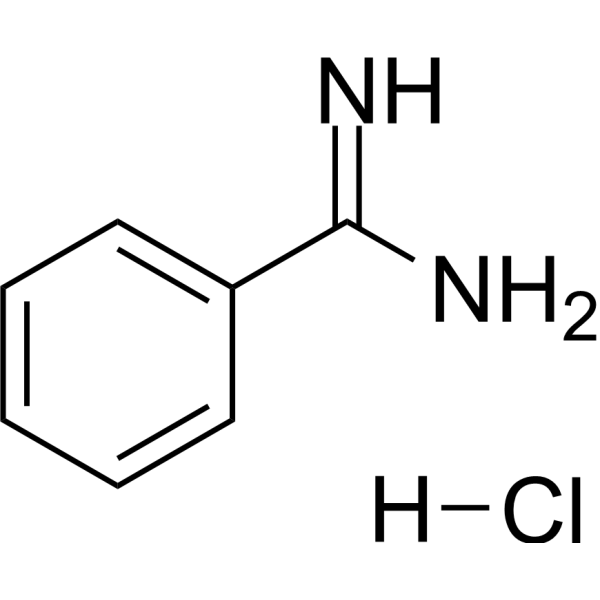
Benzamidine hydrochloride is a competitive protease inhibitor that blocks the hydrolytic cleavage of glucagon by plasmin, trypsin and thrombin. Benzamidine hydrochloride effectively inhibits the degradation of glucagon by relevant proteases during the collection, storage and analysis of human plasma and blood samples. During in vivo metabolism, Benzamidine hydrochloride undergoes N-hydroxylation and produces multiple metabolites, exhibiting characteristics of delayed excretion or biphasic elimination. Benzamidine hydrochloride only induces slight single-strand DNA breaks at high concentrations and shows no significant genotoxic potential overall. Benzamidine hydrochloride may interfere with the detection of some glucagon antisera, but does not affect key antigen-antibody affinity at specific concentrations. Benzamidine hydrochloride can be used as a stabilizer in glucagon radioimmunoassays to ensure the accuracy and recovery rate of detection results .
loading...
    loading...
4
4 Cited Publications
Cat. No.: HY-125913
CAS No.: 618-39-3
Target:  

Ser/Thr Protease

Research Areas:  

Inflammation/Immunology

Benzamidine is a competitive protease inhibitor that blocks the hydrolytic cleavage of glucagon by plasmin, trypsin and thrombin. Benzamidine effectively inhibits the degradation of glucagon by relevant proteases during the collection, storage and analysis of human plasma and blood samples. During in vivo metabolism, Benzamidine undergoes N-hydroxylation and produces multiple metabolites, exhibiting characteristics of delayed excretion or biphasic elimination. Benzamidine only induces slight single-strand DNA breaks at high concentrations and shows no significant genotoxic potential overall. Benzamidine may interfere with the detection of some glucagon antisera, but does not affect key antigen-antibody affinity at specific concentrations. Benzamidine can be used as a stabilizer in glucagon radioimmunoassays to ensure the accuracy and recovery rate of detection results .
loading...
    loading...
4
4 Cited Publications
Cat. No.: HY-W087937
CAS No.: 206752-36-5
Synonyms: Benzenecarboximidamide hydrochloride hydrate
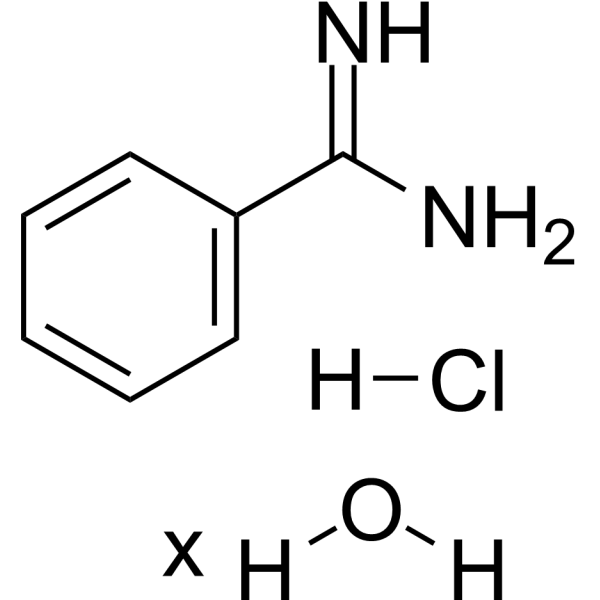
Benzamidine (Benzenecarboximidamide) hydrochloride hydrate is a competitive protease inhibitor that blocks the hydrolytic cleavage of glucagon by plasmin, trypsin and thrombin. Benzamidine hydrochloride hydrate effectively inhibits the degradation of glucagon by relevant proteases during the collection, storage and analysis of human plasma and blood samples. During in vivo metabolism, Benzamidine hydrochloride hydrate undergoes N-hydroxylation and produces multiple metabolites, exhibiting characteristics of delayed excretion or biphasic elimination. Benzamidine hydrochloride hydrate only induces slight single-strand DNA breaks at high concentrations and shows no significant genotoxic potential overall. Benzamidine hydrochloride hydrate may interfere with the detection of some glucagon antisera, but does not affect key antigen-antibody affinity at specific concentrations. Benzamidine hydrochloride hydrate can be used as a stabilizer in glucagon radioimmunoassays to ensure the accuracy and recovery rate of detection results .
loading...
    loading...
3
3 Cited Publications
Cat. No.: HY-128144
CAS No.: 1234569-09-5
Purity:  99.87%
Target:  

Lipase

Research Areas:  

Metabolic Disease

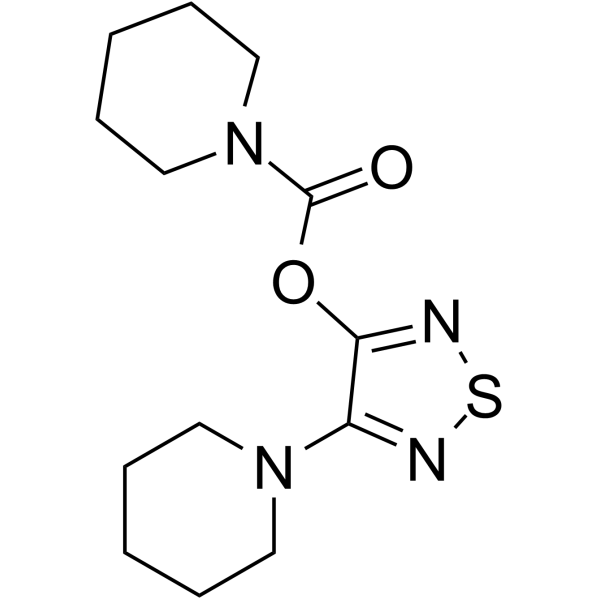
Lalistat 2 is an inhibitor of many lipases especially Lysosomal acid lipase (LAL, IC50 = 152 nM), which is a key enzyme that degrades neutral lipids at an acidic pH in lysosomes. Lalistat 2 is commonly used to investigate the cell-specific functions of LAL and LAL deficiency in vitro, as well as specifically measure LAL activity in human blood samples or cells .
loading...
    loading...
2
2 Cited Publications
Cat. No.: HY-K3010

MCE Red Blood Cell Lysis Buffer (10×) primarily contains ammonium chloride and is a ready-to-use solution designed for rapid and effective lysis and removal of anucleated red blood cells from human or mouse blood and tissue samples without affecting white blood cells, normal tissues, or tumor cells.

loading...
    loading...
Cat. No.: HY-P2149A
CAS No.: 11028-71-0
Concanavalin A (agarose) is composed of Concanavalin A (HY-P2149) conjugated with agarose. Concanavalin A (ConA) is a selective competitive binder targeting the specific carbohydrate structures of glucose and mannose, inducing mitosis, and exhibiting certain cytotoxicity, hepatotoxicity, and teratogenicity. Concanav in A (agarose) can be used for in vivo blood glucose monitoring in diabetes, and for "fishing out" specific glycoproteins or removing sugar impurities from complex samples .
loading...
    loading...
Cat. No.: HY-137873
CAS No.: 17833-43-1
Purity:  99.99%
Synonyms: 4-Methylumbelliferyl-α-D-Glucose; 4-Methylumbelliferyl-α-D-Glucoside; 4-MU-α-D-Glucopyranoside
Research Areas:  

Others

4-Methylumbelliferyl-α-D-Glucopyranoside (4-Methylumbelliferyl-α-D-Glucose) is a fluorescent substrate for α-glucosidase, which releases the fluorescent moiety 4-methylumbelliferyl (4-MU) upon cleavage. 4-MU has pH-dependent fluorescence excitation activity, with excitation wavelengths of 320 nm at low pH (1.97-6.72) and 360 nm at high pH (7.12-10.3), respectively. The emission wavelength of 4-Methylumbelliferyl-α-D-Glucopyranoside increases with decreasing pH, ranging from 445-455 nm. 4-Methylumbelliferyl-α-D-Glucopyranoside can be used as a biomarker for Fabry and Pompe diseases to quantify α-glucosidase activity in infant blood spot samples.
loading...
    loading...
Cat. No.: HY-N10510
CAS No.: 59957-92-5
Synonyms: A-Tetrasaccharide
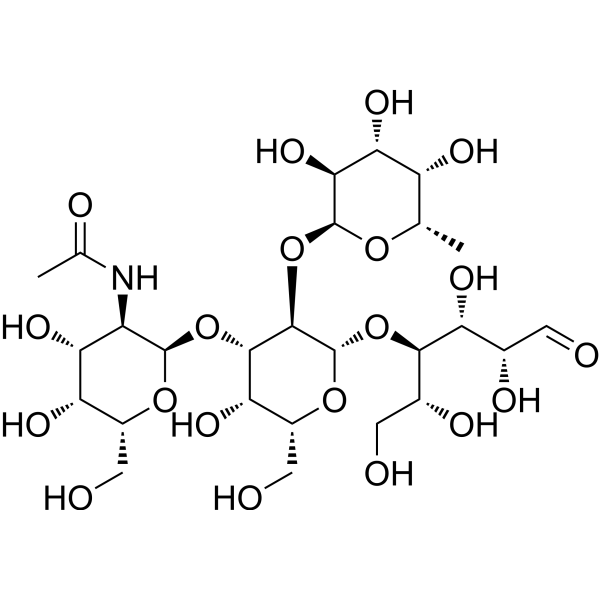
Blood group A antigen tetraose type 5 (A-Tetrasaccharide) is a tetrasaccharide and a blood group specific oligosaccharide, inhibits the binding of anti-A antibody to blood group A substance. Blood group A antigen tetraose type 5 can be isolated from polar bear milk samples .
loading...
    loading...
Cat. No.: HY-W018781R
CAS No.: 1670-14-0
Research Areas:  

Cancer

Benzamidine hydrochloride (Standard) is the analytical standard of Benzamidine (hydrochloride). This product is intended for research and analytical applications. Benzamidine hydrochloride is a competitive protease inhibitor that blocks the hydrolytic cleavage of glucagon by plasmin, trypsin and thrombin. Benzamidine hydrochloride effectively inhibits the degradation of glucagon by relevant proteases during the collection, storage and analysis of human plasma and blood samples. During in vivo metabolism, Benzamidine hydrochloride undergoes N-hydroxylation and produces multiple metabolites, exhibiting characteristics of delayed excretion or biphasic elimination. Benzamidine hydrochloride only induces slight single-strand DNA breaks at high concentrations and shows no significant genotoxic potential overall. Benzamidine hydrochloride may interfere with the detection of some glucagon antisera, but does not affect key antigen-antibody affinity at specific concentrations. Benzamidine hydrochloride can be used as a stabilizer in glucagon radioimmunoassays to ensure the accuracy and recovery rate of detection results .
loading...
    loading...
Cat. No.: HY-K0537

MCE Blood Direct PCR Kit (with Dye) is specifically designed for direct amplification from blood samples. It enables PCR amplification directly from whole blood without the need for conventional DNA extraction and purification steps, thereby significantly simplifying the workflow and improving detection efficiency.

loading...
    loading...
Cat. No.: HY-W728163
CAS No.: 3085600-43-4
Research Areas:  

Others

CH-PIATA is a synthetic cannabinoid with an acetamide linker. CH-PIATA can be detected as parent substance in blood samples. CH-PIATA has EC50 values of >71 and >176 nM for CB1 and CB2, respectively .
loading...
    loading...
Cat. No.: HY-K0324

MCE MCE Total Superoxide Dismutase (SOD) Activity Colorimetric Assay Kit (Xanthine Oxidase-NBT Method) is based on the xanthine oxidase–NBT chromogenic system and quantitatively determines total SOD activity in various biological samples by measuring the inhibition of NBT reduction to formazan in the xanthine/xanthine oxidase–generated superoxide system at 560 nm. It is suitable for the determination of SOD activity in cell or tissue homogenate supernatants, whole blood, erythrocyte extracts, serum, and other biological samples.

loading...
    loading...
Cat. No.: HY-D3347
CAS No.: 1123684-41-2
DUPA-FITC is a fluorescent reagent targeting PSMA, which specifically binds to prostate cancer cells expressing PSMA without non-specific binding to normal blood cells. DUPA-FITC can label PSMA-expressing prostate cancer cells in whole blood, followed by internalization and trafficking to acidic intracellular endosomes, during which the fluorescence is quenched. When combined with flow cytometry and density gradient centrifugation enrichment, DUPA-FITC enables quantitative analysis of circulating tumor cells in peripheral blood samples from prostate cancer patients .
loading...
    loading...
Cat. No.: HY-K0614

MCE Oil Red O Staining Kit for Cell Smears effectively stains lipid droplets of various sizes, including smaller lipid droplets, and preferentially adsorbs dye from the solvent. It is suitable for staining oil red O in cell smears, bone marrow smears, fluid smears, blood smears, and other samples. When using the kit, specimens should not be fixed with fixatives containing ethanol. If fixation is required, 10% formalin can be used. The positive staining result for fat typically appears orange-yellow to red, with the exact color varying depending on the lipid concentration.

loading...
    loading...
Cat. No.: HY-D3191
L&M-D-MR is a highly specific fluorescent "AND" logic probe with response moieties for leucine aminopeptidase (LAP) and monoamine oxidase (MAO). The coexistence of both LAP and MAO is required for L&M-D-MR to trigger intramolecular cyclization, release fluorophores and activate fluorescence. In the presence of only a single enzyme, L&M-D-MR generates only an extremely weak signal. L&M-D-MR enables bioimaging in living cells and mouse models, and can effectively distinguish different subtypes of liver diseases via blood samples or test strips. L&M-D-MR is widely used in studies related to liver cirrhosis, hepatitis B and drug-induced liver injury .
loading...
    loading...
  • 1

