7 Results for "

cataract formation

" in MedChemExpress (MCE) Product Catalog:
Products (7)

7 Results for "cataract formation" in MCE Product Catalog:

114
114 Cited Publications
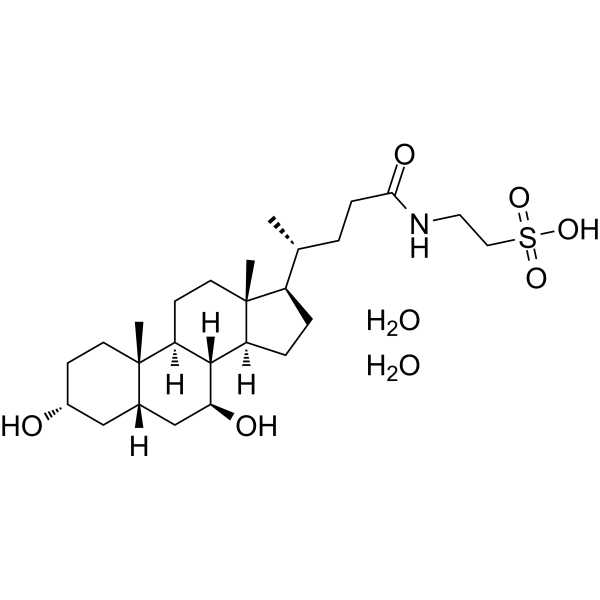
Cat. No.: HY-19696B
CAS No.: 117609-50-4
Synonyms: Tauroursodeoxycholic acid dihydrate; TUDCA dihydrate; UR 906 dihydrate
Tauroursodeoxycholate dehydrate is an orally active taurine conjugate of Ursodeoxycholic acid (HY-13771). Tauroursodeoxycholate dehydrate inhibits caspase-3/7, Apoptosis, IRE1α/TRAF2/NF-κB, prevents JNK phosphorylation, inhibits ROS generation, and activates Akt signaling. Tauroursodeoxycholate dehydrate prevents cataract formation, reduces renal tubular damage in type 2 diabetic mice, reduces I/R injury in liver, and inhibits intestinal inflammation and barrier disruption in nonalcoholic fatty liver disease .
loading...
    loading...
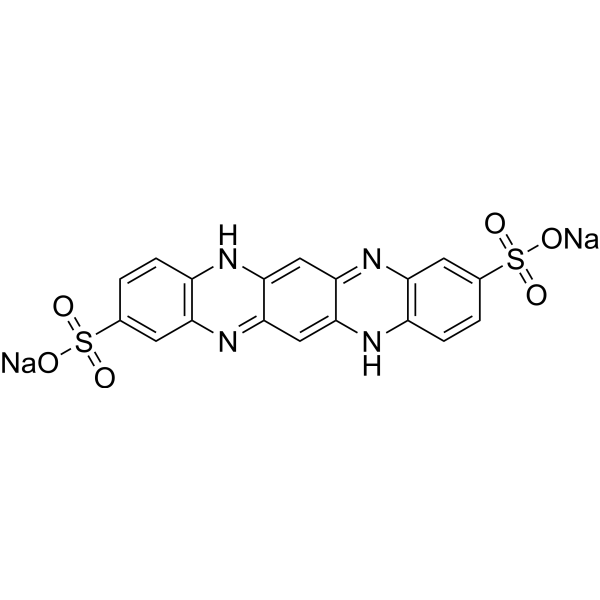
Cat. No.: HY-112573A
CAS No.: 3863-80-7
Synonyms: Phacolysine sodium
Research Areas:  

Neurological Disease

Azapentacene (Phacolysine) sodium is an anti-cataract compound. Azapentacene sodium prevents cataract formation in guinea pigs with vitamin C deficiency and delays the progression of congenital cataract in Nakano mice. Azapentacene sodium undergoes reversible one-electron oxidation to form a stable radical cation, undergoes irreversible secondary oxidation to form a hydrolyzable unstable dication, and can also be oxidized by thallium (III) trifluoroacetate in trifluoroacetic acid to generate a detectable radical cation. Azapentacene sodium is used in research related to cataracts, vitamin C deficiency-induced cataracts, and congenital cataracts .
loading...
    loading...
Cat. No.: HY-128105
CAS No.: 574-00-5
Purity:  ≥95.0%
Synonyms: 1,2-Naphthalenediol
1,2-Dihydroxynaphthalene is a metabolic intermediate of Naphthalene and a precursor for the formation of 1,2-Naphthoquinone, and is also the most sensitive biomarker of Naphthalene exposure in humans. 1,2-Dihydroxynaphthalene inhibits the AMPK/SIRT3 pathway and activates acetylated p53 and NF-κB by inducing oxidative stress, leading to G2/M cell cycle arrest, senescence, and apoptosis, while also damaging DNA through the formation of depurination adducts, thereby causing mutations. 1,2-Dihydroxynaphthalene can be used in research on cancer and cataracts .
loading...
    loading...
Cat. No.: HY-185048
PCB-OAA is a biocompatible multivinyl polycarboxybetaine macromonomer and that exhibits anti-fouling activity. PCB-OAA can form a hydrogel in vitreous cavity and shows an appealing ability to prevent significantly inflammatory response, fibrosis and complications such as raised intraocular pressure, and cataract formation. PCB-OAA can be used for the research of vitreous substitution .
loading...
    loading...
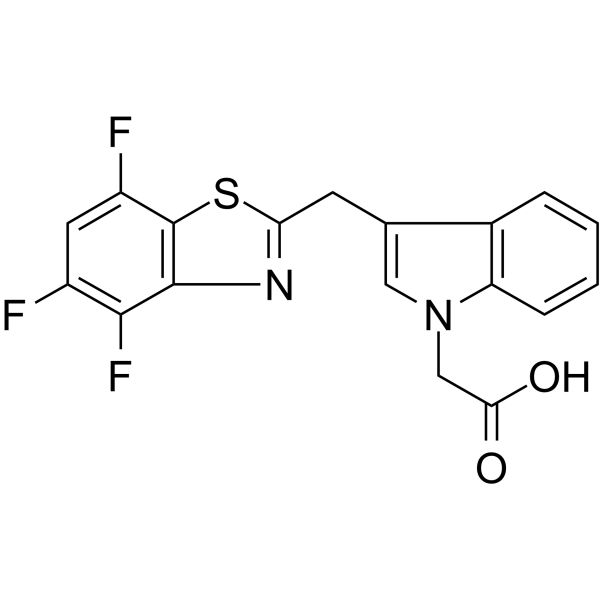
Cat. No.: HY-106198
CAS No.: 245116-90-9
Purity:  99.50%
Synonyms: IDD-676
Target:  

Aldose Reductase

Research Areas:  

Metabolic Disease

Lidorestat (IDD-676) is a potent, selective and orally active aldose reductase inhibitor with an IC50 of 5 nM. Lidorestat can be used for chronic diabetes complications. Lidorestat also improves nerve conduction and reduces cataract formation .
loading...
    loading...
Cat. No.: HY-106198R
CAS No.: 245116-90-9
Synonyms: IDD-676 (Standard)
Research Areas:  

Metabolic Disease

Lidorestat (Standard) is the analytical standard of Lidorestat (HY-106198). This product is intended for research and analytical applications. Lidorestat (IDD-676) is a potent, selective and orally active aldose reductase inhibitor with an IC50 of 5 nM. Lidorestat can be used for chronic diabetes complications. Lidorestat also improves nerve conduction and reduces cataract formation .
loading...
    loading...
Cat. No.: HY-165518
CAS No.: 128851-55-8
M 16287 is an orally active aldose reductase inhibitor, with an IC50 of 0.08 μM in rats and 0.25 μM in cattle. M 16287 improves lens fiber swelling and vacuolization, prevents galactitol accumulation, delays inositol depletion, inhibits glutathione reduction, restores the NADPH/NADP + ratio to normal, and normalizes lens Na + content and Na +/K + ratio. M 16287 prevents galactose-induced cataract formation in rats. M 16287 improves motor nerve conduction velocity in diabetic rats, partially alleviates histopathological changes in the sciatic nerve, and inhibits sorbitol accumulation. M 16287 can be used in studies related to cataracts and diabetic neuropathy .
loading...
    loading...

