

1329 Results for "

cell surface

" in MedChemExpress (MCE) Product Catalog:
Products (1329)

1329 Results for "cell surface" in MCE Product Catalog:

56
56 Publications Verification
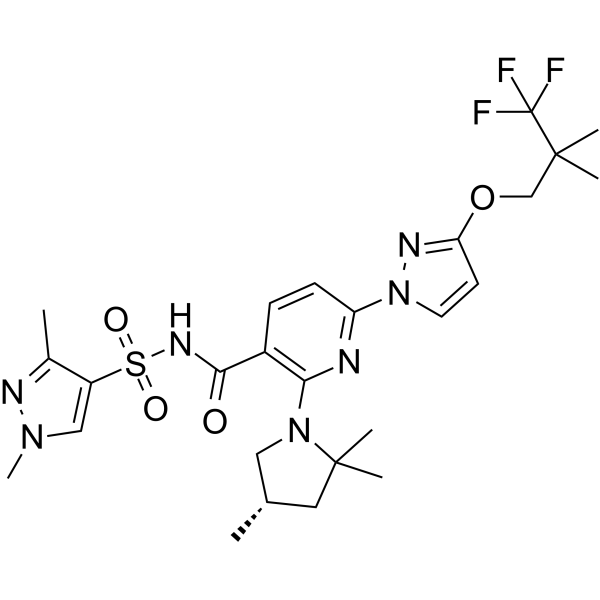
Cat. No.: HY-111772
CAS No.: 2216712-66-0
Purity:  99.74%
Synonyms: VX-445
Target:  

CFTR Autophagy

Research Areas:  

Inflammation/Immunology

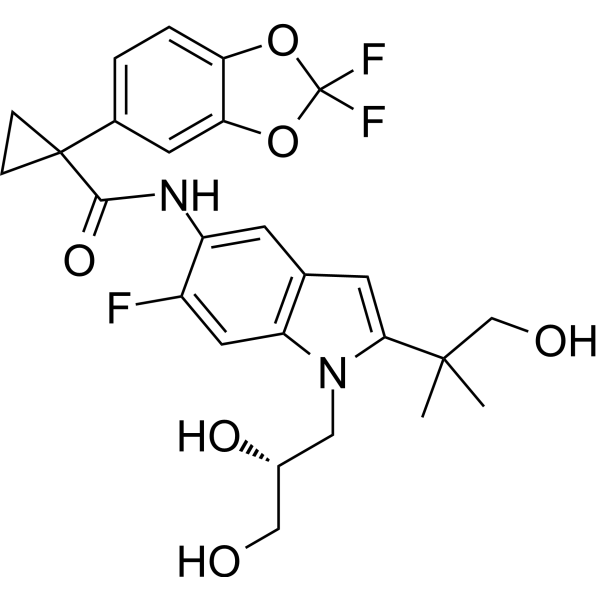
Elexacaftor (VX-445, Compound 1) is a modulator of cystic fibrosis transmembrane conductance regulator (CFTR). Elexacaftor (VX-445, Compound 1) facilitates the processing and trafficking of CFTR to increase the amount of CFTR at the cell surface .
loading...
    loading...
55
55 Cited Publications
Cat. No.: HY-119738
CAS No.: 1681056-61-0
Purity:  99.90%
Target:  

OGT Acyltransferase

Research Areas:  

Metabolic Disease

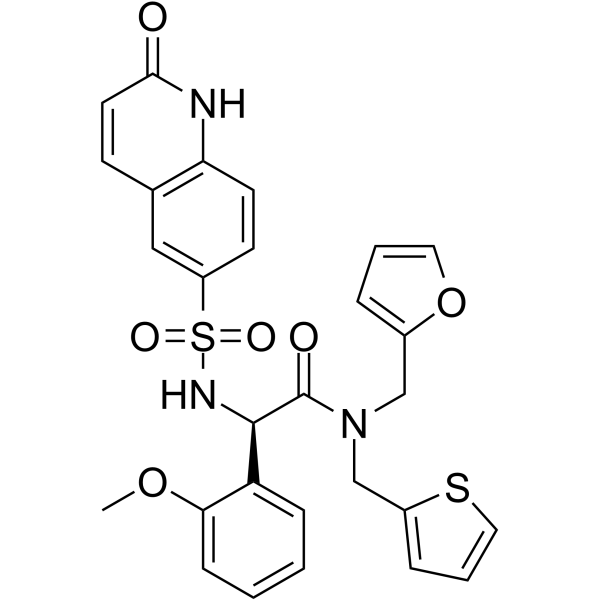
OSMI-1 is a cell-permeable O-GlcNAc transferase (OGT) inhibitor with an IC50 value of 2.7 μM. OSMI-1 inhibits protein O-linked N-acetylglucosamine (O-GlcNAcylation) in several mammalian cell lines without qualitatively altering cell surface N- or O-linked glycans .
loading...
    loading...
48
48 Cited Publications
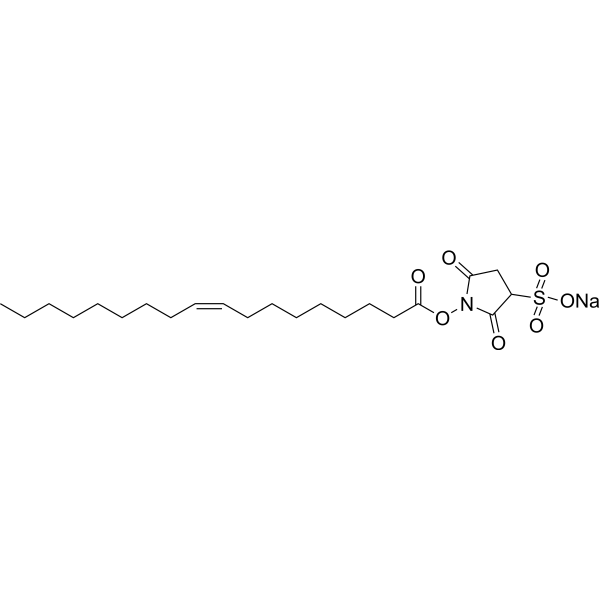
Cat. No.: HY-112847A
Purity:  ≥98.0%
Synonyms: Sulfo-N-succinimidyl oleate sodium
Target:  

Mitophagy

Research Areas:  

Inflammation/Immunology

Sulfosuccinimidyl oleate sodium (Sulfo-N-succinimidyl oleate sodium) is a long chain fatty acid that inhibits fatty acid transport into cells. Sulfosuccinimidyl oleate sodium is a potent and irreversible inhibitor of mitochondrial respiratory chain. Sulfosuccinimidyl oleate sodium binds the CD36 receptor on the surface of microglia. Anti-inflammatory effect .
loading...
    loading...
35
35 Cited Publications
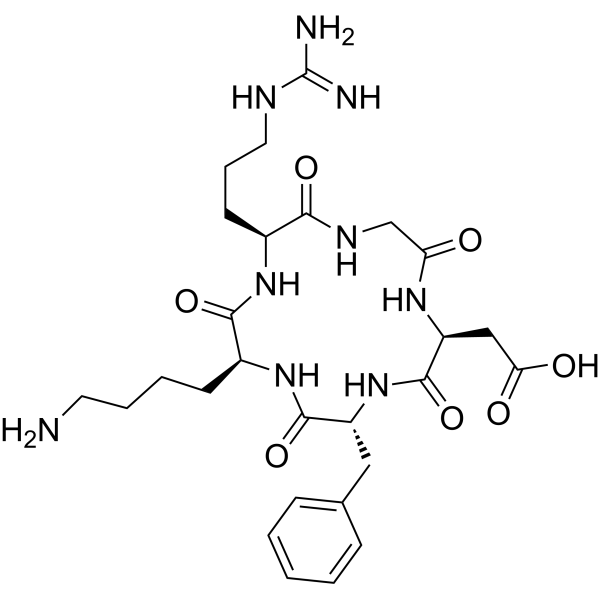
Cat. No.: HY-P0023
CAS No.: 161552-03-0
Target:  

Integrin

Research Areas:  

Cancer

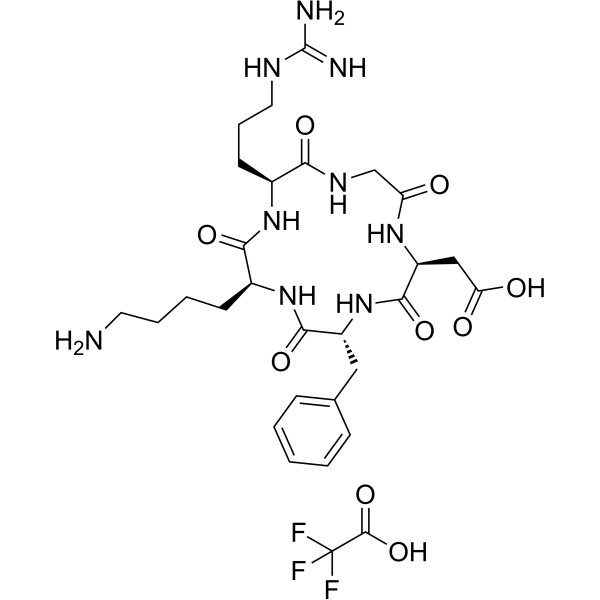
Cyclo(-RGDfK) is a potent and selective inhibitor of the αvβ3 integrin, with an IC50 of 0.94 nM. Cyclo(-RGDfK) potently targets tumor microvasculature and cancer cells through the specific binding to the αvβ3 integrin on the cell surface .
loading...
    loading...
35
35 Cited Publications
Cat. No.: HY-P0023A
CAS No.: 500577-51-5
Target:  

Integrin

Research Areas:  

Cancer

Cyclo(-RGDfK) TFA is a potent and selective inhibitor of the αvβ3 integrin, with an IC50 of 0.94 nM . Cyclo(-RGDfK) TFA potently targets tumor microvasculature and cancer cells through the specific binding to the αvβ3 integrin on the cell surface .
loading...
    loading...
31
31 Cited Publications
Cat. No.: HY-15448
CAS No.: 1152311-62-0
Purity:  99.85%
Synonyms: VX-661
Target:  

CFTR

Research Areas:  

Cancer

Tezacaftor (VX-661) is a F508del CFTR corrector. It helps CFTR protein reach the cell surface. However, Ivacaftor (VX-770, HY-13017), a CFTR potentiator, helps to prolong the opening time of cell surface CFTR protein channels. Tezacaftor combining with Ivacaftor, shows potent efficacy against cystic fibrosis and diseases with homozygous for the CFTR Phe508del mutation. Moreover, Elexacaftor (VX-445, HY-111772) is also a CFTR corrector. Elexacaftor-Tezacaftor-Ivacaftor aims at with cystic fibrosis (CF) with at least one Phe508del mutation, often avoids the indication for lung transplantation .
loading...
    loading...
24
24 Cited Publications
Cat. No.: HY-101916
CAS No.: 9050-30-0
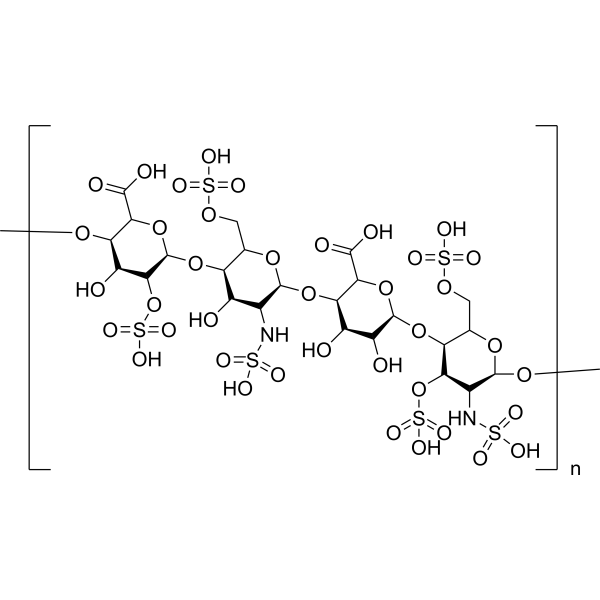
Heparan sulfate, a complex and linear polysaccharide, exists as part of glycoproteins named heparan sulfate proteoglycans, which are expressed abundantly on the cell surface and in the extracellular matrix.
loading...
    loading...
22
22 Cited Publications
Cat. No.: HY-B0633
CAS No.: 9067-32-7
Synonyms: Sodium hyaluronate
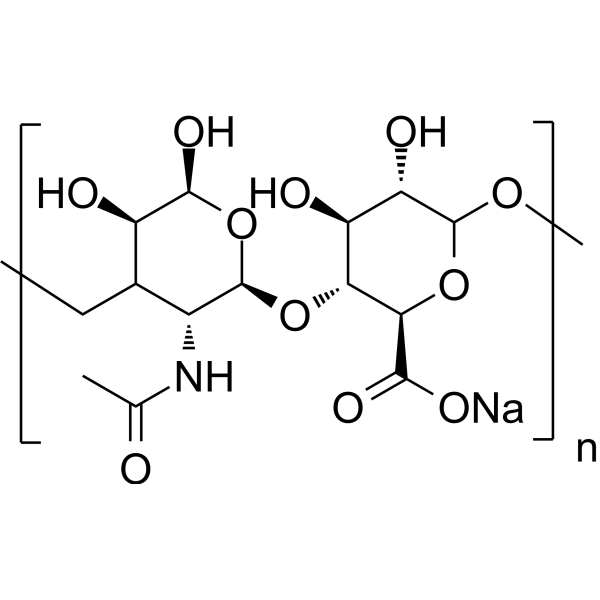
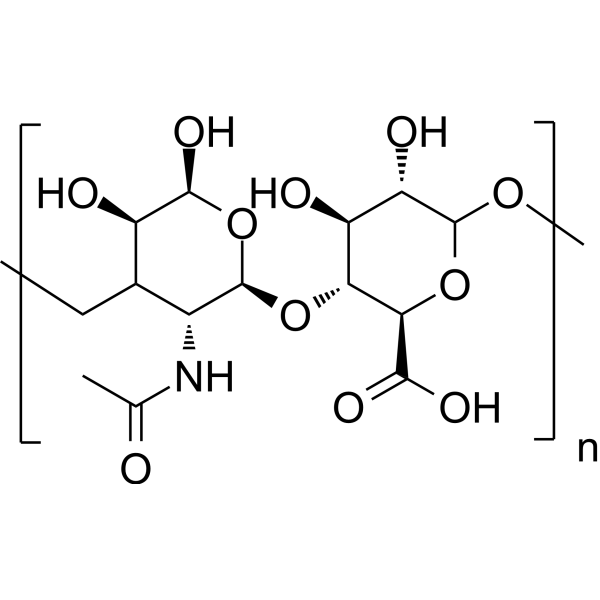
Hyaluronic acid sodium (Sodium hyaluronate) is a biopolymer composed of repeating units of disaccharides with various applications. Hyaluronic acid sodium is a major component of the extracellular matrix (ECM). Hyaluronic acid sodium is synthesized at the plasma membrane. Increased hyaluronic acid sodium levels are associated with tumor cell growth, adhesion, migration, invasion and angiogenesis in digestive cancers. Hyaluronic acid sodium participates in tissue remodeling and rapid cell proliferation in some physiological processes including embryonic morphogenesis and wound-healing. Hyaluronic acid sodium activates the PI3K-Akt signaling. Hyaluronic acid sodium acts as a regulator of cancer-associated lymphangiogenesis. Hyaluronic acid sodium also enhances cell invasion and angiogenesis by promoting proteolytic MMP-9 binding to cell surface or stimulating MMP-9 binding to cell surface. Hyaluronic acid sodium can be used as drug delivery for sodium butyrate to improve the anti-proliferative activity on breast cancer cell line. Hyaluronic acid sodium can be studied in joint diseases, wound healing and cancer .
loading...
    loading...
22
22 Cited Publications
Cat. No.: HY-B0633A
CAS No.: 9004-61-9
Synonyms: Hyaluronan; Hyaluronate
Hyaluronic acid is a biopolymer composed of repeating units of disaccharides with various applications. Hyaluronic acid is a major component of the extracellular matrix (ECM). Hyaluronic acid is synthesized at the plasma membrane. Increased hyaluronic acid levels are associated with tumor cell growth, adhesion, migration, invasion and angiogenesis in digestive cancers. Hyaluronic acid participates in tissue remodeling and rapid cell proliferation in some physiological processes including embryonic morphogenesis and wound-healing. Hyaluronic acid activates the PI3K-Akt signaling. Hyaluronic acid acts as a regulator of cancer-associated lymphangiogenesis. Hyaluronic acid also enhances cell invasion and angiogenesis by promoting proteolytic MMP-9 binding to cell surface or stimulating MMP-9 binding to cell surface. Hyaluronic acid can be used as drug delivery for sodium butyrate to improve the anti-proliferative activity on breast cancer cell line. Hyaluronic acid can be studied in joint diseases, wound healing and cancer .
loading...
    loading...
21
21 Cited Publications
Cat. No.: HY-W127378
CAS No.: 144189-73-1
Synonyms: 1,2-Dioleoyl-3-trimethylammonium-propane methylsulfate
Target:  

Liposome

Research Areas:  

Others

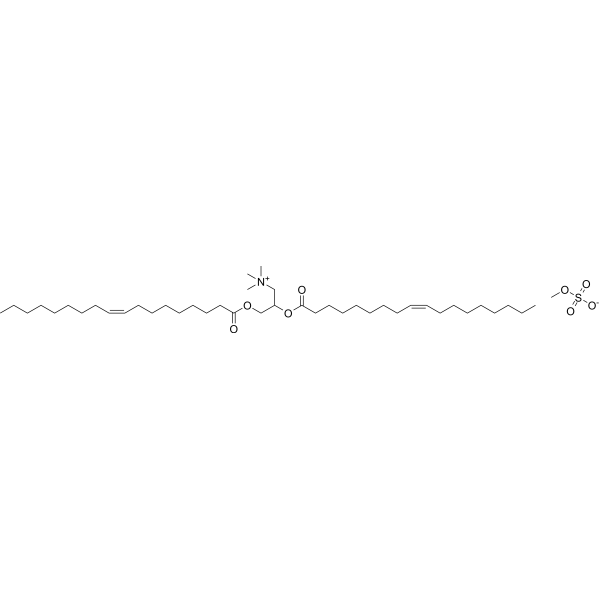
DOTAP methylsulfat is a cationic lipid reagent, a cationic derivative of trimethylammonium, linked to two 18-carbon fatty acid tails, each with a single olefin group. DOTAP methylsulfat can self-assemble with negatively charged ions (such as DNA) to form complexes, which can be adsorbed to the cell membrane surface and enter the cell by electrostatic interaction and endocytosis, respectively. DOTAP methylsulfat promotes endosomal membrane fusion with its own hydrophobic domain, releases DNA into the cytoplasm, and exerts gene delivery function. DOTAP methylsulfat can be widely used in research fields such as gene therapy, cell transfection, and non-viral vector design .
loading...
    loading...
16
16 Cited Publications
Cat. No.: HY-108847
CAS No.: 185243-69-0
Purity:  99.20%

Target:  

TNF Receptor Bacterial

Research Areas:  

Inflammation/Immunology Cancer

Etanercept, a dimeric fusion protein that binds TNF, acts as a TNF inhibitor. Etanercept competitively inhibits the binding of both TNF-α and TNF-β to cell surface TNF receptors, rendering TNF biologically inactive. Etanercept shows efficacy against rheumatoid arthritis, juvenile idiopathic arthritis, and plaque psoriasis .
loading...
    loading...
13
13 Cited Publications
Cat. No.: HY-D0986
CAS No.: 115534-33-3
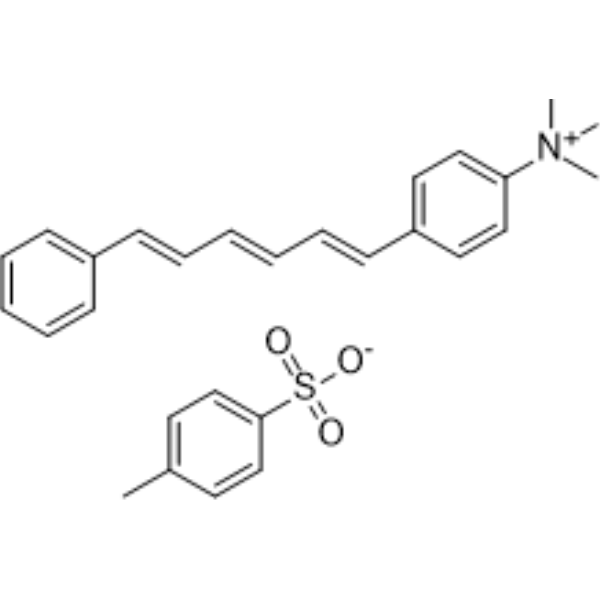
TMA-DPH is a hydrophobic fluorescent membrane probe (Ex=355 nm; Em=430 nm). TMA-DPH is able to anchor on the cell surface and localize to different regions of the phospholipid bilayer. By analyzing the fluorescence polarization values of TMA-DPH in the plasma membrane and membrane substructures, the fluidity of the cell membrane can be determined .
loading...
    loading...
11
11 Cited Publications
Cat. No.: HY-W074143
CAS No.: 36309-88-3
Synonyms: [Ru(DPP)3]Cl2
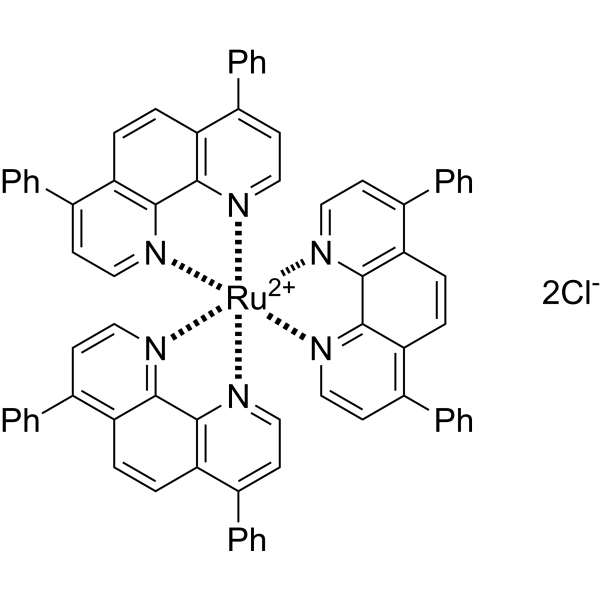
Tris(4,7-diphenyl-1,10-phenanthroline)ruthenium(II) dichloride ([Ru(dpp)3] 2+) is an electrochemiluminescent (ECL) probe and oxygen-sensitive sensor. Tris(4,7-diphenyl-1,10-phenanthroline)ruthenium(II) dichloride can be used to modify electrode surfaces for the detection of sulfates (S2O8 2-) and oxalates, based on electrochemical reactions that generate excited-state species, releasing photons through irreversible redox reactions. Tris(4,7-diphenyl-1,10-phenanthroline)ruthenium(II) dichloride utilizes the oxygen quenching of fluorescence mechanism, where fluorescence intensity reflects the metabolic rate of living microorganisms or oxygen levels within cells/tumors, allowing for real-time detection. Tris(4,7-diphenyl-1,10-phenanthroline)ruthenium(II) dichloride's main applications include microbial detection, antibacterial activity studies, and tumor microenvironment research .
loading...
    loading...
10
10 Cited Publications
Cat. No.: HY-15317
CAS No.: 415713-60-9
Purity:  99.83%
Target:  

RAD51

Research Areas:  

Cancer

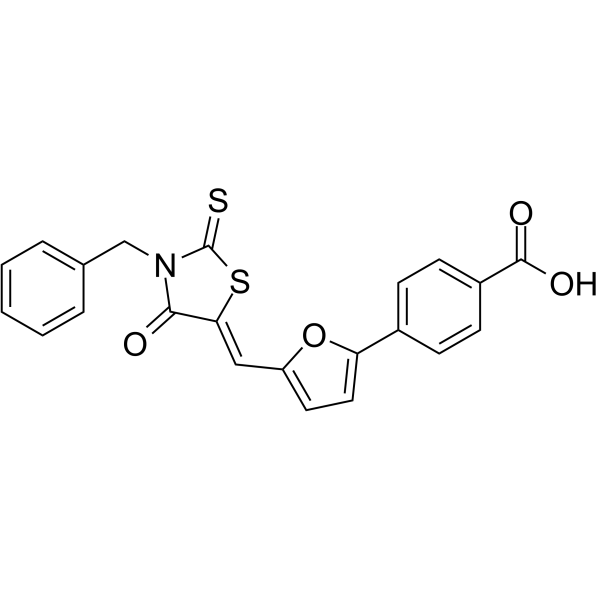
RI-1 is a RAD51 inhibitor, with IC50s ranging from 5 to 30 μM. RI-1 binds covalently to the surface of RAD51 protein at cysteine 319. RI-1 inactivates RAD51 by directly binding to a protein surface that serves as an interface between protein subunits in RAD51 filaments. RI-1 can disrupt homologous recombination in human cells .
loading...
    loading...
10
10 Cited Publications
Cat. No.: HY-15615A
CAS No.: 1616632-77-9
Purity:  99.89%
Synonyms: TIC10; ONC-201
Target:  

TNF Receptor Apoptosis

Research Areas:  

Cancer

Dordaviprone (TIC10) is a potent, orally active, and stable tumor necrosis factor-related apoptosis-inducing ligand (TRAIL) inducer which acts by inhibiting Akt and ERK, consequently activating Foxo3a and significantly inducing cell surface TRAIL. Dordaviprone can cross the blood-brain barrier .
loading...
    loading...
10
10 Cited Publications
Cat. No.: HY-N6693
CAS No.: 2001-95-8
Synonyms: NSC 122023
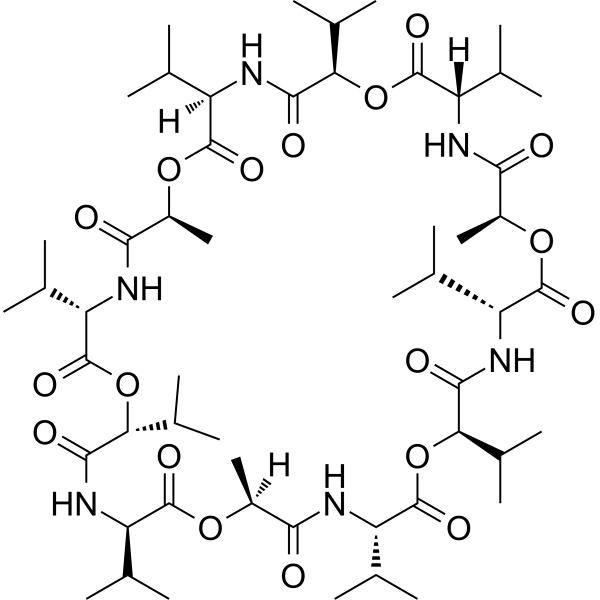
Valinomycin is a potassium-specific ionophore, the valinomycin-K + complex can be incorporated into biological bilayer membranes with the hydrophobic surface of valinomycin, destroys the normal K + gradient across the membrane, and as a result kills the cells, incorporating into liposomes can significantly reduces the cytotoxicity and enhances the targeting effect. Valinomycin exhibits antibiotic, antifungal, antiviral, antitumor and insecticidal efficacy, thus can be used for relevant research .
loading...
    loading...
10
10 Cited Publications
Cat. No.: HY-P99045
CAS No.: 1796566-95-4
Synonyms: HRS7; hRS7
Target:  

ADC Antibodies TROP2

Research Areas:  

Cancer

Sacituzumab is a humanized IgG1 monoclonal antibody targeting Trophoblast cell surface antigen 2 (TROP2). Sacituzumab demonstrates a lack of antitumor effects alone and does not inhibit the function of TROP-2 during tumor metastasis, binding to the linear epitopes of TROP-2 protein. Sacituzumab can be used for the synthesis of antibody-drug conjugates (ADC) drug Sacituzumab govitecan (HY-132254). Sacituzumab govitecan can be used in the field of triple-negative breast cancer .
loading...
    loading...
9
9 Cited Publications
Cat. No.: HY-111496
CAS No.: 325143-98-4
Purity:  ≥97.0%
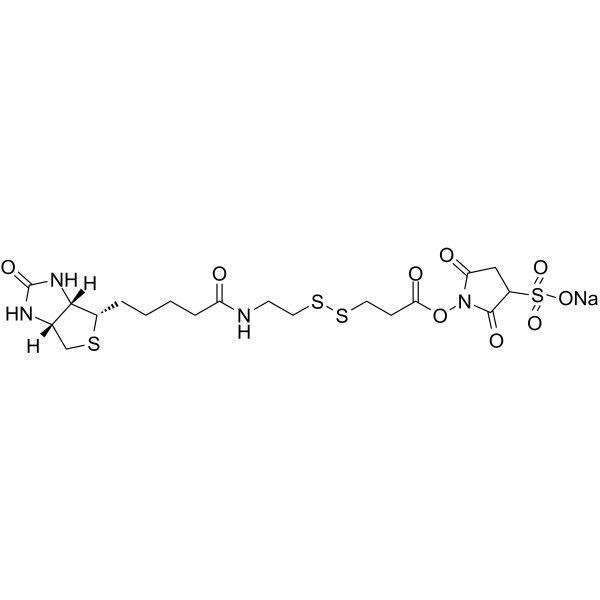
Sulfo-NHS-SS-biotin sodium is a long-chain cleavable and cell-impermeant amine-reactive biotinylation reagent. Sulfo-NHS-SS-biotin sodium can be used for the labeling and purifying of cell-surface protein .
loading...
    loading...
8
8 Cited Publications
Cat. No.: HY-P1068
CAS No.: 9001-63-2
Synonyms: Muramidase
Lysozyme (Muramidase) is a conserved antimicrobial protein. Lysozyme exerts its bactericidal effect by hydrolyzing bacterial cell wall peptidoglycan (PG). Lysozyme plays an important role in limiting bacterial growth on mucosal surfaces and other sites, not only controlling potential pathogens but also limiting overgrowth of microbiota to prevent dysbiosis. Extracellular lysozyme can also degrade polymeric PG into soluble fragments, activate NOD receptors in mucosal epithelial cells, and lead to the secretion of chemokines and activating factors by neutrophils and macrophages .
loading...
    loading...
6
6 Cited Publications
Cat. No.: HY-15701
CAS No.: 344897-95-6
Purity:  ≥98.0%
Research Areas:  

Inflammation/Immunology

Leukadherin-1, a specific agonist of the leukocyte surface integrin CD11b/CD18, increases CD11b/CD18-dependent cell adhesion to fibrinogen with an EC50 of 4 μM. Leukadherin-1 enhances leukocyte adhesion to ligands (such as ICAM-1) and vascular endothelium and thus reduces leukocyte transendothelial migration and influx to the injury sites. Leukadherin-1 suppresses innate inflammatory signaling .
loading...
    loading...

