11 Results for "

cell-cell interactions

" in MedChemExpress (MCE) Product Catalog:
Products (11)

11 Results for "cell-cell interactions" in MCE Product Catalog:

3
3 Cited Publications
Cat. No.: HY-114041
CAS No.: 552830-51-0
Purity:  95.30%
Synonyms: RvE1
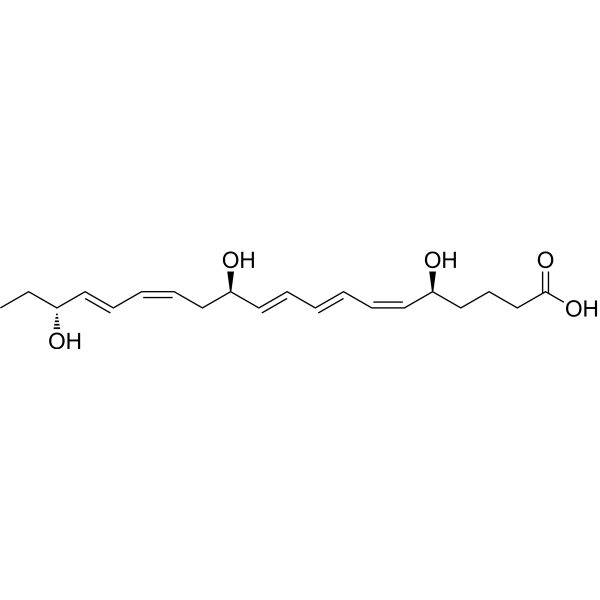
Resolvin E1 (RvE1), a potent endogenous pro-resolving mediator of inflammation, is derived from omega-3 fatty acid eicosapentaenoic acid (EPA). Resolvin E1 is endogenously biosynthesized from EPA in the presence of Aspirin during the spontaneous resolution phase of acute inflammation, where specific cell-cell interactions occur. Resolvin E1 possesses unique counterregulatory actions that inhibit polymorphonuclear leukocyte (PMN) transendothelial migration. Resolvin E1 also acts as a potent inhibitor of leukocyte infiltration, dendritic cell migration, and IL-12 production .
loading...
    loading...
Cat. No.: HY-114041S
Synonyms: RvE1-d4
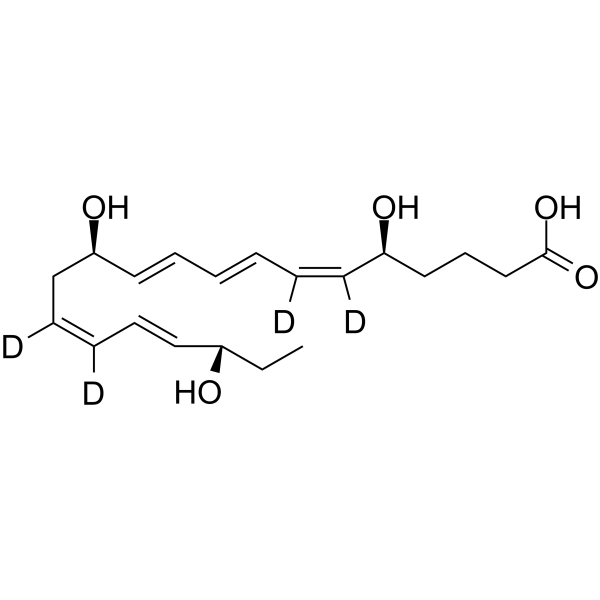
Resolvin E1-d4 (RvE1-d4) is deuterium labeled Resolvin E1. Resolvin E1 (RvE1), a potent endogenous pro-resolving mediator of inflammation, is derived from omega-3 fatty acid eicosapentaenoic acid (EPA). Resolvin E1 is endogenously biosynthesized from EPA in the presence of Aspirin during the spontaneous resolution phase of acute inflammation, where specific cell-cell interactions occur. Resolvin E1 possesses unique counterregulatory actions that inhibit polymorphonuclear leukocyte (PMN) transendothelial migration. Resolvin E1 also acts as a potent inhibitor of leukocyte infiltration, dendritic cell migration, and IL-12 production .
loading...
    loading...
Cat. No.: HY-W243002
CAS No.: 51524-71-1
Target:  

Bacterial

Research Areas:  

Infection

Acetyl-L-homoserine lactone is a member of the family of N-acylated homoserine lactones (HSLs). Acetyl-L-homoserine lactone is a polar mediator of cell-cell interactions in bacterial biofilms .
loading...
    loading...
Cat. No.: HY-114041S1
CAS No.: 2714040-94-3
Synonyms: RvE1-d4-1
Resolvin E1-d4-1 is the deuterium labeled Resolvin E1. Resolvin E1 (RvE1), a potent endogenous pro-resolving mediator of inflammation, is derived from omega-3 fatty acid eicosapentaenoic acid (EPA). Resolvin E1 is endogenously biosynthesized from EPA in the presence of Aspirin during the spontaneous resolution phase of acute inflammation, where specific cell-cell interactions occur. Resolvin E1 possesses unique counterregulatory actions that inhibit polymorphonuclear leukocyte (PMN) transendothelial migration. Resolvin E1 also acts as a potent inhibitor of leukocyte infiltration, dendritic cell migration, and IL-12 production .
loading...
    loading...
Cat. No.: HY-P10675
Research Areas:  

Metabolic Disease

Peptide K is a self-assembling peptide fiber that can be used to prepare fibrous nanocomposite hydrogels. The fibrous nanocomposite hydrogels have a dynamic network that adapts to cells and enhances cell-matrix and cell-cell interactions, thus significantly promoting the mechanotransduction, metabolic energy, and osteogenesis of encapsulated stem cells .
loading...
    loading...
Cat. No.: HY-P10500
CAS No.: 216682-41-6
Target:  

Inhibitory Antibodies

Research Areas:  

Neurological Disease

NX210 is a dodecapeptide derived from the SCO-spondin protein. NX210 can increase cell survival and induce neurite outgrowth, and participate in cell-cell and cell-matrix interactions. NX210 can be used in research on spinal cord injury recovery .
loading...
    loading...
Cat. No.: HY-115399A
CAS No.: 925448-37-9
Purity:  ≥97.0%
Synonyms: 3-Oxo-C16-AHL
Target:  

Bacterial

Research Areas:  

Infection

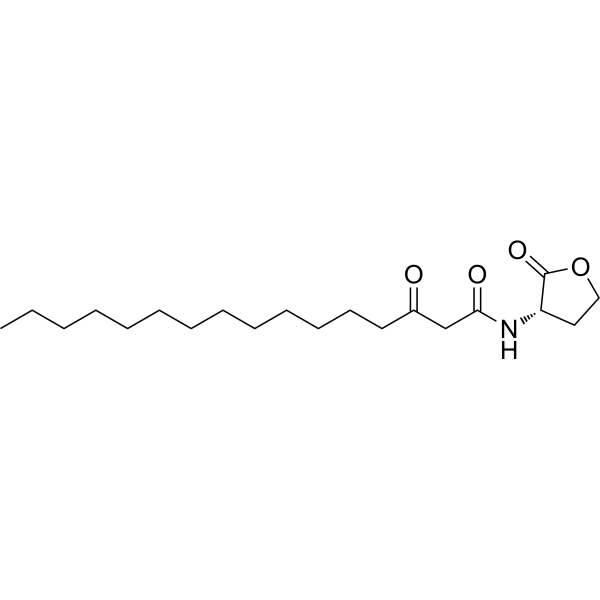
N-3-Oxo-hexadecanoyl-L-Homoserine lactone (3-Oxo-C16-AHL) is a signaling molecule to coordinate group behaviors at high densities in many bacteria. N-3-Oxo-hexadecanoyl-L-Homoserine lactone adsorbs to and promotes the remodeling of lipid membranes in ways that could underpin cell-cell or host-cell interactions .
loading...
    loading...
Cat. No.: HY-P12372
Research Areas:  

Others

Biotin-AALPETG*G is a biotinylated peptide substrate containing the sortase A recognition motif LPETG, used for mgSrtA-mediated transpeptidation. Biotin-AALPETG*G can serve as a labeling reagent for proximity-dependent biotinylation of interacting immune cells and cell surface proteins. Biotin-AALPETG*G enables the detection and recording of cell-cell interactions by transferring biotin to interacting cells .
loading...
    loading...
Cat. No.: HY-P12366
Research Areas:  

Cancer

Biotin-Ahx-LPETGS-NH2 is a synthetic biotinylated peptide tag. Biotin-Ahx-LPETGS-NH2 is used for uLIPSTIC-mediated covalent labeling of immune cells interacting with cells expressing FLAG-tagged sortase. Biotin-Ahx-LPETGS-NH2 enables proximity labeling to detect physical cell-cell interactions. Biotin-Ahx-LPETGS-NH2 functions through sortase-mediated covalent labeling .
loading...
    loading...
Cat. No.: HY-174723
Target:  

mRNA

Research Areas:  

Inflammation/Immunology

Human CXCR6 mRNA encodes the human C-X-C motif chemokine receptor 6 (CXCR6) protein, a G protein-coupled receptor that belongs to the CXC chemokine receptor family. CXCR6 and its exclusive ligand, chemokine ligand 16 (CCL16), are part of a signalling pathway that regulates T lymphocyte migration to various peripheral tissues (the liver, spleen red pulp, intestine, lungs, and skin) and promotes cell-cell interaction with dendritic cells and fibroblastic reticular cells.
loading...
    loading...
Cat. No.: HY-L081
185 compounds

Protein phosphorylation is a key post-translational modification underlying the regulation of many cellular processes. Phosphatases and kinases contribute to the regulation of protein phosphorylation homeostasis in the cell. This reversible regulation of protein phosphorylation is critical for the proper control of a wide range of cellular activities, including cell cycle, proliferation and differentiation, metabolism, cell-cell interactions, etc.

Protein phosphatases have evolved in separate families that are structurally and mechanistically distinct. Based on substrate specificity and functional diversity, protein phosphatases are classified into two superfamilies: Protein serine/threonine phosphatases and Protein tyrosine phosphatases. Ser/Thr phosphatases are metalloenzymes belonging to two major gene families termed PPP (phosphoprotein phosphatase) and PPM (metal-dependent protein phosphatases), whereas protein tyrosine phosphatases (PTPs) belong to distinct classes of enzymes that utilize a phospho-cysteine enzyme intermediate as a part of their catalytic action.

MCE supplies a unique collection of 185 phosphatase inhibitors that mainly targeting protein tyrosine phosphatases (PTPs) and serine/threonine-specific protein phosphatases. MCE Phosphatase Inhibitor Library is a useful tool for phosphatase drug discovery and related research.

  • 1

