12 Results for "

cellular infiltration

" in MedChemExpress (MCE) Product Catalog:
Products (12)

12 Results for "cellular infiltration" in MCE Product Catalog:

3
3 Cited Publications
Cat. No.: HY-Y0850J
CAS No.: 9002-89-5
Synonyms: PVA (Mw 13000-23000, 87-89% hydrolyzed); Poly(Ethenol) (Mw 13000-23000, 87-89% hydrolyzed)
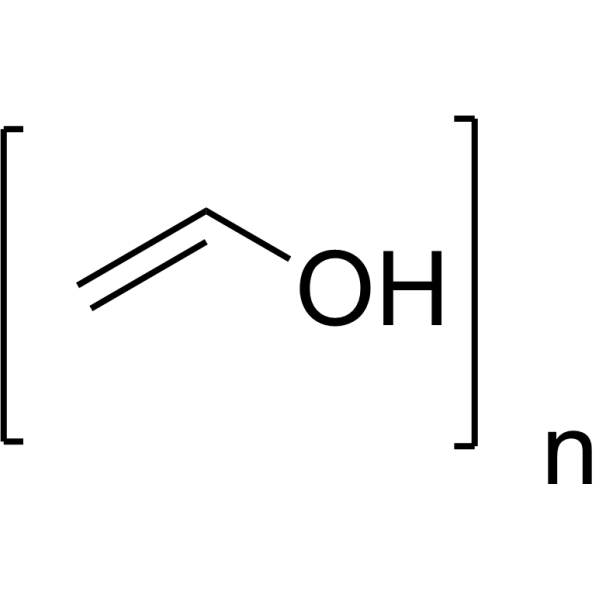
Polyvinyl alcohol (Mw 13000-23000, 87-89% hydrolyzed) is a polyvinyl alcohol with a molecular weight of 130000-23000 and hydrolytic properties. Polyvinyl alcohol (Mw 13000-23000, 87-89% hydrolyzed) is the hydrolysis and removal of acetate groups after the polymerization of ethylene acetate and polyvinyl alcohol is obtained. A degree of hydrolysis of 87-89% indicates that a large part of the acetate groups have been removed, resulting in a large number of hydroxyl groups in the PVA structure. Polyvinyl alcohol with different degrees of hydrolysis can be used to self-crosslink to form cryogel, which can be used as biological excipient. Polyvinyl alcohol can be used in tissue engineering by electrospinning. Polyvinyl alcohol can achieve high cellular density, infiltration, and uniform distribution, facilitating functional connections between cells. Polyvinyl alcohol can improve cell vitality through in vitro cultivation. Polyvinyl alcohol demonstrates promising inhibition of ostersarcoma cancer cells with Doxorubicin (HY-15142A) .
loading...
    loading...
3
3 Cited Publications
Cat. No.: HY-Y0850I
CAS No.: 9002-89-5
Synonyms: PVA (Mw 9000-10000, 80% hydrolyzed); Poly(Ethenol) (Mw 9000-10000, 80% hydrolyzed)
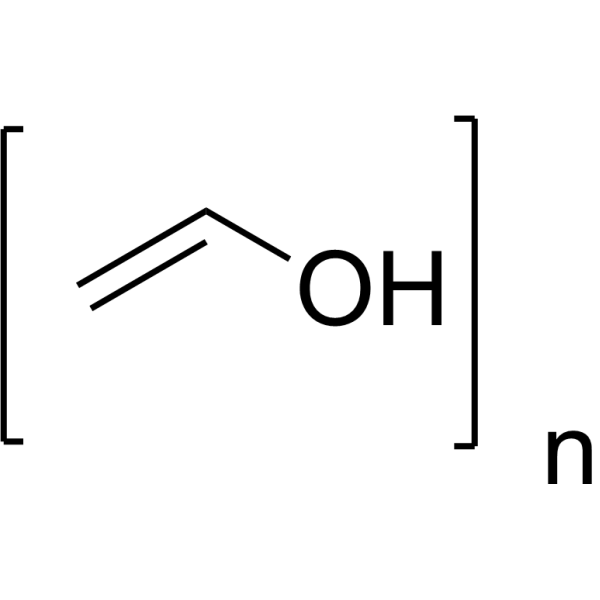
Polyvinyl alcohol (Mw 9000-10000, 80% hydrolyzed) also known as PVA, is a vinyl water-soluble polymer that can be used as a non-ionic surfactant. Polyvinyl alcohol (Mw 9000-10000, 80% hydrolyzed) can be used as a biodegradable polymer and can be used in adhesives, coatings, textiles, ceramics, and cosmetics. Polyvinyl alcohol can be used in tissue engineering by electrospinning. Polyvinyl alcohol can achieve high cellular density, infiltration, and uniform distribution, facilitating functional connections between cells. Polyvinyl alcohol can improve cell vitality through in vitro cultivation. Polyvinyl alcohol demonstrates promising inhibition of ostersarcoma cancer cells with Doxorubicin (HY-15142A) .
loading...
    loading...
3
3 Cited Publications
Cat. No.: HY-Y0850P
CAS No.: 9002-89-5
Synonyms: PVA (Mw 146000-186000, 87-89% hydrolyzed); Poly(Ethenol) (Mw 146000-186000, 87-89% hydrolyzed)
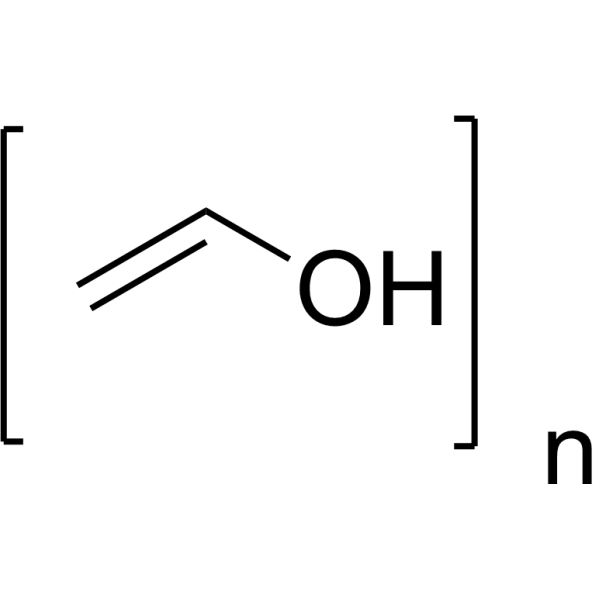
Polyvinyl alcohol (Mw 146000-186000, 87-89% hydrolyzed) is a polyvinyl alcohol with a molecular weight of 146000-186000 and hydrolytic properties. Polyvinyl alcohol (Mw 146000-186000, 87-89% hydrolyzed) is the hydrolysis and removal of acetate groups after the polymerization of ethylene acetate. And polyvinyl alcohol is obtained. Polyvinyl alcohol with different degrees of hydrolysis can be used to self-crosslink to form cryogel, which can be used as biological excipient. Polyvinyl alcohol can be used in tissue engineering by electrospinning. Polyvinyl alcohol can achieve high cellular density, infiltration, and uniform distribution, facilitating functional connections between cells. Polyvinyl alcohol can improve cell vitality through in vitro cultivation. Polyvinyl alcohol demonstrates promising inhibition of ostersarcoma cancer cells with Doxorubicin (HY-15142A) .
loading...
    loading...
3
3 Cited Publications
Cat. No.: HY-Y0850K
CAS No.: 9002-89-5
Synonyms: PVA (Mw 31000-50000, 98-99% hydrolyzed); Poly(Ethenol) (Mw 31000-50000, 98-99% hydrolyzed)
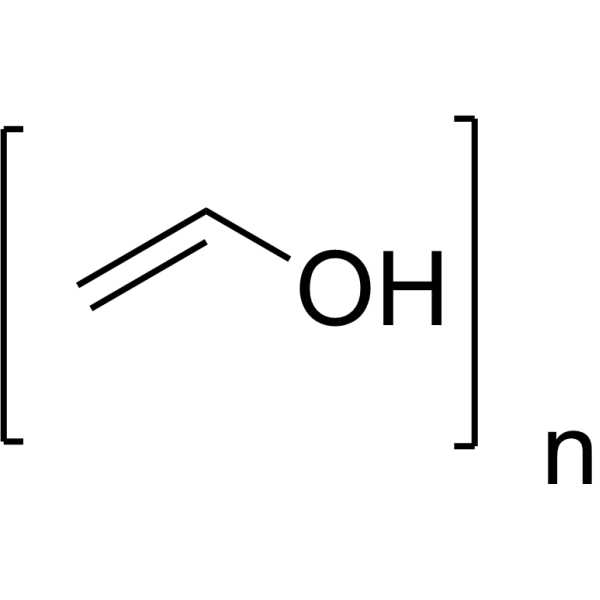
Polyvinyl alcohol (Mw 31000-50000, 98-99% hydrolyzed), also known as PVA, is a vinyl water-soluble polymer that can be used as a non-ionic surfactant. It can also be used as a biodegradable polymer and can be used in adhesives, coatings, textiles, ceramics and cosmetics. Polyvinyl alcohol can be used in tissue engineering by electrospinning. Polyvinyl alcohol can achieve high cellular density, infiltration, and uniform distribution, facilitating functional connections between cells. Polyvinyl alcohol can improve cell vitality through in vitro cultivation. Polyvinyl alcohol demonstrates promising inhibition of ostersarcoma cancer cells with Doxorubicin (HY-15142A) .
loading...
    loading...
Cat. No.: HY-111355B
CAS No.: 2864-50-8
Purity:  98.22%
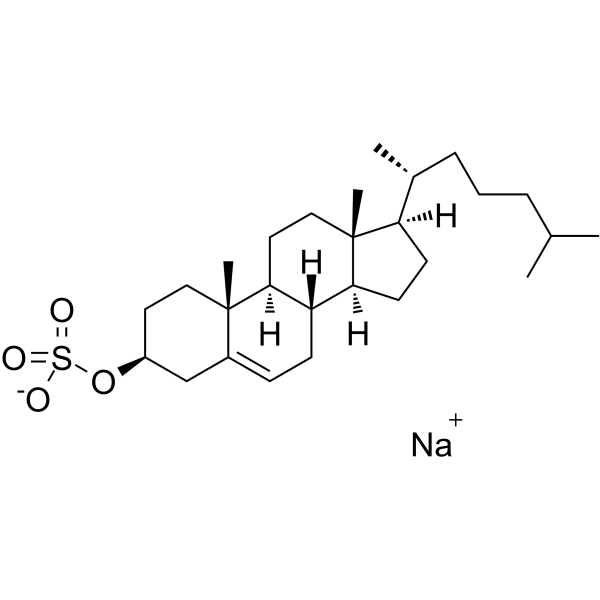
Cholesterol sulfate sodium is a naturally occurring, orally active cholesterol derivative that is widely distributed in various tissues and body fluids. Cholesterol sulfate sodium acts as a DOCK2 inhibitor, with IC50 values of 2 μM and 2.9 μM against mouse and human targets, respectively. Cholesterol sulfate sodium restricts excessive neutrophil infiltration and alleviates intestinal inflammation and damage. Cholesterol sulfate sodium serves as an activator of protein kinase C (PKC), which promotes squamous cell differentiation and inhibits skin carcinogenesis. Cholesterol sulfate sodium regulates cholesterol homeostasis and cellular metabolism by activating the AMPK-Sirt1 pathway. Cholesterol sulfate sodium can be used in research related to actinic keratitis, ulcerative colitis, skin cancer, and other conditions .
loading...
    loading...
Cat. No.: HY-111355
CAS No.: 1256-86-6
Cholesterol sulfate is a naturally occurring, orally active cholesterol derivative that is widely distributed in various tissues and body fluids. Cholesterol sulfate acts as a DOCK2 inhibitor, with IC50 values of 2 μM and 2.9 μM against mouse and human targets, respectively. Cholesterol sulfate restricts excessive neutrophil infiltration and alleviates intestinal inflammation and damage. Cholesterol sulfate serves as an activator of protein kinase C (PKC), which promotes squamous cell differentiation and inhibits skin carcinogenesis. Cholesterol sulfate regulates cholesterol homeostasis and cellular metabolism by activating the AMPK-Sirt1 pathway. Cholesterol sulfate can be used in research related to actinic keratitis, ulcerative colitis, skin cancer, and other conditions .
loading...
    loading...
Cat. No.: HY-P991149
CAS No.: 2966936-23-0
Synonyms: YH32367; ABL105

Target:  

TNF Receptor

Research Areas:  

Cancer

Nesfrotamig (YH32367; ABL105) is a bispecific activator targeting HER2 and 4-1BB. The Kd values of Nesfrotamig for human HER2 and human 4-1BB are 0.48 nM and 3.36 nM, respectively. By blocking tumor cell growth signals, activating HER2-dependent local 4-1BB in tumors to maintain T cell survival, and inducing NK cell-mediated antibody-dependent cellular cytotoxicity, Nesfrotamig enhances the cytotoxicity and tumor infiltration ability of immune cells. Nesfrotamig promotes the generation of tumor-specific memory T cells, drives T cell-mediated tumor lysis, exhibits significant anti-tumor efficacy against both HER2-positive and HER2-low-expressing tumors, and shows synergistic activity when combined with anti-PD-1 antibodies. In cynomolgus monkey studies, Nesfrotamig demonstrates good safety and is suitable for research related to HER2-positive and HER2-low-expressing tumors .
loading...
    loading...
Cat. No.: HY-111355S
CAS No.: 2687961-01-7
Purity:  ≥98.0%
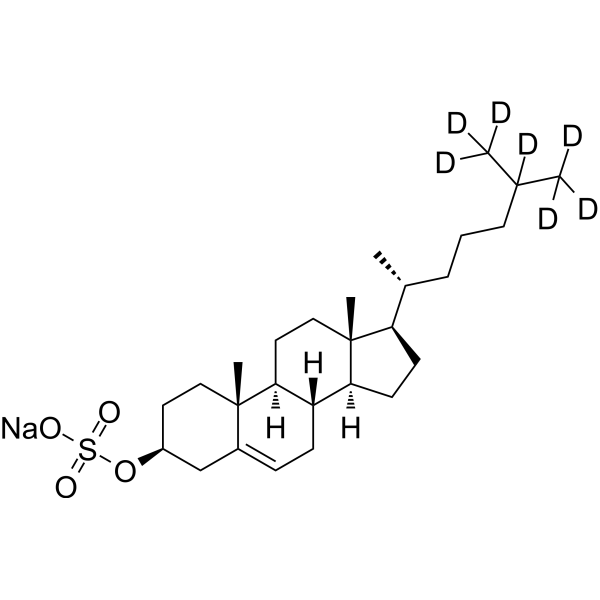
Cholesterol sulfate sodium-d7 is the deuterium labeled Cholesterol sulfate sodium. Cholesterol sulfate sodium is a naturally occurring, orally active cholesterol derivative that is widely distributed in various tissues and body fluids. Cholesterol sulfate sodium acts as a DOCK2 inhibitor, with IC50 values of 2 μM and 2.9 μM against mouse and human targets, respectively. Cholesterol sulfate sodium restricts excessive neutrophil infiltration and alleviates intestinal inflammation and damage. Cholesterol sulfate sodium serves as an activator of protein kinase C (PKC), which promotes squamous cell differentiation and inhibits skin carcinogenesis. Cholesterol sulfate sodium regulates cholesterol homeostasis and cellular metabolism by activating the AMPK-Sirt1 pathway. Cholesterol sulfate sodium can be used in research related to actinic keratitis, ulcerative colitis, skin cancer, and other conditions.
loading...
    loading...
Cat. No.: HY-121586
CAS No.: 59040-30-1
Synonyms: Bay g 6575
Target:  

Lipoxygenase

Research Areas:  

Cardiovascular Disease

Nafazatrom (Bay g 6575) is an orally active cardioprotective agent that protects against ischemic damage. Nafazatrom dose-dependently inhibits neutrophil aggregation, superoxide anion generation, arachidonic acid metabolism, and to a lesser extent the release of β-glucosidase, platelet aggregation or arachidonic acid in vitro. Acid metabolism has no significant effect. In a dog ischemia-reperfusion model, Nafazatrom (10 mg/kg; po) reduced infarct size and the occurrence of arrhythmias and rescued ischemic myocardial function without affecting any hemodynamic changes. The basis of Nafazatrom's cardioprotection may be inhibition of neutrophil function and cellular infiltration in vitro .
loading...
    loading...
Cat. No.: HY-181077
Target:  

AMPK

Research Areas:  

Endocrinology

AMPKα1 activator 1 is a selective and orally active AMPKα1 activator with an EC50 of 35.1 nM. AMPKα1 activator 1 shows 176-fold selectivity over AMPKα2. AMPKα1 activator 1 can be used as a cell protectant and a kidney protectant. AMPKα1 activator 1 attenuates elevation of serum creatinine and blood urea nitrogen levels, alleviates kidney damage, and reduces cellular infiltration in renal ischemia-reperfusion injury contexts. AMPKα1 activator 1 can be associated with renal ischemia-reperfusion injury research .
loading...
    loading...
Cat. No.: HY-P991782

Target:  

CCR

Research Areas:  

Inflammation/Immunology Cancer

Anti-Mouse CCR8 Antibody (C8Mab-2) is an antibody targeting mouse CCR8. Anti-Mouse CCR8 Antibody (C8Mab-2) induces antibody-dependent cellular cytotoxicity and antibody-dependent cellular phagocytosis to eliminate CCR8-expressing cells. Anti-Mouse CCR8 Antibody (C8Mab-2) eliminates regulatory T cells in the tumor microenvironment, increases CD8 + T cell infiltration and inhibits tumor growth. Anti-Mouse CCR8 Antibody (C8Mab-2) recognizes the N-terminal amino acid region 1-33 of mouse CCR8, in which Thr20 serves as the core binding epitope amino acid. Anti-Mouse CCR8 Antibody (C8Mab-2) is applicable to research related to colon cancer, breast cancer and bladder cancer .
loading...
    loading...
Cat. No.: HY-183569
CAS No.: 3034296-91-5
CSF1R-IN-27 is a CSF1R inhibitor with oral effectiveness, kinome-wide selective profile, low cellular cytotoxicity, and CSF1R IC50 values of 19 nM, 88 nM, 173 nM, 797 nM, 1448 nM, and >3000 nM. CSF1R-IN-27 suppresses M-CSF-induced phosphorylation of CSF1R, AKT, and ERK in macrophages, and inhibits hepatic p-CSF1R/p-AKT/p-ERK signaling. CSF1R-IN-27 reduces serum transaminase levels, improves hepatic histopathology, alleviates inflammatory cell infiltration, and decreases circulating TNF-α and IL-6 levels. CSF1R-IN-27 can be used for the research of acute liver injury .
loading...
    loading...
  • 1

