9 Results for "

charge-transfer complex

" in MedChemExpress (MCE) Product Catalog:
Products (9)

9 Results for "charge-transfer complex" in MCE Product Catalog:

1
1 Cited Publications
Cat. No.: HY-W127832
CAS No.: 123148-15-2
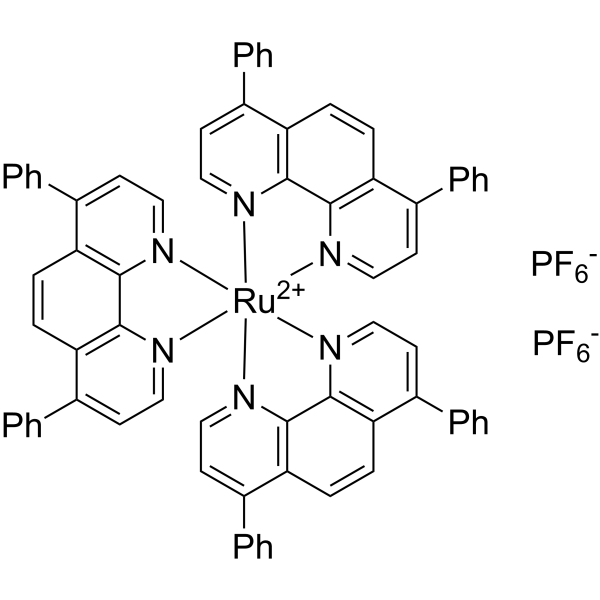
Ru(dpp)3(PF6)2 is a ruthenium (II) polypyridine complex and oxygen-sensing luminophore with excellent photostability and bright orange emission properties based on metal-to-ligand charge transfer (MLCT). Ru(dpp)3(PF6)2 undergoes oxygen-induced collisional luminescence quenching following the Stern-Volmer relationship, and can also engage in Förster-type resonance energy transfer with closed-form BTF6. Featuring excellent photophysical and electrochemical properties, Ru(dpp)3(PF6)2 is applied in studies on quenching-type oxygen sensors based on fluorinated ORMOSIL/xerogels and solid-state light-emitting devices .
loading...
    loading...
Cat. No.: HY-D0303A
CAS No.: 532-82-1
Synonyms: Solvent Orange 3 hydrochloride; Basic Orange 2; Chrysoidine Y
Research Areas:  

Others

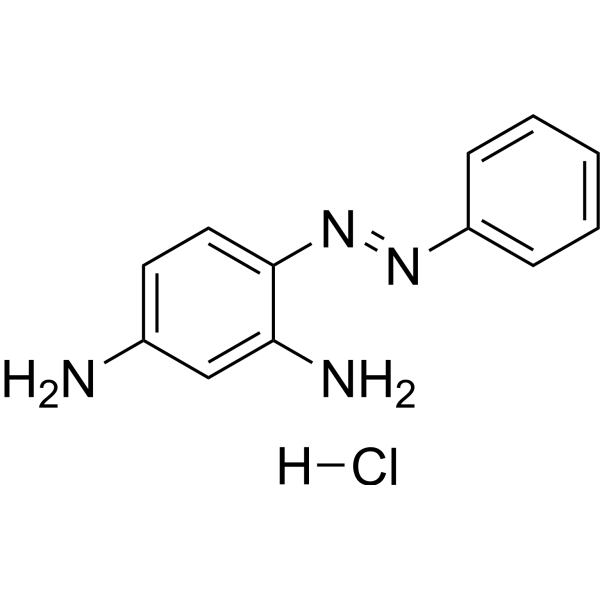
Chrysoidine G (Solvent Orange 3 hydrochloride; Basic Orange 2) is an industrial azo dye. Chrysoidine G is used in most textile dyeing, absorption fluorescent probes, and colorimetric sensors. Chrysoidine G can chemically complex with Co 2+, or bind with Cs + to inhibit the intramolecular charge transfer process, thereby triggering a red shift in the absorption spectrum and producing a significant color change. Chrysoidine G can induce DNA damage, and has moderate toxicity and carcinogenicity .
loading...
    loading...
Cat. No.: HY-124357
CAS No.: 127685-30-7
Synonyms: S-Norfluoxetine hydrochloride; LY 215229 hydrochloride
Target:  

Dopamine Receptor

Research Areas:  

Neurological Disease

Seproxetine (S-Norfluoxetine) hydrochloride is a selective serotonin reuptake inhibitor (SSRI) that enhances serotonin levels in the brain by specifically inhibiting the serotonin uptake carrier. Seproxetine hydrochloride exhibits strong charge transfer interactions with π-electron acceptors, forming stable complexes that enhance its binding affinity to multiple receptors, including serotonin and dopamine receptors. Seproxetine hydrochloride demonstrates improved biological activity when interacting with charge transfer complexes, leading to increased stability and efficacy in therapeutic applications.
loading...
    loading...
Cat. No.: HY-D0303
CAS No.: 495-54-5
Synonyms: Solvent Orange 3; Basic Orange 2 free base; Chrysoidine Y free base
Research Areas:  

Others

Chrysoidine G free base (Solvent Orange 3; Basic Orange 2 free base) is an industrial azo dye. Chrysoidine G free base is used in most textile dyeing, absorption fluorescent probes, and colorimetric sensors. Chrysoidine G free base can chemically complex with Co 2+, or bind with Cs + to inhibit the intramolecular charge transfer process, thereby triggering a red shift in the absorption spectrum and producing a significant color change. Chrysoidine G free base can induce DNA damage, and has moderate toxicity and carcinogenicity .
loading...
    loading...
Cat. No.: HY-D0303AR
CAS No.: 532-82-1
Synonyms: Solvent Orange 3 hydrochloride (Standard); Basic Orange 2 (Standard); Chrysoidine Y (Standard)
Chrysoidine G (Solvent Orange 3 hydrochloride; Basic Orange 2) Standard is the analytical standard of Chrysoidine G (HY-D0303A). This product is intended for research and analytical applications. Chrysoidine G (Solvent Orange 3 hydrochloride; Basic Orange 2) is an industrial azo dye. Chrysoidine G is used in most textile dyeing, absorption fluorescent probes, and colorimetric sensors. Chrysoidine G can chemically complex with Co 2+, or bind with Cs + to inhibit the intramolecular charge transfer process, thereby triggering a red shift in the absorption spectrum and producing a significant color change. Chrysoidine G can induce DNA damage, and has moderate toxicity and carcinogenicity .
loading...
    loading...
Cat. No.: HY-N21563
CAS No.: 7196-09-0
Synonyms: Pantothenoylcysteine 4'-phosphate; PPC
4'-Phosphopantothenoylcysteine (Pantothenoylcysteine 4'-phosphate) serves as a substrate for phosphopantothenoylcysteine decarboxylase (PPC-DC) and MdHAL3. 4'-Phosphopantothenoylcysteine enables flavin-mediated decarboxylation of the cysteine moiety via formation of a charge-transfer complex and generation of a thioaldehyde intermediate. 4'-Phosphopantothenoylcysteine is a metabolism-related biomarker and a raw material for coenzyme A synthesis, and it participates in the regulation of the TCA cycle. 4'-Phosphopantothenoylcysteine can be used in studies related to hepatocellular carcinoma .
loading...
    loading...
Cat. No.: HY-D0303AS
CAS No.: 1450729-16-4
Synonyms: Solvent Orange 3-d5 hydrochloride; Basic Orange 2-d5 hydrochloride; Chrysoidine Y-d5 hydrochloride
Chrysoidine G-d5 (Solvent Orange 3-d5 hydrochloride; Basic Orange 2-d5) is the deuterated-labeled Chrysoidine G (HY-D0303A). Chrysoidine G (Solvent Orange 3 hydrochloride; Basic Orange 2) is an industrial azo dye. Chrysoidine G is used in most textile dyeing, absorption fluorescent probes, and colorimetric sensors. Chrysoidine G can chemically complex with Co 2+, or bind with Cs + to inhibit the intramolecular charge transfer process, thereby triggering a red shift in the absorption spectrum and producing a significant color change. Chrysoidine G can induce DNA damage, and has moderate toxicity and carcinogenicity .
loading...
    loading...
Cat. No.: HY-D3125
Target:  

Fluorescent Dye

Research Areas:  

Others

NtHzBtd is a fluorescent probe for detecting Fe 3+. NtHzBtd is applicable to the selective fluorescent detection of Fe 3+ ions and live cell imaging studies. NtHzBtd can selectively coordinate with Fe 3+ to form a 1:1 complex, triggering chelation enhanced quenching (CHEQ) and intramolecular charge transfer (ICT) processes, which result in fluorescence turn-off, thereby enabling sensitive detection of Fe 3+ and live cell fluorescence imaging. After binding to Fe 3+, NtHzBtd reduces fluorescence intensity, exhibits a rapid response property, with a limit of detection of 0.036 μM and a response time of approximately 55 s. The detection wavelengths are Ex/Em = 334/401 nm (solution system) .
loading...
    loading...
Cat. No.: HY-D3127
CAS No.: 455251-97-5
Target:  

Fluorescent Dye

Research Areas:  

Others

DCA-Mln is a Fluorescent probe for ferric iron (Fe³⁺) detection. The probe works via an internal charge transfer (ICT) process from its diethylamino group to its dicyano group, which produces bright pink fluorescence in its unbound state; when Fe³⁺ is present, two molecules of DCA-Mln chelate with one Fe³⁺ ion, with one cyano group of each DCA-Mln participating in the complexation, and this binding triggers a photoinduced electron transfer (PET) process that provides a nonradiative deactivation pathway, resulting in fluorescence quenching; additionally, the probe exhibits a visible color change from purple to peach pink upon Fe³⁺ binding, enabling dual-channel detection. The probe has an excitation wavelength of 570 nm and an emission wavelength of 670 nm, and it shows a rapid response, with fluorescence stabilizing within 15 seconds of Fe³⁺ addition. DCA-Mln is cell-membrane-permeable, nontoxic at the imaging concentration of 10 μM, and can be used for Fe³⁺ detection in actual water samples, Fe³⁺ imaging in living cells, and as an anti-counterfeiting ink[1].
loading...
    loading...

