10 Results for "

chelated lipid

" in MedChemExpress (MCE) Product Catalog:
Products (10)

10 Results for "chelated lipid" in MCE Product Catalog:

Cat. No.: HY-N15871
CAS No.: 231615-77-3
Target:  

Liposome

Research Areas:  

Others

18:1 DGS-NTA(Ni) is a nickel chelating lipid. 18:1 DGS-NTA(Ni) has high affinity for histidine-tags and can bind histidine tags of recombinant proteins. 18:1 DGS-NTA(Ni) can be used for preparation of liposomes and nanosize multilamellar vesicles (NMVs) which are used in protein and peptide binding studies and antigen delivery .
loading...
    loading...
Cat. No.: HY-W068771
CAS No.: 943-89-5
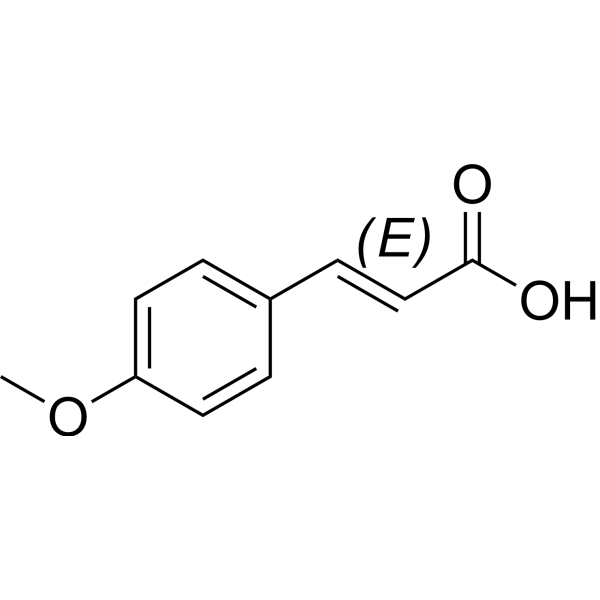
(E)-3-(4-Methoxyphenyl)acrylic acid is an antioxidant and metal chelator that modulates E-NTPDase and Na +/K + ATPase activities in iron-induced testicular injury by scavenging DPPH (HY-112053) free radicals, reducing ferric iron, chelating Fe 2+, inhibiting lipid peroxidation, and enhancing GSH, SOD, and CAT activities. (E)-3-(4-Methoxyphenyl)acrylic acid can be used for research on iron-induced testicular injury .
loading...
    loading...
Cat. No.: HY-N1953
CAS No.: 8000-34-8
Synonyms: Clove leaf oil,rectified
Target:  

Bacterial

Research Areas:  

Infection Inflammation/Immunology

Clove oil (Clove leaf oil,rectified) is a volatile aromatic essential oil with antibacterial, anti-inflammatory and antioxidant activities. Clove oil disrupts the integrity of bacterial cell membranes, releases intracellular nucleic acids and proteins, and inhibits bacterial growth and reproduction. Clove oil scavenges DPPH, ABTS, superoxide anions, hydrogen peroxide and hydroxyl radicals. Clove oil reduces Fe 3+ to Fe 2+, chelates Fe 2+ and iron ions, and inhibits lipid peroxidation in linoleic acid emulsions. Clove oil acts as a natural preservative to reduce the loss of oxidation products. Clove oil can be isolated from the flowers, stems and leaves of Eugenia aromatica and Eugenia caryophyllus, which belong to the Myrtaceae family. Clove oil can be used in studies related to bacterial infection, antioxidation and preservation .
loading...
    loading...
Cat. No.: HY-W587784
CAS No.: 542-40-5
Norbixin is an orally active natural product with multiple activities such as retinal protection and oxidative stress regulation. Norbixin scavenges ROS, chelates metal ions, regulates plasmid and genomic DNA breakage, inhibits H2O2-induced mutagenesis, activates PPAR-α, modulates lipid levels, restores or regulates antioxidant enzyme activity, and alters NO levels. Norbixin prevents A2E accumulation and protects photoreceptor cells and retinal pigment epithelial cells. Norbixin is a derivative of Bixin (HY-N6884). Norbixin can be used in research related to diseases such as macular degeneration and diabetes, and also serves as a natural textile dye .
loading...
    loading...
Cat. No.: HY-173383
Synonyms: 1,2-dioleoyl-sn-glycero-3-phosphoethanolamine-N- tetraazacyclododecane-N-tetraacetic acid, sodium salt
DOPE-DOTA sodium is a chelated lipid that serves as a key contrast agent in magnetic resonance imaging (MRI). DOPE-DOTA sodium can be used for cancer, blood-brain barrier disruption, abnormalities such as aneurysms or plaque buildup, inflammation in arthritis, and liver function and lesions study
loading...
    loading...
Cat. No.: HY-173384
Synonyms: 1,2-distearoyl-sn-glycero-3-phosphoethanolamine-N- tetraazacyclododecane-N-tetraacetic acid, sodium salt
DSPE-DOTA sodium (1,2-distearoyl-sn-glycero-3-phosphoethanolamine-N- tetraazacyclododecane-N-tetraacetic acid, sodium salt) is a chelating lipid used as a key contrast agent in magnetic resonance imaging (MRI). DSPE-DOTA sodium can be used for imaging detection of tumors, neurological and inflammatory diseases .
loading...
    loading...
Cat. No.: HY-W068771R
CAS No.: 943-89-5
(E)-3-(4-Methoxyphenyl)acrylic acid (Standard) is the analytical standard of (E)-3-(4-Methoxyphenyl)acrylic acid (HY-W068771). This product is intended for research and analytical applications. (E)-3-(4-Methoxyphenyl)acrylic acid is an antioxidant and metal chelator that modulates E-NTPDase and Na +/K + ATPase activities in iron-induced testicular injury by scavenging DPPH (HY-112053) free radicals, reducing ferric iron, chelating Fe 2+, inhibiting lipid peroxidation, and enhancing GSH, SOD, and CAT activities. (E)-3-(4-Methoxyphenyl)acrylic acid can be used for research on iron-induced testicular injury .
loading...
    loading...
Cat. No.: HY-D3068
CAS No.: 3077446-86-4
Target:  

Fluorescent Dye

Research Areas:  

Metabolic Disease

LDs-BCA is a BF2-chelated AIE fluorescent probe with a positive solvatochromic effect, which can specifically target intracellular lipid droplets (Ex/Em = 565/620-730 nm). LDs-BCA monitors the dynamic changes in the morphology, size and quantity of intracellular lipid droplets under oleic acid induction and starvation stress. LDs-BCA, after intraperitoneal injection, accumulates in the gastric fat of living obese mice, allowing continuous monitoring via its fluorescent signal. LDs-BCA is applicable to studies related to intracellular lipid droplet polarity imaging and in vivo gastric fat visualization .
loading...
    loading...
Cat. No.: HY-W747035
CAS No.: 33803-42-8
Gnaphaliin is a flavonoid compound that exerts antioxidant, anti-inflammatory, and tracheal smooth muscle relaxant effects by inhibiting lipid peroxidation, scavenging free radicals, chelating trace elements, and reducing neutrophil infiltration. Gnaphaliin can be used in research on asthma, inflammation, and atherosclerosis .
loading...
    loading...
Cat. No.: HY-W989128
CAS No.: 686723-15-9
Ethyl 8-hydroxy-α-(2-propynylamino) is a bifunctional iron chelator that inhibits lipid peroxidation (IC50 = 15 μM). Ethyl 8-hydroxy-α-(2-propynylamino) chelates Fe (II) and Fe (III) metal ions, and inhibits iron/ascorbic acid-induced mitochondrial membrane lipid peroxidation. Ethyl 8-hydroxy-α-(2-propynylamino) can be used in the research of oxidative stress and neurodegenerative diseases .
loading...
    loading...

